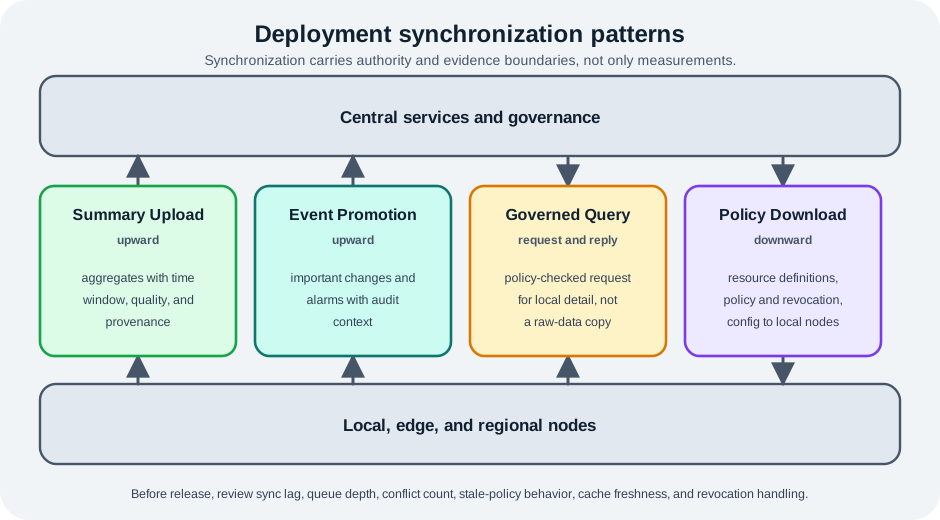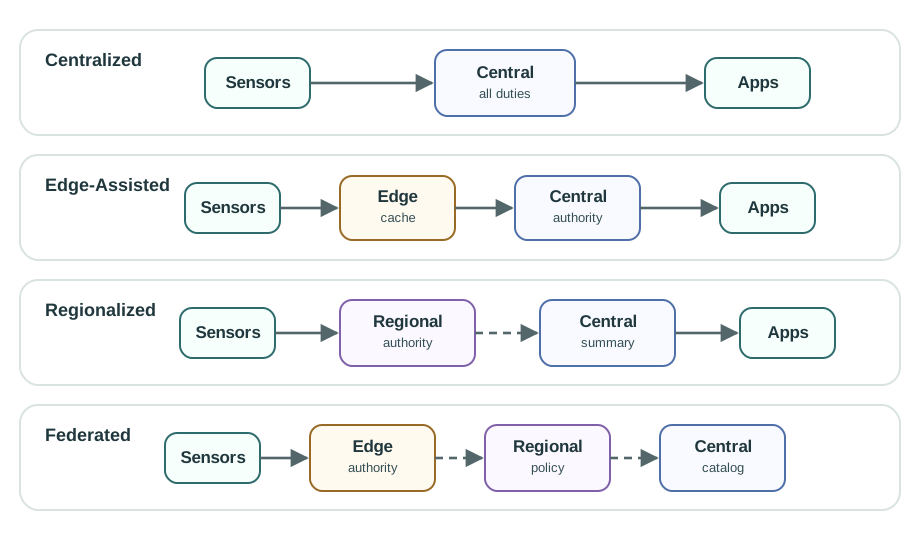
Emerging Paradigms · Study deck
S2aaS Implementation Readiness
Picture a city team that lets a university reuse readings from street air monitors.
Blueprint Bina is your guide for this deck.

After studying this chapter
Learning objectives
You will be able to:
- Define production readiness gates for an S2aaS service.
- Assign operational ownership for quality, security, incidents, subscriptions, retention, and lifecycle work.
- Design data-quality records that help consumers judge whether a stream is fit for use.
- Identify tenant-isolation and policy-enforcement checks that must apply across the full delivery path.
Major section
Start Simple
This opening does not settle price or law for every user.
- The first sample looks useful, but a later road closure moves two monitors and changes the meaning of the trend.
- The service owner must keep the shared record honest while people, sites, and needs change.
- If any answer is no, keep the service in trial.
Major section
Start Simple (continued)
A stream that arrives on time can still be unfit if its place, age, or quality is unclear.
- Shared data can support study and planning, but it should not become a hidden control path without a new safety case.
- Under the Hood examines isolation, change control, scale, recovery, and the records needed when the service grows.
- In S2aaS Implementation Readiness, the practical question is who owns the sensing resource, what quality is promised, and what policy keeps the service safe to consume.
Major section
In 60 Seconds · Minimum Viable Understanding
S2aaS implementation considerations are the checks that keep a shared sensing platform useful after the first demo.
- A production service needs named operational owners, measurable quality records, enforceable tenant isolation, tested revocation, visible degraded modes, change control, cost guardrails, incident response, and lifecycle plans.
- The key question is not "does data arrive?" but "can the platform keep its promises when sensors fail, tenants change, policies conflict, or demand grows?".
- Readiness is test-backed.: Do not move from pilot to production until monitoring, policy enforcement, quality reporting, support ownership, and recovery procedures are tested.
Major section
Can The Service Keep Its Promise? · Concept Map
Implementation considerations connect the service promise to the controls that keep it true in production.
- Resource contract, allowed use, quality target, delivery form, retention rule, support path, and exit terms.
- Freshness, completeness, calibration, provenance, error state, incident history, audit log, and test results.
- Identity, tenant isolation, policy checks, quotas, fallback behavior, lifecycle change, and operator response.
Major section
Readiness Gates · Launch Rule
The platform reports freshness, completeness, calibration state, provenance, and known gaps with each stream or report.
- Production readiness should be a sequence of gates, not a single launch meeting.
- Each gate asks for proof that the service can keep a specific promise.
- Monitoring, incident response, revocation, retention, backup, restore, and support ownership are tested with operators.
Major section
Operational Ownership · Data Quality and Fitness for Use
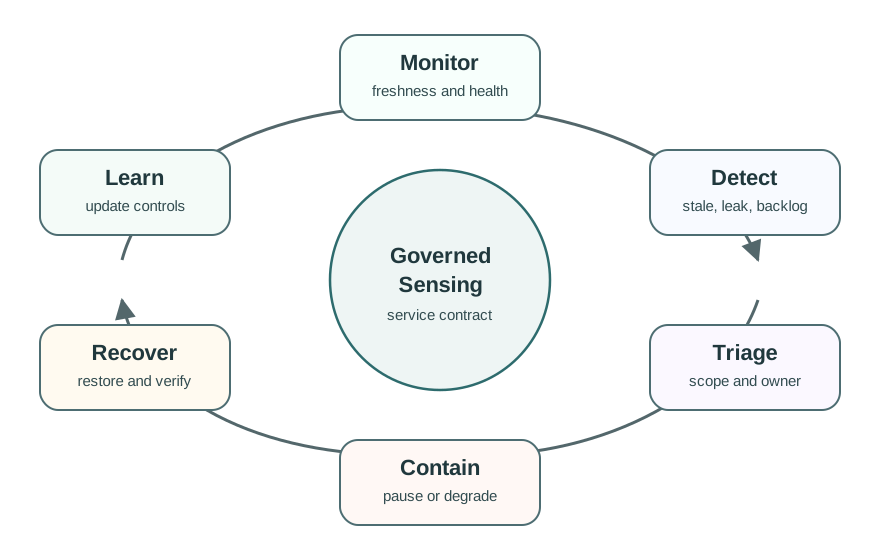
The sensor owner may control physical maintenance, the platform team may own policy enforcement, and consumers may depend on the service for their own decisions.
- Production planning should name the owner for each recurring task.
- The runbook does not need to be long.
Major section
Design Check · Scaling and Resource Guardrails
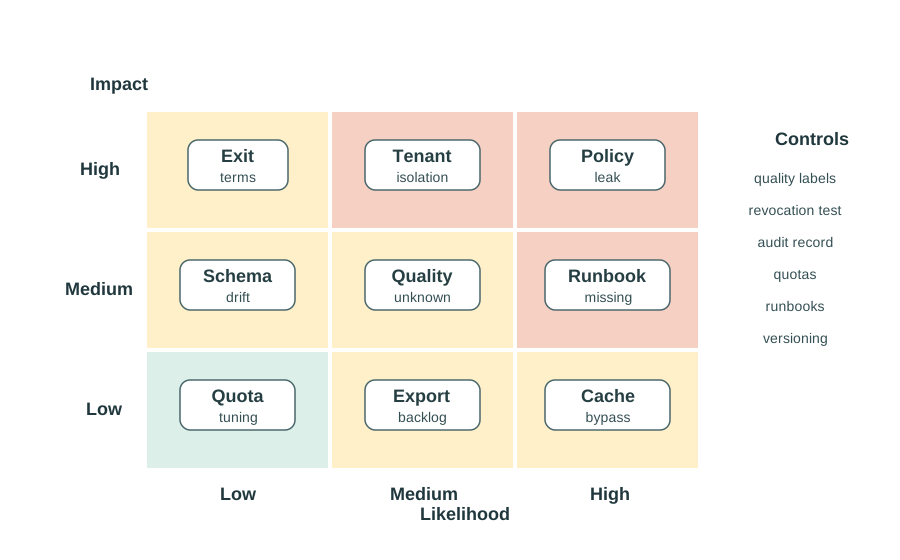
If an unauthorized tenant can discover a resource name, infer another tenant's activity from timing, or receive a cached export, the isolation model is incomplete.
- Scaling decisions should be driven by measured bottlenecks and consumer commitments, not by generic architecture diagrams.
Major section
Lifecycle and Change Control · Campus Sensing Service · Production Readiness Checklist
Sensors are replaced, schemas change, policies tighten, tenants leave, and delivery interfaces are retired.
- Implementation planning must include change control from the start.
- Re-evaluate active subscriptions when policy changes.
- Preserve provenance so consumers can see when the source changed.
- Data consumers can see freshness, completeness, provenance, calibration state, and known limitations.
Major section
S2aaS Deployment Models · Concept Relationships
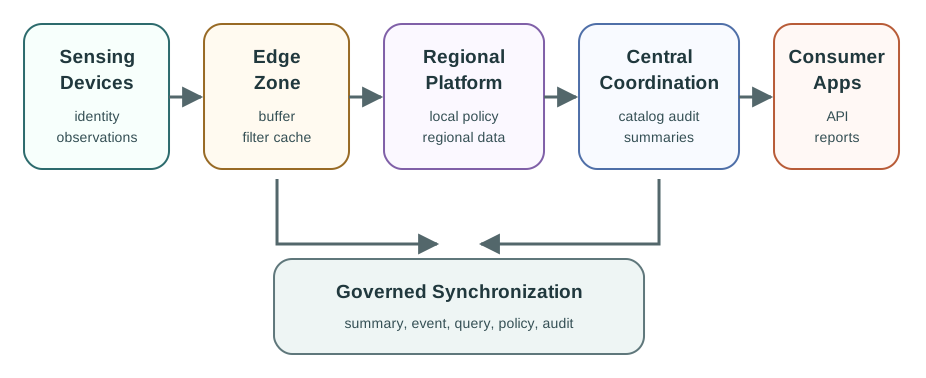
A gateway is a device or service that links one network or system to another.
- This page starts with one job.
- A shared reading is not a shared promise unless its age, quality, use, and support rules are clear.
- This first route is a guide to the main choice.
- They do not reverse its main claim.
Major section
Common Pitfalls · Readiness as Stress Proof
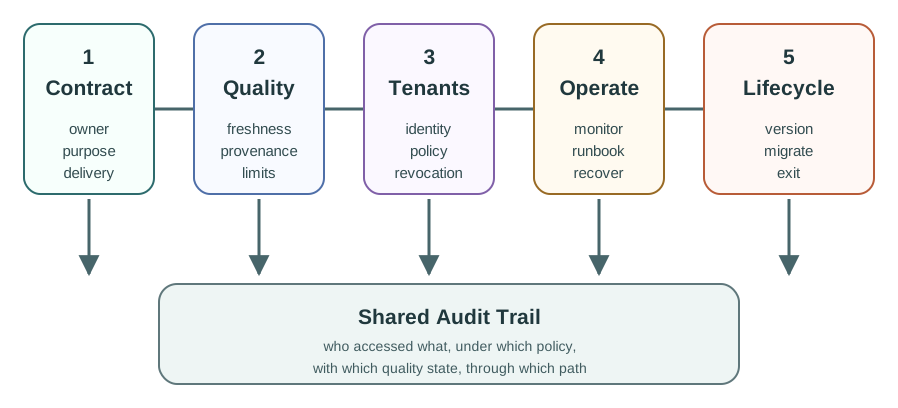
If operators cannot see freshness, backlog, error state, and policy decisions, they cannot protect consumers during incidents.
- Production readiness checks should test denied access, stale data, failed export, revoked tenant, replaced sensor, and delayed stream behavior.
- More servers do not fix missing quality metadata, weak tenant isolation, unclear ownership, or untested deletion.
Major section
Limited Pilot Readiness Record · Happy Paths Hide Readiness Gaps
Happy-path tests collapse several promises into one visible success.
- For a campus comfort service, write the pilot record as evidence the next operator can inspect.
- Each result should leave a trace in logs, quality metadata, support procedures, or audit tables.
- The subtle failures are often created by asynchronous paths.
Major section
Summary · Key Takeaway
A production platform needs readiness gates, operational ownership, data-quality records, tenant isolation, policy enforcement, capacity guardrails, visible degraded modes, and lifecycle controls.
- The strongest readiness check does not only ask whether data can be delivered.
- It asks whether the platform can deny improper access, explain data quality, recover from failure, revoke a subscription, change safely, and exit cleanly.
- S2aaS implementation must cover calibration, uptime, privacy, billing, tenant isolation, API design, support, and incident response.
Deck summary
Key takeaways
This opening does not settle price or law for every user.
- A stream that arrives on time can still be unfit if its place, age, or quality is unclear.
- S2aaS implementation considerations are the checks that keep a shared sensing platform useful after the first demo.
- Implementation considerations connect the service promise to the controls that keep it true in production.
- The platform reports freshness, completeness, calibration state, provenance, and known gaps with each stream or report.
Retrieval practice
Recall check 1 of 6

Blueprint Bina says: answer from memory, then check your reasoning.
Q1A campus S2aaS pilot has fresh comfort readings on a dashboard, but operators have not tested denied access, stale data labels, revocation, export failure, or sensor replacement. Which readiness record should block broad launch?
Show answer
Answer: A A traceable S2aaS readiness decision proves the service contract, quality metadata, tenant controls, denied and revoked access, degraded behavior, operations ownership, capacity guardrails, lifecycle change, and future-review conditions before broad launch.
Retrieval practice
Recall check 2 of 6

Blueprint Bina says: answer from memory, then check your reasoning.
Q2A consumer receives a room temperature value but no timestamp, unit, calibration state, or provenance. What is the main risk?
Show answer
Answer: B B) The consumer cannot judge whether the value is fit for the decision being made.
Retrieval practice
Recall check 3 of 6

Blueprint Bina says: answer from memory, then check your reasoning.
Q3What is the first useful question when choosing an S2aaS deployment model?
Show answer
Answer: A A defensible S2aaS deployment starts with responsibility placement, not with a cloud-or-edge slogan.
Retrieval practice
Recall check 4 of 6

Blueprint Bina says: answer from memory, then check your reasoning.
Q4Why is edge-assisted central deployment often a useful migration step for S2aaS?
Show answer
Answer: A Edge-assisted central deployment is a bounded migration step, not a blanket replacement for central authority.
Retrieval practice
Recall check 5 of 6

Blueprint Bina says: answer from memory, then check your reasoning.
Q5Place each S2aaS control where it lives in the readiness model so you can find which evidence is missing before onboarding a tenant.
Show answer
Answer: A The readiness model separates promised service evidence, tenant-safe operation, and governed change so you can turn a prototype into an auditable service.
Retrieval practice
Recall check 6 of 6

Blueprint Bina says: answer from memory, then check your reasoning.
Q6A pilot dashboard is live, but a revoked research tenant can still download an old export, stale comfort data is not labeled, and a sensor replacement changed provenance without notice. What is the strongest readiness decision?
Show answer
Answer: A A production readiness decision should block broad launch when revoked access still works, stale or changed data is not labeled, provenance is hidden, or operators lack tested containment and recovery records.
Print reference
Answers 1 of 2
Answer key.
- A · A traceable S2aaS readiness decision proves the service contract, quality metadata, tenant controls, denied and revoked access, degraded behavior, operations ownership, capacity guardrails, lifecycle change, and future-review conditions before broad launch.
- B · B) The consumer cannot judge whether the value is fit for the decision being made.
- A · A defensible S2aaS deployment starts with responsibility placement, not with a cloud-or-edge slogan.
- A · Edge-assisted central deployment is a bounded migration step, not a blanket replacement for central authority.
Print reference
Answers 2 of 2
Answer key.
- A · The readiness model separates promised service evidence, tenant-safe operation, and governed change so you can turn a prototype into an auditable service.
- A · A production readiness decision should block broad launch when revoked access still works, stale or changed data is not labeled, provenance is hidden, or operators lack tested containment and recovery records.