Routing & RPL · Study deck
TTL and Loop Prevention
Picture a field router that sends the same packet around a broken path until batteries drain.
Packet Pete is your guide for this deck.

After studying this chapter
Learning objectives
You will be able to:
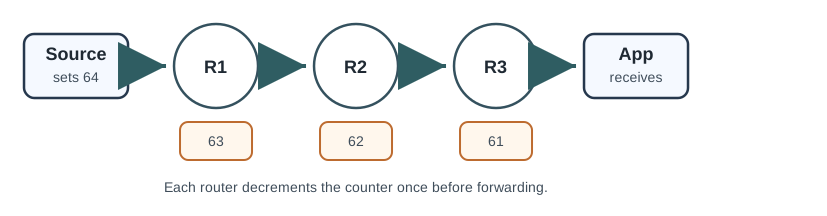
- explain how TTL (IPv4) and hop limit (IPv6) bound how far a packet can travel
- choose hop budgets from measured paths rather than defaults
- connect packet-expiry evidence back to route-state symptoms on forward and return paths
- Explain: A hop limit must stop the loop without hiding why delivery failed.
Major section
Start With the Packet That Loops · Overview: TTL and Hop Limit Bound How Far a Packet Can Travel
A hop limit must stop the loop without hiding why delivery failed.
- Internet Protocol means the shared rules for addressing and forwarding packets across networks.
- IPv4 means Internet Protocol version 4, the older packet format.
- TTL and Hop Limit give that packet a fuse.
Major section
Practitioner: Choose Hop Budgets from Measured Paths and Repair Detours · Under the Hood: Expiry Evidence Connects Packet Symptoms to Route State
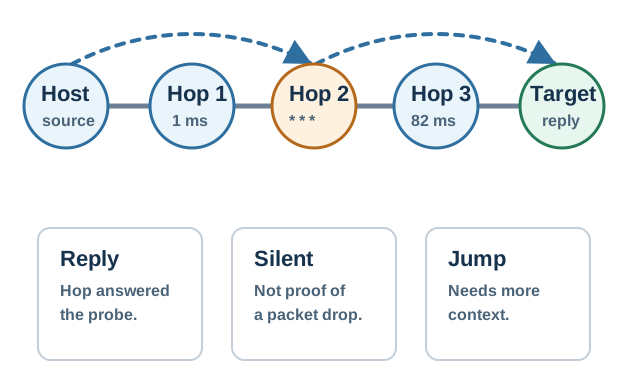
The role of “Hop 1” is to connect them, making visible how traceroute evidence is strongest when paired with route state, return-path checks, and failure observations.
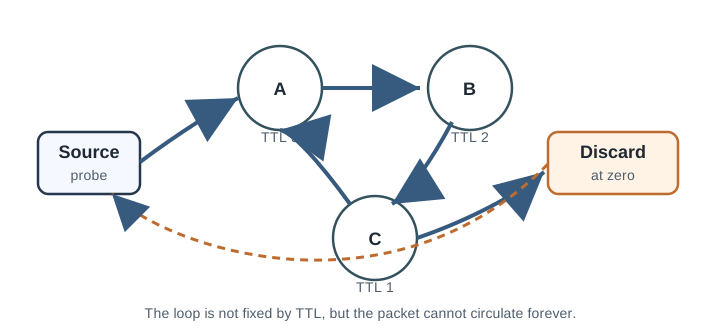
- In Figure: TTL and Hop Limit limit a loop's lifetime, the visual shows routers A, B, and C forward a looping packet until the hop counter reaches zero and the packet is discarded.
Major section
Routing Tables and Route Types · Packet Switching and Failover
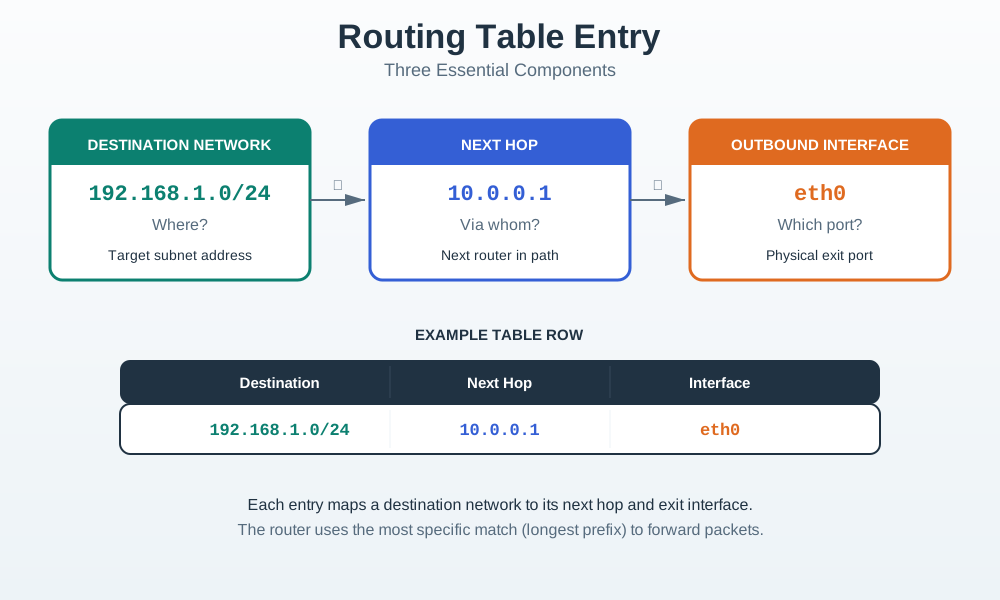
A gateway means the device or service that joins one network or system to another.
- A routing table row is a promise about one kind of traffic.
- The claim in Overview: Routing Tables Are Forwarding Decisions needs more than a named protocol feature.
- Routing tables are local forwarding evidence.
Major section
Summary · Key Takeaway
IPv4 TTL and IPv6 Hop Limit are router-hop counters, not real-time timers.
- Routers decrement the counter during forwarding and discard packets that reach zero.
- TTL and Hop Limit bound loop damage but do not select routes or repair route state.
- Traceroute uses increasing hop limits to collect Time Exceeded responses from routers.
Deck summary
Key takeaways
A hop limit must stop the loop without hiding why delivery failed.
- The role of “Hop 1” is to connect them, making visible how traceroute evidence is strongest when paired with route state, return-path checks, and failure observations.
- A gateway means the device or service that joins one network or system to another.
- IPv4 TTL and IPv6 Hop Limit are router-hop counters, not real-time timers.
Retrieval practice
Recall check 1 of 6

Packet Pete says: answer from memory, then check your reasoning.
Q1A packet starts with IPv6 Hop Limit 16 and crosses 12 routers before reaching a service. What should happen on a stable path?
Show answer
Answer: A TTL and Hop Limit are decremented once per routed hop and expire the packet at zero.
Retrieval practice
Recall check 2 of 6

Packet Pete says: answer from memory, then check your reasoning.
Q2During a field incident, repeated ICMPv6 Time Exceeded messages appear for a sensor flow. Which evidence set best explains the problem?
Show answer
Answer: C Expiry evidence becomes useful when it is connected to hop-limit policy, path measurements, control-plane state, and recent changes.
Retrieval practice
Recall check 3 of 6

Packet Pete says: answer from memory, then check your reasoning.
Q3A gateway route entry lists destination prefix, next hop, outgoing interface, route source, and metric. What does that entry primarily describe?
Show answer
Answer: A A route entry is best reviewed as a local forwarding contract, not as proof of end-to-end delivery.
Retrieval practice
Recall check 4 of 6

Packet Pete says: answer from memory, then check your reasoning.
Q4A router has a broad site route with metric 5 and a more-specific sensor VLAN route with metric 50. The packet destination matches both. Which review statement is strongest?
Show answer
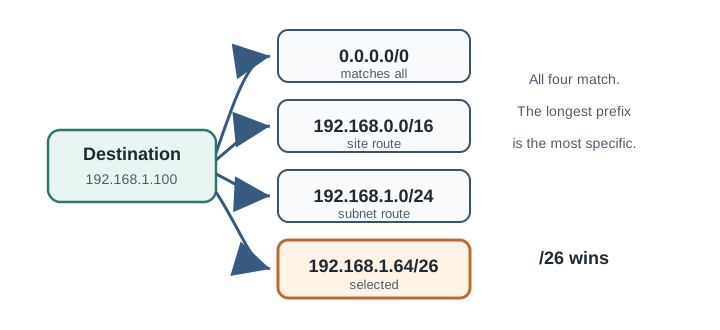
Answer: C Route review should separate prefix specificity, route-source preference, and metric comparison.
Retrieval practice
Recall check 5 of 6

Packet Pete says: answer from memory, then check your reasoning.
Q5A packet-switched IoT path loses its primary next hop and later uses an alternate route. Which statement is most accurate?
Show answer
Answer: B Packet switching forwards each packet according to current state.
Retrieval practice
Recall check 6 of 6

Packet Pete says: answer from memory, then check your reasoning.
Q6An IoT mesh prefers a longer route because the shorter route has unreliable links. What is the strongest under-the-hood interpretation?
Show answer
Answer: A Metrics and convergence are routing contracts.
Print reference
Answers 1 of 2
Answer key.
- A · TTL and Hop Limit are decremented once per routed hop and expire the packet at zero.
- C · Expiry evidence becomes useful when it is connected to hop-limit policy, path measurements, control-plane state, and recent changes.
- A · A route entry is best reviewed as a local forwarding contract, not as proof of end-to-end delivery.
- C · Route review should separate prefix specificity, route-source preference, and metric comparison.
- B · Packet switching forwards each packet according to current state.
Print reference
Answers 2 of 2
Answer key.
- A · Metrics and convergence are routing contracts.