RFID, NFC & UWB · Study deck
RFID System Components
Picture a tagged medicine box crossing a receiving door twice but appearing once in stock.
Radio Remi is your guide for this deck.
After studying this chapter
Learning objectives
You will be able to:
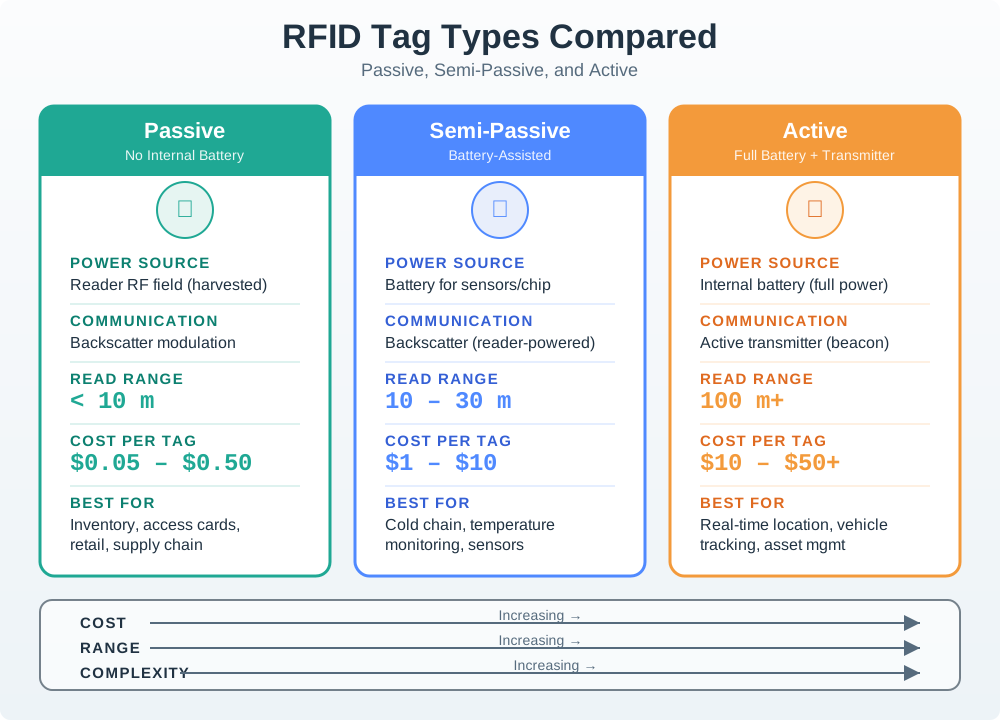
- Distinguish passive, battery-assisted passive, and active RFID tags by power source and communication behavior.
- Explain why tag form factor, attachment, and surrounding material can matter as much as the tag family.
- Select a tag type from workflow evidence instead of generic performance claims.
- Review tag memory and sensor choices without overloading the tag with application state.
Major section
Start With the Story
Radio frequency means the part of the spectrum used to carry the tag signal.
- Radio frequency identification (RFID) means identifying an object from data carried by that tag; it does not by itself prove which business event should be accepted.
- The tag stores an identity, the antenna shapes the field, the reader gathers observations, middleware filters duplicates, and the application decides whether a business event happened.
- This chapter is the component walk-through for that chain.
Major section
Overview: RFID Components Form One Evidence Chain
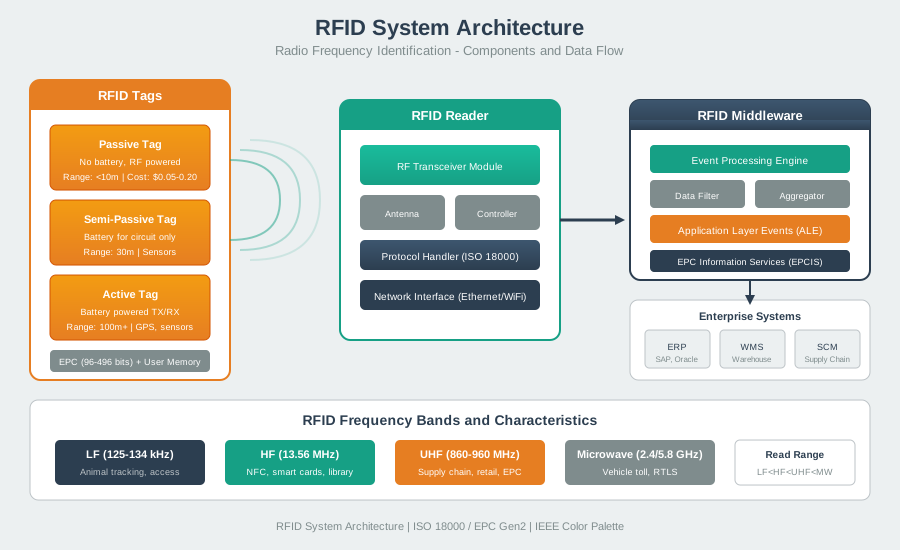
Both: RFID System Architecture and: Event Processing Engine need evidence.
- The beginner mistake is to approve each component in isolation.
- An RFID system is not only a tag and a reader.
Major section
Practitioner: Build the Component Review Record
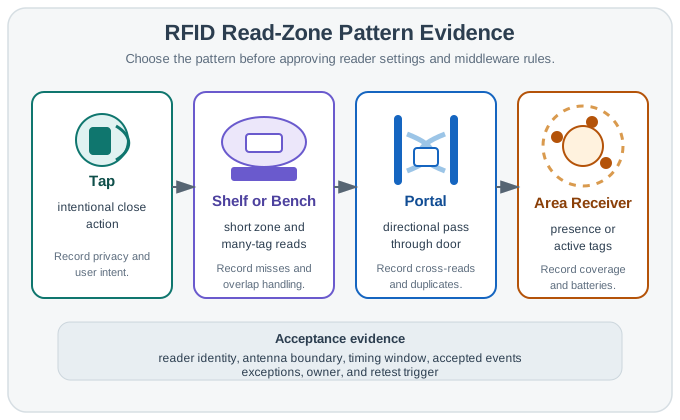
That evidence determines whether the observation should be an intentional tap, a short shelf or cabinet zone, a directional portal, a handheld audit, or wider area presence.
- A tool checkout cabinet differs from a dock-door portal.
- The approval should name the cabinet and tool set, not claim RFID solves every custody workflow.
Major section
Under the Hood: Every Handoff Can Change Meaning
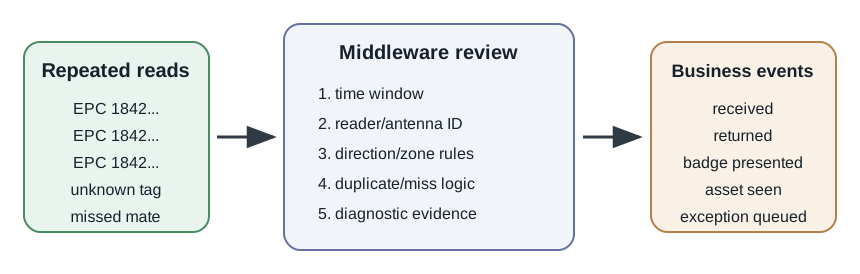
An object is associated with a tag.
- Each handoff proves something, and each handoff can also lose context.
- The safest review keeps raw read evidence separate from business event evidence.
Major section
RFID Tag Type Selection
On a metal cage at the loading door, the same label is missed and workers enter records by hand.
- One pilot does not promise every site or lifetime.
- The tag family was chosen before the real job was drawn.
Deck summary
Key takeaways
Radio frequency means the part of the spectrum used to carry the tag signal.
- Both: RFID System Architecture and: Event Processing Engine need evidence.
- That evidence determines whether the observation should be an intentional tap, a short shelf or cabinet zone, a directional portal, a handheld audit, or wider area presence.
- An object is associated with a tag.
- On a metal cage at the loading door, the same label is missed and workers enter records by hand.
Retrieval practice
Recall check 1 of 6

Radio Remi says: answer from memory, then check your reasoning.
Q1Why is a successful RFID tag read not enough evidence to approve an RFID workflow?
Show answer
Answer: D A single read proves decode only; approval also needs object mapping, tag attachment, read-zone control, filtering, application meaning, support owner, privacy boundary, and retest evidence.
Retrieval practice
Recall check 2 of 6

Radio Remi says: answer from memory, then check your reasoning.
Q2A portal reads most cartons during a pilot, but some reads are duplicated and nearby pallets are also detected. What evidence is missing before approval?
Show answer
Answer: B The gap is a read-zone and event-filter record covering antenna settings, boundary control, duplicate window, missed-read rule, extra-read handling, owner, and retest triggers.
Retrieval practice
Recall check 3 of 6

Radio Remi says: answer from memory, then check your reasoning.
Q3An RFID reader decodes a tag reliably, but the application records the item as returned when it was only near the return desk. Which boundary should be reviewed first?
Show answer
Answer: D A reliable decode but a wrong state points to the reader-to-middleware and middleware-to-application boundary: zone rule, duplicate filter, accepted reader, timing, and event mapping.
Retrieval practice
Recall check 4 of 6

Radio Remi says: answer from memory, then check your reasoning.
Q4An asset must report its presence from anywhere across a yard, not only at a checkpoint gate. Which RFID tag type fits best?
Show answer
Answer: A Reporting presence from anywhere in an area needs an active tag with its own transmitter, not a reader-energized passive tag.
Retrieval practice
Recall check 5 of 6

Radio Remi says: answer from memory, then check your reasoning.
Q5A reusable cold-chain case is read at planned receiving doors, but it also needs to record whether the temperature limit was exceeded during transport. Which tag choice is the best first candidate?
Show answer
Answer: A Battery-assisted passive tags are useful when onboard electronics or sensing must operate between reads, while the communication still happens at planned read points.
Retrieval practice
Recall check 6 of 6

Radio Remi says: answer from memory, then check your reasoning.
Q6A logistics team needs tags that log temperature during transit and can be read at longer range than plain passive tags, but wants to avoid the cost and battery drain of active beacons. Which tag family fits and why?
Show answer
Answer: D Passive and BAP both reply by backscatter; only active tags transmit.
Print reference
Answers 1 of 2
Answer key.
- D · A single read proves decode only; approval also needs object mapping, tag attachment, read-zone control, filtering, application meaning, support owner, privacy boundary, and retest evidence.
- B · The gap is a read-zone and event-filter record covering antenna settings, boundary control, duplicate window, missed-read rule, extra-read handling, owner, and retest triggers.
- D · A reliable decode but a wrong state points to the reader-to-middleware and middleware-to-application boundary: zone rule, duplicate filter, accepted reader, timing, and event mapping.
Print reference
Answers 2 of 2
Answer key.
- A · Reporting presence from anywhere in an area needs an active tag with its own transmitter, not a reader-energized passive tag.
- A · Battery-assisted passive tags are useful when onboard electronics or sensing must operate between reads, while the communication still happens at planned read points.
- D · Passive and BAP both reply by backscatter; only active tags transmit.