Application Protocols · Study deck
Realtime Protocols: WebRTC and WebSocket Operations
Realtime protocols matter when "check again later" is not good enough.
Broker Bex is your guide for this deck.

After studying this chapter
Learning objectives
You will be able to:
- Explain: A reliable notification wakes the application, session signaling negotiates who may join, and protected timed transport carries audio and video while a separate state channel updates the dashboard.
- Explain: The WebRTC side owns media-specific concerns such as codecs and changing network routes; the WebSocket side carries ordered messages such as status and commands.
- Explain: The next stop adds latency, jitter, loss, and synchronization limits; the security stop then tests identity, protected signaling and media, relay, and recording boundaries.
- Explain: Browser support can make WebRTC and WebSocket look interchangeable, but their payload and timing contracts differ.
Major section
WebRTC and WebSocket Are Different
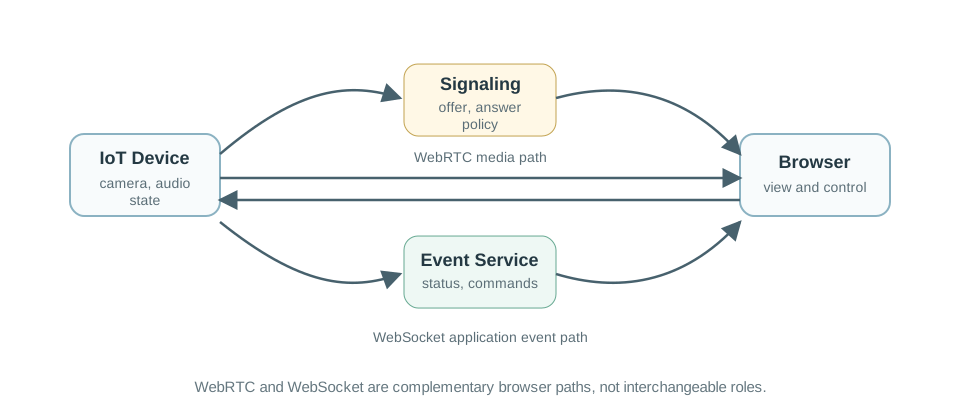
Browser support can make WebRTC and WebSocket look interchangeable, but their payload and timing contracts differ.
- The WebRTC side owns media-specific concerns such as codecs and changing network routes; the WebSocket side carries ordered messages such as status and commands.
Major section
Latency, Jitter, and Loss Review
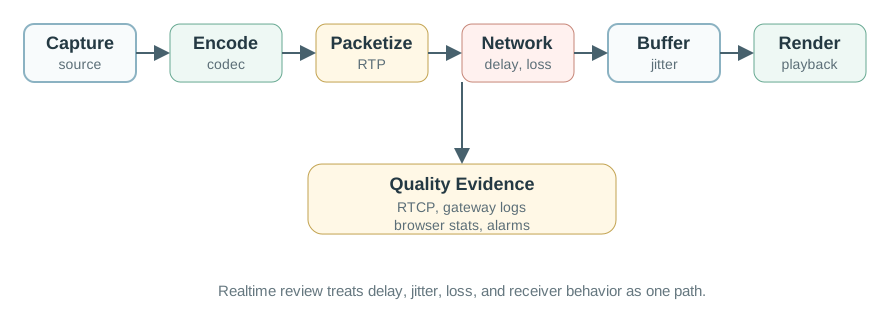
Average latency alone cannot prove a usable media session.
- RTP does not guarantee timely delivery or network quality by itself.
- Those measurements turn “the call felt bad” into thresholds the running design review can test under load and path changes.
- For voice or video media, the packet stack is part of the timing budget.
Major section
Security Review
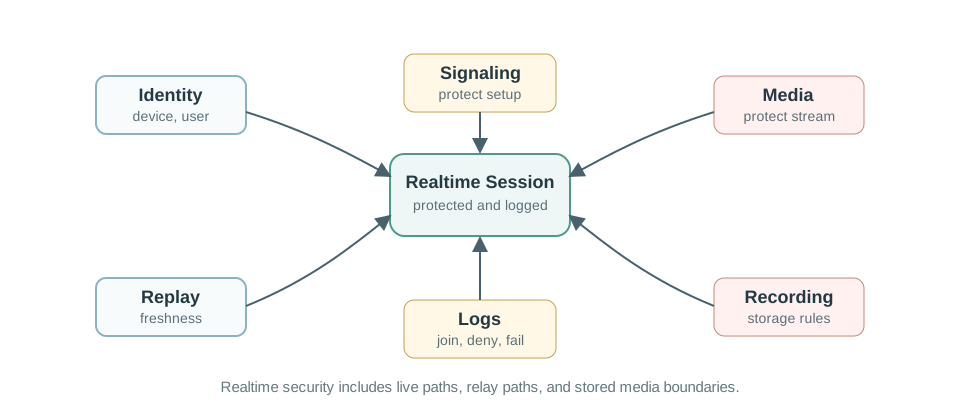
Realtime IoT traffic can carry private audio, video, and operational state.
- Security review must cover signaling, media, identity, authorization, and storage boundaries.
- The result connects the earlier role split to an end-to-end policy rather than a list of protocol acronyms.
Major section
Worked Review: Door Station With Live View
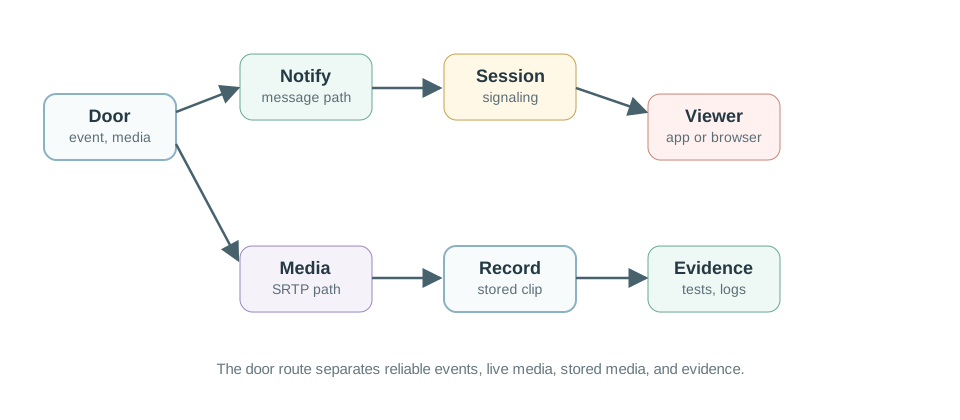
A building door station needs a visitor button, live video, two-way audio, status updates, and recorded clips for review.
- A reliable notification wakes the application, session signaling negotiates who may join, and protected timed transport carries audio and video while a separate state channel updates the dashboard.
Major section
Worked Review: Door Station With Live View (continued)
The evidence records alongside those branches—delivery, latency, loss, authorization, and retention—show how the abstract review becomes an acceptance test.
- A button press or motion event needs reliable delivery to an app, dashboard, or service.
- Timed packets carry live media while the receiver handles jitter, loss, and synchronization.
- Recorded media uses a reliable storage path with its own retention and access rules.
Major section
Learning Route
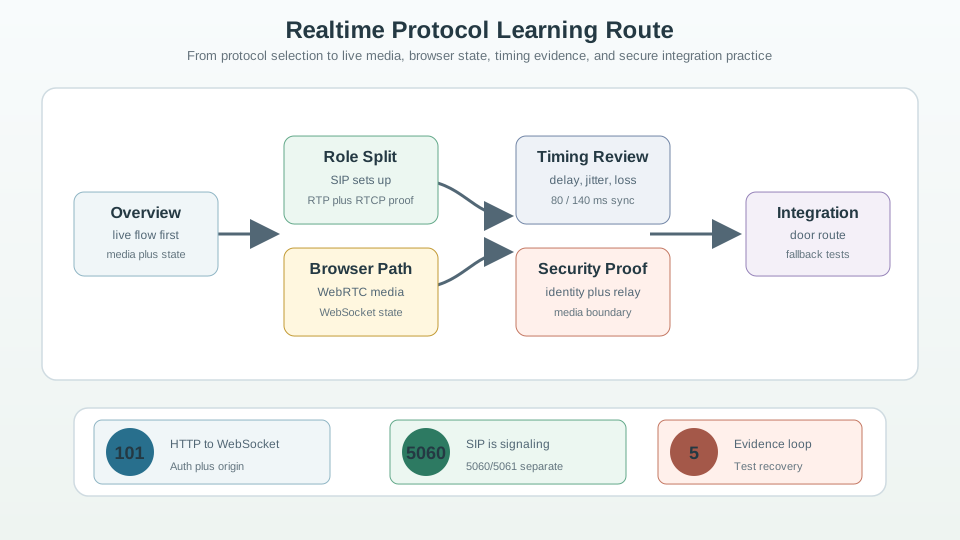
The next stop adds latency, jitter, loss, and synchronization limits; the security stop then tests identity, protected signaling and media, relay, and recording boundaries.
- This route preserves the running narrative from need to proof.
Deck summary
Key takeaways
Browser support can make WebRTC and WebSocket look interchangeable, but their payload and timing contracts differ.
- Average latency alone cannot prove a usable media session.
- Realtime IoT traffic can carry private audio, video, and operational state.
- A building door station needs a visitor button, live video, two-way audio, status updates, and recorded clips for review.
- The evidence records alongside those branches—delivery, latency, loss, authorization, and retention—show how the abstract review becomes an acceptance test.
Retrieval practice
Recall check 1 of 2

Broker Bex says: answer from memory, then check your reasoning.
Q1A door station has already negotiated a live call. Which protocol role carries the timed audio and video packets?
Show answer
Answer: A Separate session signaling, media transport, quality reporting, and storage flows before choosing protocols.
Retrieval practice
Recall check 2 of 2

Broker Bex says: answer from memory, then check your reasoning.
Q2A browser dashboard needs live camera media and a separate stream of device status updates. Which pairing is the strongest starting point?
Show answer
Answer: A Browser-based IoT often combines WebRTC for media with WebSocket or another message path for application state.
Print reference
Answers
Answer key.
- A · Separate session signaling, media transport, quality reporting, and storage flows before choosing protocols.
- A · Browser-based IoT often combines WebRTC for media with WebSocket or another message path for application state.