Cloud, SDN & Production Architectures · Study deck
QoS Core Mechanisms
Picture a fire alarm waiting behind a large software download.
Cloud Clara is your guide for this deck.

After studying this chapter
Learning objectives
You will be able to:
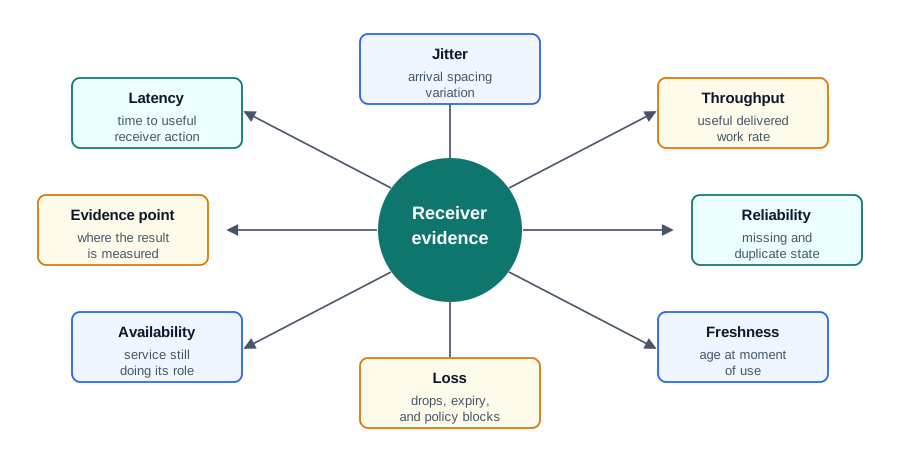
- Explain latency, jitter, throughput, reliability, loss, freshness, and availability as QoS service metrics.
- Choose between strict priority, weighted fair, round-robin, and weighted round-robin scheduling.
- Compare token-bucket shaping with leaky-bucket smoothing for bursty IoT traffic.
- Set per-source and aggregate rate limits that protect shared services without hiding urgent traffic.
Major section
Start With the Consequence
Both messages eventually arrive, but the alarm is no longer useful when it reaches the receiver.
- Latency means the delay from sending to useful receipt.
- Firmware means the software stored on a device.
- This runway does not prove that one policy suits every workload.
- QoS is about consequence before mechanism.
Major section
Service Metrics Before Mechanisms
QoS work starts by naming what must be protected.
- A vague statement such as "make this traffic fast" cannot be verified.
- The next service metrics before mechanisms step needs Receiver as a visual checkpoint.
- Useful when control loops, media streams, or periodic decisions need stable spacing.
- Whether the message is still useful when consumed.
Major section
Traffic Classes
A telemetry message can become protected if it drives an immediate action, while a large diagnostic transfer should usually yield during contention.
- Narrow class for events where late arrival changes the operating consequence.
- Commands that need acknowledgement, expiry, duplicate handling, and a record of whether the receiver could act.
- Measurements that support monitoring.
Major section
Queue Scheduling
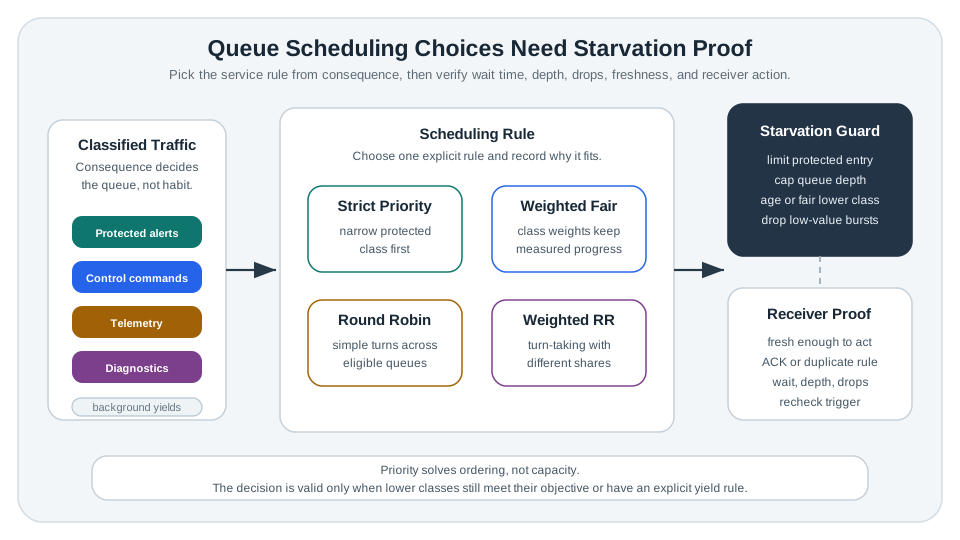
The mechanism is useful only when it matches the service objective.
- Together they explain the: Priority solves ordering, not capacity figure claim: Queue scheduling choices need starvation proof.
- This protects high classes while still giving lower classes measured progress.
- Useful for fairness, but it may under-protect urgent traffic if used alone.
- Cycles through queues with different service shares.
Major section
Queue Scheduling (continued)
A shared access bottleneck can be managed at two levels.
- The first allocator divides capacity among residential gateways; the second divides each gateway's share among applications and devices inside the home.
- One decentralised design gives each gateway a credit balance.
- Its gateway can reserve credits beforehand and spend them during the call, then return to the baseline.
Major section
Queue Scheduling (continued)
Keeping those decisions separate lets the upstream policy protect fairness between households while each household preserves its own priorities for calls, alarms, work, entertainment, updates, and background telemetry.
- During congestion, every home receives a protected baseline and can spend credits for a temporary larger share; credits are replenished or redistributed by an explicit rule.
- For example, four homes sharing an access segment may all stream routine traffic, while one expects a scheduled telehealth call.
- Inside that home, the second-level scheduler still protects the call from a console update.
Major section
Traffic Shaping
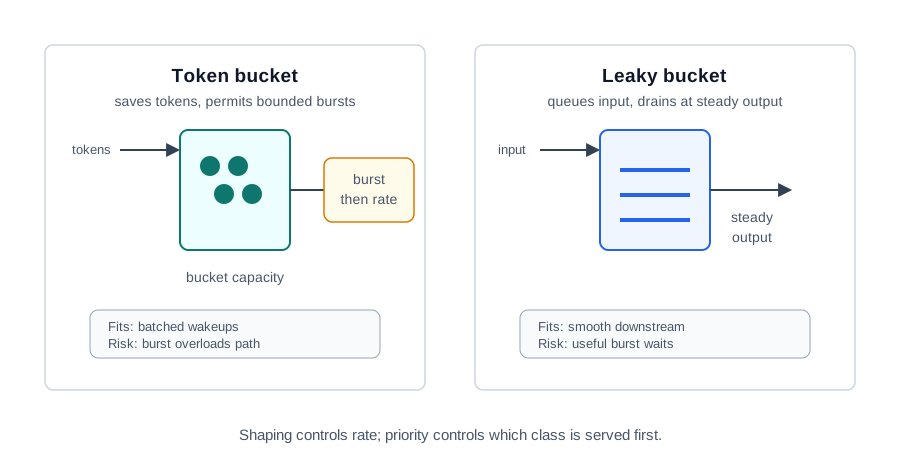
Traffic shaping controls how quickly messages leave a sender, gateway, queue, or service boundary.
- The next traffic shaping step needs Token bucket as a visual checkpoint.
- Tokens accumulate while traffic is quiet.
- A sender can use saved tokens for a controlled burst, then returns to the sustained rate.
- When token bucket fits.
Major section
Rate Limits, Retry, and Expiry
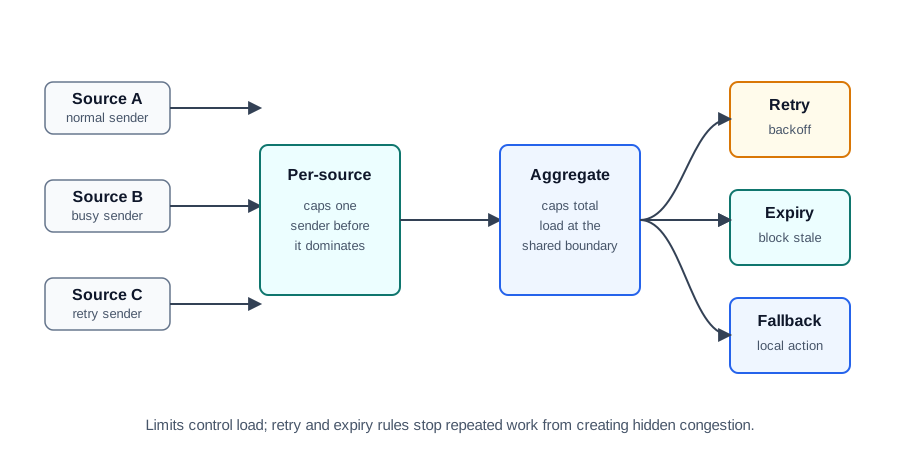
Rate limits protect shared services.
- This local action sequence supports the claim: QoS rate-limit and retry controls.
- Caps one source so a faulty or busy sender cannot consume the whole shared path.
- Caps total load at a shared boundary so many normal senders cannot overwhelm the service together.
- Expired work should be logged and checked.
Major section
Common Pitfalls
If every class gets highest priority, the system has no useful priority.
- A delivered command can still be wrong if it arrives after its useful window.
- Retries without backoff and expiry can create more traffic than the original event.
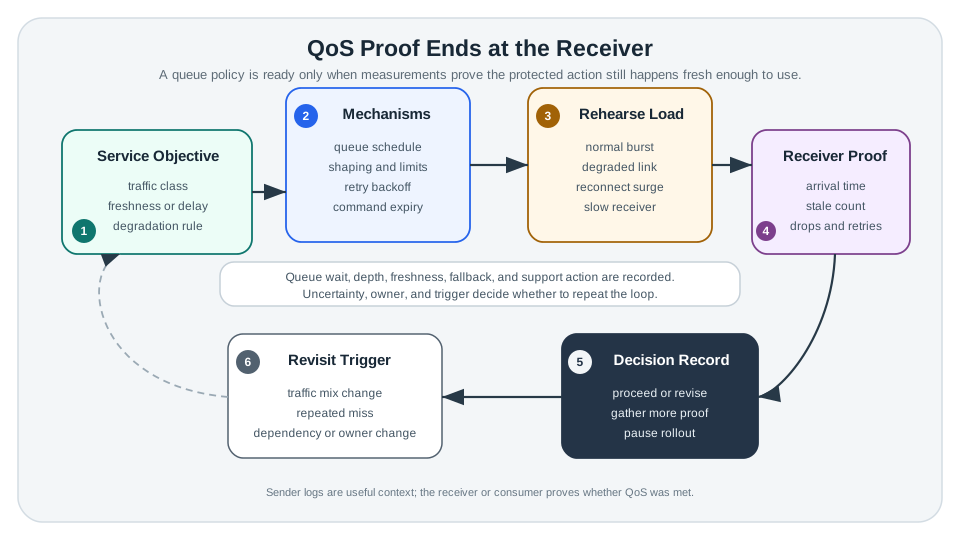
- The receiver or consumer is where the service objective is met or missed.
Major section
QoS Starts With Consequence
QoS is not a request to make every packet faster.
- That observation connects this visual to the chapter's running narrative: use it to justify the next design decision and to record what evidence would confirm it in operation.
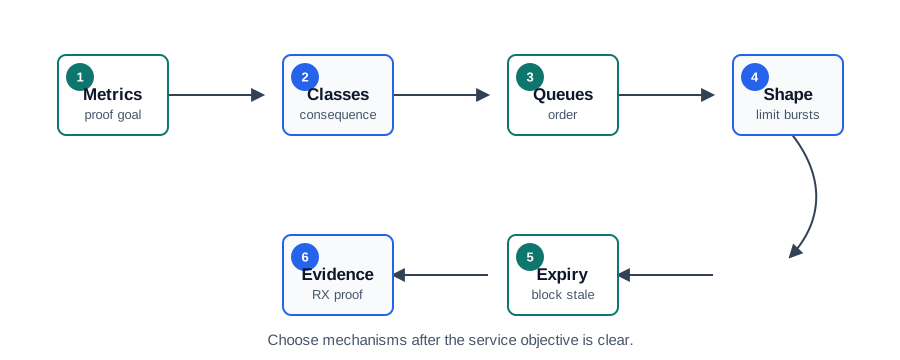
- Small-screen read:: The route is metrics, classes, queues, shaping, expiry, and proof.
- The mechanism should then be narrow.
Major section
QoS Starts With Consequence (continued)
If the objective is unclear, the mechanism choice is only a guess.
- Strict priority belongs to the smallest class that truly changes the operating outcome.
- Fair scheduling belongs to shared classes that must keep moving.
- Shaping and rate limits belong at the boundary where bursty senders can harm other work.
- The last step is receiver proof.
Major section
Receiver Proof Record
Sender logs are useful, but the receiver proves whether the service objective was actually met.
- Also record what lower classes experienced while the protected class was active.
- A narrow alert lane is acceptable when telemetry waits and then drains.
- The proof record should therefore include queue depth, wait time, drops, retry volume, and recovery time by class.
Major section
Priority Can Create Failure
If too many messages enter the protected class, strict priority stops being protection and becomes another congestion source.
- Lower classes starve, telemetry ages, diagnostics disappear, and operators lose the evidence needed to understand the incident.
- Retries can make the same failure worse.
- QoS therefore needs retry budgets, backoff, expiry, shaping, and proof that queues drain after the event.
Major section
Priority Can Create Failure (continued)
A fleet that retries immediately after a gateway outage can generate more traffic during recovery than it generated before the outage.
- Shaping and scheduling fail in different ways.
- A leaky bucket smooths output, but it can delay a burst long enough to make a command stale.
- These settings need measured receiver outcomes, not only configuration review.
Major section
Priority Can Create Failure (continued)
Weighted fair scheduling gives every class progress, but a poor weight choice can still miss a protected service target.
- MQTT QoS, TCP retransmission, broker queues, gateway buffers, and application retries can all be correct locally while creating bad end-to-end behavior together.
- The under-the-hood review should follow one message class through every queue and ask where delay, duplication, expiry, and fallback are decided.
- Capacity accounting keeps the policy honest.
Deck summary
Key takeaways
Both messages eventually arrive, but the alarm is no longer useful when it reaches the receiver.
- QoS work starts by naming what must be protected.
- A telemetry message can become protected if it drives an immediate action, while a large diagnostic transfer should usually yield during contention.
- The mechanism is useful only when it matches the service objective.
- A shared access bottleneck can be managed at two levels.
Retrieval practice
Recall check 1 of 3

Cloud Clara says: answer from memory, then check your reasoning.
Q1A gateway carries safety alarms, routine telemetry, and maintenance downloads on the same uplink. The alarm path looks fast in one dashboard, but there is no baseline for queue delay, drop behavior, receiver timing, or fallback under congestion. What should the QoS readiness check compare first?
Show answer
Answer: A A QoS mechanism is ready only when the team can connect the protected traffic class to baseline delay and loss, queue or priority behavior, receiver timing, congestion behavior, rollback or fallback action, ownership, and a retest trigger.
Retrieval practice
Recall check 2 of 3

Cloud Clara says: answer from memory, then check your reasoning.
Q2A gateway shows that protected alerts leave the sender quickly, but receivers still act on some commands after they are stale. Which QoS mechanism should be checked first?
Show answer
Answer: A QoS mechanisms must protect useful receiver behavior, not only fast sender behavior.
Retrieval practice
Recall check 3 of 3

Cloud Clara says: answer from memory, then check your reasoning.
Q3A gateway marks alerts, control commands, telemetry retries, and diagnostics as high priority during a recovery event. Lower queues stop draining and some commands arrive stale. Which QoS correction is most defensible?
Show answer
Answer: A QoS priority must stay narrow and be paired with retry backoff, expiry, shaping, and receiver proof; otherwise priority and retries can create the congestion they were meant to control.
Print reference
Answers
Answer key.
- A · A QoS mechanism is ready only when the team can connect the protected traffic class to baseline delay and loss, queue or priority behavior, receiver timing, congestion behavior, rollback or fallback action, ownership, and a retest trigger.
- A · QoS mechanisms must protect useful receiver behavior, not only fast sender behavior.
- A · QoS priority must stay narrow and be paired with retry backoff, expiry, shaping, and receiver proof; otherwise priority and retries can create the congestion they were meant to control.