Prototyping · Study deck
Robotics and Agricultural Kits
Robotics kits and agricultural kits both shorten the path to evidence, but they answer different questions.
Voltage Vera is your guide for this deck.
After studying this chapter
Learning objectives
You will be able to:
- Match robotics and agricultural kit roles to the evidence they can produce.
- Separate motion-control evidence from outdoor field evidence.
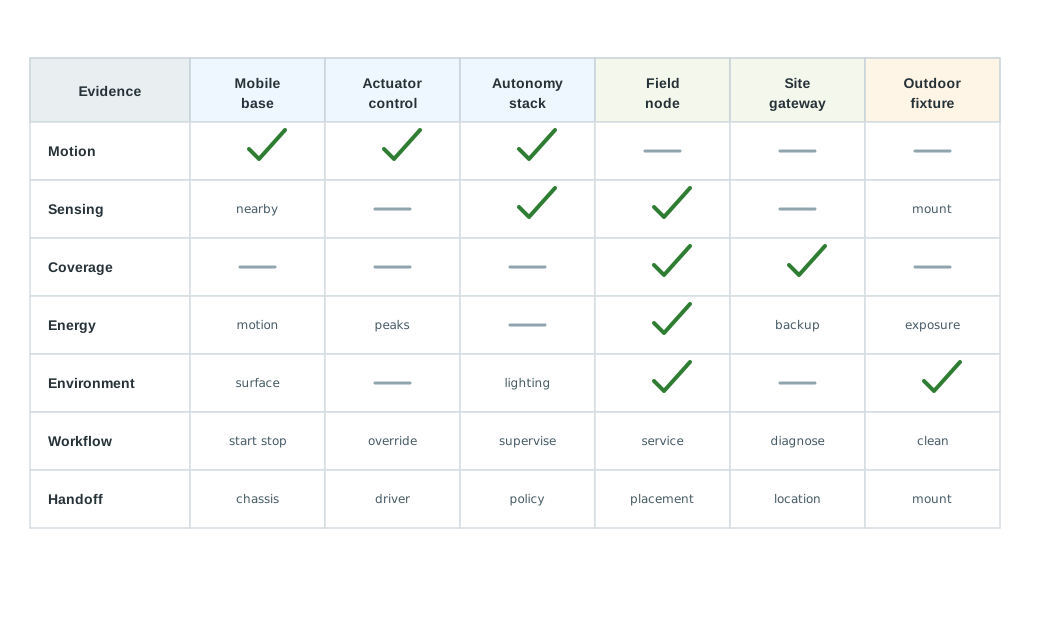
- Build a review matrix for actuation, sensing, coverage, energy, environment, workflow, and handoff risk.
- Plan a staged prototype that combines mobile and field evidence without hiding failures.
Major section
Start With the Story
It drives well on a lab floor and shows a neat chart indoors.
- The farm owner still needs proof that it can stop on wet ground, measure in real soil, survive weather, and recover when power or contact is lost.
- For motion, record route, slope, surface, load, speed, stop distance, obstacle case, and safe halt.
- A kit shortens learning time; it does not prove the final machine, field life, radio reach, or food-production decision.
Major section
Motion and Field Kit Risks
A robotics kit should make movement reviewable: drive geometry, traction, steering, braking, payload, obstacle sensing, localization, path following, emergency stop, and recovery.
- A smooth demo on a lab floor does not prove the route, surface, load, or safety state the product will meet later.
- One clean indoor drive cannot prove field survival or reliable reporting.
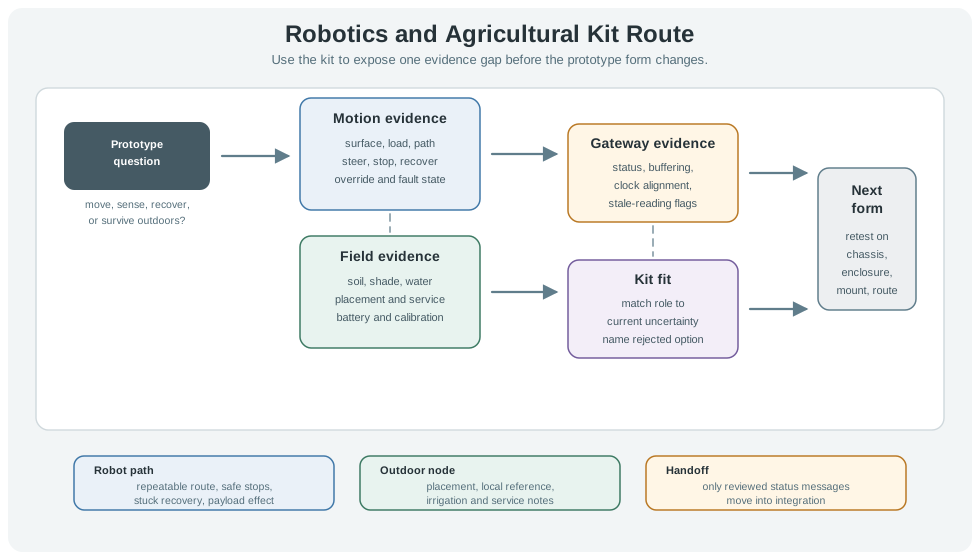
- the Robotics and agricultural kits answer different evidence questions: motion behavior and recovery for the robot path, field placement and service context for the outdoor node, gateway status and stale-reading evidence, then kit fit before the physical form changes diagram gives motion, field sensing, and gateway behavior separate tests.
- A TurtleBot-class scout first needs a representative route that exposes obstacle stops, payload effects, repeatability, and stuck recovery.
Major section
Motion and Field Kit Risks (continued)
A robotics kit result should say which surface, payload, battery, sensor height, and override condition was tested.
- A clean bench reading does not prove a node can make useful decisions in a bed, field, greenhouse, barn, or orchard.
- The same greenhouse example can need a TurtleBot-class mobile base for aisle movement, a separate LoRaWAN or Wi-Fi field node for bed readings, and a gateway fixture for buffering and clock alignment.
- An agricultural kit result should say which soil depth, shade condition, irrigation exposure, enclosure state, and service interval was tested.
Major section
Name Stack, Sensor, Field Risk
A practical review usually needs a small evidence table before a large dashboard.
- For a robot, record commanded velocity, measured wheel speed, motor current, encoder count, IMU yaw drift, obstacle range, localization confidence, controller state, stop reason, and operator override.
- Gazebo, Isaac Sim, or a ROS 2 Nav2 test can expose path-planning and fault-state assumptions before hardware is risked, but it cannot prove traction, ingress, solar recovery, crop occlusion, or maintenance access.
- A useful practitioner record says which results came from simulation, which came from bench motion, which came from field placement, and which must be repeated after the prototype form changes.
Major section
Outdoor Robots Fail at Edges
The kit result is useful only when the next prototype knows which motion, field, coverage, power, and workflow tests must repeat after the physical form changes.
- The hard failures are usually at the boundary between mechanical motion, sensing, power, connectivity, and human supervision.
- Control boundary: separate command source, actuator state, limit switch, watchdog, emergency stop, manual override, safe stop, and restart path before adding autonomy.
- Many failures are state-contract failures rather than single component failures.
Major section
Kit Roles
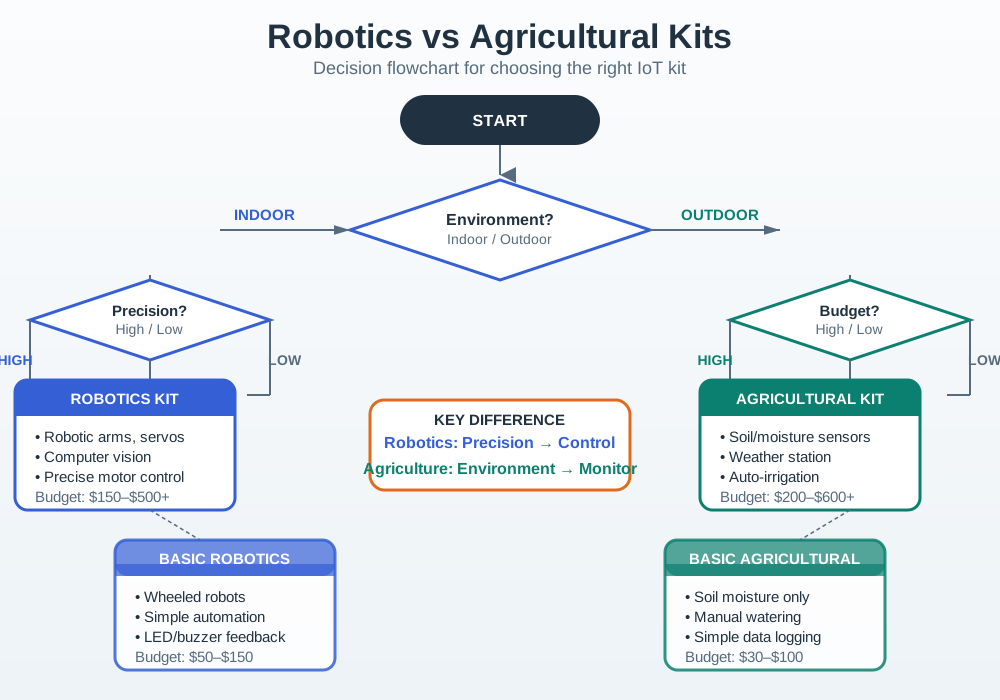
The flowchart separates indoor and outdoor work before considering precision and budget.
- A robotics kit can expose motion control, obstacle response, and repeatable route behavior; an agricultural kit can expose sensing and survival in soil, water, and weather.
- Those branches do not mean every outdoor task needs the same kit.
- the Robotics vs Agricultural Kits diagram starts kit choice with the environment and precision of the task.
- Their status is only comparable after a gateway record joins both under the same trial conditions.
Major section
Greenhouse and Bed Monitor
The team records route repeatability, obstacle detection, safe stops, stuck conditions, and recovery actions.
- A team is prototyping a greenhouse system.
- A small mobile scout should inspect rows and report blocked aisles, while fixed bed nodes should report soil and air conditions.
- The field sensing nodes are placed in several beds.
Major section
Greenhouse and Bed Monitor (continued)
The mobile base kit is tested on the greenhouse floor with representative turns, aisle widths, slopes, wet spots, payload, and stop conditions.
- The team records placement depth, shade, irrigation exposure, local reference readings, battery state, message gaps, and maintenance notes.
- The site gateway kit is placed where a real gateway might be installed.
- The team records message buffering, clock alignment, stale-reading warnings, restart recovery, and local status indicators.
Major section
Integration Boundary
The Robotics rig bounds the control loop, safe state, and tested load; the: Agricultural node records placement, seasonal behavior, and maintenance recovery.
- Bounded traces, interfaces, and stated placement conditions may cross; the chassis, load, terrain, seasonal exposure, network, safe stop, and field-service workflow must be re-tested in the deployed form.
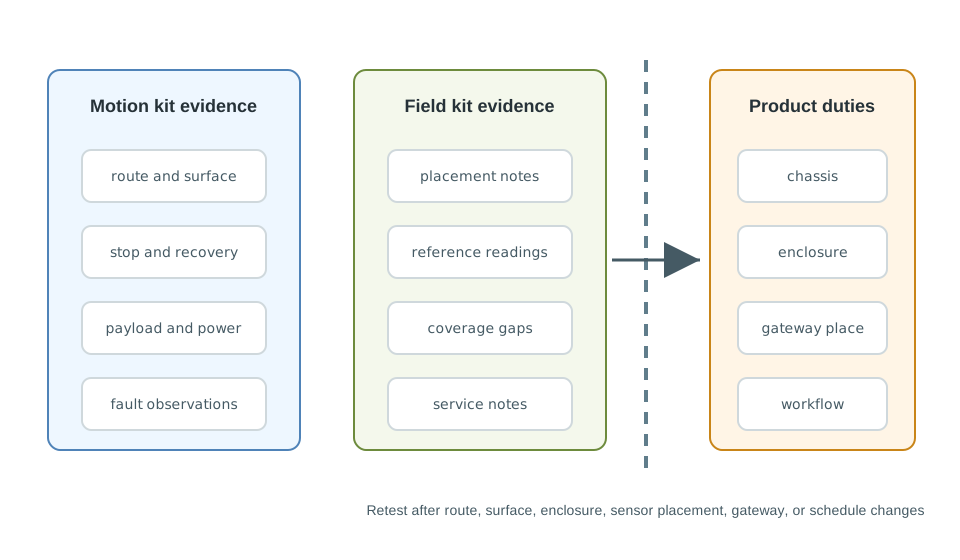
- the Motion-rig and field-node evidence can transfer into the next prototype, but the deployed robot or agricultural system must re-prove context-dependent responsibilities diagram gives the motion rig and field node distinct proof duties.
Major section
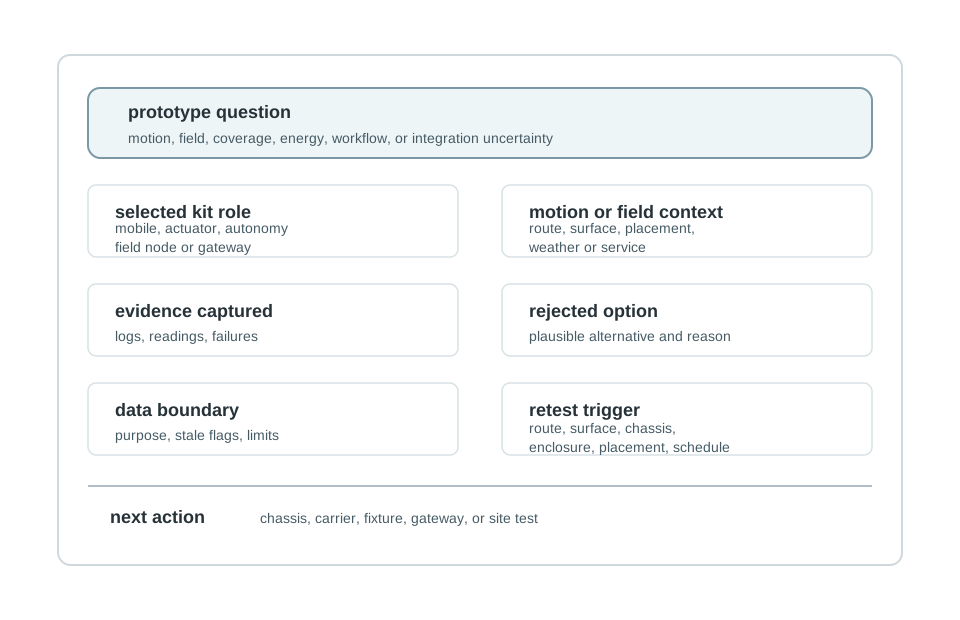
Kit Review Record
Leave a record that another reviewer can challenge.
- A good record explains what the kit proved, what was rejected, what remains unproven, and when evidence must be repeated.
- The mobile-base entry records payload, obstacle stops, route repeatability, and stuck recovery on the greenhouse floor.
- The bed-monitor entry needs sensor placement, calibration, and the conditions around each reading.
Major section
Common Failure Patterns
Demo-first robot: The robot moves in a clear room but has no evidence for the real surface, route, payload, stop condition, or recovery action.
- Bench-only field node: The sensor reads correctly indoors but has no placement, reference, weather, coverage, or service evidence.
- Unreviewed calibration: The system reacts to a reading without a local reference or context note explaining what the reading means.
- No rejected option: The team records the chosen kit but not the alternative that was considered and rejected.
- No change condition: The team changes route, chassis, enclosure, sensor depth, gateway location, or schedule without repeating the evidence test.
Deck summary
Key takeaways
It drives well on a lab floor and shows a neat chart indoors.
- A robotics kit should make movement reviewable: drive geometry, traction, steering, braking, payload, obstacle sensing, localization, path following, emergency stop, and recovery.
- A robotics kit result should say which surface, payload, battery, sensor height, and override condition was tested.
- A practical review usually needs a small evidence table before a large dashboard.
- The kit result is useful only when the next prototype knows which motion, field, coverage, power, and workflow tests must repeat after the physical form changes.
Retrieval practice
Recall check 1 of 3

Voltage Vera says: answer from memory, then check your reasoning.
Q1Per this chapter's discussion of state-contract failures, why can a robot's 'healthy navigation' status and a field node's 'valid soil reading' status both be individually true while the combined system misleads a supervisor?
Show answer
Answer: D see answers page
Retrieval practice
Recall check 2 of 3
Voltage Vera says: answer from memory, then check your reasoning.
Q2Per this chapter's kit-role checklist, which role is 'best for checking enclosure, pole, stake, cable, sensor depth, solar exposure, cleaning, and service access'?
Show answer
Answer: D see answers page
Retrieval practice
Recall check 3 of 3
Voltage Vera says: answer from memory, then check your reasoning.
Q3A team wants a mobile greenhouse scout and fixed bed sensors. What is the strongest first prototype strategy?
Show answer
Answer: A Robotics and agricultural evidence should be staged.
Print reference
Answers 1 of 2
Answer key.
- D · The chapter states: 'A robot may publish a healthy navigation state while the field gateway is buffering stale bed readings; a field node may publish a valid soil value while its calibration reference is outdated; a dashboard may show the latest robot position without showing that manual override is active.' It recommends defining explicit joint states (moving, blocked, safe_stop, offline_buffering, reading_stale, needs_service, override_active) before subsystems are joined, because per-subsystem health alone can hide the combined-system risk.
Print reference
Answers 2 of 2
Answer key.
- D · The chapter's kit-role checklist lists 'Outdoor fixture kit' as: 'Best for checking enclosure, pole, stake, cable, sensor depth, solar exposure, cleaning, and service access.' It is distinct from the field sensing node, which tests the sensing itself rather than the mounting hardware.
- A · Robotics and agricultural evidence should be staged.