UX Design · Study deck

Device Power: Sources and Boundaries

the primary power source and any backup source. what is inside the measured device boundary.

UX Uma is your guide for this deck.

power-managementduty-cyclebattery-readiness
UX Uma, the module guide, in a scene from this chapter.
iotclass.org

After studying this chapter

Learning objectives

You will be able to:

  • Measure power source and boundary from current, time, and transition evidence.
  • Validate worked review: interactive device with a concrete scenario and pass criteria.
  • measure power source and boundary from current, time, and transition evidence
  • 'validate worked review: interactive device with a concrete scenario and pass criteria'
iotclass.org

Major section

Power Source And Boundary
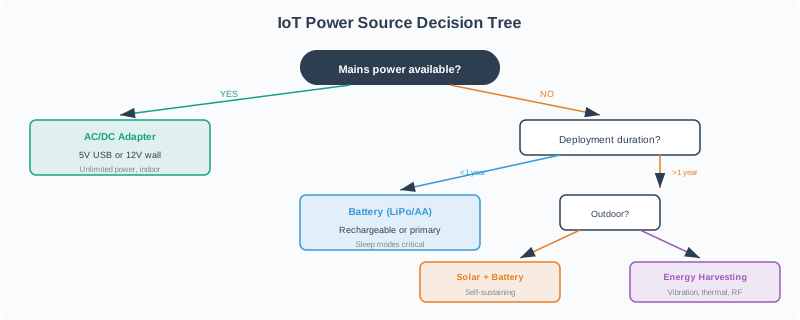
A device may look battery powered but depend on a gateway, phone, charger, solar panel, vehicle bus, or maintenance visit.

  • If the power boundary is unclear, battery-life claims and service claims will also be unclear.
  • Energy harvesting is not only solar.
IoT power source decision tree for choosing AC/DC adapter, rechargeable or primary battery, solar plus battery, or energy harvesting.
iotclass.org

Major section

Measured Power States

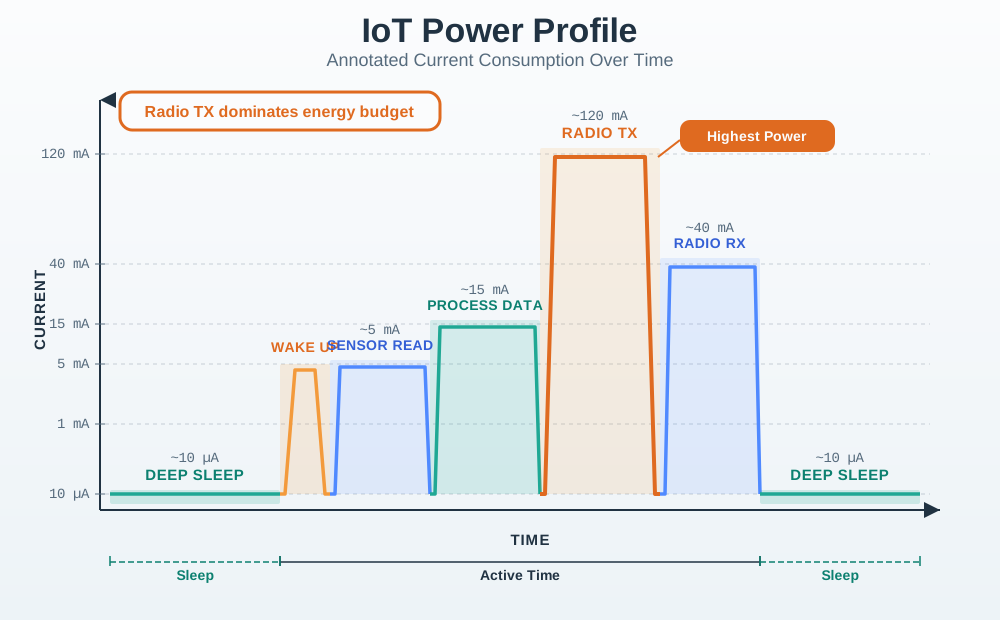
A power budget should be based on measured states, not only datasheet values.

  • Transmit and receive: connection setup, payload send, acknowledgement, retry, and disconnect.
  • The same board can draw different current depending on firmware build, pull-ups, regulator choice, sensor mode, antenna placement, debug headers, and sleep configuration.
Annotated IoT power profile: current consumption over time across deep sleep (about 10 microamps), wake-up, sensor read (about 5 mA), processing (about 15 mA), and radio transmission (about 120 mA).
iotclass.org

Major section

Duty Cycle Review

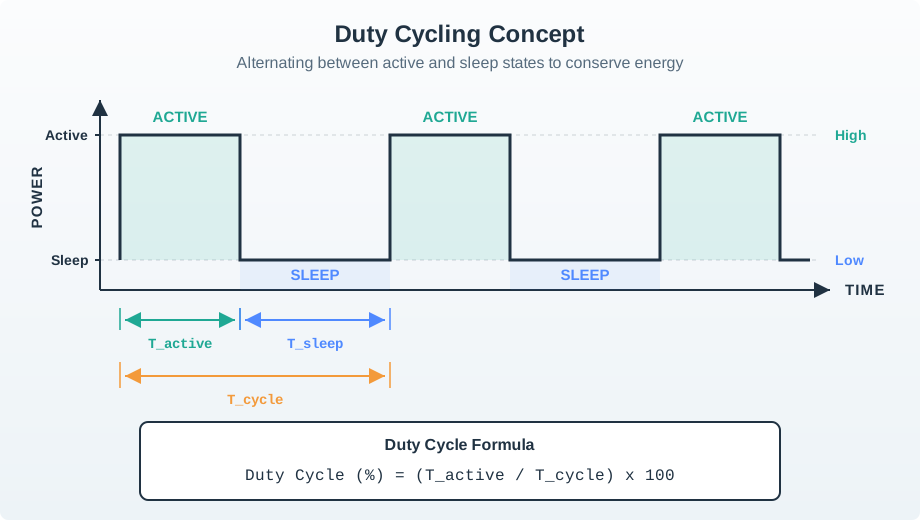
Duty cycle is the schedule of how long the device spends in each state.

  • The average current is a time-weighted result.
  • A short high-power state may matter less than a long idle state, while a small sleep leak may dominate a device that sleeps almost all the time.
Duty cycling concept showing active and sleep intervals, active time, sleep time, cycle time, and duty-cycle formula.
iotclass.org

Major section

Battery, Charging, And Service

Battery and charging decisions are also UX and maintenance decisions.

  • A device that dies silently creates more support burden than a device that warns early, preserves core function, and records why it degraded.
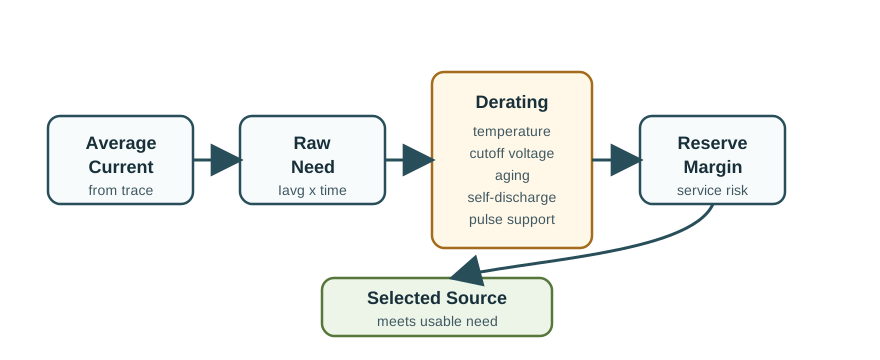
  • For battery, charging, and service, aging and: Reserve make the next battery, charging, and service decision depend on visible evidence.
Usable energy budget from average current through raw need, derating, reserve margin, and selected source.
iotclass.org

Major section

Power Readiness Record

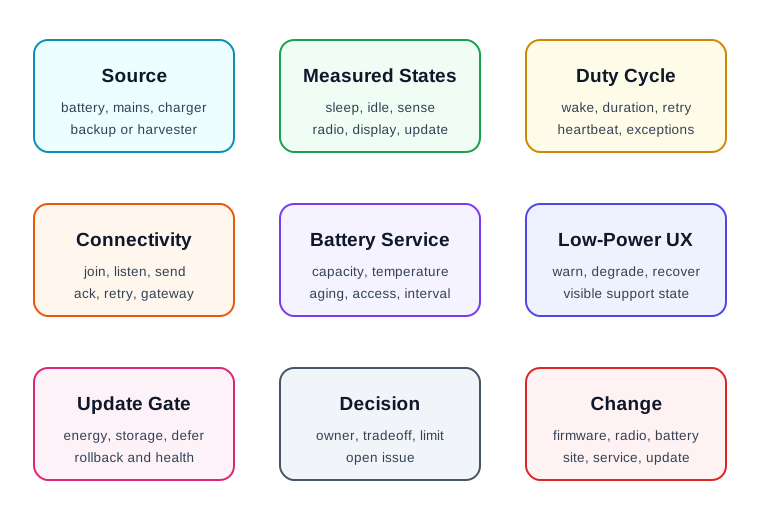
Measured States constrains the decision.

  • Measured States so power readiness record remains explicit.
  • Low-power UX: warning, degraded function, user control, support state, and recovery.
  • Decision and change condition: accepted tradeoff, owner, known limit, open issue, and condition requiring another review.
  • The record should remain short enough to update when firmware, schedule, radio, enclosure, or deployment changes.
Connected device power management readiness record.
iotclass.org

Major section

Worked Review: Interactive Device

An interactive connected device has a display, local controls, and an actuator.

  • User interaction frequency and time spent in high-power states.
  • Charging or replacement workflow that users can complete.
  • Low-power behavior that preserves the most important function.
  • Change condition: Rerun the review when display behavior, actuator load, notification policy, charging hardware, user workflow, firmware update policy, or low-power threshold changes.

Try it: Worked Review: Interactive Device in the chapter

iotclass.org

Major section

Common Findings

Battery life is claimed from nominal capacity instead of measured state evidence.

  • Sleep current was not measured with the final firmware and peripherals.
  • Low-battery behavior is not visible to users or support staff.
  • OTA updates can start without enough energy or a rollback path.
  • Service interval depends on access, tools, or user behavior that is not recorded.
iotclass.org

Major section

Summary

Connected-device power management is an evidence problem.

  • The review ties measured power states, duty cycle, connectivity energy, battery or charging assumptions, service access, low-power UX, and update gates to the claimed service interval.
  • The strongest power records avoid generic claims.
  • They show what was measured, what was assumed, what users or technicians must do, what happens at low power, who owns the tradeoff, and what change requires another review.
iotclass.org

Deck summary

Key takeaways

A device may look battery powered but depend on a gateway, phone, charger, solar panel, vehicle bus, or maintenance visit.

  • A power budget should be based on measured states, not only datasheet values.
  • Duty cycle is the schedule of how long the device spends in each state.
  • Battery and charging decisions are also UX and maintenance decisions.
  • Measured States constrains the decision.
iotclass.org

Retrieval practice

Recall check

UX Uma says: answer from memory, then check your reasoning.

Q1A battery endpoint claims a two-year service interval, but the record only lists nominal battery capacity and a datasheet sleep current. What is the strongest review response?

APause approval until measured state current, duty cycle, derating, service access, and change conditions are recorded
BApprove the claim because nominal capacity and a datasheet sleep-current value are enough for a service-life estimate
CReject all battery-powered designs because power estimates cannot be reviewed, measured, or updated after deployment
DCheck only radio transmit current and postpone sleep leakage, sensing load, retries, regulator loss, and update energy
Show answer

Answer: A Power management review accepts bounded evidence, not nominal battery claims or generic protocol assumptions.

iotclass.org

Print reference

Answers

Answer key.

  1. A · Power management review accepts bounded evidence, not nominal battery claims or generic protocol assumptions.
iotclass.org