Control, Gateways & Networked Systems · Study deck

Open-Loop and Closed-Loop Systems

Picture a heater that runs for ten minutes even after the room becomes warm.

Gateway Gus is your guide for this deck.

openclosedloop
Gateway Gus, the module guide, in a scene from this chapter.
iotclass.org

After studying this chapter

Learning objectives

You will be able to:

  • Explain the practical difference between command-only control and feedback control.
  • Identify when an open-loop design is acceptable for an IoT system.
  • Identify when a closed-loop design is required because the system must correct error.
  • Describe how disturbances, sensor quality, actuator limits, and placement affect loop design.
iotclass.org

Major section

Start With the Missing Measurement

The difference between open-loop and closed-loop control is easiest to see when a measurement disappears.

  • A timed heater can run for ten minutes whether the room is warm or cold; a closed-loop heater checks the temperature and changes course.
  • IoT teams make this choice constantly when deciding whether a command should trust a schedule, a model, or live feedback.
  • If you cannot measure it in time, the control shape must acknowledge that gap.
iotclass.org

Major section

The Two Control Shapes

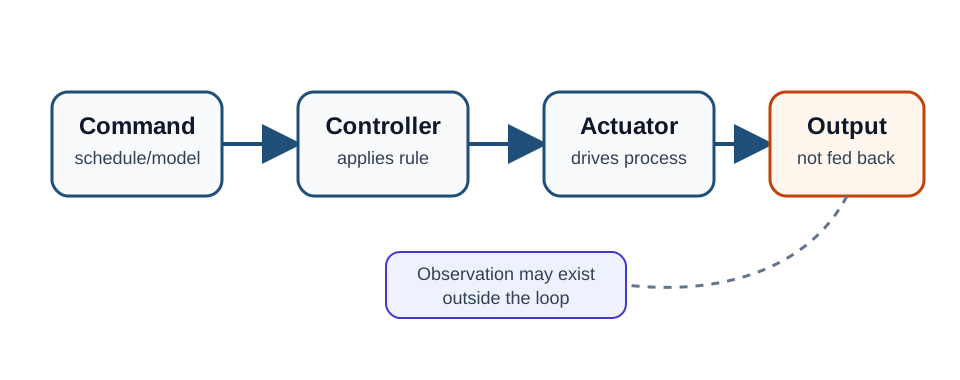
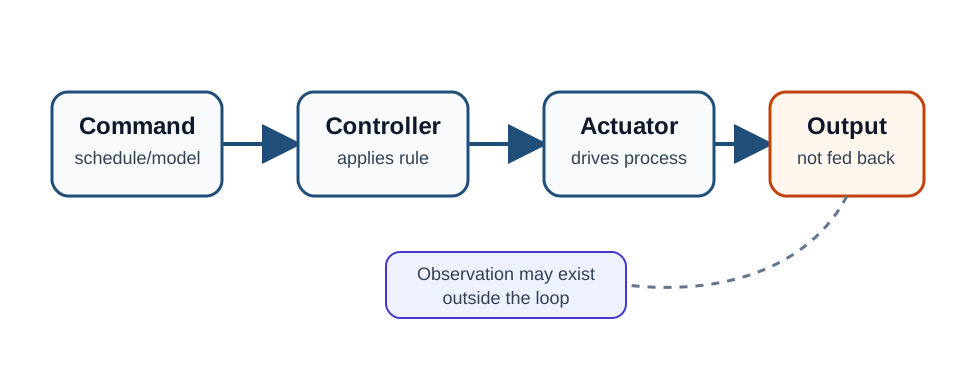
The observer can inspect or log the result, but there is no arrow returning the measured output to the controller.

  • That absent return path is the meaning of open loop: the next command depends on the schedule, setting, or model rather than on measured error.
Open-loop command path
iotclass.org

Major section

How to Choose

The choice is not "simple versus smart." It is a fit decision based on observability, consequence, timing, and expected variation.

  • The process is repeatable over the operating range.
  • The output does not need tight correction.
  • The actuator effect is easy to predict.
  • Failure is visible before it becomes severe.

Key terms

Feedback
Feedback is available only during some operating states.
iotclass.org

Major section

How to Choose (continued)

A local loop must keep the process stable while a remote layer adjusts targets.

  • A slower inspection path is enough.
  • The process variable must be held near a setpoint.
  • Disturbances change faster than manual response can handle.
  • The actuator response changes with load or wear.
iotclass.org

Major section

Disturbances and Observability

A disturbance is any influence that changes the process output without being the controller command.

  • Wind, load, supply variation, occupancy, friction, and material changes are common examples.
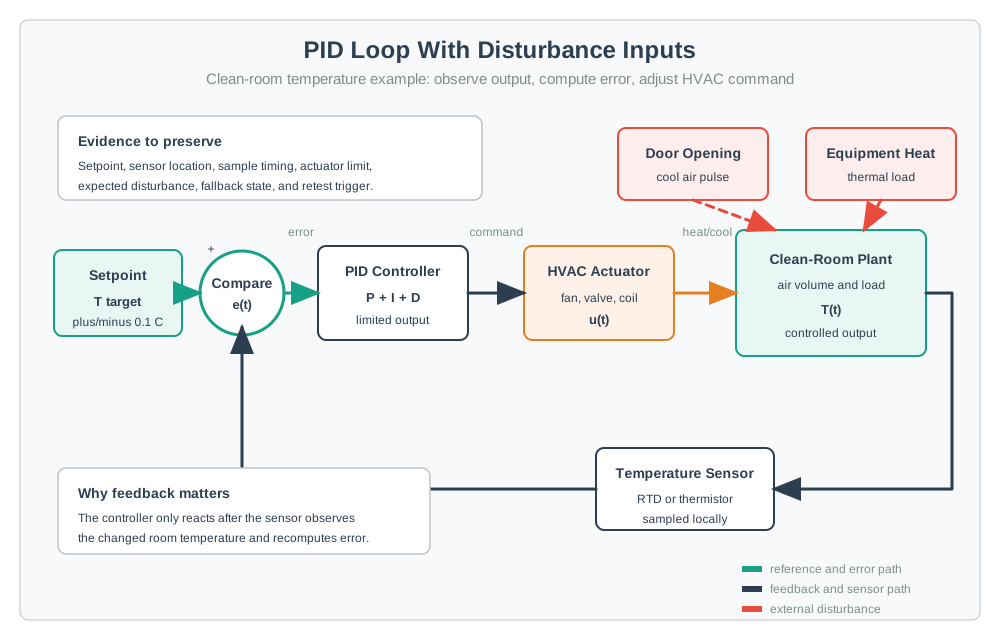
  • Door opening and equipment heat enter at the plant rather than through the command path; their effect becomes correctable only after the temperature measurement changes.
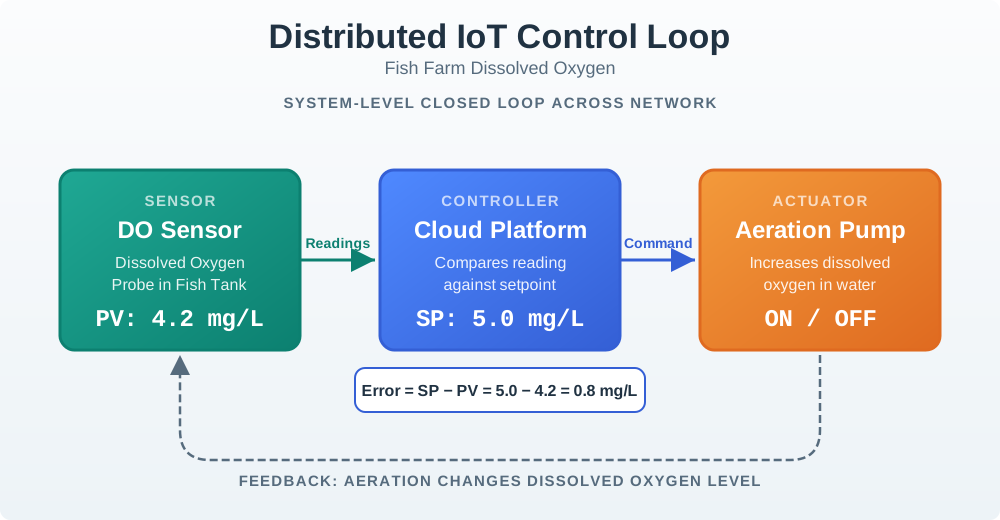
A clean-room PID loop compares the temperature setpoint with measured temperature, computes error, drives an HVAC actuator, observes the plant output, and compensates for door-opening and equipment-heat disturbances.
iotclass.org

Major section

Placement in IoT Systems

Feedback can be local, distributed, or supervisory.

  • The correct placement depends on how quickly the process needs correction and whether the system can continue when the network is unavailable.
  • Sensor, controller, and actuator are near the process.
  • Measurement and actuation are separated across devices.
  • Useful when one node observes what another node affects.
iotclass.org

Major section

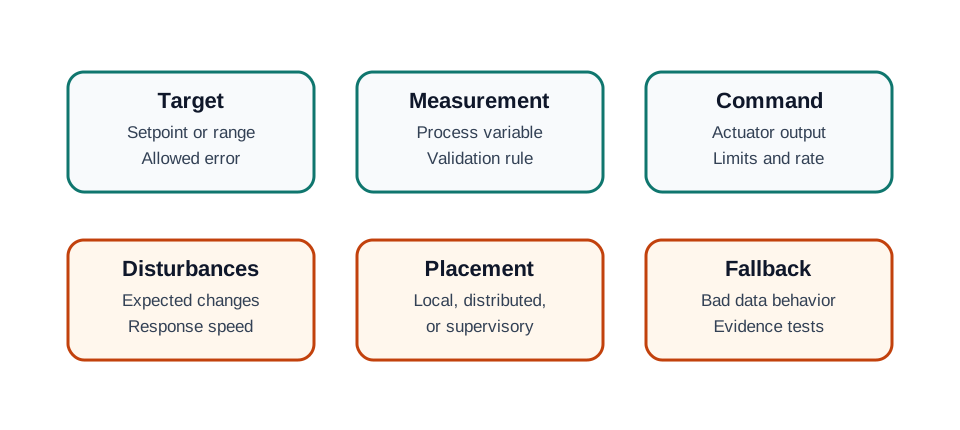
Control Decision Record

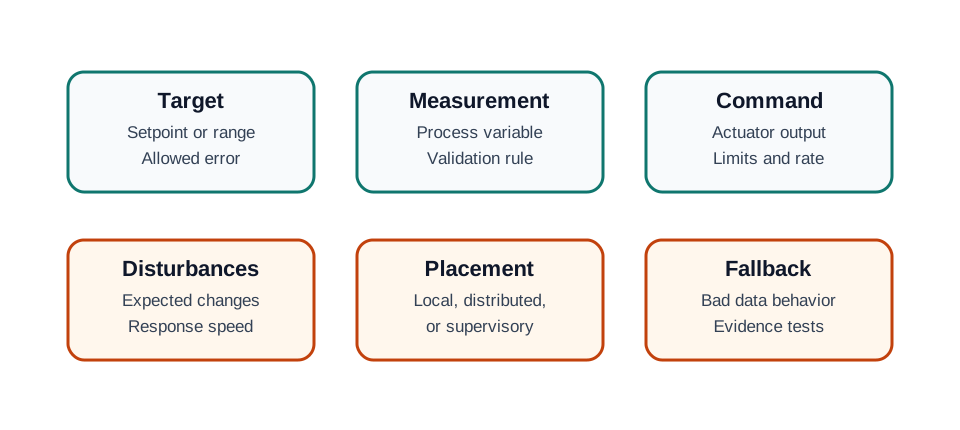
A control decision should leave a short record.

  • The first fields define what the loop may influence; the middle fields bound authority and failure exposure; the final fields make the choice testable.
  • Minimum, maximum, and rate limits.

Why it matters

This prevents a later maintainer from guessing why a loop was left open, closed locally, or split across layers.

Control-loop decision record
iotclass.org

Major section

Worked Example: Pumped Tank Level

This works only if the outlet flow and starting level are predictable.

  • Closed-loop design: A level sensor reports the tank level.
  • The loop can correct outlet variation, but it must handle sensor faults, pump saturation, and delayed level response.
  • Hybrid design: A schedule provides a baseline pump plan, while the level sensor trims the command.

Why it matters

If outlet demand changes, the tank may drift high or low because the command does not depend on the measured level.

iotclass.org

Major section

Common Pitfalls

A noisy, delayed, or misplaced sensor can make a closed-loop system worse than a simple command plan.

  • The design issue is not whether feedback exists; it is whether missing feedback creates unacceptable error.
  • Ignoring Actuator Limits.
  • A controller cannot correct an error if the actuator is already at its limit.
iotclass.org

Major section

Key Concepts

The chapter's vocabulary describes one causal path: a controller compares a setpoint with a process variable, acts within its authority, and encounters disturbances across a chosen loop boundary.

  • A process variable is useful only when its sensor location and timing reveal the error the actuator can correct.
  • A disturbance matters when it changes that variable outside the command path.
  • Loop placement then determines whether the measurement, decision, actuation, and fallback remain available within the required response time.

Why it matters

Closed-loop control: Control that uses measured output to reduce error between a target and a process variable.

iotclass.org

Major section

Key Concepts (continued)

The definitions summarise those relationships; they do not replace the control-path and failure evidence developed above.

  • Process variable: The measured output that represents process behavior.
  • Disturbance: A factor outside the controller command that changes process output.
  • Loop placement: The architectural boundary that determines where sensing, control, actuation, and fallback behavior run.
iotclass.org

Major section

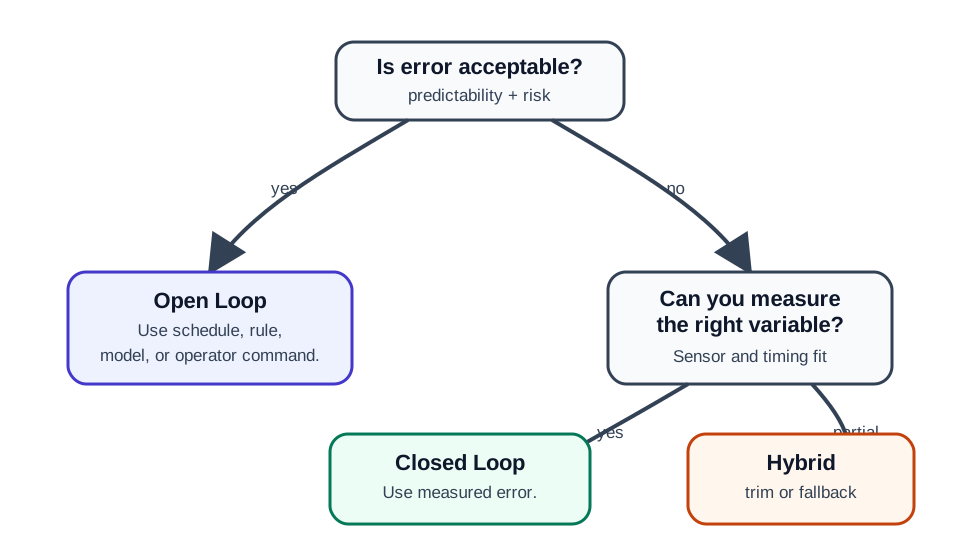
Overview: Loop Choice Is A Risk Boundary
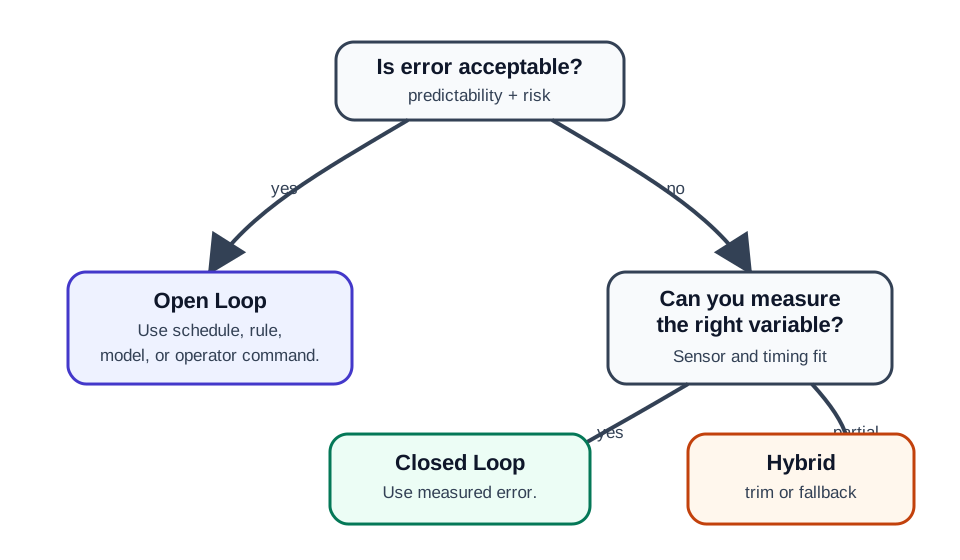
An open-loop design promises that the command plan is good enough until inspection.

  • A closed-loop design promises that a measured process variable can safely change the next actuator command.
  • The risk boundary is the moment the process drifts.
  • If the drift is slow, visible, and low consequence, open loop may be acceptable.
Use the choice map as an architecture gate: first decide whether output error is acceptable, then decide whether the right variable can be measured quickly enough for correction. Partial measurement, unreliable timing, or fallback requirements point to a hybrid record instead of a vague closed-loop label.
iotclass.org

Deck summary

Key takeaways

The difference between open-loop and closed-loop control is easiest to see when a measurement disappears.

  • The observer can inspect or log the result, but there is no arrow returning the measured output to the controller.
  • The choice is not "simple versus smart." It is a fit decision based on observability, consequence, timing, and expected variation.
  • A local loop must keep the process stable while a remote layer adjusts targets.
  • A disturbance is any influence that changes the process output without being the controller command.
iotclass.org

Retrieval practice

Recall check 1 of 3

Gateway Gus says: answer from memory, then check your reasoning.

Q1A fan must hold cabinet temperature near a target while heat load varies as processors wake and sleep. What is the best first loop choice?

AClosed loop, because measured temperature shapes the next fan command
BOpen loop, because a fixed fan schedule is simpler to build and inspect
COpen loop, because processor heat load is fully predictable during operation
DNo control loop, because cabinet temperature self-regulates under varying load
Show answer

Answer: A A varying heat load needs feedback correction, so a closed loop that adjusts the fan from measured temperature is the right choice.

iotclass.org

Retrieval practice

Recall check 2 of 3

Gateway Gus says: answer from memory, then check your reasoning.

Q2A fan must hold cabinet temperature near a target while heat load changes when processors wake and sleep. Which control shape is the best first loop choice?

AOpen loop, because a fixed fan command is simpler.
BClosed loop, because the measured temperature should affect the next fan command.
COpen loop with no decision record, because fan control is not part of the architecture.
DRemote closed loop, to use a central temperature history when choosing the next fan command.
Show answer

Answer: B When the output must stay near a target despite changing load, measured feedback should influence the next actuator command.

iotclass.org

Retrieval practice

Recall check 3 of 3

Gateway Gus says: answer from memory, then check your reasoning.

Q3A refrigerated cabinet runs a fixed fan schedule, but door openings now vary by hour. The cloud service can suggest setpoints, yet network delays are sometimes several seconds. Which design record best fits the risk?

AUse a hybrid record: baseline fan plan, local temperature loop, slower cloud setpoints, and stale-command/sensor-fault fallback.
BUse remote-only closed loop because cloud feedback is valid once a sensor reading arrives, even with seconds of delay.
CStay open loop with no measurement proof because the old schedule already cooled one operating profile.
DRemove the baseline schedule so measurement or communication failure leaves no bounded behavior.
Show answer

Answer: A A hybrid loop record separates baseline command behavior, local closed-loop correction, supervisory setpoint changes, and fallback rules so delay or stale measurements do not silently open the stabilizing loop.

iotclass.org

Print reference

Answers

Answer key.

  1. A · A varying heat load needs feedback correction, so a closed loop that adjusts the fan from measured temperature is the right choice.
  2. B · When the output must stay near a target despite changing load, measured feedback should influence the next actuator command.
  3. A · A hybrid loop record separates baseline command behavior, local closed-loop correction, supervisory setpoint changes, and fallback rules so delay or stale measurements do not silently open the stabilizing loop.
iotclass.org