Control, Gateways & Networked Systems · Study deck

Setpoint, Error, and Feedback

Picture a heater asked to hold a room at twenty degrees.

Gateway Gus is your guide for this deck.

feedback
Gateway Gus, the module guide, in a scene from this chapter.
iotclass.org

After studying this chapter

Learning objectives

You will be able to:

  • Define setpoint, process variable, error signal, controller output, actuator, and disturbance.
  • Explain why negative feedback is the standard regulation pattern for PID control.
  • Distinguish regulation feedback from positive feedback used for switching or latch behavior.
  • Decide whether a feedback loop should run locally, remotely, or as a hybrid with local fallback.
iotclass.org

Major section

Start With One Feedback Loop

It turns on, but the temperature sensor sits near an open door.

  • If the controller trusts that cold reading alone, it may keep heating a room that is already warm.
  • An actuator is a part that turns a command into physical action.
  • This first loop does not prove every load, delay, or controller setting.

Key terms

Feedback
Feedback is the moment a device stops guessing and listens to the result of its own action.
iotclass.org

Major section

Start With One Feedback Loop (continued)

The deeper sections show how proportional, accumulated, and rate-based responses shape the result and how a feedback record keeps the physical outcome tied to each command.

  • Feedback is the moment a device stops guessing and listens to the result of its own action.
  • A heater turns on, the room warms, the sensor reports the change, and the controller decides whether to keep pushing or back off.
  • That loop is everywhere in IoT: irrigation valves, fans, chargers, robots, and gateways all need evidence that the last command helped.
iotclass.org

Major section

Feedback Vocabulary

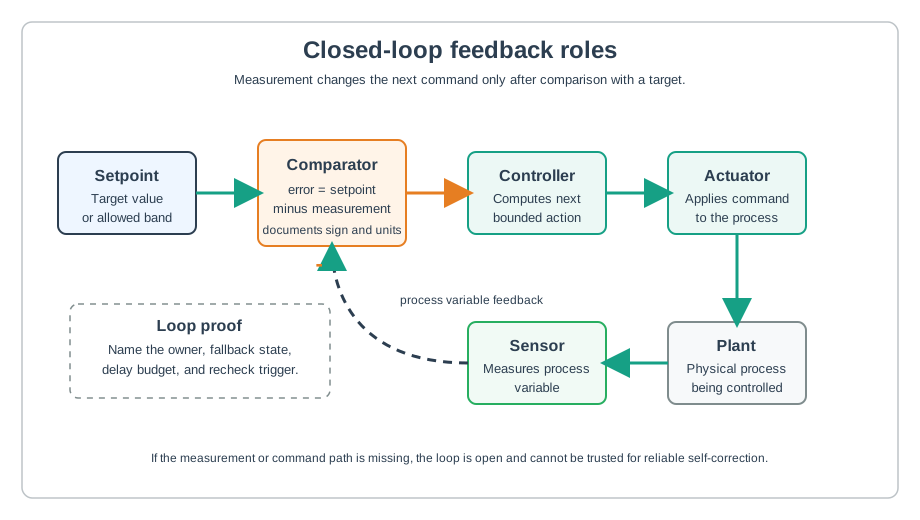
A feedback loop is easier to check when each responsibility has a plain name.

  • That sequence connects Feedback Vocabulary to evidence a reviewer can name and retest.
  • The exact controller can be on/off, proportional, PI, PID, or another policy.
  • The feedback requirement is that measured output affects the next action.
Closed-loop feedback roles: a setpoint enters a comparator, the error signal drives a controller, the actuator changes the plant, and the sensor returns the measured process variable to close the loop.
iotclass.org

Major section

Negative and Positive Feedback

The evidence keeps Negative and Positive Feedback aligned with the running narrative.

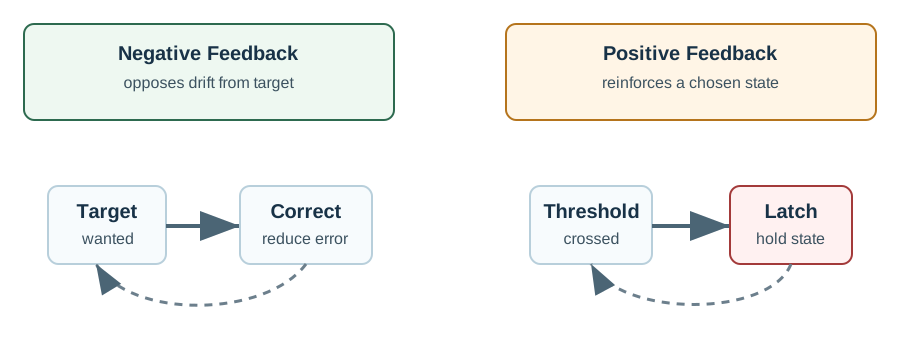
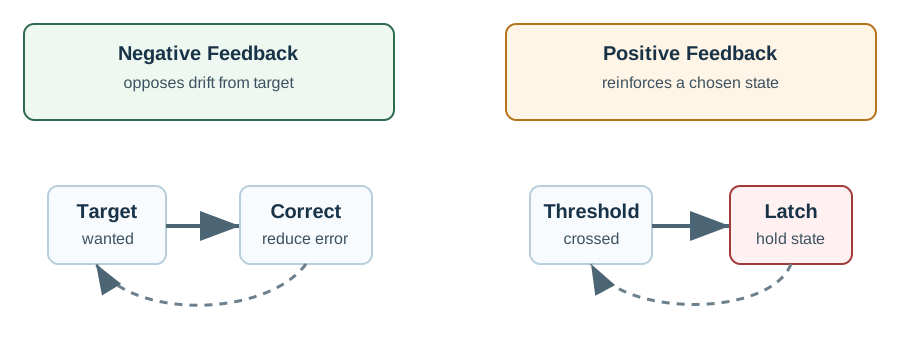
  • PID is a negative feedback controller.
  • Proportional, integral, and derivative terms all use the error signal to reduce deviation from the setpoint.

Why it matters

The most important feedback distinction is whether the action reduces or reinforces a change.

Negative feedback opposing error for regulation and positive feedback reinforcing state changes for deliberate switching.
iotclass.org

Major section

Local and Distributed Feedback

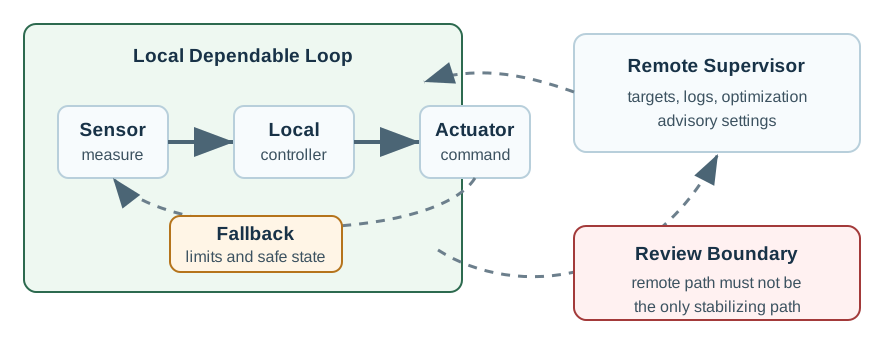
If losing the network path would leave the actuator unable to respond to a harmful or service-breaking condition, the loop needs local fallback.

  • Remote logic can advise, tune, schedule, or report, but the basic stabilizing behavior must remain available where the sensor and actuator are connected.
Feedback placement showing a local control loop with remote observation and optimization kept outside the dependable safety path.
iotclass.org

Major section

Feedback Loop Record

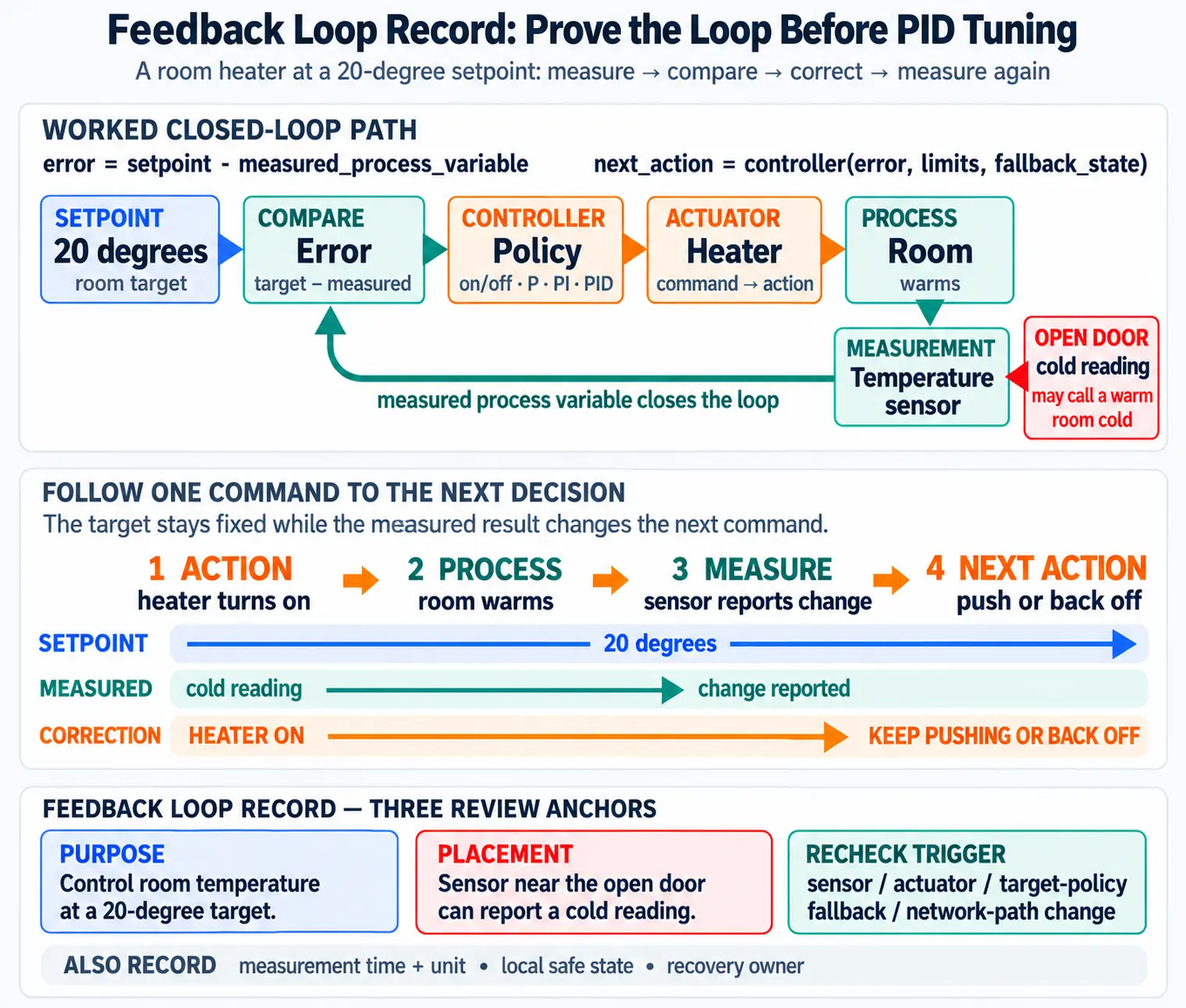
A feedback loop is not ready for PID tuning until the loop record proves that the loop itself is coherent.

  • Recheck the loop after sensor replacement, actuator replacement, target-policy change, fallback change, or network-path redesign.
Feedback loop record tying loop purpose, measurement, comparison, action, placement, fallback, proof, owner, and recheck trigger.
iotclass.org

Major section

Common Pitfalls

A dashboard that only displays measurements is monitoring, not closed-loop control.

  • Feedback requires a command path that can influence the process.
  • If the actuator moves in the wrong direction, the loop can amplify the problem.
  • Positive feedback can be valid for switching and hysteresis, but it is not the normal pattern for holding a process near a target.

Key terms

Remote optimization
Remote optimization is useful, but a critical loop should not lose basic regulation just because the network path is unavailable.
iotclass.org

Major section

Overview: Feedback Needs A Proof Path
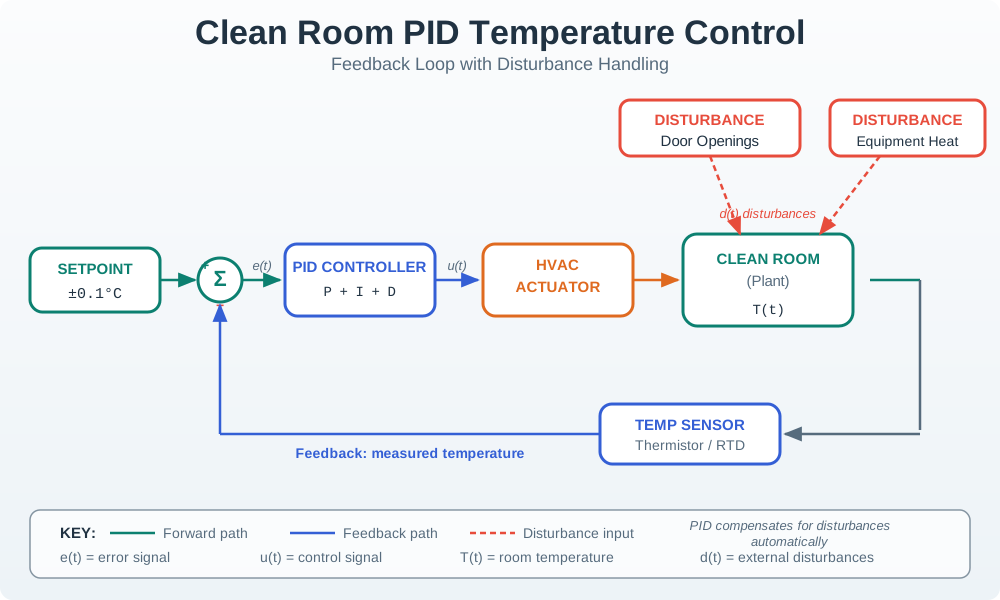
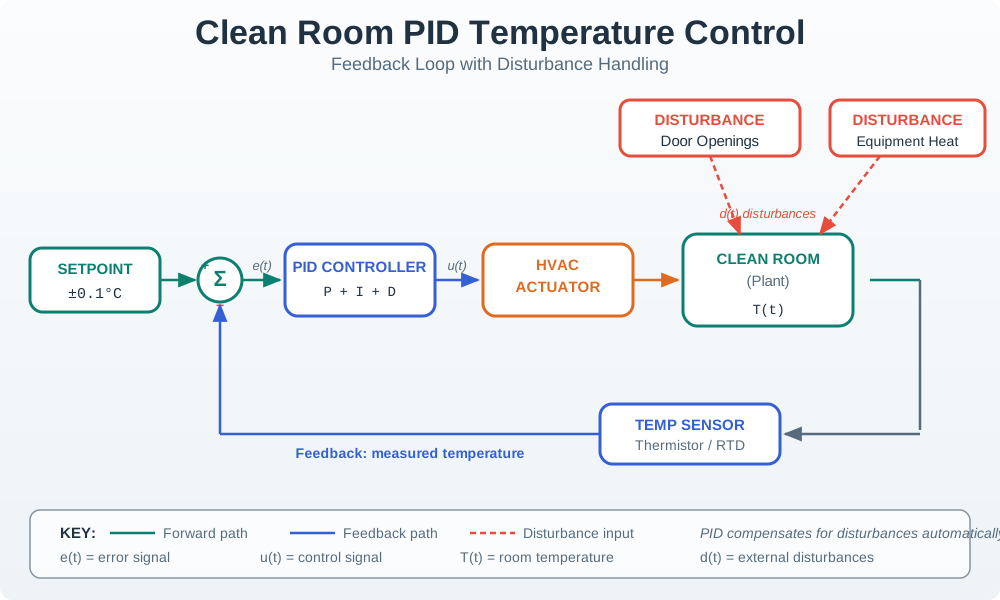
A feedback loop is real only when a measured value changes the next action.

  • A dashboard can show temperature, pressure, or speed, but the loop is not closed until that measurement is compared with a setpoint and drives an actuator command that can change the process.
Clean-room PID temperature-control loop with disturbance handling.
iotclass.org

Major section

Delay and Sign Set Stability

If the sign is reversed, the same loop becomes positive feedback and pushes the process farther from the target.

  • The loop has sensor delay, filtering delay, controller decision time, network delay when remote, actuator delay, and process response time.
  • A stable local loop can become unstable if the decision is moved across a slow or unreliable path.
  • The critical-damping preset below isolates the plant response before controller gains are changed.
iotclass.org

Major section

Summary

Negative feedback reduces error and is the normal regulation pattern.

  • Feedback is the foundation for PID control.
  • The loop measures a process variable, compares it with a setpoint, computes error, and changes an actuator command.
  • Positive feedback reinforces state changes and belongs only in deliberate switching behavior.
iotclass.org

Deck summary

Key takeaways

It turns on, but the temperature sensor sits near an open door.

  • The deeper sections show how proportional, accumulated, and rate-based responses shape the result and how a feedback record keeps the physical outcome tied to each command.
  • A feedback loop is easier to check when each responsibility has a plain name.
  • The evidence keeps Negative and Positive Feedback aligned with the running narrative.
  • If losing the network path would leave the actuator unable to respond to a harmful or service-breaking condition, the loop needs local fallback.
iotclass.org

Retrieval practice

Recall check 1 of 3

Gateway Gus says: answer from memory, then check your reasoning.

Q1Why is negative feedback the normal pattern for IoT regulation loops?

AIt opposes drift, driving the error toward zero, while positive feedback reinforces change
BIt is faster because it can safely ignore the configured setpoint entirely
CIt removes the need for any sensor measurement of the process output at all
DIt only ever applies to deliberate latch and switching circuit behavior
Show answer

Answer: A Negative feedback opposes drift and drives error toward zero, which is why it is the normal regulation pattern.

iotclass.org

Retrieval practice

Recall check 2 of 3

Gateway Gus says: answer from memory, then check your reasoning.

Q2An IoT room controller sends sensor readings to a remote service, and that service sends actuator commands back. During a network outage, commands stop arriving. Which feedback-loop decision is most appropriate?

AAdd a local fallback loop so the nearby controller keeps safe regulation when the remote path fails.
BUse positive feedback so the actuator command becomes stronger after communication fails.
CTune PID gains remotely until the network outage no longer matters.
DRemove the sensor because feedback is only needed while the network is available.
Show answer

Answer: A Dependable feedback should keep the basic sensor-to-actuator response available locally when the remote path is unavailable.

iotclass.org

Retrieval practice

Recall check 3 of 3

Gateway Gus says: answer from memory, then check your reasoning.

Q3A remote service receives room-temperature readings and sends damper commands, but during a network delay the room overshoots and the controller keeps opening the damper. What should the feedback record check first?

ACheck error sign, actuator direction, timing, local fallback, stale commands, and proof the action reduces error.
BTune proportional gain higher before checking action direction, timing, or stale commands.
CTreat the dashboard reading as proof, even if it never changes a valid damper command.
DMove fallback behavior to the remote service so every command still depends on the network.
Show answer

Answer: A Feedback-loop proof must show the measured value changes a correctly directed command soon enough, with local fallback and stale-command handling when the remote path cannot be trusted.

iotclass.org

Print reference

Answers

Answer key.

  1. A · Negative feedback opposes drift and drives error toward zero, which is why it is the normal regulation pattern.
  2. A · Dependable feedback should keep the basic sensor-to-actuator response available locally when the remote path is unavailable.
  3. A · Feedback-loop proof must show the measured value changes a correctly directed command soon enough, with local fallback and stale-command handling when the remote path cannot be trusted.
iotclass.org