Control, Gateways & Networked Systems · Study deck
PID Control Theory
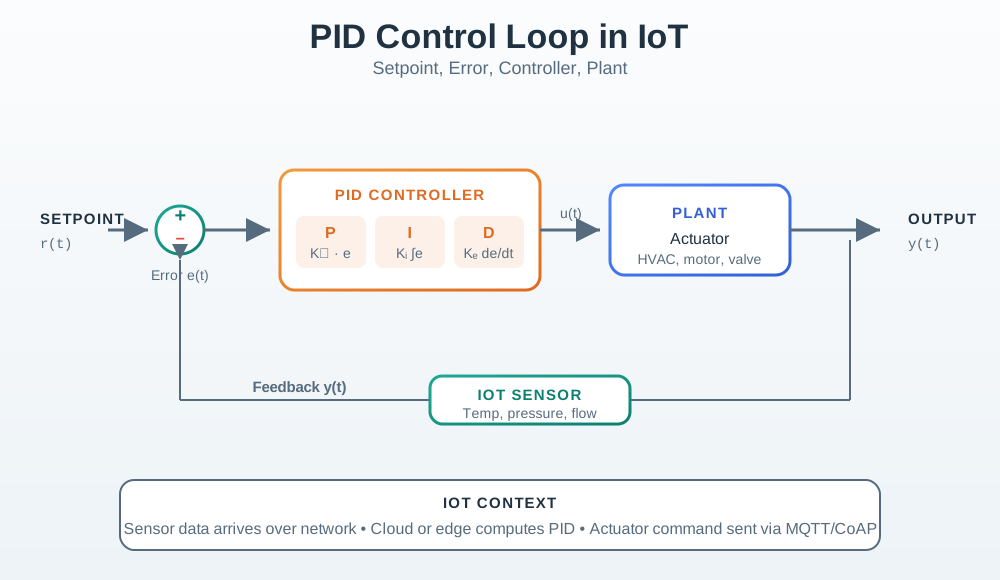
Proportional-integral-derivative (PID) control changes an output from the gap between a target and a measured result.
Gateway Gus is your guide for this deck.

After studying this chapter
Learning objectives
You will be able to:
- Explain the PID control equation without treating it as a black box.
- Describe how proportional, integral, and derivative actions change loop behavior.
- Identify steady-state offset, overshoot, oscillation, windup, and derivative noise sensitivity.
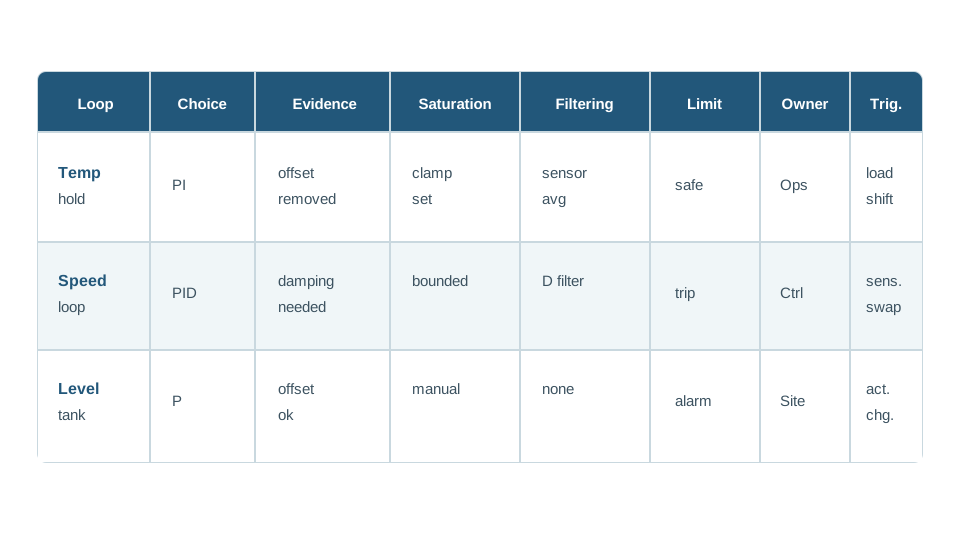
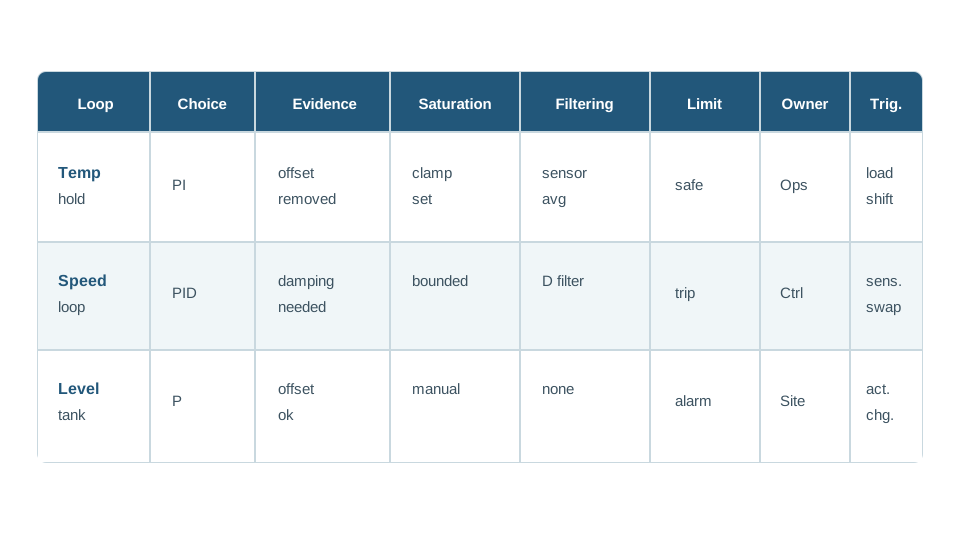
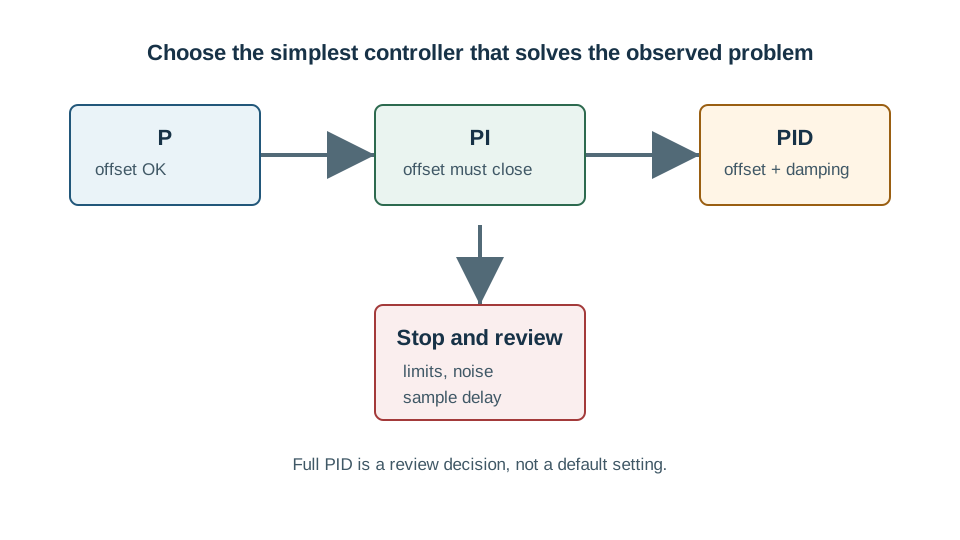
- Choose P, PI, PD, or PID based on response data rather than habit.
Major section
Start With the Error You Can Measure
Proportional-integral-derivative (PID) control changes an output from the gap between a target and a measured result.
- A calm demo may look stable.
- Opening the lid, adding cold liquid, delaying the sensor, or limiting heater power can expose a slow response, a lasting error, or repeated overshoot.
- A good graph does not prove safety.
Major section
Start With the Error You Can Measure (continued)
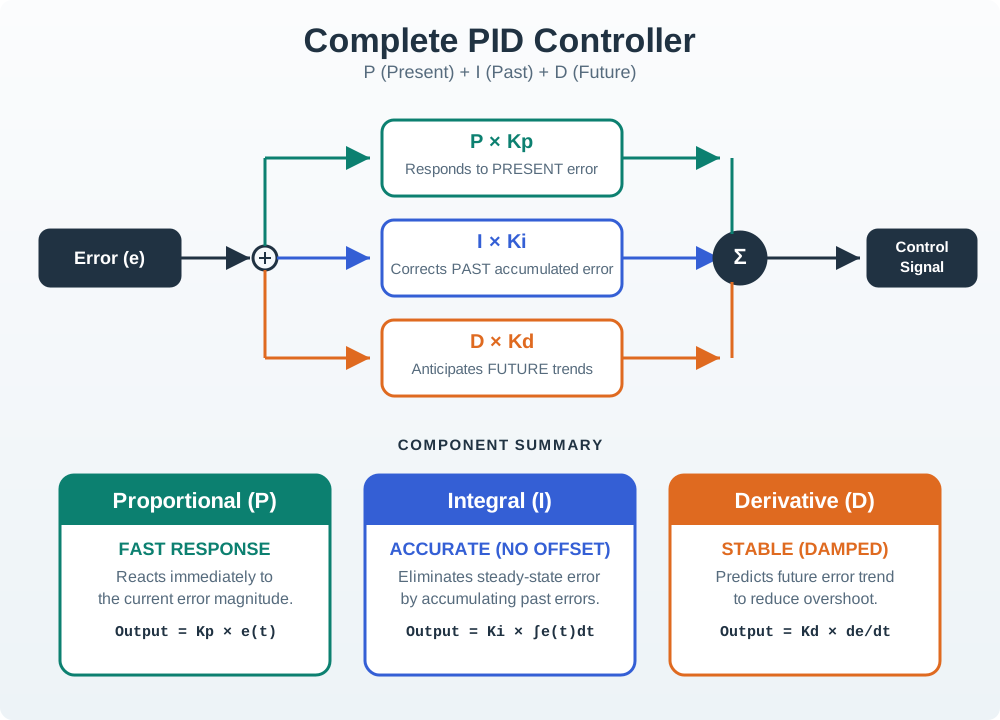
A PID controller does not begin with three magic constants.
- These plain checks come before any claim that the tune is good.
- These results apply only to the tested plant, sensor, timing, and limits.
- The proportional, integral, and derivative terms are three different answers to that gap.
Major section
Term Behavior
The three terms can be understood as three views of the same error signal.
- That sequence connects Term Behavior to evidence a reviewer can name and retest.
Major section
Everyday Analogy: Changing Lanes in a Crosswind
A steady crosswind can cancel out a fixed steering angle entirely, so the car keeps drifting straight no matter how the driver preset Kp.
- The driver responds by gradually increasing the steering angle until the car actually starts moving toward the lane again.
- At higher speed, the same steering input moves the car across lanes faster, so the correction needs to ease off sooner to avoid overshoot.
- A compact way to keep the three terms straight: proportional corrects instances of error, integral corrects the accumulation of error, and derivative corrects the present error against the error the last time it was checked.
Major section
Reading Response Shape
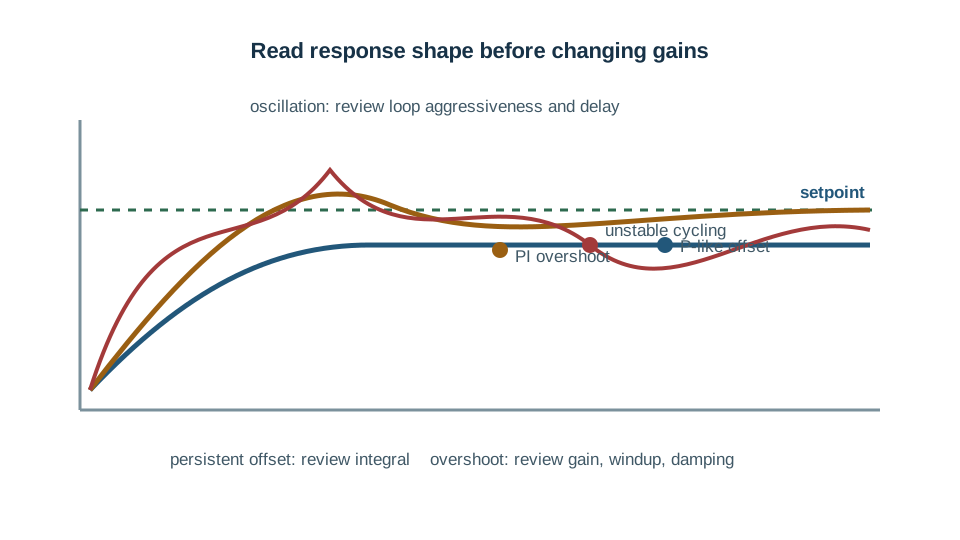
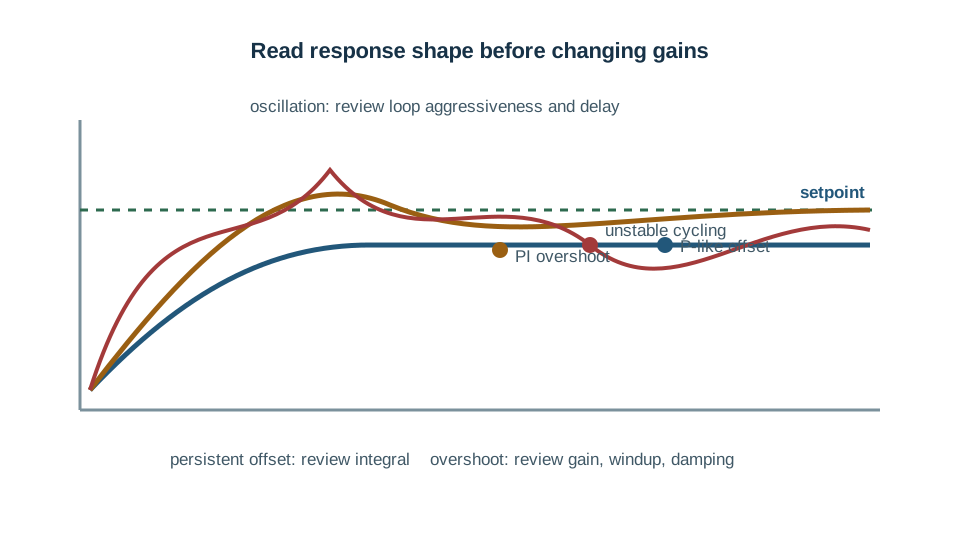
PID theory becomes practical when a team can look at a response shape and connect it to a term decision.
- The chapter can now use Reading Response Shape as an engineering criterion.
- If the process settles away from the setpoint, proportional action may not be enough.
- Integral action can remove the offset, but only if windup is controlled.
Major section
Windup and Derivative Filtering
When an actuator is already at its limit, the integral term may keep accumulating error.
- When the process finally responds, the stored integral can drive a large overshoot.
- Derivative action magnifies rapid measurement changes.
- A noisy sensor can make the controller output jitter unless derivative filtering, sensor filtering, and sample timing are checked together.
Major section
Common Pitfalls
Enabling all three terms before proving which loop problem each term solves makes tuning harder and hides root causes.
- The equation does not document sample timing, actuator limits, filter choices, windup behavior, or safety fallback.
- A controller designed as if actuators can follow every requested output may fail badly when real devices hit limits.
- Derivative gain can turn ordinary sensor noise into control chatter when the measurement path is not filtered.
Major section
Overview: PID Terms Are Evidence Claims
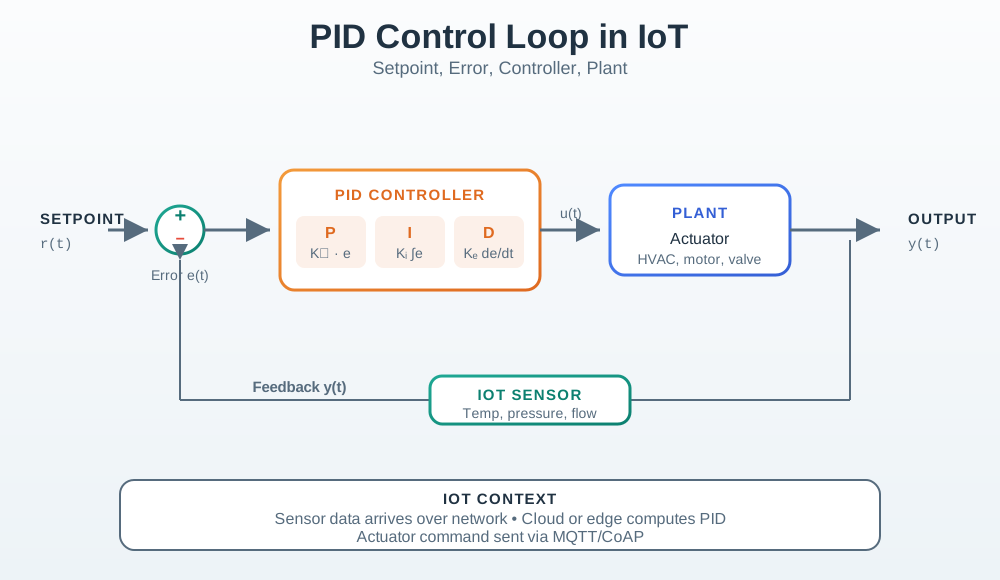
A PID setting is not just a number.
- Each enabled term is a claim about the loop: proportional action claims the current error needs immediate correction, integral action claims persistent offset must be removed, and derivative action claims the trend needs damping.
Major section
Sampled and Limited Loops
Real PID controllers run at a sample interval and drive a limited actuator.
- Those states explain why a gain set that works in one trace can fail later.
- A slower sample interval can make derivative action stale.
- A saturated actuator can make integral action store a command the process cannot follow.
Deck summary
Key takeaways
Proportional-integral-derivative (PID) control changes an output from the gap between a target and a measured result.
- A PID controller does not begin with three magic constants.
- The three terms can be understood as three views of the same error signal.
- A steady crosswind can cancel out a fixed steering angle entirely, so the car keeps drifting straight no matter how the driver preset Kp.
- PID theory becomes practical when a team can look at a response shape and connect it to a term decision.
Retrieval practice
Recall check 1 of 3

Gateway Gus says: answer from memory, then check your reasoning.
Q1In PID control, which action responds to accumulated (persistent) error over time?
Show answer
Answer: A Integral action responds to accumulated error, removing steady-state offset, but it can wind up if unbounded.
Retrieval practice
Recall check 2 of 3

Gateway Gus says: answer from memory, then check your reasoning.
Q2A closed-loop controller is stable but settles below the setpoint. The actuator still has room to increase output. Which PID theory decision is most appropriate?
Show answer
Answer: A Integral action addresses persistent offset, but the loop record must also check actuator saturation and windup protection.
Retrieval practice
Recall check 3 of 3

Gateway Gus says: answer from memory, then check your reasoning.
Q3A PI loop reaches the setpoint in a clean test, but during a field disturbance the actuator saturates for 40 seconds and the loop overshoots badly when the process recovers. What should the proof record require?
Show answer
Answer: A PID term choices need proof under real sampled-loop limits, including saturation, anti-windup, accumulator bounds, output clamps, recovery traces, and retest triggers.
Print reference
Answers
Answer key.
- A · Integral action responds to accumulated error, removing steady-state offset, but it can wind up if unbounded.
- A · Integral action addresses persistent offset, but the loop record must also check actuator saturation and windup protection.
- A · PID term choices need proof under real sampled-loop limits, including saturation, anti-windup, accumulator bounds, output clamps, recovery traces, and retest triggers.