IoT Value and Product Strategy · Study deck
Device Evolution: Boundaries and Connected Products
A thermostat with a radio is connected, but that alone does not make it intelligent.
Ada is your guide for this deck.

After studying this chapter
Learning objectives
You will be able to:
- Separate embedded, connected, and IoT products by decision ownership.
- Classify a device from its sensing, network, and autonomy evidence.
- Explain: "Back in the 1980s, Washy could wash clothes, but that was ALL Washy could do.
- Explain: Well, not exactly, but Washy learned to send messages to YOUR phone.
Major section
How Devices Got Smarter
"Back in the 1980s, Washy could wash clothes, but that was ALL Washy could do.
- You pressed a button -- that is where I come in! -- picked a cycle, and walked away.
- Washy could not tell you when clothes were done.
- Washy could not learn that you like warm water for towels.
Major section
How Devices Got Smarter (continued)
Well, not exactly, but Washy learned to send messages to YOUR phone.
- I could hear the little ding sound when it said 'Hey!
- Your clothes are done!' You could even press START from the couch.
- But Washy still did not know if you put in towels or t-shirts.
- You still had to pick everything yourself.".
Major section
How Devices Got Smarter (continued)
Think about using less water because the clothes are not very dirty.
- Max the motion sensor adds: "Think of it like a music box that you can start and stop with a remote control.
- The whole Sensor Squad is amazed by Washy 3.0!: Max says: "NOW Washy is really smart!
- Feel what kind of clothes are inside -- "That is MY job!" says Max, detecting fabric weight and type.
Major section
What Device Evolution Means
Stage 3 -- Adaptive IoT: The connected device uses sensor history, context, or learned patterns to make better decisions with less manual input.
- If you are new to IoT, the core idea here is straightforward: electronic devices have gone through three stages over the past few decades, and each stage added a new capability.
- Stage 1 -- Embedded: The device does one job and nothing else.
- You do not need any programming or engineering background to follow this chapter.
Major section
What Device Evolution Means (continued)
A Wi-Fi-enabled thermostat that lets you change the temperature from an app is a basic IoT product even if it still follows fixed rules.
- A thermostat that notices you lower the heat at 10 PM and starts doing it automatically is an adaptive IoT device.
- A device can remain a valid IoT sensor or actuator while following the same deterministic rule for years.
- The examples use everyday products like washing machines, thermostats, and light bulbs to illustrate each stage.
- Nest is useful because it shows the exact moment remote control stops being the main value and learned behavior starts carrying the claim.
Major section
Nest From Connected to IoT
Remote app control establishes a connected product; learning algorithms add autonomous optimization and a stronger outcome claim.
- A learning thermostat may infer recurring setpoint patterns from user adjustments; present the exact timing and 92% prediction accuracy only with a Nest technical study.
- Google reports typical Nest energy-bill savings of about $131–145 a year; actual purchase price and savings vary by model and home.
- Using an assumed $110 price premium and $131–145 annual savings, payback would be about 9–10 months before installation or rebates; state the assumptions.
Major section
Minimum Viable Understanding
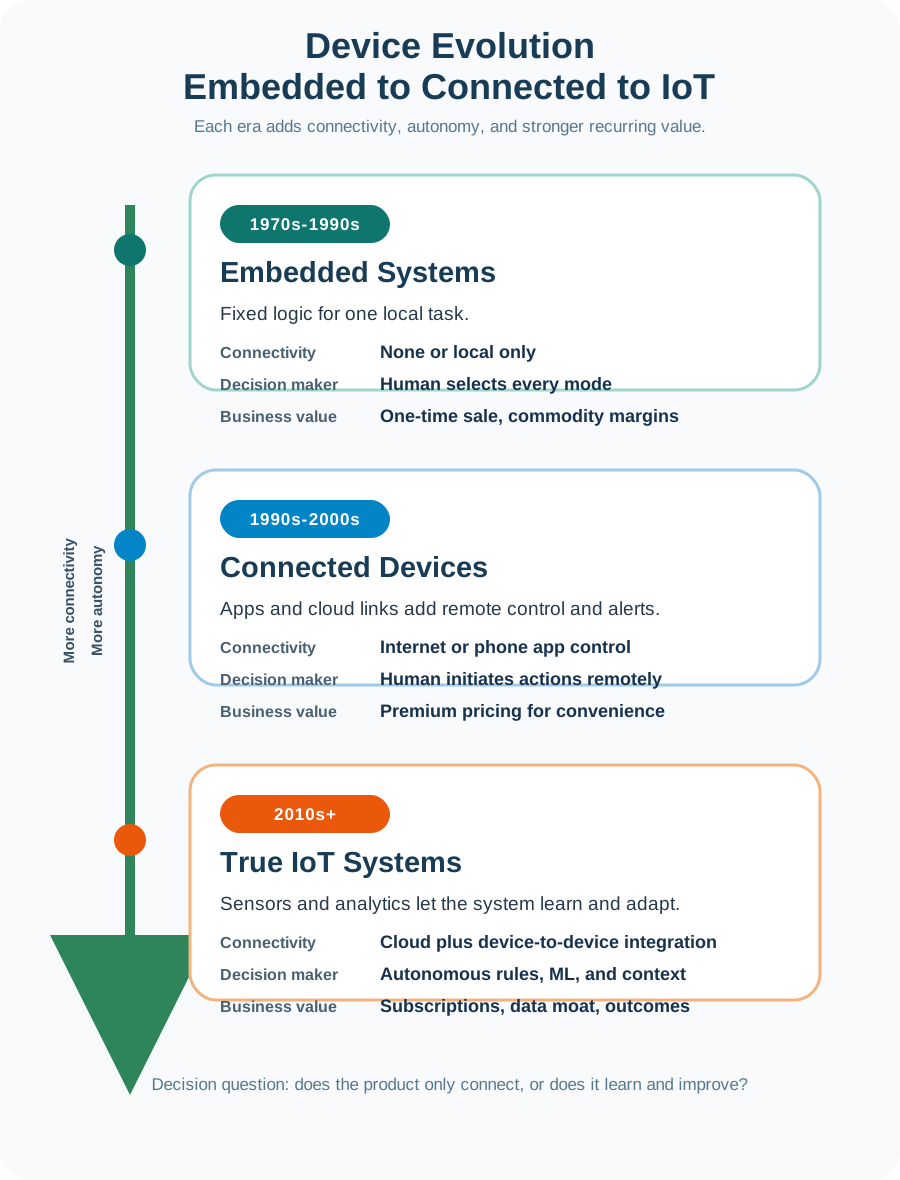
Three stages organise the evolution story: Embedded (isolated local function), Connected IoT (internet-enabled telemetry or control), and Adaptive IoT (connected data improves decisions).
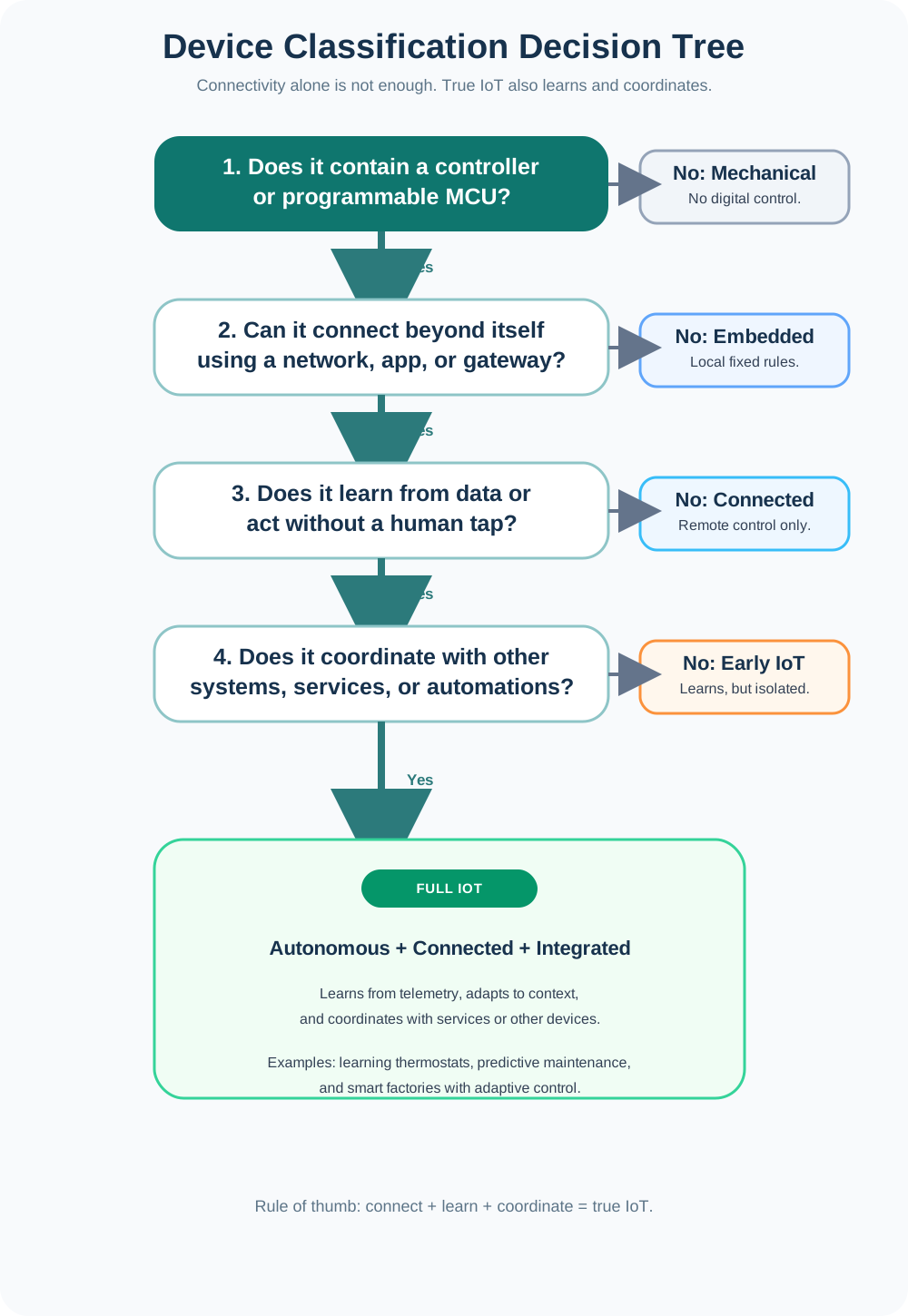
- The Intelligence Test measures maturity: learning, autonomous decisions, and adaptation strengthen a product claim, but a deterministic networked sensor or actuator can still meet the baseline IoT definition.
- The third row is where launches fail.
Major section
Checkpoint: Three Eras
The first panel shows a device with two cables but no label that settles its category.
- The next panel places it beside other product types; the last adds links to a network, learning, and a wider system.
- The picture suggests questions, but does not answer them for every product.
Major section
Embedded Products (1970s-1990s)
Limitation: Minimal added value because the device operates independently without external communication.
- An embedded system is purpose-built for a single, specific function with minimal resources.
- Function: The timer enables scheduled operations but lacks any form of network connectivity.
- You set the cycle manually, and it executes the same pre-programmed sequence every time.
Major section
Connected Products (1990s-2000s)
Benefit: Improves convenience and user engagement through connectivity.
- However, they typically lack the intelligence to make autonomous decisions based on data.
- Example: A washing machine that sends smartphone alerts when the wash cycle is complete.
- Still requires human decision-making for optimization - it's a "remote control" not a "smart assistant.".
Deck summary
Key takeaways
"Back in the 1980s, Washy could wash clothes, but that was ALL Washy could do.
- Well, not exactly, but Washy learned to send messages to YOUR phone.
- Think about using less water because the clothes are not very dirty.
- Stage 3 -- Adaptive IoT: The connected device uses sensor history, context, or learned patterns to make better decisions with less manual input.
- A Wi-Fi-enabled thermostat that lets you change the temperature from an app is a basic IoT product even if it still follows fixed rules.
Retrieval practice
Recall check 1 of 3

Ada says: answer from memory, then check your reasoning.
Q1What changed most when embedded devices evolved into IoT devices?
Show answer
Answer: C IoT evolution adds connected system responsibilities around data, software, security, and operations, not just smaller hardware.
Retrieval practice
Recall check 2 of 3
Ada says: answer from memory, then check your reasoning.
Q2In the chapter’s product-maturity decision tree, a home security camera streams video to your phone and sends fixed motion alerts. It cannot distinguish a pet, person or car and does not learn or make independent decisions. Which tier does it reach?
Show answer
Answer: D The chapter separates baseline IoT ingredients from a maturity tier.
Retrieval practice
Recall check 3 of 3
Ada says: answer from memory, then check your reasoning.
Q3Which capability most clearly moves a basic connected IoT device toward the adaptive tier described in this chapter?
Show answer
Answer: D The maturity model concerns behaviour.
Print reference
Answers
Answer key.
- C · IoT evolution adds connected system responsibilities around data, software, security, and operations, not just smaller hardware.
- D · The chapter separates baseline IoT ingredients from a maturity tier.
- D · The maturity model concerns behaviour.