Integration & Gateways · Study deck
OPC UA: Models, Services, and Trust
Picture a control screen that says a motor is too hot.
Gateway Gus is your guide for this deck.

After studying this chapter
Learning objectives
You will be able to:
- explain OPC UA as a combined information-model, service, and trust architecture
- record the session path (application services, trust record) before release
- distinguish what pub/sub, gateway, and companion-model boundaries preserve or lose
- review an OPC UA integration for the tag someone must ultimately trust
Major section
Start With the Tag Someone Must Trust
The number matters only if the operator knows which motor sent it and whether the reading is good.
- The screen should show uncertainty instead of making a bad value look safe.
- A good model makes the safe action easier.
- It should stop two similar tags from being confused.
- A flat tag value is not enough.
Major section
Start With the Tag Someone Must Trust (continued)
It should also make poor evidence visible before a control decision.
- This short story does not cover every object, service, or certificate rule.
- A large plant needs a consistent model and careful trust choices across many systems.
- Under the Hood explains sessions, certificates, and access rules.
Major section
Overview: OPC UA Is a Model, Service, and Trust Architecture
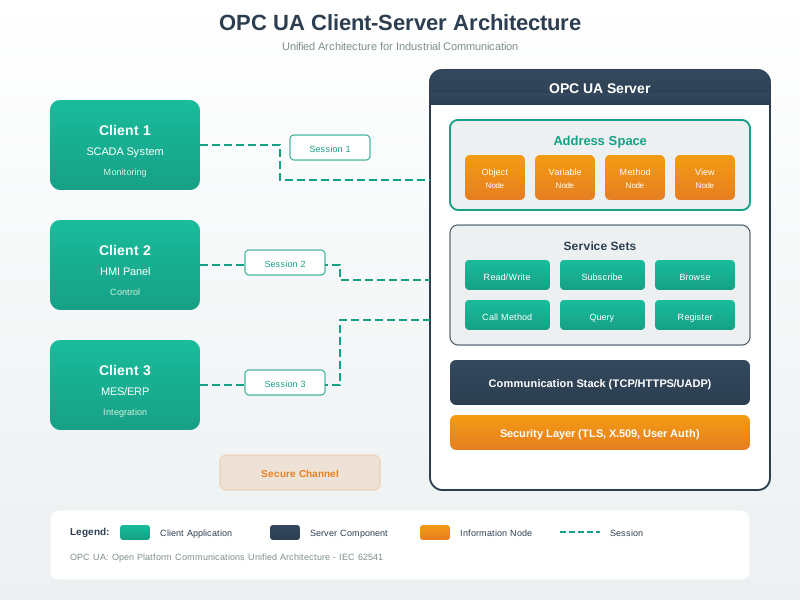
OPC UA is not just a replacement wire format for industrial tags.
- Its core value is that an industrial system can expose a typed address space, let clients discover that model through services, and protect access through certificates, secure channels, sessions, user identity, and authorization.
Major section
Overview: OPC UA Is a Model, Service, and Trust Architecture (continued)
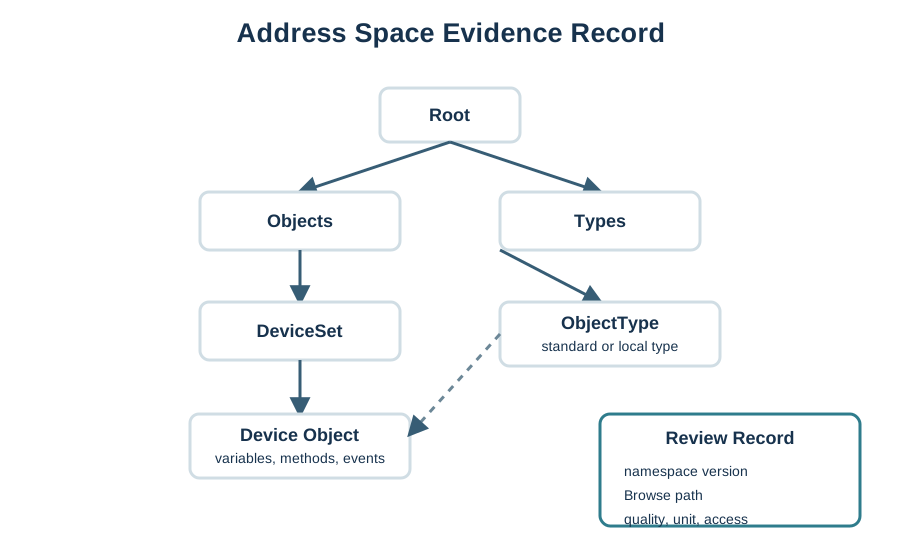
It costs more design effort than a simple register map, but it can reduce fragile custom mapping if the team treats the address space and trust configuration as release artifacts rather than as default server output.
- The same record also gives operations a stable checklist when a server certificate, namespace, companion model, or gateway mapping changes later.
- Information Model The server exposes Objects, Variables, Methods, Types, References, namespaces, and data types in an address space that clients can browse.
- Trust Record Production readiness depends on endpoint policy, certificates, trust lists, user authentication, authorization, and renewal ownership.
Major section
Practitioner: Record the Session Path Before Release
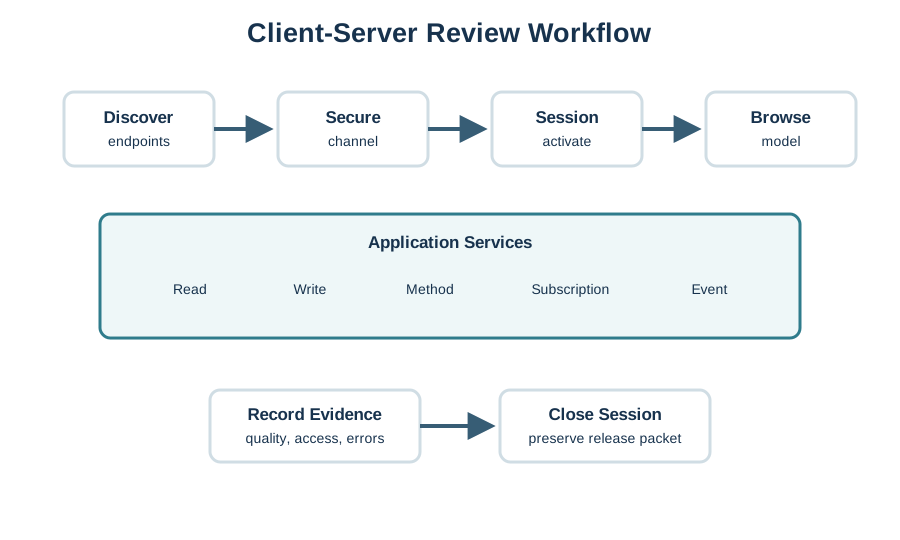
A normal OPC UA client-server path includes endpoint discovery, secure-channel setup, session creation, session activation, and application services.
- Each stage can fail for a different reason, so the release record should name the stage and the evidence captured there.
- The same packet should name who renews certificates and who approves model changes.
Major section
Practitioner: Record the Session Path Before Release (continued)
Separates transport reachability from authorized application access.
- A practical acceptance test should walk the whole path with the identity that production will use.
- Two labels deserve attention—“Discover” and “endpoints”—because they bound The OPC UA service path is a workflow, not a single socket connection.
- Network placement alone is not a security design.
Major section
Practitioner: Record the Session Path Before Release (continued)
The resulting chain supports The OPC UA service path is a workflow, not a single socket connection; it also gives the “discover”–“endpoints” decision a specific retest boundary.
- Proves the client selected an approved server endpoint instead of accepting whatever was reachable.
- Certificate renewal owner, namespace/version record, rejected-certificate review, and model-change process.
- Gate before production: unsecured or lab-only endpoints need explicit exception records and compensating controls.
Major section
Under the Hood: Pub/Sub, Gateways, and Companion Models Preserve or Lose Semantics
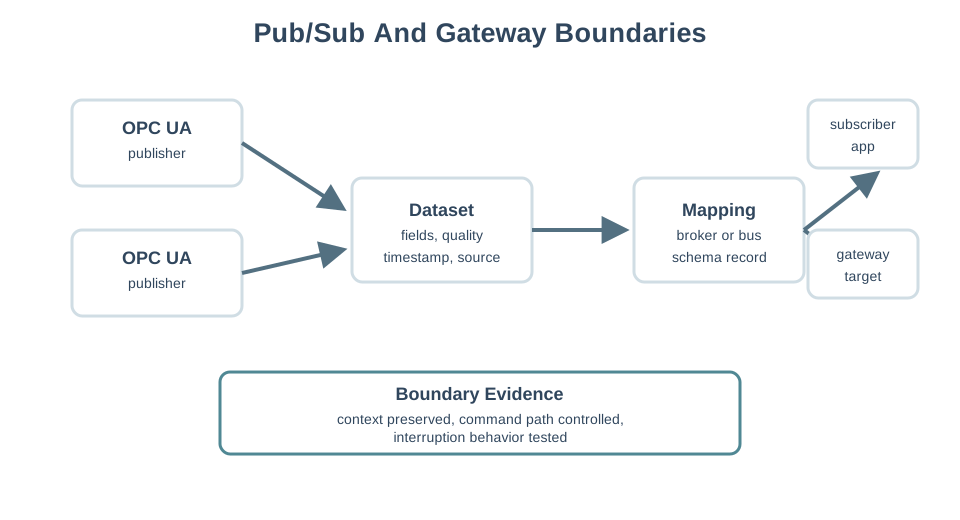
OPC UA can expose client-server services, Pub/Sub datasets, and gateway translations into MQTT, AMQP, HTTP, storage APIs, or analytics systems.
- Those boundaries are useful only when the integration records what semantic context survives the transfer.
- From “Companion”, it arrives at “domain types”.
Major section
Under the Hood: Pub/Sub, Gateways, and Companion Models Preserve or Lose Semantics (continued)
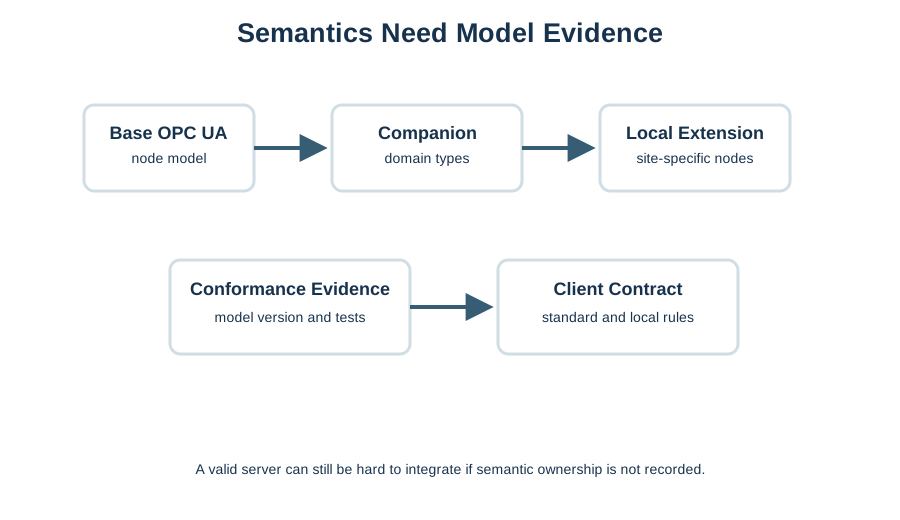
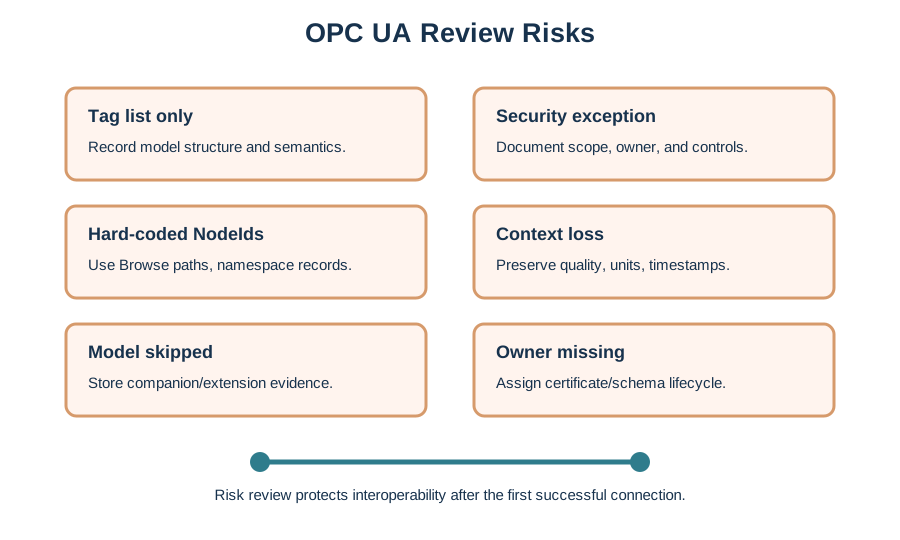
This matters during audits and incident response: teams need to know whether a surprising value is stale, translated, denied, disconnected, or genuinely measured at the machine.
- The downstream message may carry the numeric value, but lose the node's namespace, Browse path, engineering unit, status code, source timestamp, role restriction, or companion-model type unless the mapping records them deliberately.
- A boundary review should therefore name the exported nodes, dataset fields, schema owner, quality mapping, timestamp choice, command path, and interruption behavior.
- The record should be reviewed with both OT owners and downstream data owners.
Deck summary
Key takeaways
The number matters only if the operator knows which motor sent it and whether the reading is good.
- It should also make poor evidence visible before a control decision.
- OPC UA is not just a replacement wire format for industrial tags.
- It costs more design effort than a simple register map, but it can reduce fragile custom mapping if the team treats the address space and trust configuration as release artifacts rather than as default server output.
- A normal OPC UA client-server path includes endpoint discovery, secure-channel setup, session creation, session activation, and application services.
Retrieval practice
Recall check 1 of 3

Gateway Gus says: answer from memory, then check your reasoning.
Q1What makes OPC UA different from a simple industrial tag transport?
Show answer
Answer: B OPC UA should be reviewed as an industrial interoperability architecture rather than a tag-only protocol.
Retrieval practice
Recall check 2 of 3

Gateway Gus says: answer from memory, then check your reasoning.
Q2A client can connect to an OPC UA endpoint but fails when calling a method on a machine object. What should the review check first?
Show answer
Answer: C OPC UA troubleshooting should name the failing stage: channel, session, identity, service call, authorization, model, or lifecycle.
Retrieval practice
Recall check 3 of 3

Gateway Gus says: answer from memory, then check your reasoning.
Q3An OPC UA gateway republishes machine data into MQTT. Which review record is most important before claiming the downstream data is semantically equivalent?
Show answer
Answer: D OPC UA gateway reviews should prove how model semantics, quality, timestamps, units, identity, and commands survive translation.
Print reference
Answers
Answer key.
- B · OPC UA should be reviewed as an industrial interoperability architecture rather than a tag-only protocol.
- C · OPC UA troubleshooting should name the failing stage: channel, session, identity, service call, authorization, model, or lifecycle.
- D · OPC UA gateway reviews should prove how model semantics, quality, timestamps, units, identity, and commands survive translation.