RFID, NFC & UWB · Study deck
NFC Tags and NDEF Format
Picture a maintenance tag that opens the wrong asset page after it is mounted.
Radio Remi is your guide for this deck.

After studying this chapter
Learning objectives
You will be able to:
- Review NFC tag family fit for simple NDEF records, file-style NDEF storage, vicinity-style labels, and application-specific credential behavior.
- Explain the relationship among tag memory, NDEF TLV containers, NDEF messages, record headers, record types, and payloads.
- Choose URI, Text, MIME, External, or composite record patterns for a practical IoT tag workflow.
- Validate capacity, write state, lock or protection behavior, parser output, application policy, fallback, and read-back evidence.
Major section
Start With the Story
A successful tap does not show that the stored record, app rule, and physical label agree.
- Near Field Communication, or NFC, is a short-range radio system used for taps.
- A payload means the useful data carried inside a message or record.
- This runway does not prove that a nearby tag is trusted or authorized.
Major section
Tag Types and Discovery Path
NDEF is the data; the NFC Forum tag types are the chips that hold it, and they differ in memory, speed, and underlying technology.
- The comparison reaches circular substrate.
- Placement around central silicon chip still needs testing.
- Regardless of type, a reader first discovers whether an NDEF mapping is present.
- Choosing NDEF records is a behavior decision.

Major section
Tag Types and Discovery Path (continued)
On small labels this can mean reading a Capability Container or TLV-style metadata that declares NDEF memory size and access state.
- On file-oriented tags it can mean selecting and reading an NDEF file.
- That discovery step is what lets one phone handle a small NTAG poster sticker and a multi-kilobyte DESFire card with the same NDEF parsing logic.
- Choosing a tag type is a memory, security, and reader-support decision.
Major section
NDEF Message Structure
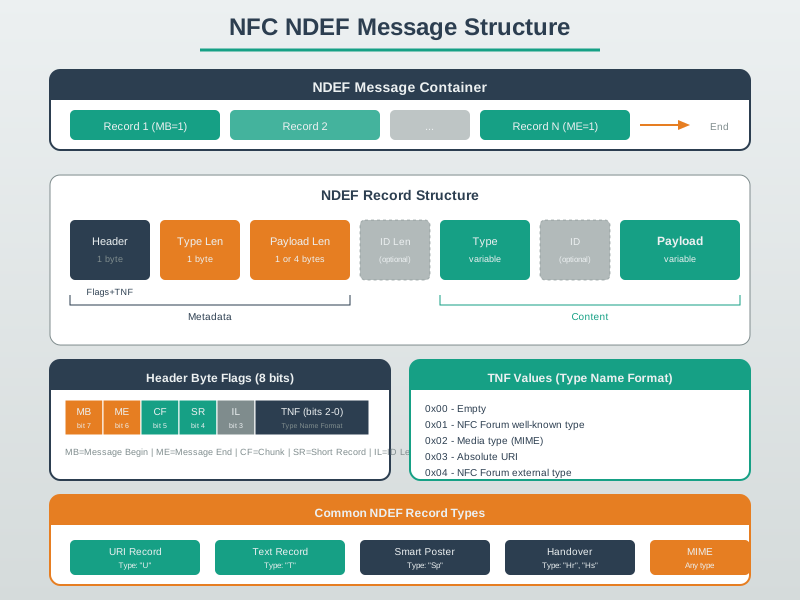
NDEF turns tag bytes into records that many NFC devices can parse.
- To place ndef message structure on firm evidence, inspect how: NFC NDEF Message Structure relates to: SR in it.: Any type limits the claim.
- Both: NFC NDEF Message Structure and: SR need evidence.
- Tag memory:: The physical tag stores bytes according to its family and access rules.
Major section
NDEF Record Planning
A tag that seems to open a URL, join Wi-Fi, or show text when you tap it is usually storing data as NDEF (NFC Data Exchange Format), the common format NFC readers understand.
- An NDEF message is a list of NDEF records, and each record is a typed container with a type, optional ID, and payload.
- The record type is what lets a reader choose an action.
- The release decision starts with capacity and lifecycle.
Major section
NDEF Record Planning (continued)
A URI record says "this is a link"; a Text record says "this is text"; a MIME or External record says "this is app-specific structured data." The tag is not running the workflow.
- For a maintenance label, a safe NDEF plan might use one URI record and one Text record.
- The Text record stores a short printed fallback such as PUMP-014, so support can compare the phone result with the visible label.
- The tag still does not authorize work; it only selects the asset and gives the application structured input to validate.
Major section
Validation and Security Boundary
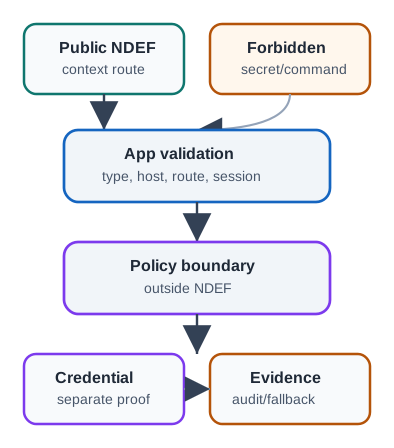
That also means it should not carry authority.
- Public payload:: A URL, text label, external type, or MIME payload can identify context or launch an app path.
- Credential system:: If the tap controls access or authenticity, use a credential proof path outside ordinary readable NDEF and document revocation.
- The same layering explains the security boundary.
Major section
Validation and Security Boundary (continued)
Public NDEF is useful because it is easy to read.
- Type 2 and Type 5 labels are often excellent public pointers, but ordinary readable NDEF does not hide secrets from a phone.
- Type 4 tags can support file access conditions and larger payloads, but an NDEF file is still only one part of a credential system.
- If a copied NDEF message can trigger the final action, the tag has been given too much authority.
Major section
Common Review Findings
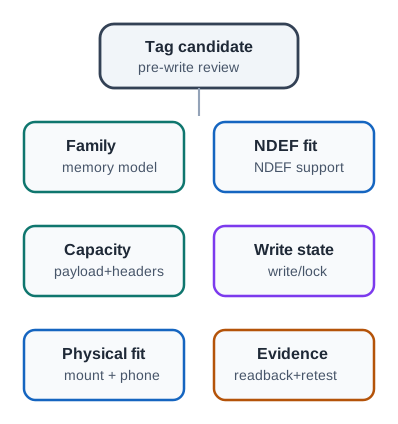
Tag type chosen by habit.: The tag must fit capacity, NDEF support, write state, placement, reader path, and support needs.
- Payload too large after overhead.: A payload that fits in a note may not fit once NDEF headers, language fields, type fields, and fallback data are included.
- Authority stored in NDEF.: Readable records should not carry secrets, credentials, roles, unlock commands, or policy decisions.
- No fallback value.: A printed or text fallback keeps the workflow usable when the reader, phone setting, tag placement, or app route fails.
Major section
Summary
NFC tag review starts with family, NDEF support, usable capacity, write state, physical fit, and release evidence.
- NDEF messages are structured as records with header flags, type information, optional IDs, and payloads that applications must validate.
- URI, Text, MIME, External, and composite records are useful when each record has a clear workflow role.
- Ordinary NDEF should carry context and routing data, not credentials, private data, unlock commands, long-lived secrets, or policy decisions.
Deck summary
Key takeaways
A successful tap does not show that the stored record, app rule, and physical label agree.
- NDEF is the data; the NFC Forum tag types are the chips that hold it, and they differ in memory, speed, and underlying technology.
- On small labels this can mean reading a Capability Container or TLV-style metadata that declares NDEF memory size and access state.
- NDEF turns tag bytes into records that many NFC devices can parse.
- A tag that seems to open a URL, join Wi-Fi, or show text when you tap it is usually storing data as NDEF (NFC Data Exchange Format), the common format NFC readers understand.
Retrieval practice
Recall check 1 of 3

Radio Remi says: answer from memory, then check your reasoning.
Q1According to this chapter, NFC tag work should start with what, before choosing a payload idea?
Show answer
Answer: B NFC tag work starts with tag family, NDEF support, usable capacity, and lock/write state, not the payload idea.
Retrieval practice
Recall check 2 of 3

Radio Remi says: answer from memory, then check your reasoning.
Q2You need cheap stickers that open a URL on tap, plus a smaller number of tags that store a secured, file-structured credential of several kilobytes. Which choices fit?
Show answer
Answer: C NDEF records such as the Well-Known URI record define behavior; NFC Forum tag types T1T-T5T define memory, access, and radio mapping.
Retrieval practice
Recall check 3 of 3

Radio Remi says: answer from memory, then check your reasoning.
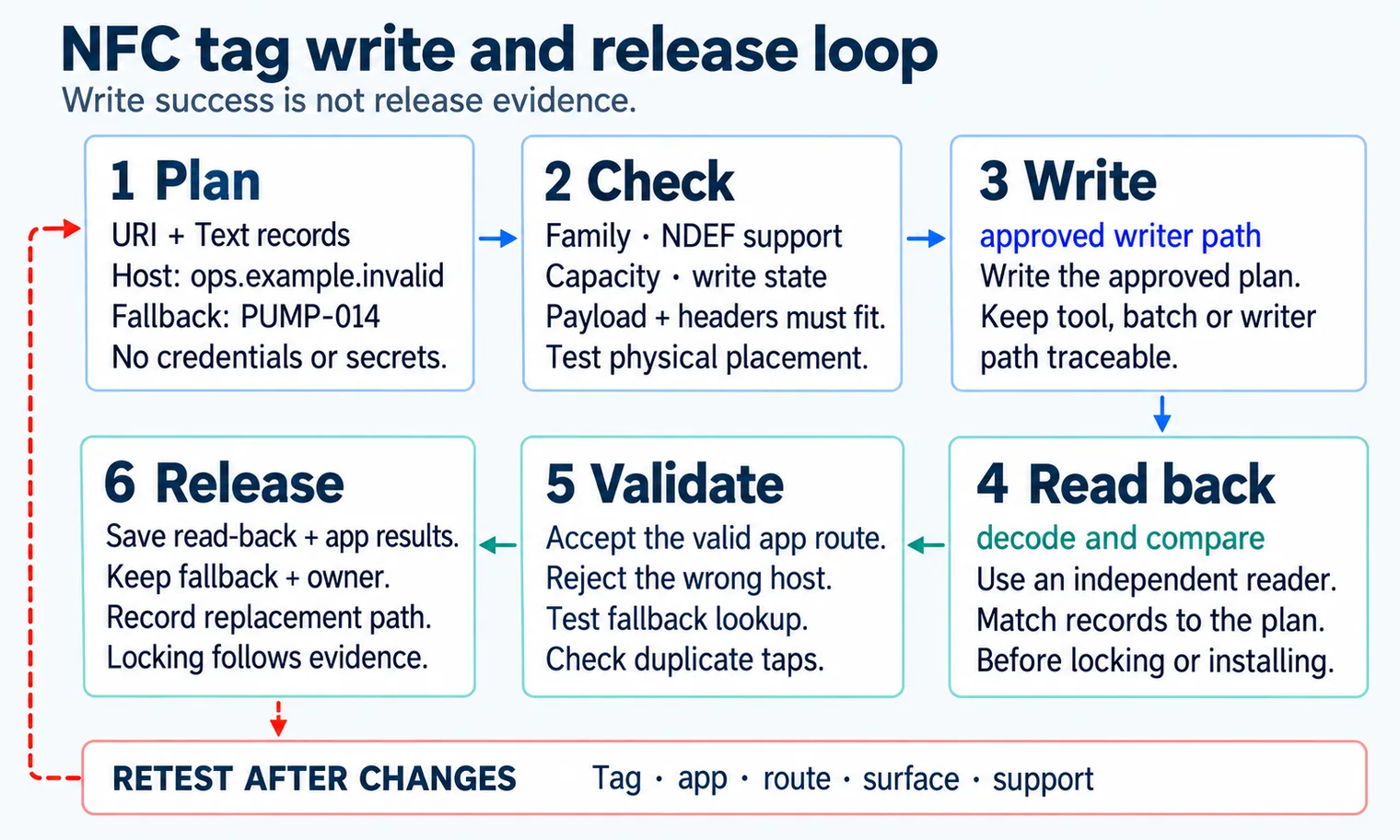
Q3A team writes an NFC tag with a URI record and the writer app reports success. What is the best next step before the tag is locked and installed?
Show answer
Answer: B A safe NDEF release loop verifies the final tag bytes through decoded read-back, validates app behavior, checks denied cases and fallback, and records evidence before locking or installing the tag.
Print reference
Answers
Answer key.
- B · NFC tag work starts with tag family, NDEF support, usable capacity, and lock/write state, not the payload idea.
- C · NDEF records such as the Well-Known URI record define behavior; NFC Forum tag types T1T-T5T define memory, access, and radio mapping.
- B · A safe NDEF release loop verifies the final tag bytes through decoded read-back, validates app behavior, checks denied cases and fallback, and records evidence before locking or installing the tag.