RFID, NFC & UWB · Study deck
NFC Tag Programming
Picture a maintenance tag that opens the wrong asset record after it is fixed to a metal cabinet.
Radio Remi is your guide for this deck.

After studying this chapter
Learning objectives
You will be able to:
- Plan URI, Text, MIME, and external-type NDEF records for an IoT tag without storing secrets in public payloads.
- Check tag capacity, write state, and platform support before attempting a write.
- Implement safe write patterns for Android, Python/nfcpy, and PN532-based embedded readers.
- Verify a written tag by reading it back and validating the payload, type, length, and application policy.
Major section
Start With the Story
A writer's green tick is not enough.
- The team must prove what a real phone reads in the final place.
- An application programming interface is a defined way for software parts to request work; API is its short name.
- Near field communication, or NFC, lets nearby devices exchange small records.
Major section
Minimum Viable Understanding
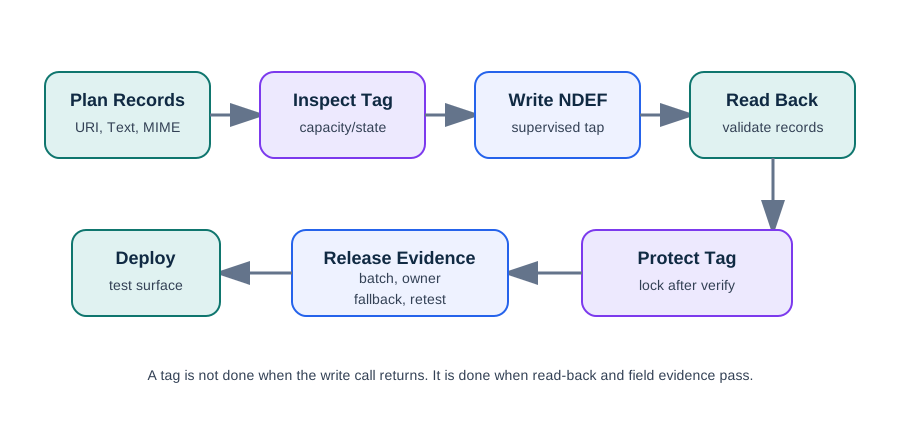
Programming is not just writing bytes.: A safe tag write includes record planning, capacity checks, write access checks, write, read-back verification, and a release record.
- NDEF is public unless another layer protects it.: Do not store passwords, access tokens, private keys, or one-time codes as ordinary NDEF text.
- UIDs and NDEF records have different jobs.: A UID can identify a tag, while an NDEF record can identify content or launch an app.
- Tag memory is tight.: Small Type 2 tags work well for one URL or compact app link; larger or protected records need a tag with explicit headroom.
Major section
Programming Is Records Plus Lifecycle
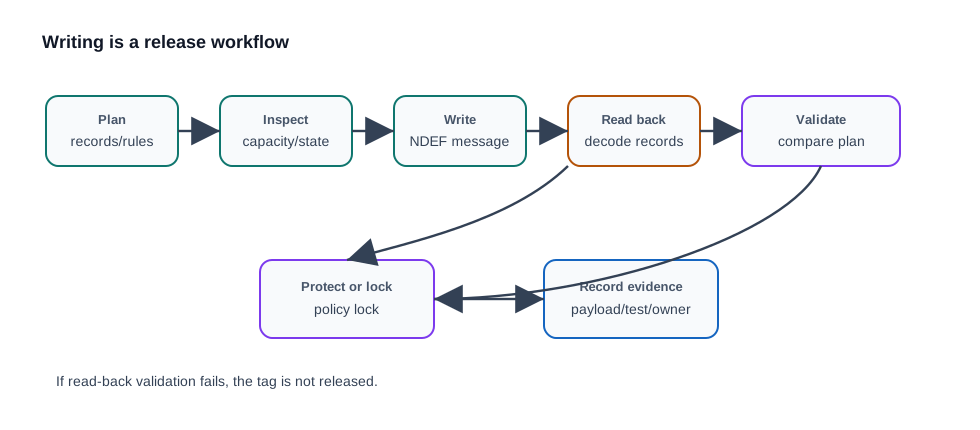
Writing an NFC tag has two halves that are easy to blur.
- A poster sticker anyone could overwrite and a tamper-resistant asset tag may use the same records but opposite lifecycle choices.
- The team needs 80 labels.
- The tag should not contain a technician password, service command, or bearer token.
Major section
Programming Is Records Plus Lifecycle (continued)
Each tap should open one maintenance record, show a short human label, and let the app request authenticated service actions.
- The tag selects context; the app and backend decide whether the current technician may do anything privileged.
- That split gives you a release checklist.
- The conclusion depends on payload/test/owner.
Major section
Programming Is Records Plus Lifecycle (continued)
During writing, reject tags that are read-only, already protected, too small, or not NDEF formatted.
- Work through it with: Writing is a release workflow as one fact, decode records as another, and payload/test/owner as the closeout.
- Combining: Writing is a release workflow with decode records hides accountability.
- The most common design error is treating the write command's success flag as the release event.
Major section
NDEF Record Planning
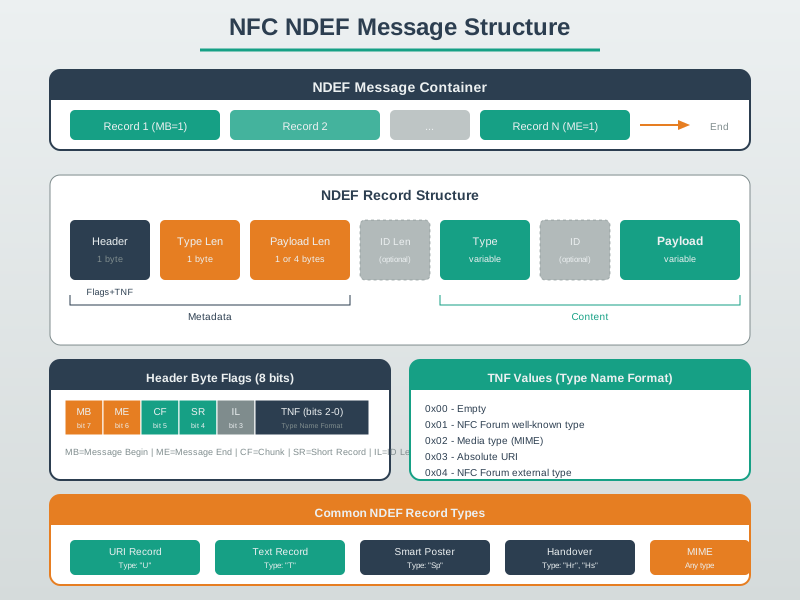
NDEF messages can contain multiple records, but a good programming workflow keeps the record set small and predictable.
- When reviewing ndef record planning, locate: NDEF Message Container beside bit 5 on it.: Any type makes the purpose concrete.
- Both: NDEF Message Container and bit 5 need evidence.
- Include a version field and reject unknown schemas.
Major section
Record Types and Validation Rules
The record type determines both the platform behavior and the validation rule.
- A message can hold several records, and order matters: the first record usually drives the primary action while later records act as fallbacks or hints.
- A "tap to open the app, or the web page if the app is missing" tag is one multi-record message, not two unrelated tags.
- For a batch station, make the checks mechanical.
Major section
PN532 Embedded Reader Pattern
An embedded reader is usually better for reading and validating tags in a product flow than for mass programming.
- If it writes tags, keep the write flow supervised and include verification.
- The pictured: PN532 RFID/NFC Shield marking makes setup reproducible.

Major section
Write and Verify Loop
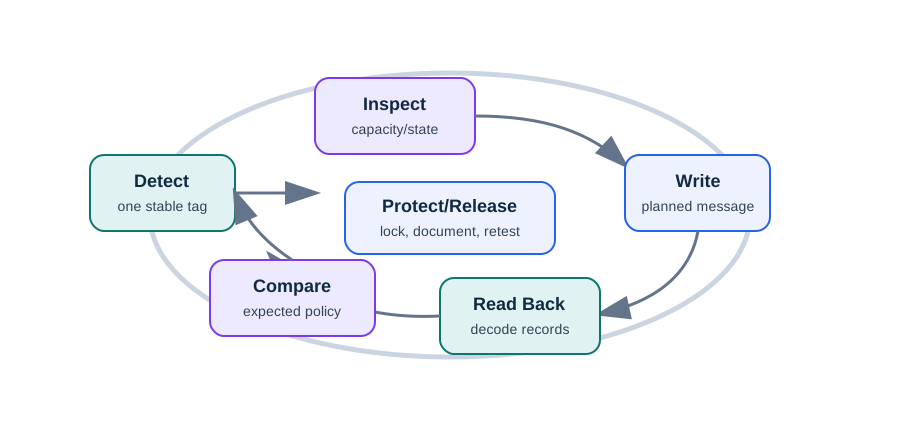
Both one stable tag and decode records need evidence.
- Protect: Lock or password-protect only after read-back passes and the replacement process is documented.
Major section
Lock Bits and Password Protection on NTAG
NTAG213, NTAG215, and NTAG216 provide roughly 144, 504, and 888 bytes of user memory, respectively.
- Their memory model gives you two different write controls, and confusing them creates deployment bugs.
- Static and dynamic lock bits are one-way; once a page is locked, it cannot be rewritten.

Major section
Lock Bits and Password Protection on NTAG (continued)
Password protection uses a 32-bit PWD and a 16-bit PACK acknowledgement to gate writes, or sometimes reads, behind a shared secret.
- An authorized writer can still update the tag, so this protects an update process rather than freezing content.
- "Make this tag safe" therefore has two different answers.
- Lock it if the content is final and must never change.
- The security boundary is narrower than many product sketches imply.
Major section
Lock Bits and Password Protection on NTAG (continued)
Password-protect it if it must stay updatable by staff but not by the public.
- NTAG21x also exposes a one-way NFC counter and a Capability Container that a reader checks first to learn the memory size and whether the tag is already read-only.
- The Capability Container is why a careful writer inspects the tag before writing instead of blasting records at every UID it sees.
- If a public poster tag is locked before read-back and the URL has a typo, the mistake becomes permanent.
Major section
Debugging Map
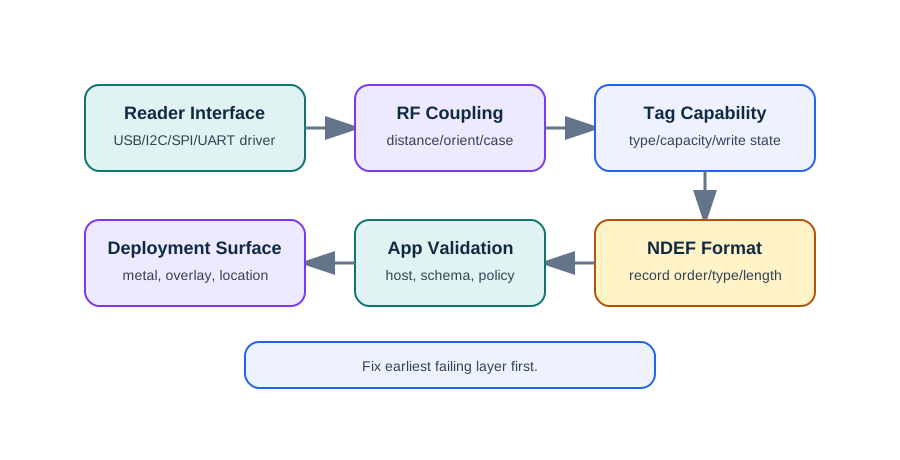
When a tag does not work, isolate the failure layer before changing code.
- To make debugging map reviewable, find the boundary between: USB/I2C/SPI/UART driver and type/capacity/write state on it.: Fix earliest failing layer first identifies the later check.
- Both: USB/I2C/SPI/UART driver and type/capacity/write state need evidence.
Major section
Summary
Android, Python, and PN532-based readers can all support tag work, but each needs explicit capacity, write-state, and error handling.
- NDEF records are useful for interoperability but should be treated as untrusted public input.
- Tag selection depends on payload size, write lifecycle, environment, phone support, and security needs.
- Production tags need field evidence from the final mounting surface and target reader devices.
Deck summary
Key takeaways
A writer's green tick is not enough.
- Programming is not just writing bytes.: A safe tag write includes record planning, capacity checks, write access checks, write, read-back verification, and a release record.
- Writing an NFC tag has two halves that are easy to blur.
- Each tap should open one maintenance record, show a short human label, and let the app request authenticated service actions.
- During writing, reject tags that are read-only, already protected, too small, or not NDEF formatted.
Retrieval practice
Recall check 1 of 3

Radio Remi says: answer from memory, then check your reasoning.
Q1After a maintenance app writes a URL and label to an NFC tag, what is required before reporting the write as successful?
Show answer
Answer: B A safe NFC write reads the tag back and verifies the records before it is reported successful or locked.
Retrieval practice
Recall check 2 of 3

Radio Remi says: answer from memory, then check your reasoning.
Q2A museum deploys NFC poster tags whose URL must never be altered by visitors, but staff must update a separate tag batch each week. Which memory controls fit the two cases?
Show answer
Answer: A NTAG lock bits set pages permanently read-only, while PWD/PACK password protection gates writes reversibly; freeze final content with lock bits and keep updatable content behind a password.
Retrieval practice
Recall check 3 of 3

Radio Remi says: answer from memory, then check your reasoning.
Q3A maintenance app writes a URL and short text label to an NFC tag. Which step is required before the app shows the write as successful?
Show answer
Answer: B A safe programming workflow does not stop at the write call.
Print reference
Answers
Answer key.
- B · A safe NFC write reads the tag back and verifies the records before it is reported successful or locked.
- A · NTAG lock bits set pages permanently read-only, while PWD/PACK password protection gates writes reversibly; freeze final content with lock bits and keep updatable content behind a password.
- B · A safe programming workflow does not stop at the write call.