Core Networking · Study deck
Subnetting and CIDR for IoT Networks
Picture a school adding thirty air sensors beside cameras, printers, and staff laptops.
Packet Pete is your guide for this deck.

After studying this chapter
Learning objectives
You will be able to:
- Explain: The installer must know which devices should speak directly, which must cross a checked boundary, and how many spare places the next term will need.
- Explain: That visual pairing grounds device families can need different subnet sizes because cameras, sensors, lighting, access control, and infrastructure grow differently in named evidence.
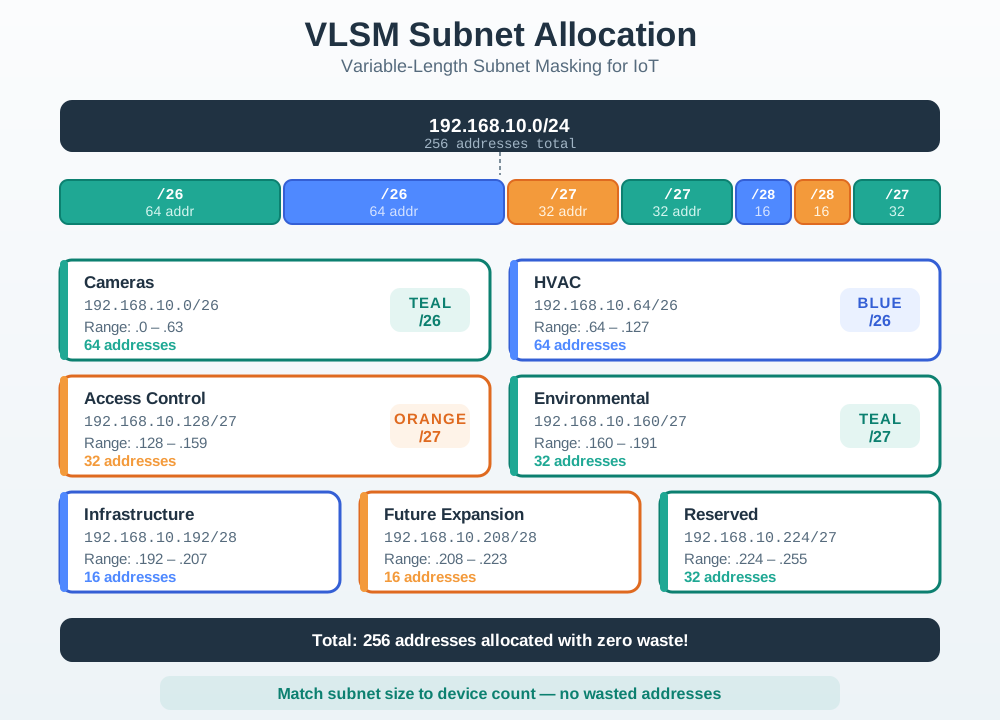
- Explain: Ground under the hood: prefix bits define the address budget with the visual at Figure: Variable-length subnet masking lets large and small device.
- Explain: That labelled check bounds device families can need different subnet sizes because cameras, sensors, lighting, access control, and infrastructure grow differently.
Major section
Start With the Boundary Line
Giving every device an address is not enough.
- The installer must know which devices should speak directly, which must cross a checked boundary, and how many spare places the next term will need.
- A subnet is a group of addresses treated as one local area.
- This example does not replace address arithmetic or policy design.
Major section
Start With the Boundary Line (continued)
The arithmetic matters because the deployment will inherit every boundary the design creates.
- A gateway is the device that carries traffic from that area toward another one.
- The deeper sections show how prefixes, host counts, route summaries, address assignment, and security rules make the boundary reviewable.
- Subnetting is the moment an address becomes a design decision.
Major section
Overview: A Subnet Is an Address Boundary
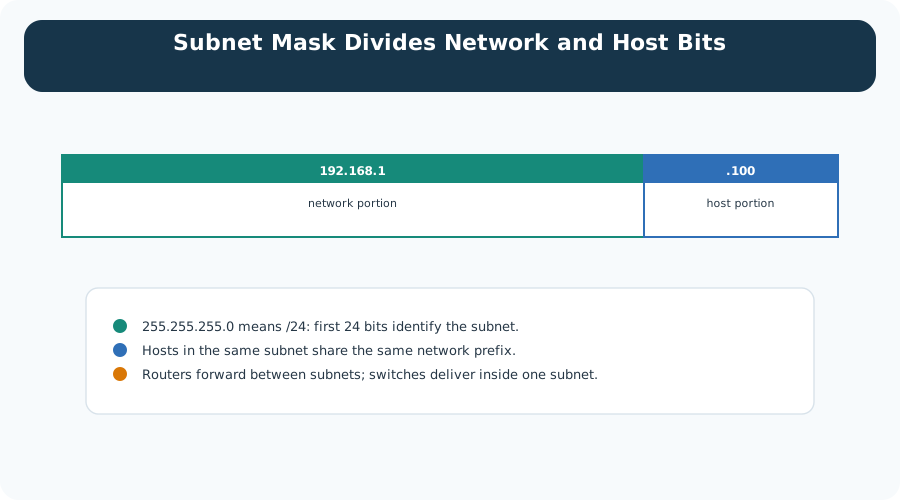
Addresses with the same reviewed prefix are treated as local; other destinations use the configured gateway.
- That relationship connects the arithmetic to broadcast scope, routing policy, DHCP capacity, and the failure clues a deployment will expose.
Major section
Practitioner: Build the Subnet Plan From Inventory
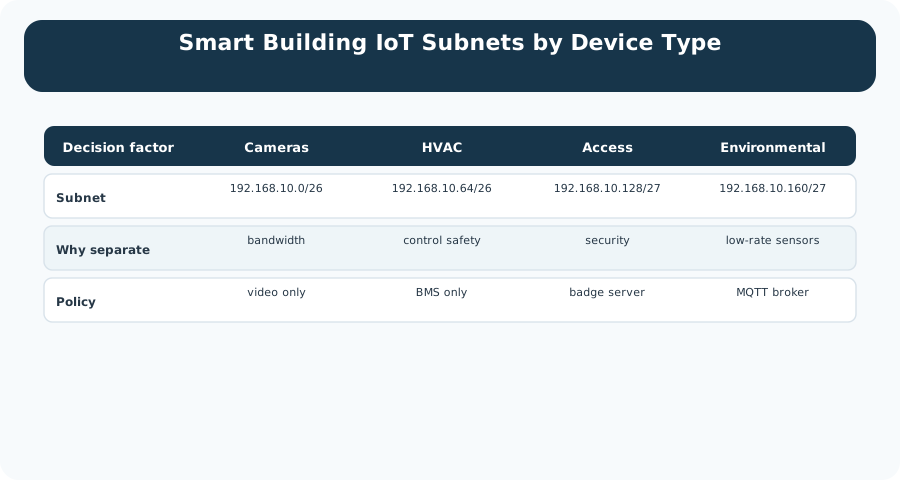
That visual pairing grounds device families can need different subnet sizes because cameras, sensors, lighting, access control, and infrastructure grow differently in named evidence.
- That labelled check bounds device families can need different subnet sizes because cameras, sensors, lighting, access control, and infrastructure grow differently.
Major section
Under the Hood: Prefix Bits Define the Address Budget
Ground under the hood: prefix bits define the address budget with the visual at Figure: Variable-length subnet masking lets large and small device.
- That sequence keeps under the hood: prefix bits define the address budget tied to what is visibly labelled.
Major section
Divide a Building by Device Population
A school has 50 cameras, 20 room sensors, and 10 door controllers.
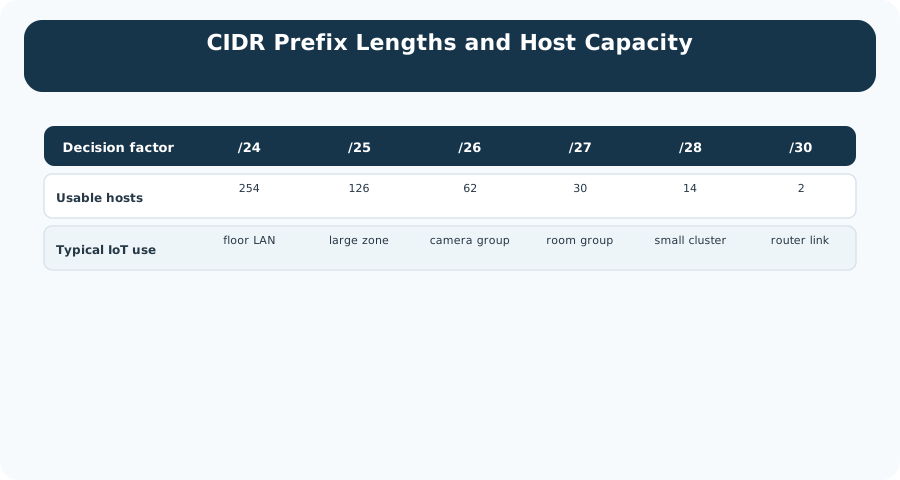
- A /26 leaves 6 host bits, so it contains 2^6=64 addresses and normally 62 usable IPv4 host addresses.
- The 20 room sensors need a /27: 2^5=32 total and 30 usable.
- The valid network start covering 80 is 64.
Major section
Divide a Building by Device Population (continued)
The 10 controllers fit a /28: 2^4=16 total and 14 usable.
- Those three allocations consume 112 address slots while preserving a clear subnet boundary for each device family.
- A camera should not receive the broadcast address, and a controller should not collide with the router.
- Its addresses run from 10.20.0.0 through 10.20.0.63.
- Routing and firewall policy still decide which device families may exchange unicast traffic.
Major section
Summary
CIDR prefix length determines how many host bits remain and therefore how many addresses are available.
- A subnet plan should count endpoints, gateways, infrastructure, DHCP reservations, static addresses, and spare capacity.
- VLSM lets different IoT zones use different subnet sizes when device counts and growth records differ.
- A defensible subnet design includes route summaries, gateway placement, security policy, monitoring scope, and recheck triggers.
Deck summary
Key takeaways
Giving every device an address is not enough.
- The arithmetic matters because the deployment will inherit every boundary the design creates.
- Addresses with the same reviewed prefix are treated as local; other destinations use the configured gateway.
- That visual pairing grounds device families can need different subnet sizes because cameras, sensors, lighting, access control, and infrastructure grow differently in named evidence.
- Ground under the hood: prefix bits define the address budget with the visual at Figure: Variable-length subnet masking lets large and small device.
Retrieval practice
Recall check 1 of 3

Packet Pete says: answer from memory, then check your reasoning.
Q1Why is subnetting useful in an IoT deployment beyond simply creating more address ranges?
Show answer
Answer: A Subnetting connects address math to operational boundaries: security zones, broadcast domains, routing, ownership, and troubleshooting.
Retrieval practice
Recall check 2 of 3

Packet Pete says: answer from memory, then check your reasoning.
Q2A site has 180 sensors, 12 infrastructure addresses, 8 reserved maintenance addresses, and a documented need for 40 spare addresses. Which review step matters before choosing a prefix?
Show answer
Answer: A Subnet sizing should include every address consumer and the documented spare capacity, not just the endpoint device count.
Retrieval practice
Recall check 3 of 3

Packet Pete says: answer from memory, then check your reasoning.
Q3For an ordinary IPv4 host subnet using /26, why are there 62 usable host addresses?
Show answer
Answer: C CIDR host capacity comes from the number of host bits left by the prefix, with ordinary IPv4 host subnets reserving network and broadcast addresses.
Print reference
Answers
Answer key.
- A · Subnetting connects address math to operational boundaries: security zones, broadcast domains, routing, ownership, and troubleshooting.
- A · Subnet sizing should include every address consumer and the documented spare capacity, not just the endpoint device count.
- C · CIDR host capacity comes from the number of host bits left by the prefix, with ordinary IPv4 host subnets reserving network and broadcast addresses.