Core Networking · Study deck

Wide-Area Access: LPWAN and Cellular

Picture a soil probe that sends four small readings each day.

Packet Pete is your guide for this deck.

networkphysicallpwan
Packet Pete, the module guide, in a scene from this chapter.
iotclass.org

After studying this chapter

Learning objectives

You will be able to:

  • Explain: With a 2.7 path-loss exponent and 15 dB obstruction allowance, 3 km leaves 13.4 dB margin; 8 km leaves only about 2 dB, before weather or foliage changes.
  • Explain: Transmit power, antenna gain, receiver sensitivity, path loss, building loss, terrain, foliage, interference, and fade margin decide whether a packet can be heard at the gateway or base station.
  • Explain: Provisioning also becomes part of the system: keys, SIM profiles, roaming permissions, operator coverage, gateway backhaul, and network-server ownership decide whether the radio path remains usable after rollout.
  • Explain radio, airtime, and battery constraints
iotclass.org

Major section

Start With Reach Before Speed

It sits far from the farm office and must run for years.

  • A fast link may waste power.
  • A long-range link may fit if it can carry the small job with clear support.
  • A payload is the useful data carried in a message.: Latency means the time from sending work to receiving the needed result.

Key terms

payload
payload is the useful data carried in a message.
Latency
Latency means the time from sending work to receiving the needed result.
gateway
gateway is a device or service that joins the field radio path to a wider network.
iotclass.org

Major section

Start With Reach Before Speed (continued)

A gateway is a device or service that joins the field radio path to a wider network.

  • LoRaWAN is a low-power wide-area network in which gateways forward radio messages to a network service.
  • Long reach does not mean endless reach.
  • Under the Hood covers link budget, air-time limits, mobile service, and power states.
iotclass.org

Major section

Start With Reach Before Speed (continued)

Those details can overturn a paper choice.

  • LPWAN and cellular choices begin with reach, ownership, power, and service model before raw throughput.
  • A tiny sensor that reports once an hour and a mobile gateway that streams diagnostics do not need the same wide-area network.
  • The right technology is the one whose constraints match that record.
iotclass.org

Major section

Phoebe's Field Notes: Where The Soil-Moisture Sensor's Link Budget Comes From

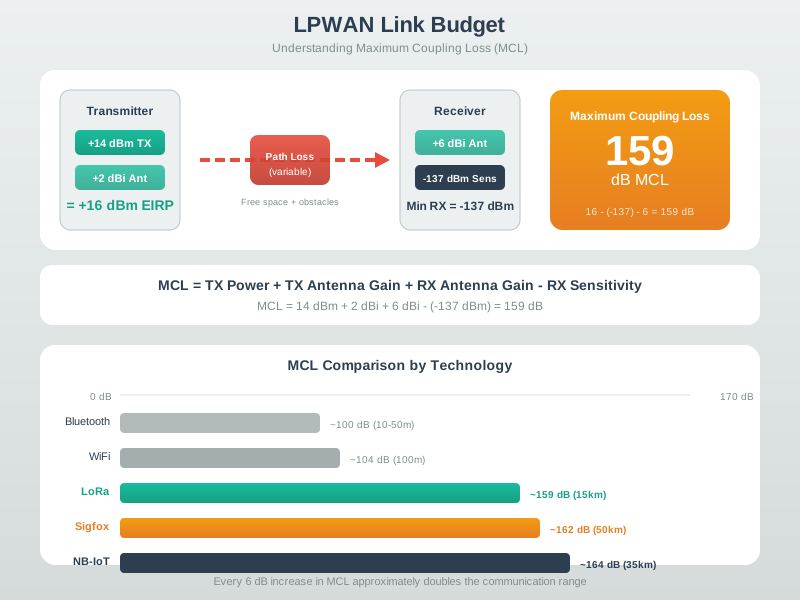
The mathematical gist.: This chapter's 14 dBm end node, 3 dBi gateway antenna, and −137 dBm receiver make a 154 dB link budget.

  • With a 2.7 path-loss exponent and 15 dB obstruction allowance, 3 km leaves 13.4 dB margin; 8 km leaves only about 2 dB, before weather or foliage changes.

Numbers to remember

−137 dBmand −137 dBm receiver make a 154 dB link budget.
154 dBand −137 dBm receiver make a 154 dB link budget.
15 dB15 dB obstruction allowance, 3 km leaves 13.4 dB margin
iotclass.org

Major section

Overview: Wide-Area IoT Trades Bandwidth For Reach
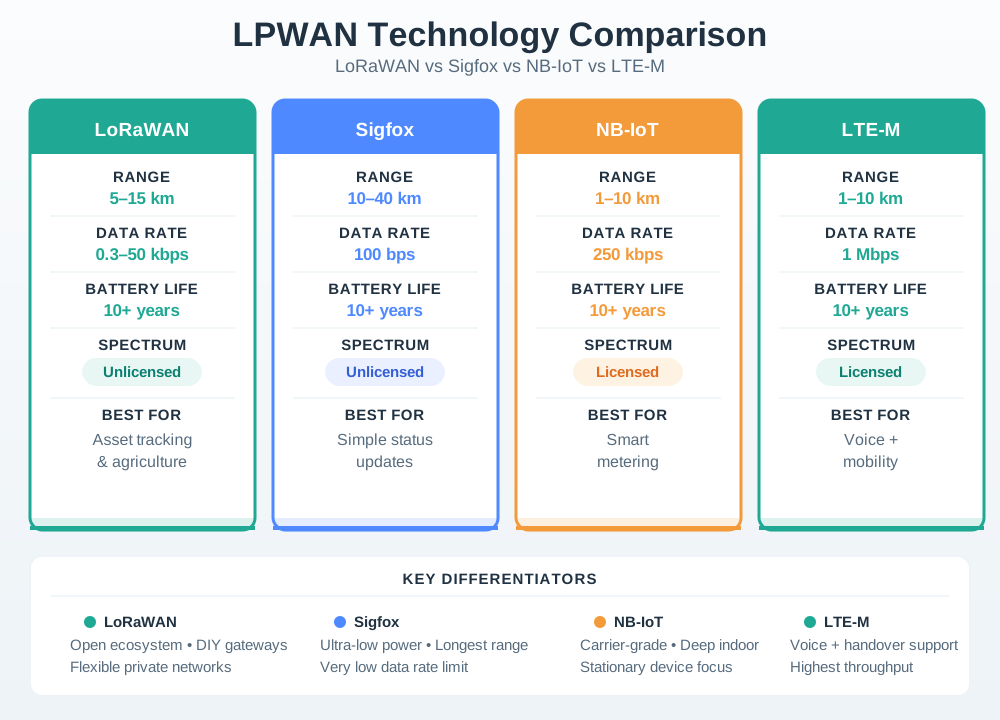
LPWAN and cellular IoT links are chosen when sensors must reach beyond a building, campus, or Wi-Fi cell while using small batteries.

  • The first design question is not which radio is newest.
  • Neither family is automatically better.
  • The practical distinction is therefore not only range.
Wide-area access sits between short-range personal networks and full broadband connectivity.
iotclass.org

Major section

Practitioner: Build A Coverage And Cadence Record
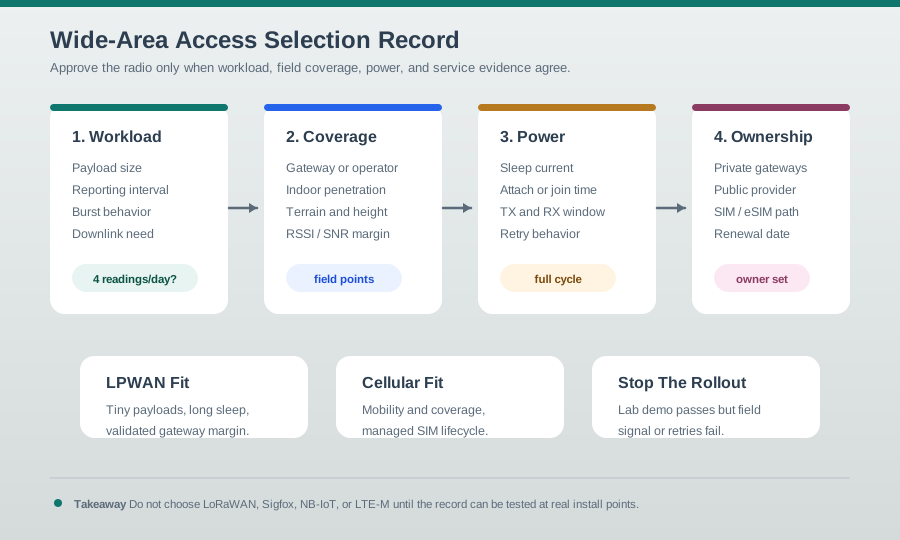
Include the best, typical, and worst install locations; the normal message; the largest exceptional message; the expected acknowledgement pattern; and the fallback when a report is missed.

  • For battery devices, keep one measured current trace that includes wake, attach or join, transmit, receive-window behavior, retry, and return to sleep.

Why it matters

Failure It Prevents.

Long range is earned through link budget, antenna placement, path loss, gateway density, and margin, not through a data-sheet range number alone.
iotclass.org

Major section

Practitioner: Build A Coverage And Cadence Record (continued)
Failure It Prevents.

  • For managed networks, keep the provisioning path, owner, renewal date, and support route beside the radio evidence.
  • Workload, which frames the selection record should preserve the workload, coverage, power, and ownership assumptions that made a wide-area technology acceptable.
  • Payload size, reporting interval, burst behavior, downlink need, firmware-update expectation.
iotclass.org

Major section

Under The Hood: Radio Physics Meets Service Model
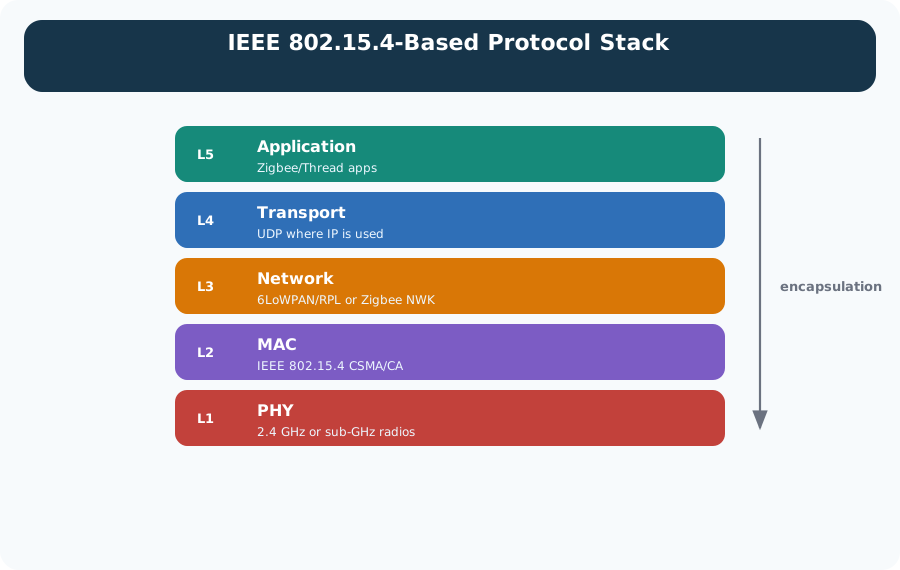
Wide-area IoT is a stack of constraints.

  • The radio layer controls link budget, airtime, interference, and energy per message.
  • The service layer controls network ownership, SIM or device provisioning, roaming, downlink timing, firmware-update path, and long-term continuity.
  • The radio side starts with a link budget, not with an advertised range number.

Why it matters

That longer airtime can consume battery, reduce channel capacity, increase collision exposure, and run into regional duty-cycle or fair-use limits.

Short-range low-power networks solve local mesh and scheduling problems; LPWAN and cellular solve different wide-area access problems.
iotclass.org

Major section

Under The Hood: Radio Physics Meets Service Model (continued)
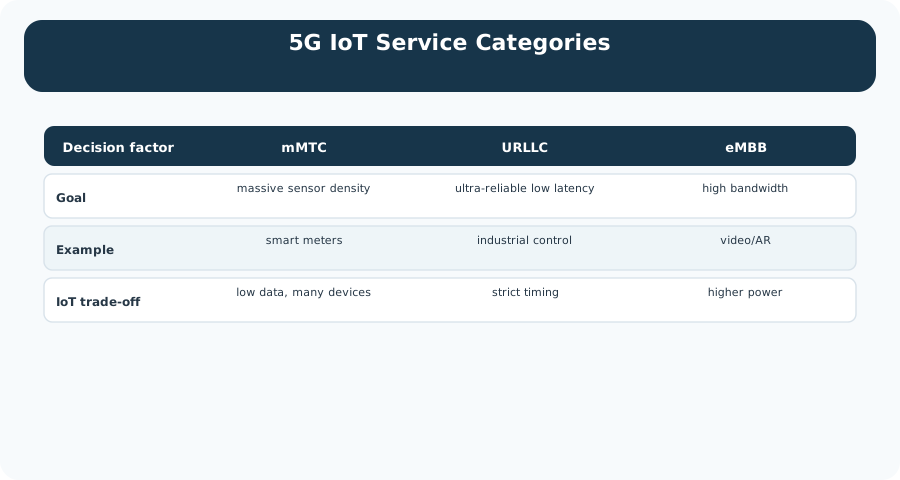
Transmit power, antenna gain, receiver sensitivity, path loss, building loss, terrain, foliage, interference, and fade margin decide whether a packet can be heard at the gateway or base station.

  • Lower data rates can improve sensitivity, but they keep the transmitter on air for longer.
  • A design that looks efficient for one sensor can fail when thousands of devices wake near the same reporting window.
  • The service side is just as technical.
iotclass.org

Major section

Under The Hood: Radio Physics Meets Service Model (continued)
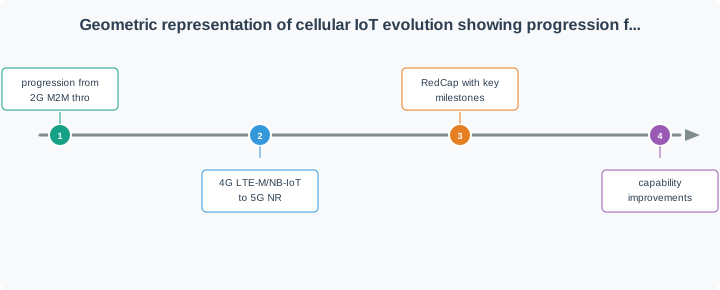
Provisioning also becomes part of the system: keys, SIM profiles, roaming permissions, operator coverage, gateway backhaul, and network-server ownership decide whether the radio path remains usable after rollout.

  • A wide-area design is complete only when radio evidence and service evidence agree, and both are tied to real install locations, payload schedules, and support owners.
  • That labelled check bounds short-range low-power networks solve local mesh and scheduling problems; lpwan and cellular solve different wide-area access problems.
  • Airtime Pressure Low data rate increases time on air.
iotclass.org

Deck summary

Key takeaways

It sits far from the farm office and must run for years.

  • A gateway is a device or service that joins the field radio path to a wider network.
  • Those details can overturn a paper choice.
  • The mathematical gist.: This chapter's 14 dBm end node, 3 dBi gateway antenna, and −137 dBm receiver make a 154 dB link budget.
  • LPWAN and cellular IoT links are chosen when sensors must reach beyond a building, campus, or Wi-Fi cell while using small batteries.
iotclass.org

Retrieval practice

Recall check 1 of 3

Packet Pete says: answer from memory, then check your reasoning.

Q1A field sensor sends a small soil-moisture reading four times per day and must run for years on a battery. Which first question best narrows the access choice?

AWhich product page claims the longest range for outdoor battery sensors?
BWhat coverage, cadence, payload, battery, ownership, and downlink needs must it meet?
CWhich module advertises the newest cellular label for this class of sensor?
DWhich plan offers the largest data allowance for a four-reading-per-day device?
Show answer

Answer: B LPWAN and cellular choices are workload decisions: payload, cadence, range, power, coverage, ownership, mobility, and downlink requirements drive the shortlist.

iotclass.org

Retrieval practice

Recall check 2 of 3

Packet Pete says: answer from memory, then check your reasoning.

Q2A water-meter pilot works beside the office gateway but fails in several basement meter rooms. What should stop the rollout?

AThe team has only a lab success and no field coverage or link-margin evidence for the basement locations.
BThe technology name includes LPWAN, which guarantees every low-power deployment will work.
CThe payload is small, so coverage and retries no longer matter.
DThe devices sleep most of the day, so downlink reachability is always guaranteed.
Show answer

Answer: A A pilot must prove coverage, link margin, retry behavior, and power behavior at representative install points before rollout.

iotclass.org

Retrieval practice

Recall check 3 of 3

Packet Pete says: answer from memory, then check your reasoning.

Q3Which review finding should fail an LPWAN or cellular IoT design before procurement?

AThe design records payload cadence, field coverage evidence, power profile, provisioning process, and fallback behavior.
BThe design chooses private LPWAN because the owner can place gateways and validate link margin for the actual terrain.
CThe design assumes one vendor range number and one lab transmit test are enough for all buildings, terrain, operators, and battery targets.
DThe design selects cellular IoT after confirming operator coverage, subscription terms, device provisioning, and power-mode behavior.
Show answer

Answer: C Wide-area IoT decisions fail when they rely on generic range claims instead of tested coverage, link margin, power, provisioning, and lifecycle evidence.

iotclass.org

Print reference

Answers

Answer key.

  1. B · LPWAN and cellular choices are workload decisions: payload, cadence, range, power, coverage, ownership, mobility, and downlink requirements drive the shortlist.
  2. A · A pilot must prove coverage, link margin, retry behavior, and power behavior at representative install points before rollout.
  3. C · Wide-area IoT decisions fail when they rely on generic range claims instead of tested coverage, link margin, power, provisioning, and lifecycle evidence.
iotclass.org