Core Networking · Study deck

Link Budget and Coverage Planning

A gateway hears a field sensor reliably, but configuration commands rarely return.

Packet Pete is your guide for this deck.

proplinkbudget
Packet Pete, the module guide, in a scene from this chapter.
iotclass.org

After studying this chapter

Learning objectives

You will be able to:

  • Explain: That visual pairing grounds a waterfall view helps review every gain and loss in order, especially when a design looks good on path loss alone but weak after installation losses in named evidence.
  • Explain: Together those labels make lpwan coverage planning depends on a ledger of radio terms, path assumptions, installation losses, and the margin required for reliable reporting testable.
  • Explain: This proves one path and set of conditions, not every season or site; the deeper sections derive the budget and examine fade, uncertainty, and release limits.
  • Explain: Its coverage calculation changes even if no hardware moves.
iotclass.org

Major section

Start With the Margin You Need to Trust

A gateway means the device or service that joins the local radio network to another system.

  • This proves one path and set of conditions, not every season or site; the deeper sections derive the budget and examine fade, uncertainty, and release limits.
  • A link budget is the story of a signal from transmitter to receiver with every gain and loss written down.
  • For IoT, the budget becomes a release gate.

Key terms

If the margin
If the margin is thin before rain, foliage, battery voltage, installation error, or antenna orientation are considered, the network is not ready for the field.
iotclass.org

Major section

Practitioner: Build The Budget As A Deployment Ledger
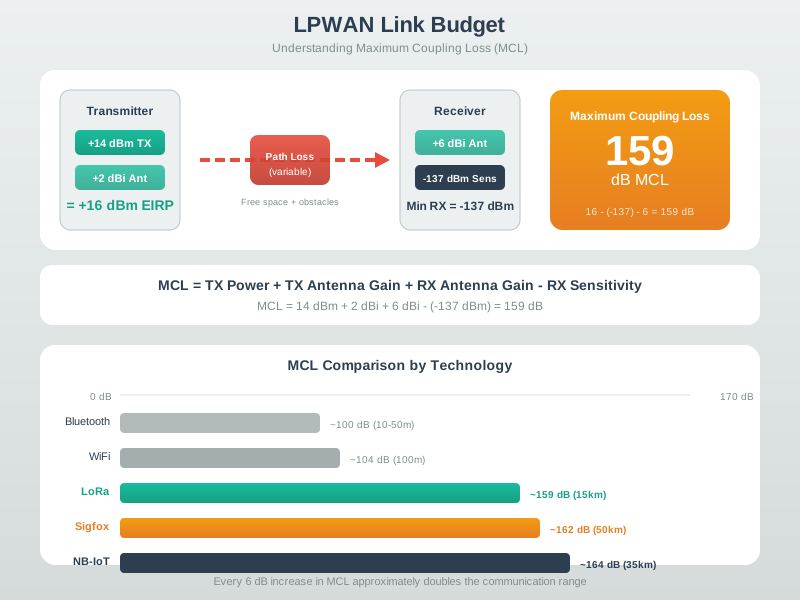
Together those labels make lpwan coverage planning depends on a ledger of radio terms, path assumptions, installation losses, and the margin required for reliable reporting testable.

  • That visual pairing grounds a waterfall view helps review every gain and loss in order, especially when a design looks good on path loss alone but weak after installation losses in named evidence.
LPWAN coverage planning depends on a ledger of radio terms, path assumptions, installation losses, and the margin required for reliable reporting.
iotclass.org

Major section

Under The Hood: Margin Is Where Assumptions Become Risk
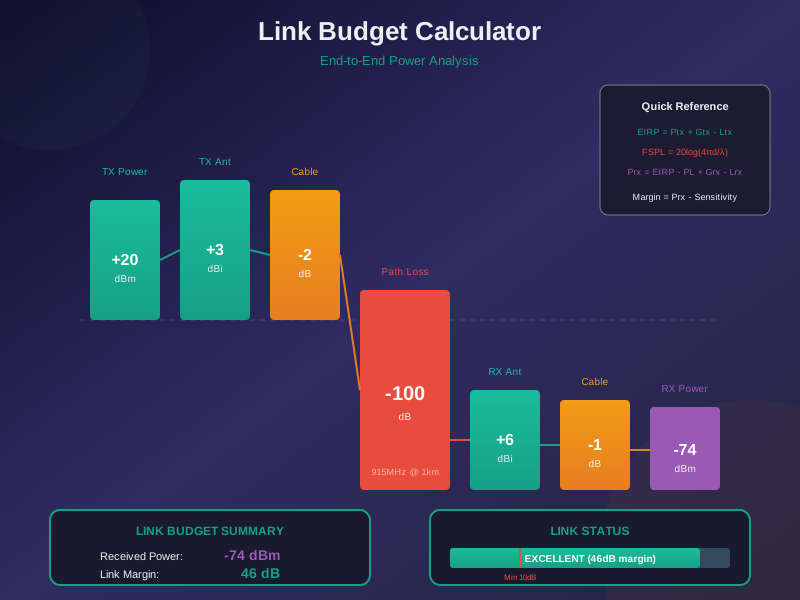
The decision in under the hood: margin is where assumptions become risk must preserve that labelled boundary.

  • The visual evidence for under the hood: margin is where assumptions become risk sits in Figure: Margin is the gap between the predicted received.

Why it matters

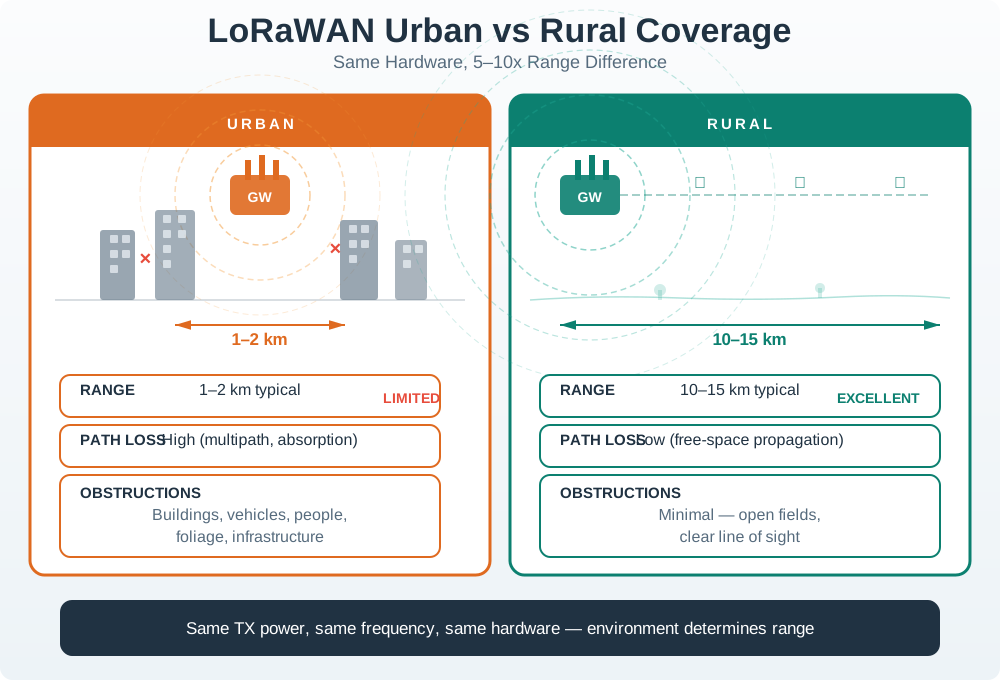
That visual pairing grounds the same radio can behave very differently in dense urban, indoor, and open rural paths because the environment changes the loss terms in named evidence.

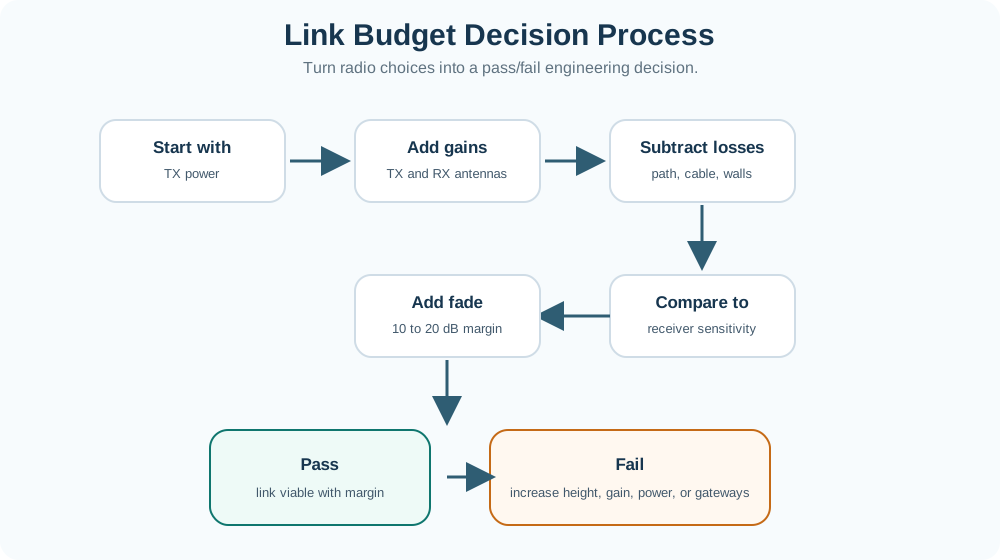
The calculation is additive in dB units: add gains, subtract losses, then compare the result with receiver sensitivity.
iotclass.org

Major section

Check Both Directions before Calling the Site Covered
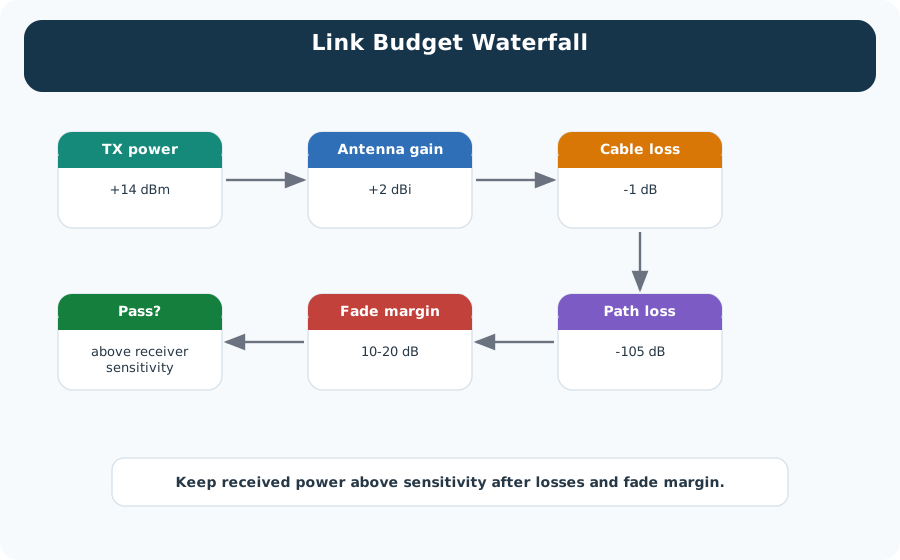
The received estimate is −95 dBm.

  • Against −118 dBm sensitivity, nominal margin is 23 dB.
  • After a 10 dB reserve, the remaining allowance is 13 dB.
  • For an illustrative return-path calculation, suppose effective launched power is 10 dBm and the same modeled losses total 111 dB.
  • The receiving device sees −101 dBm.

Numbers to remember

−95 dBmThe received estimate is −95 dBm.
−118 dBmAgainst −118 dBm sensitivity, nominal margin is 23 dB.
23 dBnominal margin is 23 dB.
A waterfall view helps review every gain and loss in order, especially when a design looks good on path loss alone but weak after installation losses are included.
iotclass.org

Major section

Check Both Directions before Calling the Site Covered (continued)

Its coverage calculation changes even if no hardware moves.

  • If its selected mode requires −110 dBm, the nominal margin is only 9 dB.
  • Sensitivity belongs to a particular receiver and setting; it is not a universal property of the site.
  • A radio acknowledgement alone need not prove the requested configuration was applied.
iotclass.org

Deck summary

Key takeaways

A gateway means the device or service that joins the local radio network to another system.

  • Together those labels make lpwan coverage planning depends on a ledger of radio terms, path assumptions, installation losses, and the margin required for reliable reporting testable.
  • The decision in under the hood: margin is where assumptions become risk must preserve that labelled boundary.
  • The received estimate is −95 dBm.
  • Its coverage calculation changes even if no hardware moves.
iotclass.org

Retrieval practice

Recall check 1 of 3

Packet Pete says: answer from memory, then check your reasoning.

Q1What is the main decision a link budget should support before an IoT wireless deployment?

AWhether the protocol advertises the longest range in a product brochure.
BWhether received power still clears sensitivity after site losses and reserve.
CWhether the transmitter is using the maximum possible output power.
DWhether all devices use the same antenna type.
Show answer

Answer: B The useful decision is whether the link has enough margin after gains, losses, and reserve assumptions are recorded.

iotclass.org

Retrieval practice

Recall check 2 of 3

Packet Pete says: answer from memory, then check your reasoning.

Q2A gateway move adds a longer antenna cable and places the antenna behind a parapet. What should happen to the link-budget record?

ALeave the budget unchanged because the same radio protocol is still being used.
BRemove receiver sensitivity from the record because the gateway location changed.
CRecord the new cable and obstruction losses, then recheck field margin.
DIncrease the advertised range value and skip field validation.
Show answer

Answer: C The physical installation changed, so the budget needs new loss terms and validation against measured signal quality.

iotclass.org

Retrieval practice

Recall check 3 of 3

Packet Pete says: answer from memory, then check your reasoning.

Q3Why is a positive nominal link margin still not enough for release in a real IoT deployment?

ABecause receiver sensitivity is unrelated to whether a link works.
BBecause free-space models must be replaced with an indoor model.
CBecause datasheet antenna gain should be removed from the budget.
DBecause reserve may miss fading, site loss, and measurement uncertainty.
Show answer

Answer: D A nominal pass is only useful when the reserve terms and field validation show the link can survive real deployment variation.

iotclass.org

Print reference

Answers

Answer key.

  1. B · The useful decision is whether the link has enough margin after gains, losses, and reserve assumptions are recorded.
  2. C · The physical installation changed, so the budget needs new loss terms and validation against measured signal quality.
  3. D · A nominal pass is only useful when the reserve terms and field validation show the link can survive real deployment variation.
iotclass.org