Control, Gateways & Networked Systems · Study deck
Where Multi-Hop Networks Fit
Picture a field sensor that reaches the operator only when two battery nodes relay its alarm.
Gateway Gus is your guide for this deck.

After studying this chapter
Learning objectives
You will be able to:
- Decide whether an application is a good candidate for multi-hop ad hoc networking.
- Map application needs to end-node, relay, and gateway responsibilities.
- Define path-health proof that shows a multi-hop route is working for the application.
- Explain how gateway boundaries shape reliability, buffering, and ownership.
Major section
Start With the Place a Gateway Cannot Cover
Extra reach is useful only if delay, loss, and energy stay inside the service promise.
- A gateway means the boundary system that joins local devices to another network or service.
- The deeper sections compare use cases, routing, capacity, power, mobility, and support.
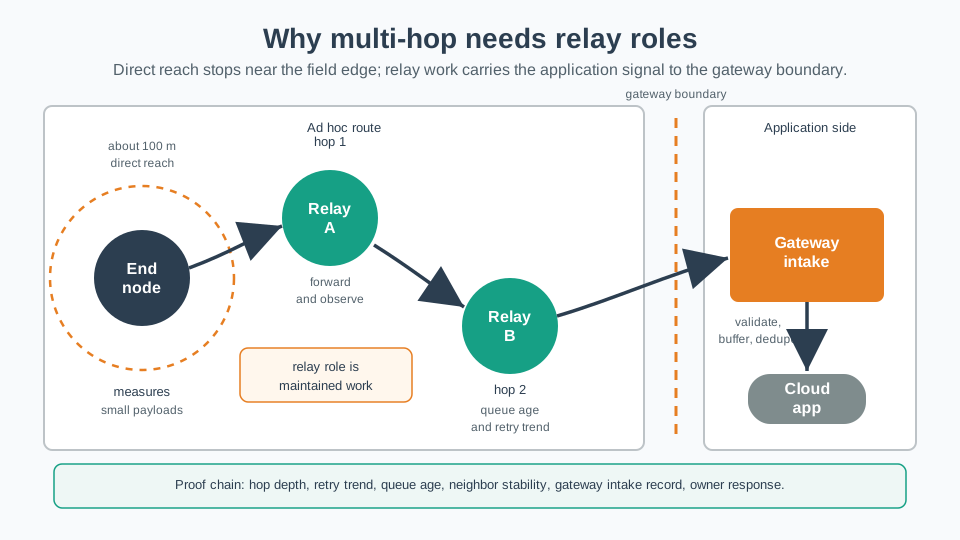
- Multi-hop applications appear when one gateway cannot reach every useful sensor.
Major section
Application Fit for Multi-Hop
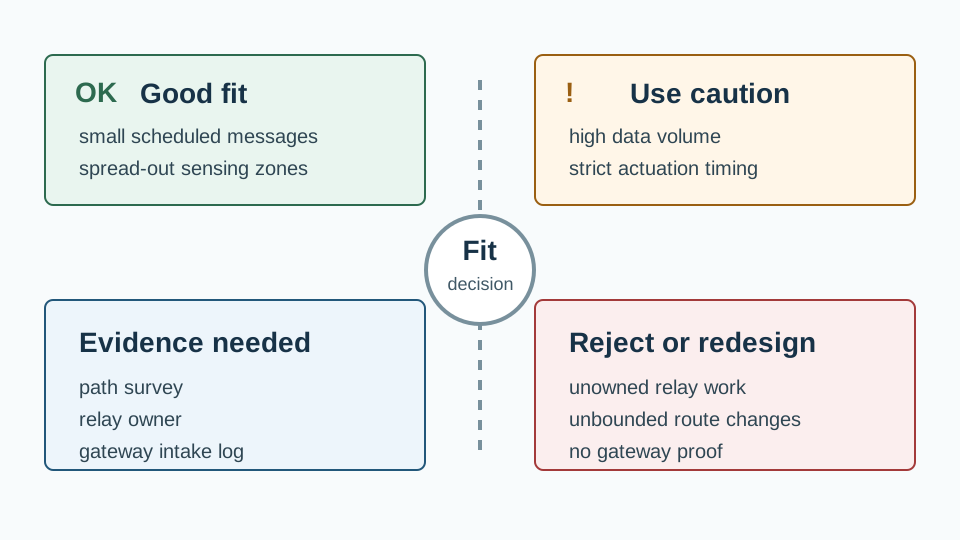
The route has value only when the application can tolerate the shape of that route.
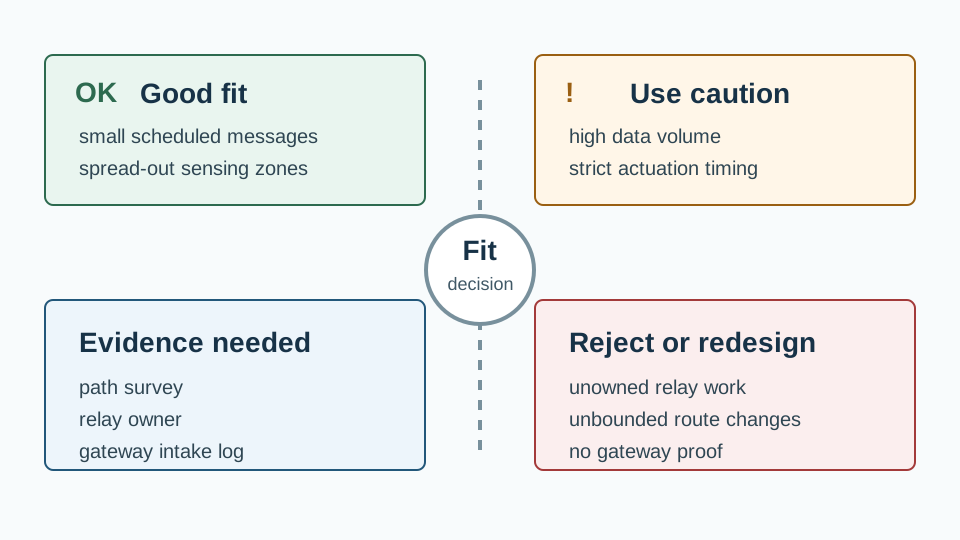
- The same design is a poor fit when the application requires continuous high-volume streams, strict actuation timing, unbounded route changes, or unowned relay nodes.
- Multi-hop can extend reach, but it also creates extra responsibilities.
Major section
Common Application Patterns
The strongest multi-hop applications usually have a clear reason for not making every node talk directly to a fixed access point.
- Nodes are added, moved, or retired as a project area changes.
- Assets may not remain near one access point.
- The review focuses on neighbor stability, delivery windows, and whether asset movement changes relay burden.
Major section
Path Health and Operational Proof
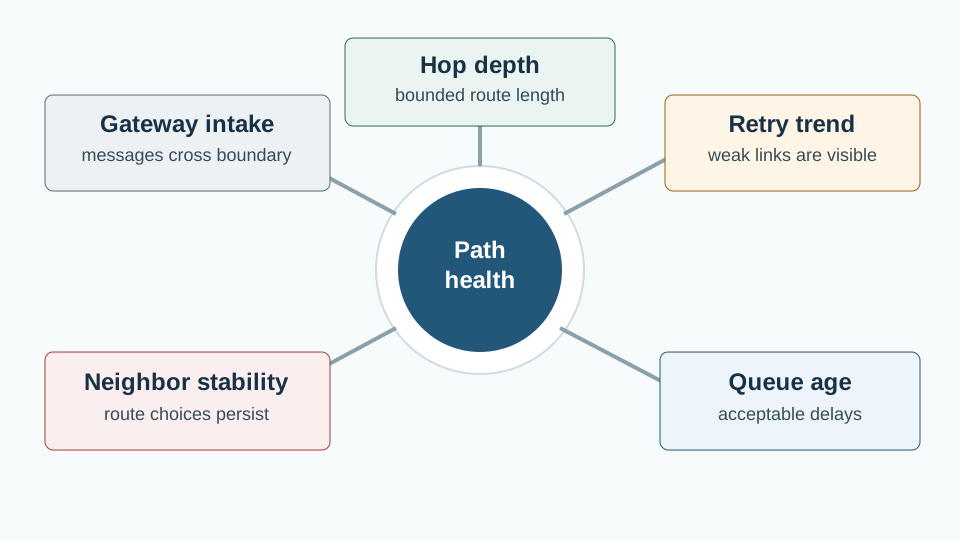
Multi-hop applications fail quietly when teams review only a drawing.
- The drawing shows intended paths.
- The evidence shows whether those paths are behaving well enough for the application.
Major section
Field Environment Monitor
A team needs environment readings from several separated zones.
- The readings are small and periodic, the site layout makes direct gateway reach uneven, and some nodes can be placed where they can serve as maintained relays.
- It should approve the design only after the application contract is clear.
- Clarify the Application Need.
Major section
Application Decision Record
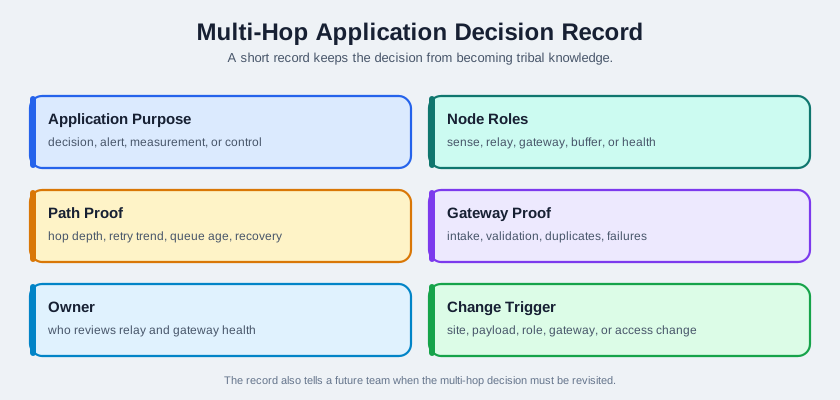
A short review record keeps the multi-hop decision from becoming tribal knowledge.
- It also helps future teams know when the decision must be revisited.
- Change trigger:: Site layout change, payload change, node role change, gateway policy change, or maintenance access change.
Major section
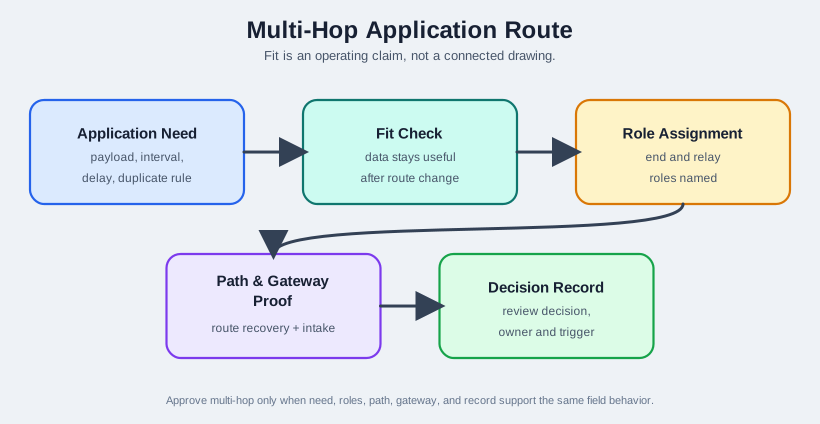
Overview: Fit Is An Operating Claim
A multi-hop application is not approved by showing that nodes can form a route.
- The fit claim therefore has two sides.
- The application must define what counts as useful data, and the network must show which route, relay, and gateway conditions keep that data useful.
Major section
Separate Traffic from Relay Work
This prevents a team from approving a mesh because it looks connected while missing the devices that now carry the cost of that connection.
- For each application pattern, split the review into traffic need and relay work.
- This split is especially important for mobile asset yards and staged work areas.
- Movement can turn yesterday's end node into today's overloaded relay, so the application record must track role changes as well as delivery success.
Deck summary
Key takeaways
Extra reach is useful only if delay, loss, and energy stay inside the service promise.
- The route has value only when the application can tolerate the shape of that route.
- The strongest multi-hop applications usually have a clear reason for not making every node talk directly to a fixed access point.
- Multi-hop applications fail quietly when teams review only a drawing.
- A team needs environment readings from several separated zones.
Retrieval practice
Recall check 1 of 2

Gateway Gus says: answer from memory, then check your reasoning.
Q1A hillside soil-moisture deployment has 28 sensors, and the far plots barely reach the gateway after rain. What is the best response before choosing direct links or multi-hop?
Show answer
Answer: B The choice is credible only when direct-link and multi-hop candidates are compared against the same application, route, gateway, and operations evidence.
Retrieval practice
Recall check 2 of 2

Gateway Gus says: answer from memory, then check your reasoning.
Q2A construction yard uses a multi-hop network for asset tags. The route usually reaches the gateway, but some relay nodes also move with equipment and occasionally buffer tag updates for several minutes. What should the application-fit review decide first?
Show answer
Answer: A A multi-hop application fit decision must prove that moving relay roles, queue age, and gateway acceptance still leave the delivered data useful.
Print reference
Answers
Answer key.
- B · The choice is credible only when direct-link and multi-hop candidates are compared against the same application, route, gateway, and operations evidence.
- A · A multi-hop application fit decision must prove that moving relay roles, queue age, and gateway acceptance still leave the delivered data useful.