Integration & Gateways · Study deck

Modbus and the Register Contract

Picture a heat meter that returns the number 517.

Gateway Gus is your guide for this deck.

modbus
Gateway Gus, the module guide, in a scene from this chapter.
iotclass.org

After studying this chapter

Learning objectives

You will be able to:

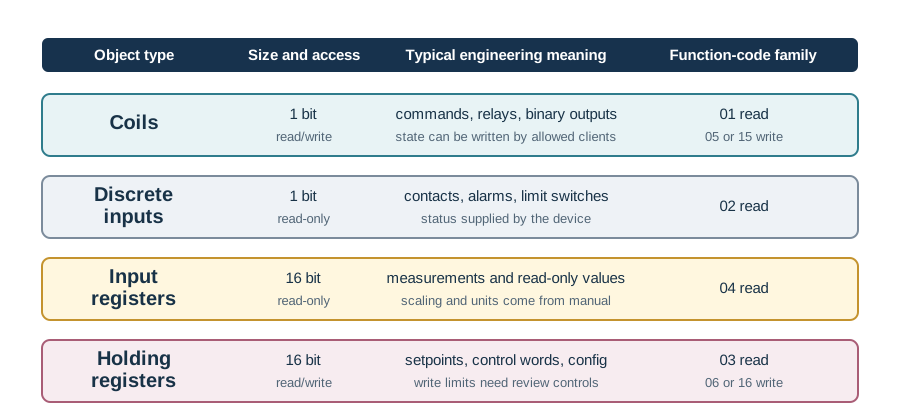
  • map coils, discrete inputs, input registers, and holding registers to what they can and cannot prove
  • build an integration record before polling a Modbus device
  • separate a protocol-level failure (no response, exception) from a data-meaning failure (wrong value, unexpected write)
  • review a Modbus register contract for release
iotclass.org

Major section

Start With the Number Behind the Register
The screen should show 51.7 degrees, but only if the team chose the right location, scale, sign, and byte order.

  • A reply is not proof that the value is correct.
  • Modbus is a small set of request and response rules used by industrial devices.
  • The device manual gives those locations their engineering meaning.
iotclass.org

Major section

Start With the Number Behind the Register (continued)
It lets one side read or write bits and groups of 16-bit numbers.

  • A gateway is a bridge that can carry those requests between unlike links.
  • No reply, an error reply, a wrong value, and an unsafe write need different action.
  • The useful question is not whether Modbus returned bytes.
iotclass.org

Major section

Overview: Modbus Exposes a Register Contract
Modbus is a compact industrial request/response protocol for reading and writing device state.

  • Its stable idea is not a rich device model; it is a client asking a server for coils, discrete inputs, input registers, or holding registers.
  • That separation is useful and dangerous.
  • The register map and integration record do.

Why it matters

Two labels deserve attention—“Size and access” and “Typical engineering meaning”—because they bound The four object families tell the client how the value can be accessed; the device manual tells the team what the value means.

Modbus separates the protocol operation from the engineering meaning that a register map supplies.
iotclass.org

Major section

Overview: Modbus Exposes a Register Contract (continued)
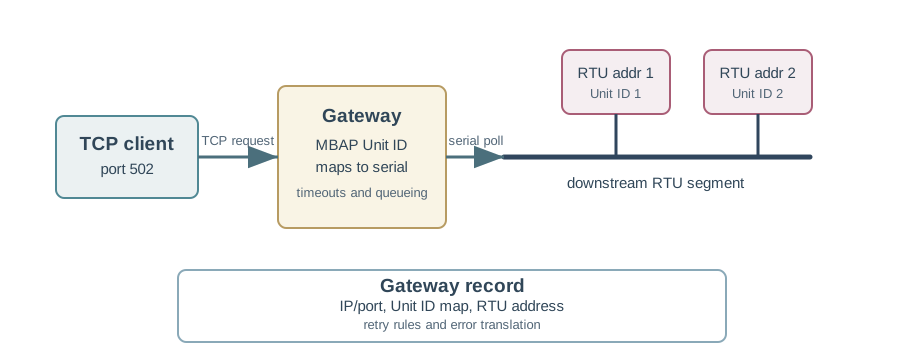
For example, a heat-meter manual might label a supply temperature as holding register 40017, scale it by 0.1 degrees, and store a 32-bit value across two adjacent 16-bit registers.

  • One client library may expect the human reference number, another may expect zero-based protocol address 16, and a gateway may pass only the function code plus address onward to a serial device.
  • If you only remember one rule, remember this: Modbus does not explain what a value means.
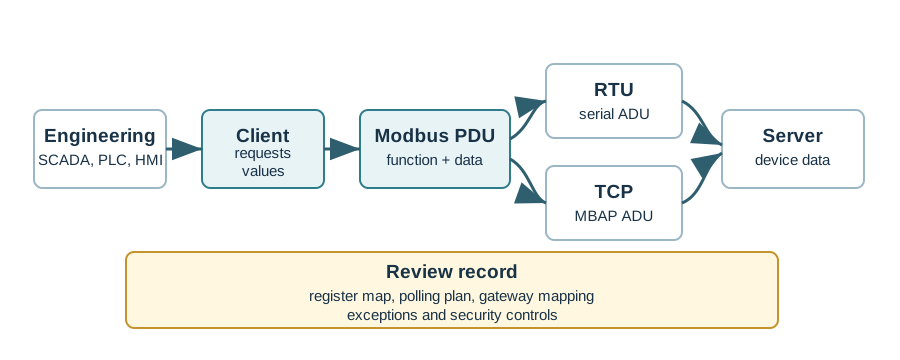
  • A release decision about the “scada, plc, hmi”–“client” decision needs “requests”, not a slogan.
iotclass.org

Major section

Practitioner: Build the Integration Record Before Polling
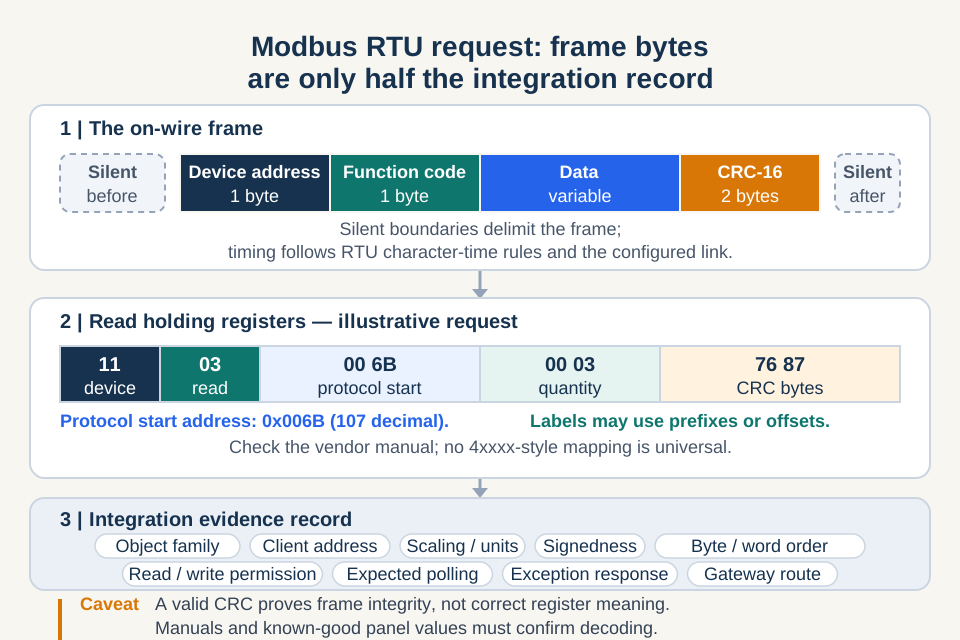
A useful Modbus integration record lets another engineer reproduce the connection without guessing.

  • It identifies the device, each value, the object family, the protocol address expected by the client or gateway, the engineering unit, the scaling rule, byte and word order, read/write permission, and the expected polling behavior.

Numbers to remember

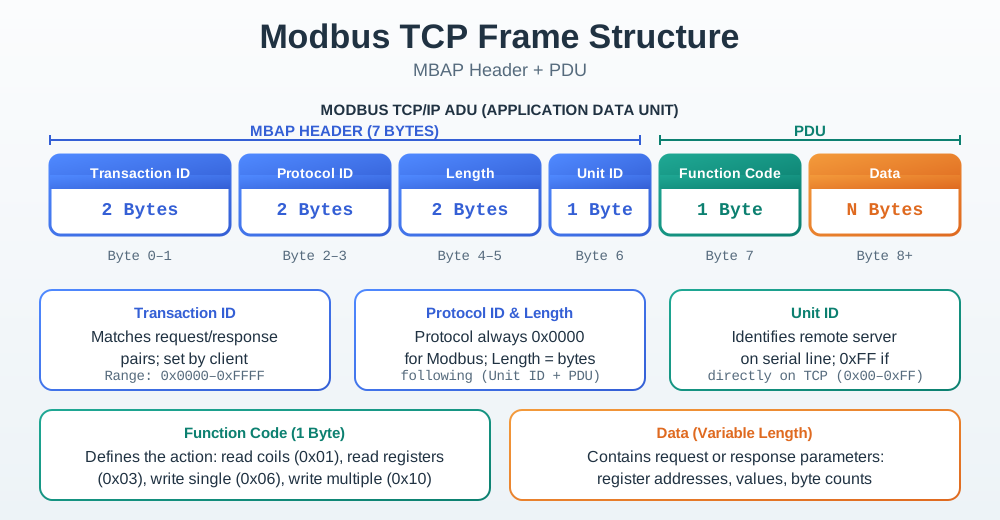
7 BYTES“MBAP HEADER (7 BYTES)” is what makes Modbus TCP Frame Structure reviewable.
Modbus RTU framing becomes integration evidence only when captured bytes, address convention, device-map meaning, and observed response agree.
iotclass.org

Major section

Practitioner: Build the Integration Record Before Polling (continued)
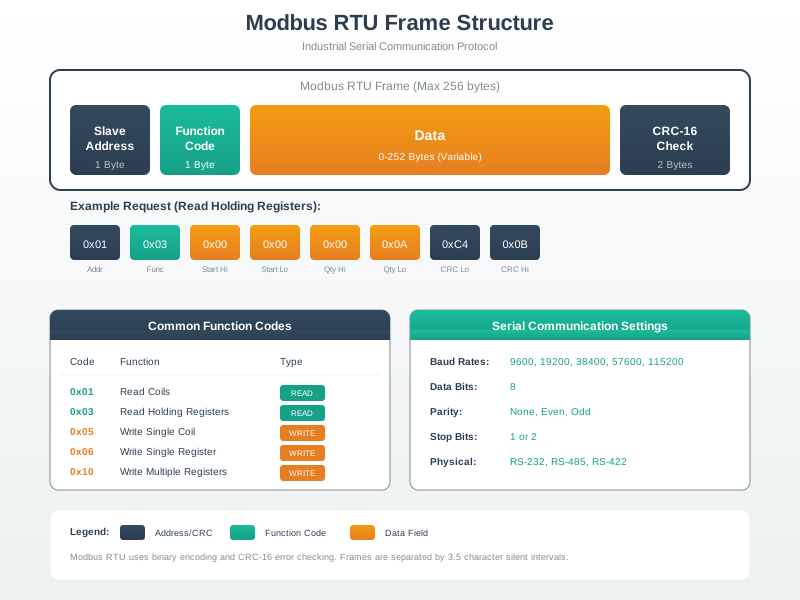
The record also explains the transport path.

  • Modbus RTU carries requests over a serial segment with device addresses, timing boundaries, and frame error checks.
  • Modbus TCP carries the same application operation through a TCP connection with an application header.
  • Device manuals and client libraries may describe the same register differently.
iotclass.org

Major section

Practitioner: Build the Integration Record Before Polling (continued)

A small tested map that shows documented label, object type, client address, and observed value.

  • In a small pump-skid integration, the record should make each assumption testable before the polling loop is left unattended.
  • Their order turns Modbus RTU framing becomes integration evidence only when captured bytes, address convention, device-map meaning, and observed response agree into a reviewable path.
  • Multi-register values need scaling, signedness, byte order, and word order.
iotclass.org

Major section

Practitioner: Build the Integration Record Before Polling (continued)

In the “are only half the integration record”–“1 | the on-wire frame” decision, use the same stops to locate evidence and assign the recheck.

  • Blaming the network when the value is present but decoded incorrectly.
  • Known-good sample values, units, limits, and conversion notes from the device documentation.
  • The relationship between “MODBUS TCP/IP ADU (APPLICATION DATA UNIT)” and “MBAP HEADER (7 BYTES)” is what makes Modbus TCP Frame Structure reviewable.
iotclass.org

Major section

Under the Hood: Separate Protocol Failure from Data Meaning Failure
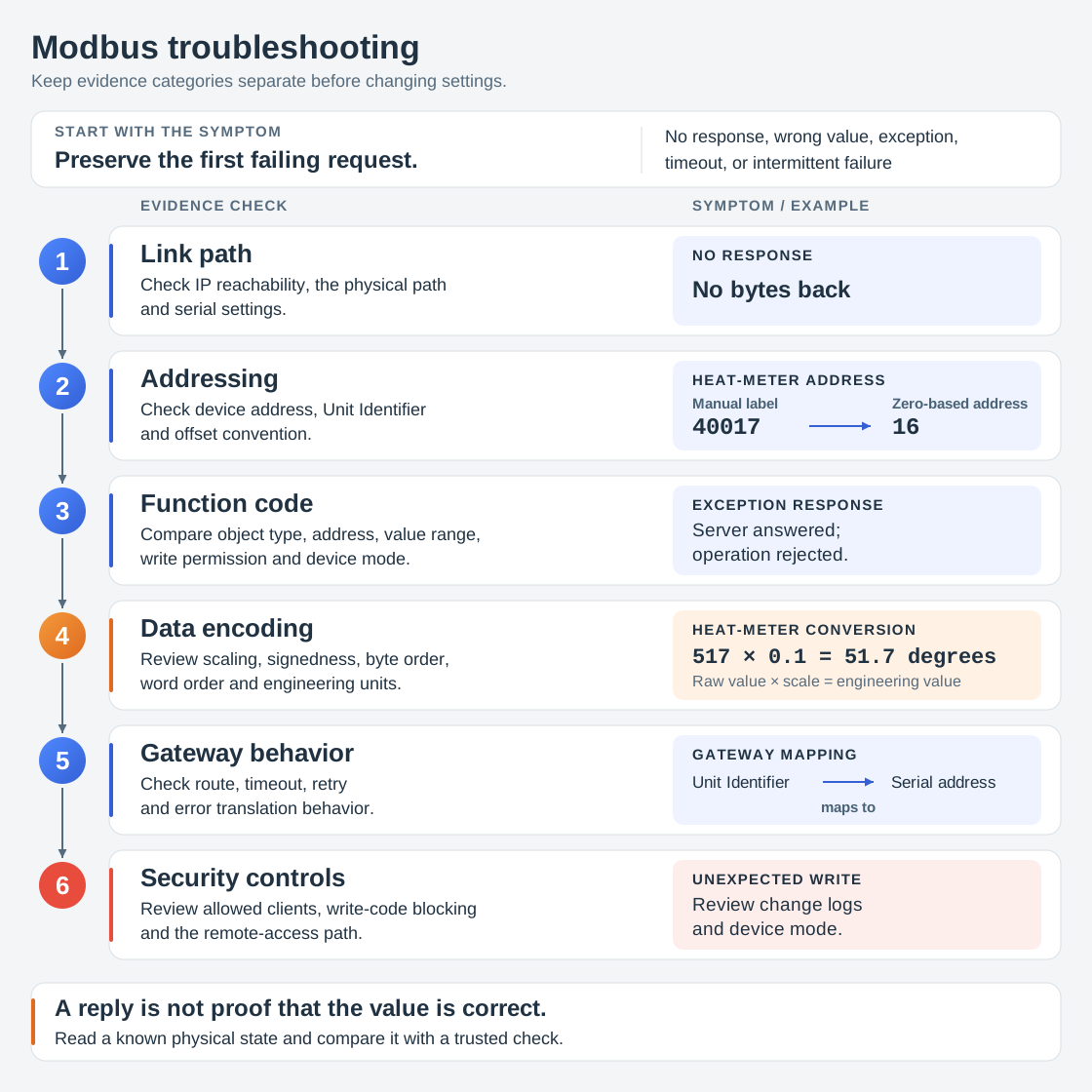
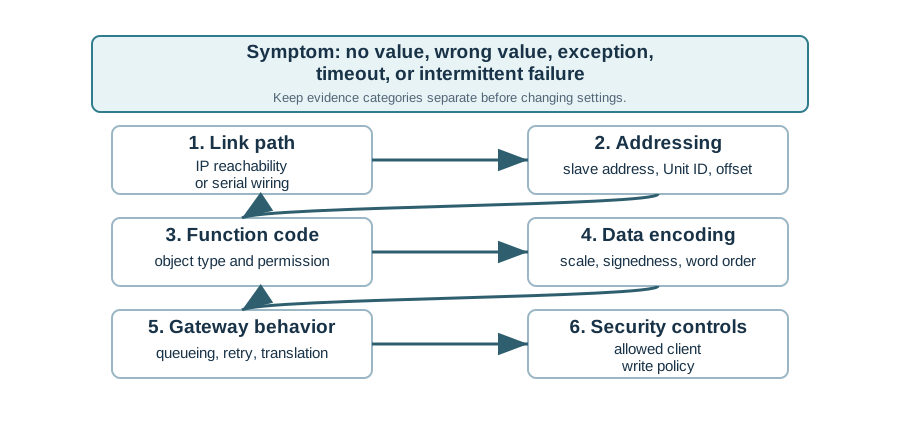
Good Modbus troubleshooting separates symptoms before changing configuration.

  • Treating every symptom as a generic network failure usually adds retries while leaving the real defect in the register map, gateway boundary, or security envelope.
  • A useful triage pattern is to preserve the first failing request and classify it before tuning.

Why it matters

Two labels deserve attention—“timeout, or intermittent failure” and “Keep evidence categories separate before changing settings”—because they bound Troubleshooting is faster when the evidence ladder separates link, address, function, encoding, gateway, and security questions.

Troubleshooting is faster when the evidence ladder separates link, address, function, encoding, gateway, and security questions.
iotclass.org

Major section

Under the Hood: Separate Protocol Failure from Data Meaning Failure (continued)
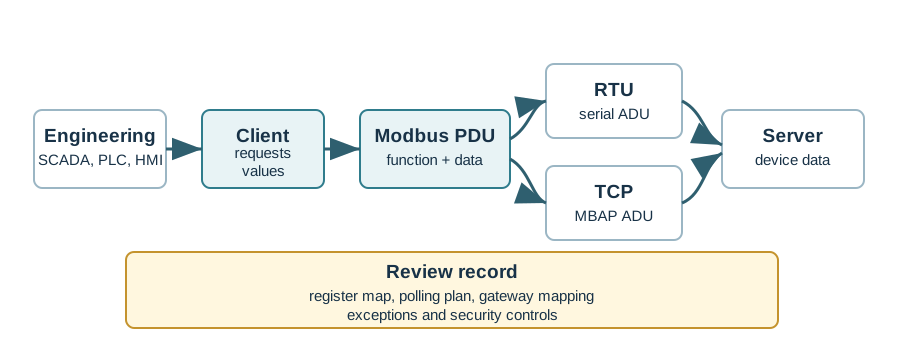
A Modbus exception response means the server answered but rejected the operation, so function code, address range, permission, or device mode is the next evidence.

  • A plausible response with an impossible value means decoding work: offset convention, scaling, signed interpretation, endian order, stale point mapping, or a wrong adjacent register.
  • Keeping those buckets separate prevents a security or data-quality issue from being hidden behind more retries.
  • Unexpected write Review allowed clients, firewall rules, write-code blocking, change logs, remote-access path, and device mode.
iotclass.org

Major section

Summary

Modbus is useful because it is small and predictable, but that simplicity shifts responsibility into engineering records.

  • The protocol defines object families, function operations, and transport mappings.
  • The device register map defines meaning, scaling, write safety, and decoding.
  • RTU, TCP, and gateway paths all need different evidence, and classic Modbus deployments need an explicit security envelope before values are exposed upstream.
iotclass.org

Deck summary

Key takeaways

The screen should show 51.7 degrees, but only if the team chose the right location, scale, sign, and byte order.

  • It lets one side read or write bits and groups of 16-bit numbers.
  • Modbus is a compact industrial request/response protocol for reading and writing device state.
  • For example, a heat-meter manual might label a supply temperature as holding register 40017, scale it by 0.1 degrees, and store a 32-bit value across two adjacent 16-bit registers.
  • A useful Modbus integration record lets another engineer reproduce the connection without guessing.
iotclass.org

Retrieval practice

Recall check 1 of 2

Gateway Gus says: answer from memory, then check your reasoning.

Q1A drive exposes a speed setpoint that a controller must read and write. Which Modbus object type is the best fit?

ADiscrete input
BInput register
CHolding register
DGateway Unit Identifier
Show answer

Answer: C Writable numeric setpoints normally belong in holding registers.

Q2A Modbus TCP client reaches a gateway, but reads from the wrong downstream RTU device. Which review artifact should you check first?

ARegister scaling table for the selected measurement value
BGateway Unit Identifier and downstream serial-address map
CEthernet switch port label and dashboard color setting
DCloud retention rule for stored polling history
Show answer

Answer: B Gateway problems should be reviewed at the boundary: client address, gateway endpoint, Unit Identifier or routing field, downstream serial address, timeout, retry, and error translation behavior.

iotclass.org

Retrieval practice

Recall check 2 of 2

Gateway Gus says: answer from memory, then check your reasoning.

Q3A Modbus poll succeeds, but a temperature value is clearly wrong while neighboring values look reasonable. What should you inspect before blaming network loss?

ATCP retry count and socket keepalive timer for every poll
BChart refresh interval and dashboard color mapping
CRack location and cable label for the nearby device
DScaling, signedness, byte order, word order, and address offset
Show answer

Answer: D Modbus troubleshooting should first classify the evidence.

iotclass.org

Print reference

Answers

Answer key.

  1. C · Writable numeric setpoints normally belong in holding registers.
  2. B · Gateway problems should be reviewed at the boundary: client address, gateway endpoint, Unit Identifier or routing field, downstream serial address, timeout, retry, and error translation behavior.
  3. D · Modbus troubleshooting should first classify the evidence.
iotclass.org