LoRa & LoRaWAN · Study deck
LPWAN Link Budget and Range
A soil probe reaches the roof gateway on a dry morning.
Radio Remi is your guide for this deck.

After studying this chapter
Learning objectives
You will be able to:
- Explain: If the raw budget is 149 dB and the review reserves 10 dB for fading, 12 dB for obstruction, and 4 dB for installation uncertainty, only 123 dB remains for path loss.
- Explain: The mathematical gist.: The chapter's 14 dBm transmitter, 2 dBi device antenna, 6 dBi gateway antenna, 3 dB loss, and -130 dBm receiver floor make a 149 dB raw budget.
- Explain: If the model assumes antennas several metres above ground but the real device is bolted inside a metal cabinet, the path-loss estimate is optimistic even when the arithmetic is correct.
Major section
Start Simple
A positive paper result does not guarantee service, and one successful message does not prove durable coverage.
- A soil monitor sits at the far end of a farm, and the receiver is fixed to a roof.
- The farm owner needs a ledger, not a brochure range.
- Every number needs a source, unit, condition, and owner.
Major section
Start Simple (continued)
A clear-day test succeeds, but wet leaves, a closed metal door, cable loss, poor antenna placement, and a low mounting point can spend the spare signal.
- The first question is not whether the brochure says long range.
- The first question is whether enough signal remains after walls, terrain, antenna choices, and uncertainty have taken their share.
- A link budget is the plain ledger that shows whether a pilot has margin or whether the design needs another gateway, a better antenna, or a different placement.
Major section
Eddie's Math Bridge: Spreading Factor And Link Budget
The mathematical gist.: The chapter's 14 dBm transmitter, 2 dBi device antenna, 6 dBi gateway antenna, 3 dB loss, and -130 dBm receiver floor make a 149 dB raw budget.
- Reserving 26 dB leaves 123 dB allowable path loss.
Major section
Overview: Link Budget Is Signal Accounting
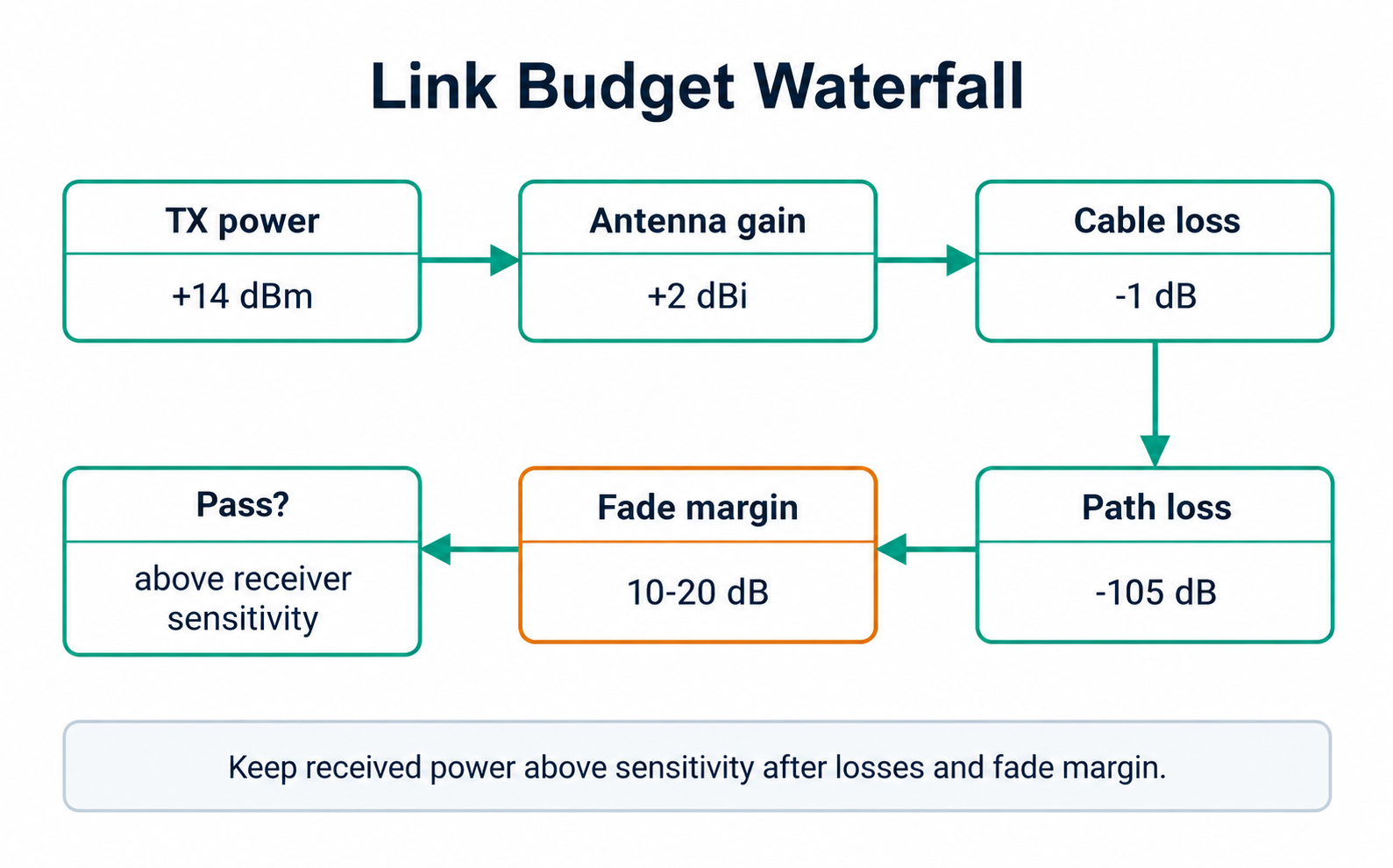
An LPWAN link budget is a review record, not a range promise.
- It adds the useful signal contributions, subtracts losses, compares the expected received signal with receiver sensitivity, and keeps margin for fading, clutter, antenna placement, enclosure loss, and measurement uncertainty.
- The overview record should therefore state the acceptance rule before field work starts.
Major section
Overview: Link Budget Is Signal Accounting (continued)
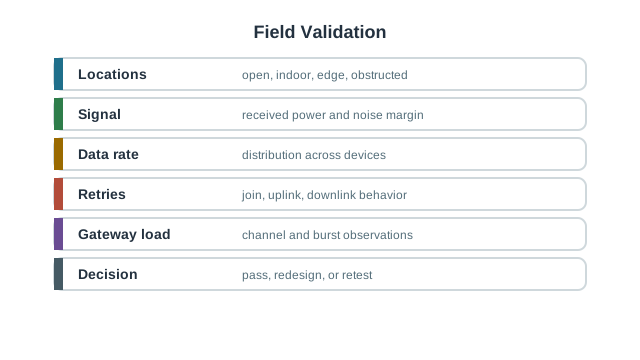
The result is not "this device reaches ten kilometers." The result is a bounded statement: under these assumptions, this link has enough or not enough remaining margin to justify a pilot.
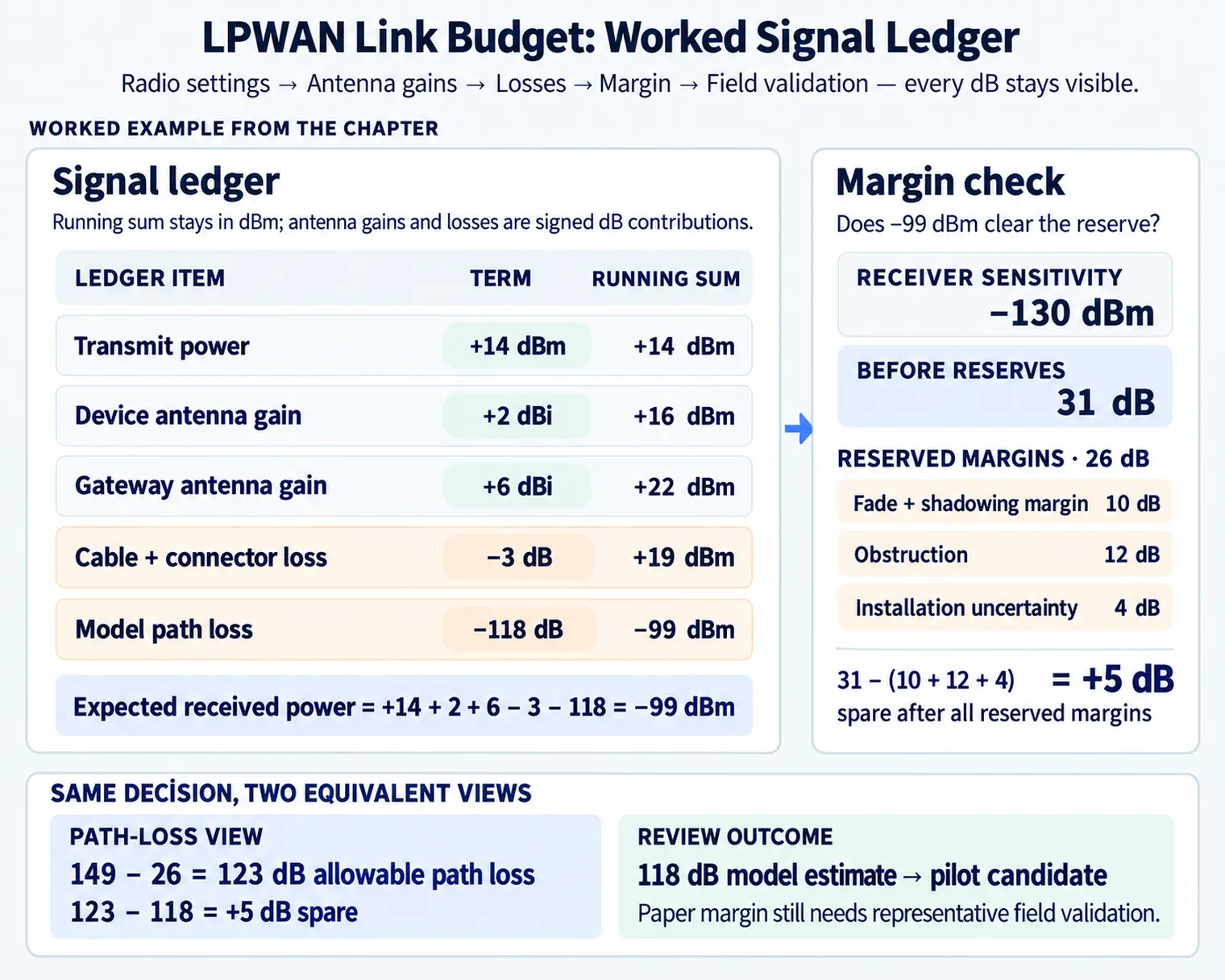
- If the raw budget is 149 dB and the review reserves 10 dB for fading, 12 dB for obstruction, and 4 dB for installation uncertainty, only 123 dB remains for path loss.
- A model estimate of 118 dB is a pilot candidate; an estimate of 128 dB is not a "maybe" range claim.
- Margin Reserved budget for fading, shadowing, seasonal change, installation variation, interference, and measurement uncertainty.
Major section
Overview: Link Budget Is Signal Accounting (continued)
A conditional pass might allow the hill tanks but require a second gateway for buried pits.
- A pass might mean every representative location keeps at least the reserved margin while using an allowed data rate and legal transmit setting.
- A fail should name the design change, not leave a vague note that the range was shorter than expected.
- Configured transmit power, antenna gain, connector or enclosure loss, and regional limit.
Major section
Practitioner: Turn the Ledger into a Margin Decision
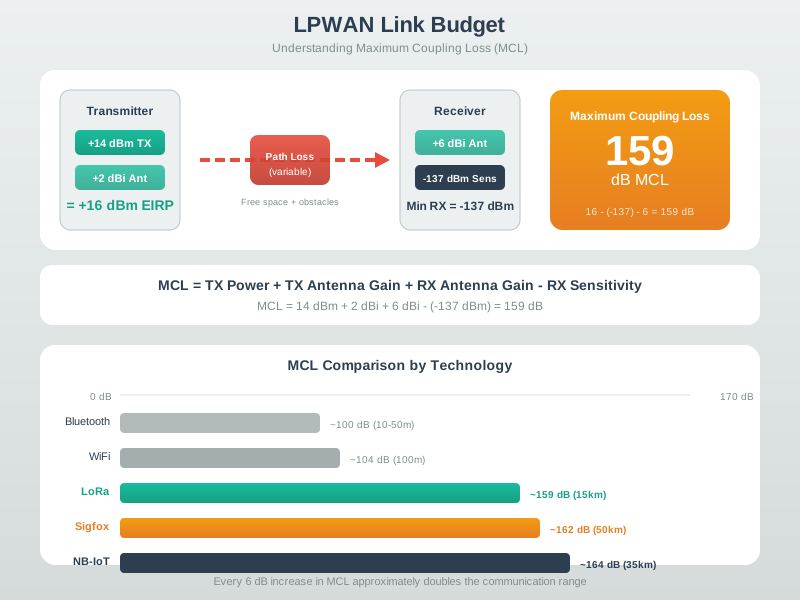
That value can be compared with a model estimate or measured field result.
- Raw budget is 149 dB before margin deductions.
- Allowable path loss becomes 123 dB.
- Estimated path loss is compared with allowable path loss for representative locations.
- The design is healthy, pilot-only, needs redesign, or is unsuitable.
Major section
Practitioner: Turn the Ledger into a Margin Decision (continued)
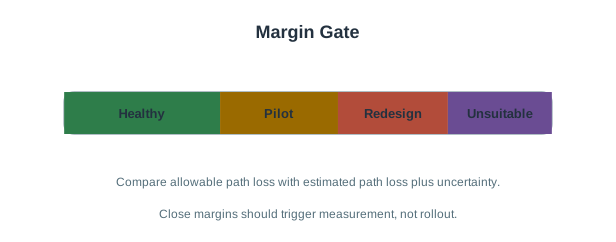
A map pass without field validation can hide edge failures.
- A link budget without a decision is only arithmetic.
- The practitioner decision should also name the evidence owner.
- The ledger is strongest when it records both the numeric answer and the condition that would make that answer stale.
Major section
Under the Hood: Models Need Field Evidence
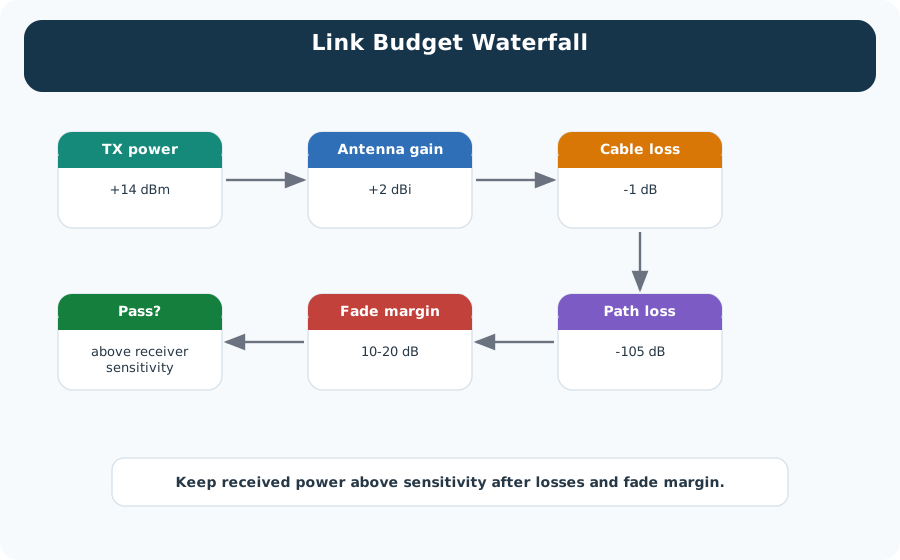
A free-space estimate is a clean baseline, while log-distance and clutter-aware models add assumptions about terrain, buildings, foliage, antenna height, and indoor penetration.
- The model is useful only when its assumptions are documented and tested.
- Gateway density is the same kind of under-the-hood question.
- One gateway is enough.
Major section
Under the Hood: Models Need Field Evidence (continued)
Those criteria keep the model, the measurement, and the release decision tied together.
- If the model assumes antennas several metres above ground but the real device is bolted inside a metal cabinet, the path-loss estimate is optimistic even when the arithmetic is correct.
- Coverage and capacity are different constraints.
- Near-gateway tests passed.
Major section
Under the Hood: Models Need Field Evidence (continued)
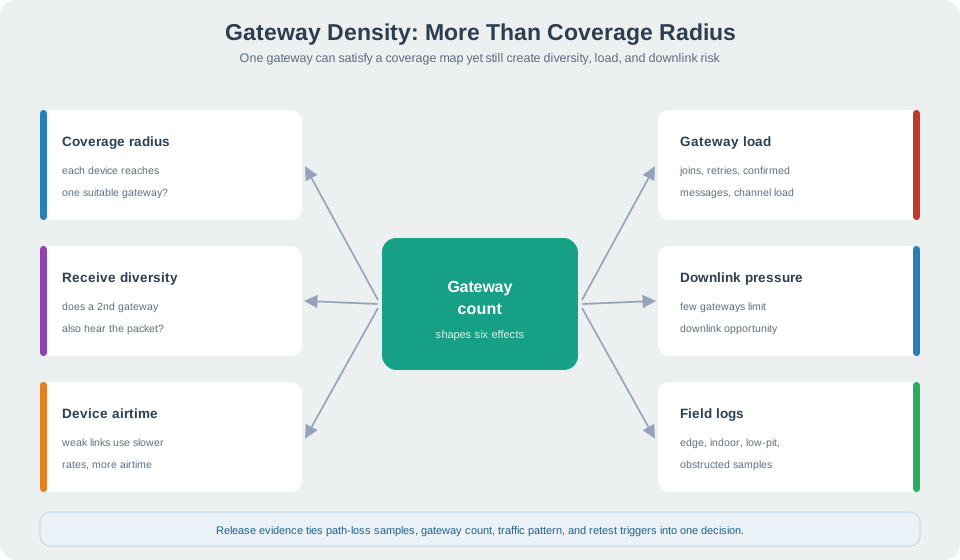
One gateway may satisfy a coverage model yet still create weak receive diversity, high channel load, poor downlink opportunity, or fragile incident response.
- The release evidence should connect path-loss samples, gateway count, traffic pattern, and retest triggers into one decision.
- A field team should therefore test the awkward cases on purpose.
- Coverage color can hide missing margins, indoor loss, and edge cases.
- Easy locations do not prove edge or obstructed coverage.
Major section
Keep the Reserve Separate from the Receiver Floor
With a receiver floor of −130 dBm, the raw allowance is 14 + 2 + 6 − 3 − (−130) = 149 dB.
- Reserving 26 dB leaves 123 dB for modeled path loss.
- That reserve is a deliberate design allowance, not another antenna gain.
- Adding an unmodeled 5 dB obstruction makes path loss 125 dB.
Major section
Keep the Reserve Separate from the Receiver Floor (continued)
The budget gains 2 dB under the same conditions; it does not establish a universal increase in kilometres.
- The range model uses 120 of the allowed 123 dB, leaving 3 dB above the chosen reserve.
- A packet received once does not undo that budget result.
- Each entry needs the same reference points.
Major section
Keep the Reserve Separate from the Receiver Floor (continued)
The range design now misses its reserved-margin target by 2 dB, even if the signal exceeds the receiver floor.
- It may change receiver needs and airtime, but the new sensitivity must match the tested setting.
- A longer transmission also needs a capacity and energy check alongside the revised range estimate.
- The module's distinction between a signal ledger and a range claim is practical.
Major section
Summary
LPWAN link budgets are evidence records, not guaranteed range claims.
- The ledger must show transmit power, antenna gains, implementation losses, receiver sensitivity, path-loss assumptions, and reserved margin.
- Maximum allowable path loss is raw link budget after subtracting fade, clutter, penetration, and uncertainty allowances.
- Coverage planning and capacity planning are separate gates; gateway density must consider both.
Deck summary
Key takeaways
A positive paper result does not guarantee service, and one successful message does not prove durable coverage.
- A clear-day test succeeds, but wet leaves, a closed metal door, cable loss, poor antenna placement, and a low mounting point can spend the spare signal.
- The mathematical gist.: The chapter's 14 dBm transmitter, 2 dBi device antenna, 6 dBi gateway antenna, 3 dB loss, and -130 dBm receiver floor make a 149 dB raw budget.
- An LPWAN link budget is a review record, not a range promise.
- A conditional pass might allow the hill tanks but require a second gateway for buried pits.
Retrieval practice
Recall check 1 of 3

Radio Remi says: answer from memory, then check your reasoning.
Q1A design note lists transmit power and receiver sensitivity but leaves out antenna losses, building loss, and fade margin. What should the reviewer do?
Show answer
Answer: A A link-budget ledger must include major gains, losses, assumptions, and margin before range is accepted.
Retrieval practice
Recall check 2 of 3

Radio Remi says: answer from memory, then check your reasoning.
Q2A link has a raw link budget of 149 dB. The review reserves 10 dB fade margin, 12 dB obstruction allowance, and 4 dB installation uncertainty. What maximum allowable path loss remains?
Show answer
Answer: A Maximum allowable path loss is the raw link budget after subtracting all required margins and allowances.
Retrieval practice
Recall check 3 of 3

Radio Remi says: answer from memory, then check your reasoning.
Q3A pilot tests only devices placed near the gateway and reports excellent signal. What is the strongest critique?
Show answer
Answer: B Coverage validation should include difficult representative cases and compare results with documented acceptance criteria.
Print reference
Answers
Answer key.
- A · A link-budget ledger must include major gains, losses, assumptions, and margin before range is accepted.
- A · Maximum allowable path loss is the raw link budget after subtracting all required margins and allowances.
- B · Coverage validation should include difficult representative cases and compare results with documented acceptance criteria.