LoRa & LoRaWAN · Study deck
LoRaWAN Assessment: Fundamentals and Diagnostics
Use four short checks.
Radio Remi is your guide for this deck.

After studying this chapter
Learning objectives
You will be able to:
- Explain: The same missing uplink symptom could come from weak radio margin, channel occupancy, a regional profile mismatch, activation failure, a blocked route, or an application expectation that the network never promised.
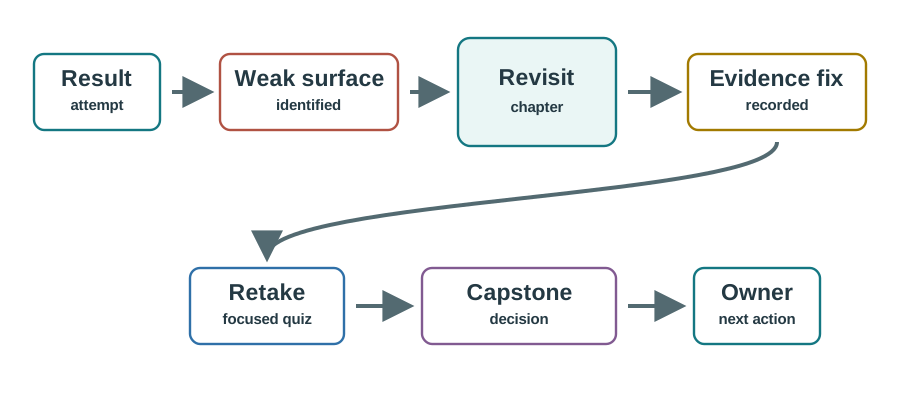
- Explain: The move through “identified” reaches “Revisit”, making Quiz readiness loop: identify the weak surface, revisit the right chapter, fix the evidence gap, retake with focus, then record the owner action observable.
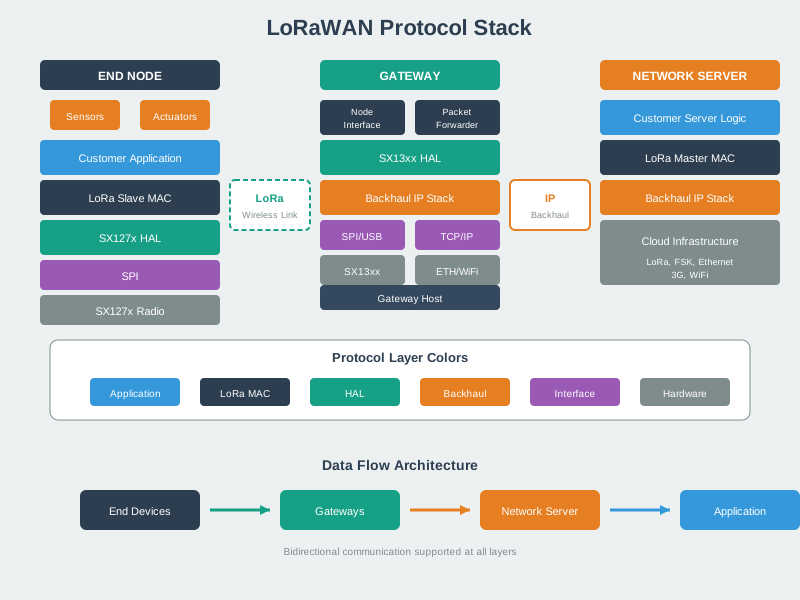
- Explain: The radio can be heard, the gateway can forward, the network server can accept and control MAC behavior, the application can interpret the payload, and the operator can respond to failures.
Major section
Start Simple
LoRaWAN means Long Range Wide Area Network.
- A protocol is an agreed set of rules for an exchange.
- A gateway is a bridge that hears radio traffic and forwards it; it does not decide what the reading means.
- One vague answer can send the repair team to the wrong place.
- It gives you a safe route into them.
Major section
Start Simple (continued)
The grower needs to know whether the radio failed, the network rejected the device, the reply window was missed, or the service ignored a valid reading.
- A yes at one step is not a yes at the next.
- This method does not replace the detailed rules for joining, device classes, security, or radio range.
- The deeper sections show which record can support each claim and where the claim must stop.
Major section
Minimum Review Knowledge
LoRaWAN adds network behavior, joining, class behavior, and server responsibilities.
- Gateway Forwarding role A gateway forwards frames and metadata.
- Class Downlink timing Class behavior must match the application response promise and the energy source.
- ADR Evidence policy ADR is a policy decision based on representative uplink evidence, not a magic performance switch.
Major section
Troubleshooting Surfaces
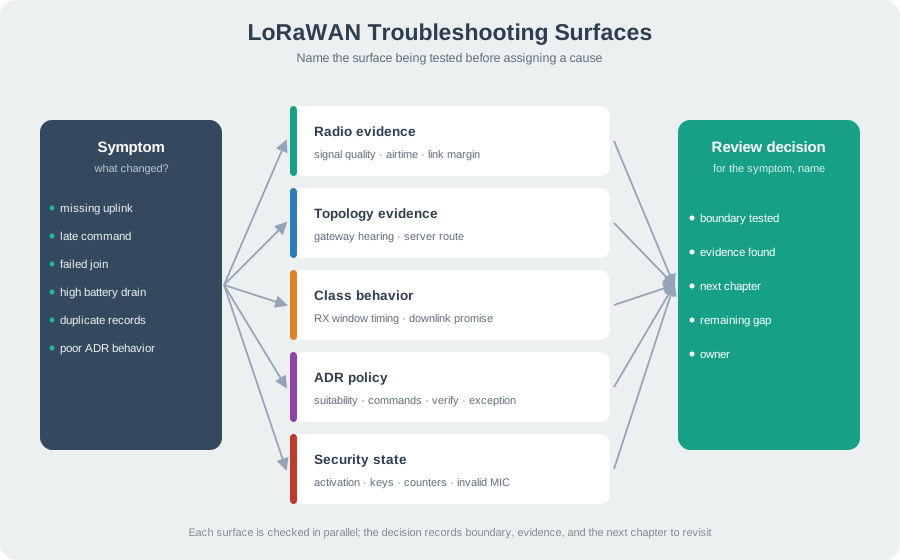
Good troubleshooting starts by naming the surface being tested.
- A release decision about the “symptom”–“what changed?” decision needs “missing uplink”, not a slogan.
- Relate it to “what changed?”, then carry “missing uplink” toward “late command”.
Major section
Overview: Assessment Proves Boundaries
For example, a learner who answers "add another gateway" to every reliability problem has not passed the boundary check.
- A LoRaWAN assessment is useful when every answer names the boundary being tested.
- The quiz is therefore not a memory check about labels.
- In practice, that means every corrected answer should be traceable.
Major section
Overview: Assessment Proves Boundaries (continued)
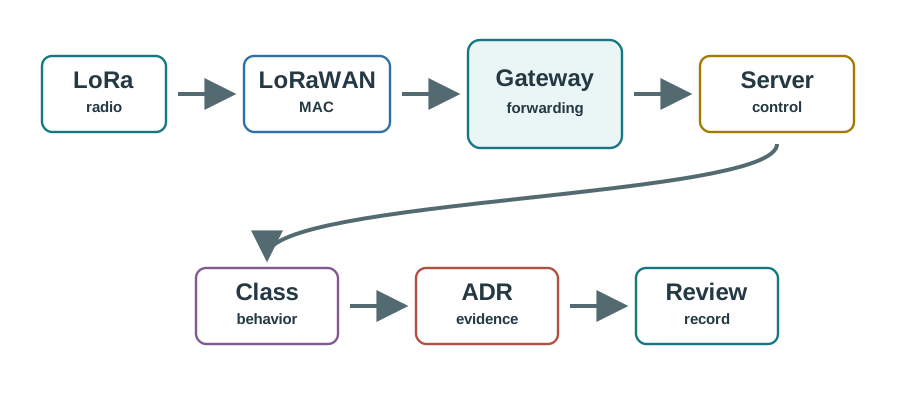
LoRa radio behavior, LoRaWAN MAC behavior, gateway forwarding, network-server control, join/security custody, device class, ADR policy, regional settings, and application ownership each need different evidence.
- The same missing uplink symptom could come from weak radio margin, channel occupancy, a regional profile mismatch, activation failure, a blocked route, or an application expectation that the network never promised.
- The assessment should push the learner to ask which surface is being tested before choosing a remedy.
- A strong answer also keeps evidence proportional to the claim. "LoRaWAN reaches far" is not enough to approve a campus, farm, or warehouse deployment.
Major section
Practitioner: Mark The Missed Evidence
A layer miss sends them back to boundary diagrams.
- A timing miss sends them to device classes and downlink windows.
- A security miss sends them to activation, counters, MIC checks, and key custody.
- An ADR miss sends them to link evidence and exception handling.
- The feedback should not only say the answer is wrong.
Major section
Practitioner: Mark The Missed Evidence (continued)
A repeated architecture miss means gateway, server, and application responsibilities should be reviewed before the learner moves to deployment scenarios.
- The move through “identified” reaches “Revisit”, making Quiz readiness loop: identify the weak surface, revisit the right chapter, fix the evidence gap, retake with focus, then record the owner action observable.
- That lightweight record is useful for teams too.
- A repeated security miss means the reviewer should not approve activation exceptions yet.
Major section
Practitioner: Mark The Missed Evidence (continued)
The record should say the learner confused gateway reachability with device listening behavior, point them to device classes, and ask for an example receive-window timeline before the retake.
- A repeated regional-profile miss means copied settings need a field-validation owner.
- Boundary miss: LoRa, LoRaWAN MAC, gateway, server, and application roles were mixed together.
- Evidence miss: a range, energy, ADR, or class claim was accepted without representative observations.
Major section
Under The Hood: Wrong Answers Collapse Layers
A nearby gateway is treated as proof of application success.
- A long-range radio is treated as proof of network readiness.
- ADR is treated as a universal optimizer.
- Device class is treated as an application preference instead of a radio-listening and energy contract.
- The safer mental model is a chain of claims.
Major section
Under The Hood: Wrong Answers Collapse Layers (continued)
The underlying skill is not trivia; it is controlled handoff between layers.
- The radio can be heard, the gateway can forward, the network server can accept and control MAC behavior, the application can interpret the payload, and the operator can respond to failures.
- A good assessment answer says which link is being tested and what evidence proves that link.
- Radio proof does not prove join success, payload acceptance, or downlink timing.
Major section
Under The Hood: Wrong Answers Collapse Layers (continued)
A dashboard value can prove ingestion, but it does not prove that a future downlink can be scheduled for a sleeping Class A device.
- If the wrong answer was "move the parser" for an ADR problem, the correction should name ADR as MAC/network behavior and point back to link evidence.
- If the wrong answer was "disable frame counters" for a reset problem, the correction should name security state and recovery evidence.
- If the wrong answer was "copy the EU profile" into another region, the correction should name regional configuration and field validation.
Deck summary
Key takeaways
LoRaWAN means Long Range Wide Area Network.
- The grower needs to know whether the radio failed, the network rejected the device, the reply window was missed, or the service ignored a valid reading.
- LoRaWAN adds network behavior, joining, class behavior, and server responsibilities.
- Good troubleshooting starts by naming the surface being tested.
- For example, a learner who answers "add another gateway" to every reliability problem has not passed the boundary check.
Retrieval practice
Recall check 1 of 5

Radio Remi says: answer from memory, then check your reasoning.
Q1A learner says LoRaWAN and LoRa are the same thing because both use the same radio signal. What is the strongest correction?
Show answer
Answer: C LoRa is the radio layer, while LoRaWAN adds MAC behavior, joining, security, device classes, and server roles above it.
Retrieval practice
Recall check 2 of 5

Radio Remi says: answer from memory, then check your reasoning.
Q2A team says adding gateways will automatically fix all packet loss. Which review response is strongest?
Show answer
Answer: D Gateway count can help some symptoms, but the root cause must be diagnosed from evidence.
Retrieval practice
Recall check 3 of 5

Radio Remi says: answer from memory, then check your reasoning.
Q3An application expects a downlink whenever the server has a command, but the device is configured as Class A and sends uplinks infrequently. What should the reviewer say?
Show answer
Answer: B Class behavior must match the response promise and the energy source.
Retrieval practice
Recall check 4 of 5

Radio Remi says: answer from memory, then check your reasoning.
Q4A device group is pinned to a conservative radio setting even though gateway metadata suggests stronger links for many devices. What is the best review action?
Show answer
Answer: C ADR should be tied to link evidence and release records, not used or rejected by habit.
Retrieval practice
Recall check 5 of 5

Radio Remi says: answer from memory, then check your reasoning.
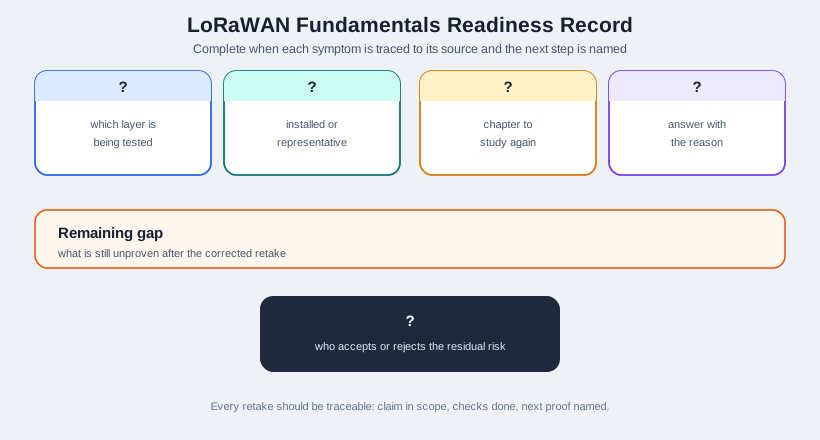
Q5Place each readiness record where it lives so you can correct a LoRaWAN boundary mistake and assign the remaining proof gap.
Show answer
Answer: A Name the path boundary, use evidence to correct the model, and assign the gap so you can turn quiz readiness into an operational next step.
Print reference
Answers 1 of 2
Answer key.
- C · LoRa is the radio layer, while LoRaWAN adds MAC behavior, joining, security, device classes, and server roles above it.
- D · Gateway count can help some symptoms, but the root cause must be diagnosed from evidence.
- B · Class behavior must match the response promise and the energy source.
- C · ADR should be tied to link evidence and release records, not used or rejected by habit.
Print reference
Answers 2 of 2
Answer key.
- A · Name the path boundary, use evidence to correct the model, and assign the gap so you can turn quiz readiness into an operational next step.