Smart Places and Infrastructure · Study deck
IoT Case Studies: Smart Parking Design
The deeper smart-parking sensor chain now lives in Smart Parking Sensor Contracts.
Ada is your guide for this deck.
After studying this chapter
Learning objectives
You will be able to:
- Evaluate design contract: smart parking sensors with range, error, power, and interface evidence.
- Validate barcelona lessons learned with a concrete scenario and pass criteria.
- 'evaluate design contract: smart parking sensors with range, error, power, and interface evidence'
- validate barcelona lessons learned with a concrete scenario and pass criteria
Major section
Barcelona Smart Parking TCO
5-Year TCO: $2,699,700 (56% of this is initial investment, 44% is ongoing costs).
- Common Budgeting Mistake: A naive budget might estimate $950K (sensors) + $38K (gateways) + $150K (software) = $1.14M total.
- The true 5-year TCO is $2.7M -- 2.4× the naive estimate.
Major section
Barcelona Results and Impact
Water Management: Barcelona was reported to save $58 million annually using smart water technology; the cited amount is not specifically a smart-irrigation result.
- Energy: Barcelona’s smart lighting system has been reported to save the city $37 million each year; the associated 30% reduction is not documented in that account.
Major section
Putting Numbers to It
Barcelona reports separate annual smart-water savings and parking-fee revenue, and a separate source reports lighting savings.
- The $87M waste claim, $232M combined savings total, and 0.15–0.3 synergy multiplier are not established; do not sum incomparable benefits.
- Parking Search Time: Real-time space availability can help drivers plan a shorter search for parking.
Major section
Putting Numbers to It (continued)
The compound benefit model adds direct savings across domains, then adds a synergy term for cross-domain effects.
- In that model, each domain saving is one input, and the synergy multiplier, typically 0.15-0.3, captures value created when one service improves another.
- Waste Collection Efficiency: Optimized routes can avoid unnecessary collections when fill-level data are reliable.
- Air Quality: Traffic management can be assessed through measured NO2 concentration changes in designated pilot zones.
Major section
Barcelona Lessons Learned
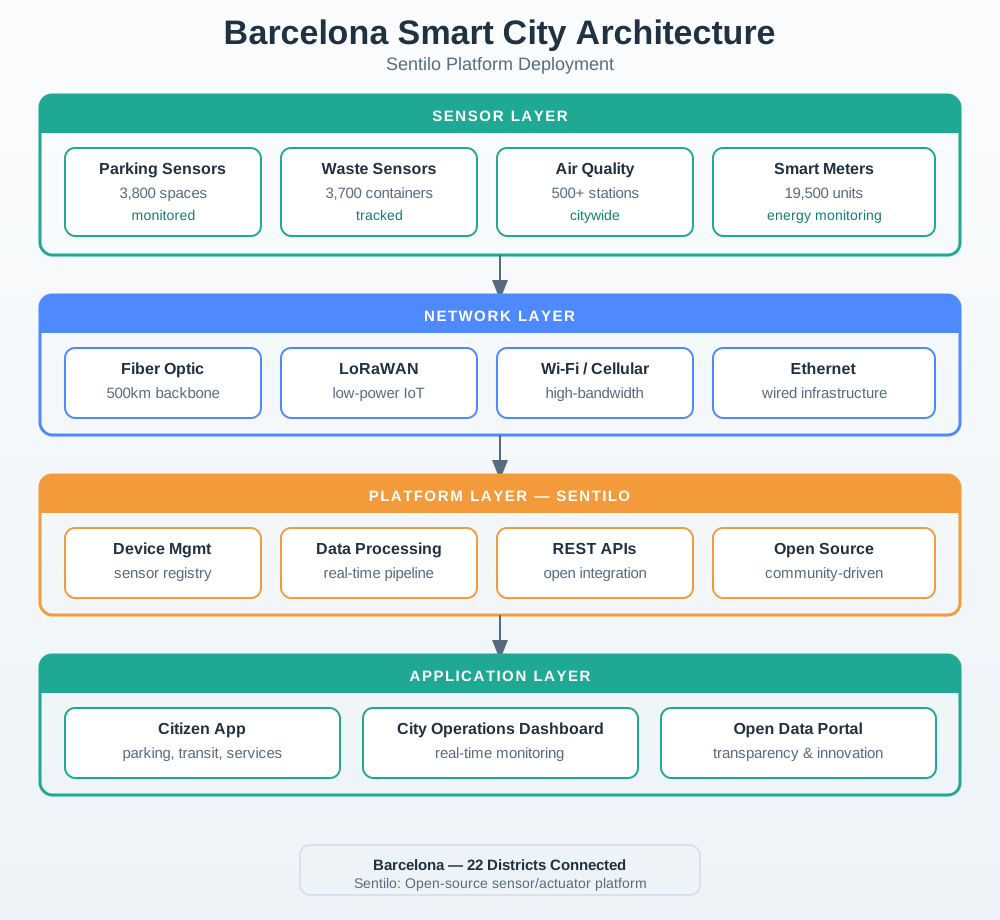
Proprietary platforms create vendor lock-in and limit innovation.
- Lesson: Insist on open APIs and standards from the start; vendor-neutral middleware is critical for long-term success.
- 500km fiber backbone was foundation for all services.
- Parking and lighting delivered visible results within 6 months.
- Citizen-facing apps built engagement and political support.
Deck summary
Key takeaways
5-Year TCO: $2,699,700 (56% of this is initial investment, 44% is ongoing costs).
- Water Management: Barcelona was reported to save $58 million annually using smart water technology; the cited amount is not specifically a smart-irrigation result.
- Barcelona reports separate annual smart-water savings and parking-fee revenue, and a separate source reports lighting savings.
- The compound benefit model adds direct savings across domains, then adds a synergy term for cross-domain effects.
- Proprietary platforms create vendor lock-in and limit innovation.
Retrieval practice
Recall check

Ada says: answer from memory, then check your reasoning.
Q1Barcelona's Sentilo platform was built on open-source principles. A competing city is considering a proprietary smart city platform from a major vendor that promises faster deployment. Based on Barcelona's experience, what is the strongest argument for choosing open source?
Show answer
Answer: B Correct!
Print reference
Answers
Answer key.
- B · Correct!