Applications & Use Cases · Study deck

Baby Monitoring: Diapers, Privacy, and Trade-offs

A nursery monitor can raise a careful breathing alert, but the family also wants diaper events, room controls, and useful trends.

Blueprint Bina is your guide for this deck.

casesbabymonitoring
Blueprint Bina, the module guide, in a scene from this chapter.
iotclass.org

After studying this chapter

Learning objectives

You will be able to:

  • explain how a smart diaper powers and reports an event
  • separate UTI pattern evidence from medical diagnosis
  • design nursery controls and privacy rules around caregiver decisions
  • Explain: The final BLE link to the parent's phone is the boundary that turns harvested energy into a timestamped wetness or health event without adding a battery to the diaper.
iotclass.org

Major section

Self-Powered Smart Diaper Technology
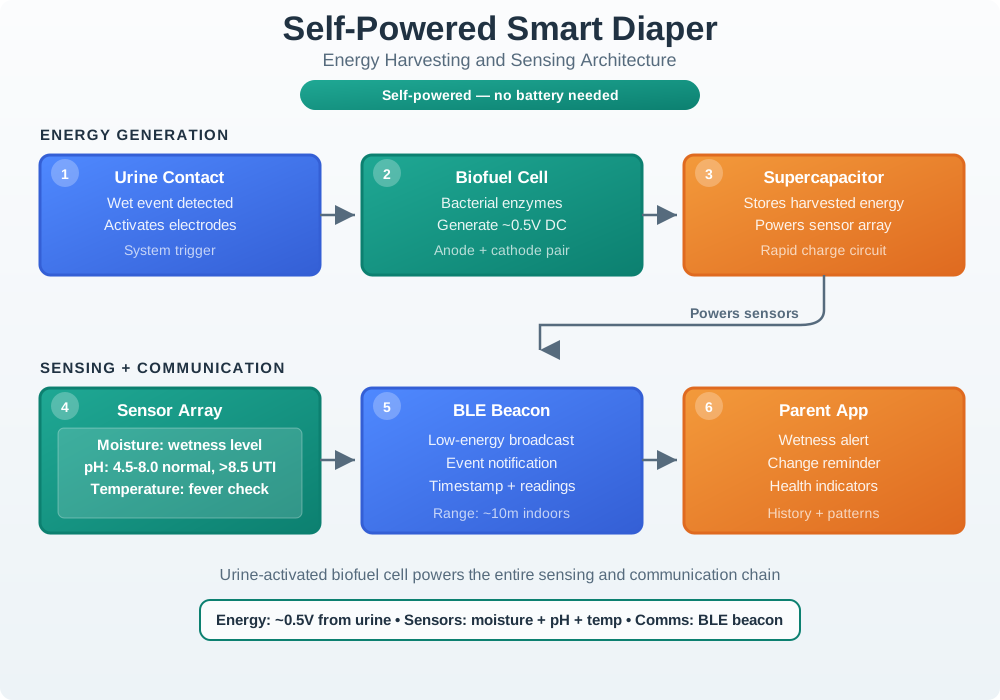
The final BLE link to the parent's phone is the boundary that turns harvested energy into a timestamped wetness or health event without adding a battery to the diaper.

  • Urine Detection: When wet event occurs, urine contacts electrodes.
  • Energy Generation: Microbial fuel cell uses bacterial enzymes in urine to generate ~0.5V DC.
Self-powered smart diaper system architecture showing urine-activated biofuel cell generating power for moisture sensors, temperature monitoring, and BLE transmission to parent smartphone app.
iotclass.org

Major section

UTI Pattern Walkthrough

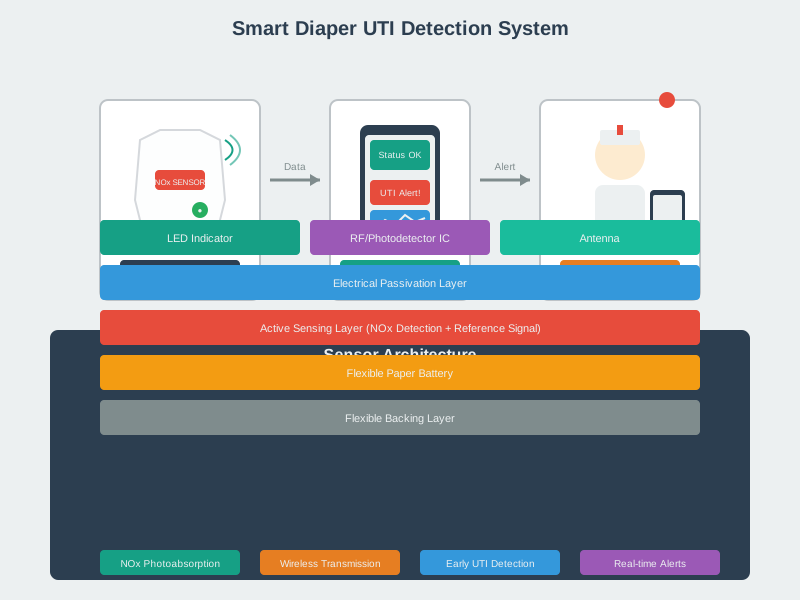
This example shows how the algorithm transitions from baseline monitoring to a meaningful alert only after multiple signals align.

  • Pattern to notice: The diaper does not react to a single odd pH reading.
  • It waits for rising pH, increased wetness frequency, and a confirmation signal before recommending pediatric follow-up.
  • This early detection window can prevent progression to pyelonephritis (kidney infection), which occurs in approximately 10-15% of untreated infant UTIs.

Why it matters

A urinalysis is still required for diagnosis, but smart diapers enable 48-hour earlier detection than waiting for visible symptoms.

iotclass.org

Major section

Baby IoT Privacy

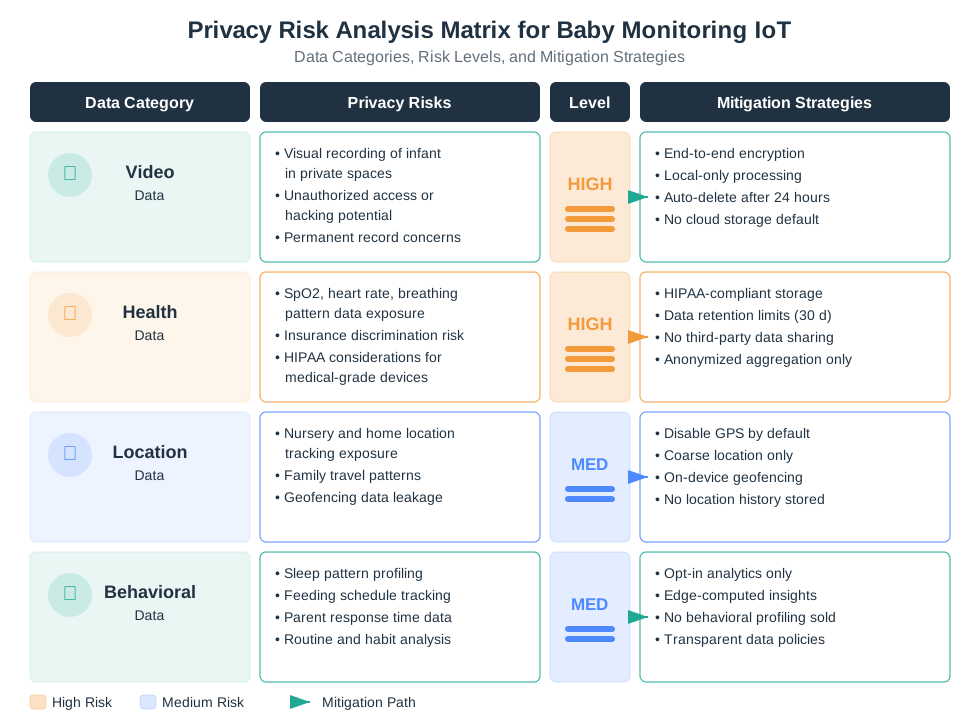
The visual evidence for privacy and data security sits in the linked figure in Part 1-privacy-matrix.

  • That sequence keeps privacy and data security tied to what is visibly labelled.
Privacy risk categories for baby monitoring IoT systems, showing video, health, location, and behavioral data risks that manufacturers must address.
iotclass.org

Major section

Smart Diaper UTI Detection

Scenario: A smart diaper manufacturer has deployed 1,000 sensors in a clinical trial to validate their UTI early detection algorithm.

  • After 6 months, they have collected data on 82 actual UTI cases (confirmed by pediatric urinalysis) and need to evaluate algorithm performance.
  • Positive Predictive Value (Precision): 71 / 103 = 68.9% (69% of alerts were real UTIs).
  • Step 2: Evaluate clinical value: UTI symptoms typically appear 2-5 days after infection starts.

Numbers to remember

87%providing a 48-hour warning for 87% of UTIs is clinically meaningful.

Why it matters

The ultra-low false positive rate (99.98% specificity) ensures parent trust -- critical for adoption.

iotclass.org

Major section

Wearable vs Non-Contact

PPG enables SpO2 and heart rate monitoring impossible without contact.

  • Bottom line: For premature or high-risk infants, wearable SpO2 monitoring provides the most clinically relevant data.
  • For healthy full-term infants, non-contact options reduce intervention while still providing breathing and environment monitoring.
  • Those tradeoffs set up the final review: the same product can be technically accurate and still fail if privacy, maintenance, or false alarms break caregiver trust.
iotclass.org

Major section

Common Mistakes in Baby Monitoring IoT
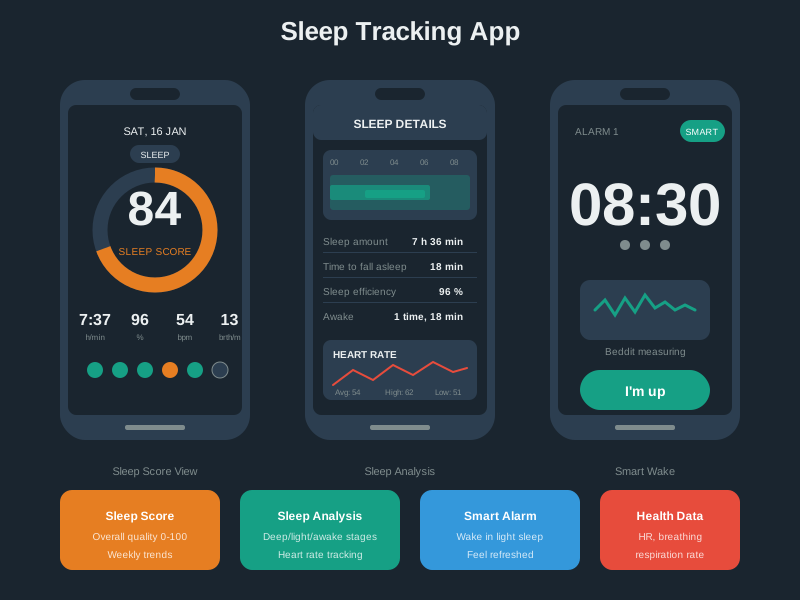
Pitfall 1: Over-relying on consumer monitors for medical-grade decisions.: Consumer monitors with +/- 3% accuracy are wellness tools.

  • Good design requires multi-signal confirmation before alerting and clear escalation tiers (informational vs. Urgent vs. Critical).
  • Pitfall 3: Assuming "more sensors = better monitoring.": Adding sensors increases power consumption, data complexity, cost, and potential failure points.
  • A well-calibrated single SpO2 sensor provides more safety value than a poorly integrated suite of 6 sensors.

Why it matters

A parent who delays seeking medical attention because "the monitor says oxygen is fine" is misusing the technology.

iotclass.org

Deck summary

Key takeaways

The final BLE link to the parent's phone is the boundary that turns harvested energy into a timestamped wetness or health event without adding a battery to the diaper.

  • This example shows how the algorithm transitions from baseline monitoring to a meaningful alert only after multiple signals align.
  • The visual evidence for privacy and data security sits in the linked figure in Part 1-privacy-matrix.
  • Scenario: A smart diaper manufacturer has deployed 1,000 sensors in a clinical trial to validate their UTI early detection algorithm.
  • PPG enables SpO2 and heart rate monitoring impossible without contact.
iotclass.org

Retrieval practice

Recall check 1 of 5

Blueprint Bina says: answer from memory, then check your reasoning.

Q1A smart diaper records one elevated pH sample, but wet-event frequency is still normal, temperature is normal, and no nitrite confirmation is available. What should the system do first?

AFlag a UTI diagnosis now and recommend antibiotics
BWait for repeated pH plus a confirmation signal
CDisable the pH channel and use wetness only
DUpload raw diaper events for public model training
Show answer

Answer: B The useful signal is a pattern: repeated elevated pH plus increased wet-event frequency and a confirmation signal such as nitrite or fever context.

iotclass.org

Retrieval practice

Recall check 2 of 5

Blueprint Bina says: answer from memory, then check your reasoning.

Q2A self-powered smart diaper uses a microbial fuel cell that generates electricity when activated by urine. What is the PRIMARY advantage of this energy harvesting approach over battery-powered alternatives for infant health monitoring?

AProvide enough power for continuous video, audio, and high-rate vital-sign sensors
BRemove button-battery hazards and charging chores while fitting normal diaper-change workflows
CImprove pH and temperature accuracy beyond what battery-powered sensors can measure
DKeep monitoring active for many days after the diaper is wet or removed
Show answer

Answer: B Correct!

iotclass.org

Retrieval practice

Recall check 3 of 5

Blueprint Bina says: answer from memory, then check your reasoning.

Q3A consumer baby monitor reports a SpO2 reading of 94% with an accuracy of +/- 3%. A medical-grade pulse oximeter simultaneously reads 96% with +/- 2% accuracy. The parent is alarmed by the lower consumer reading. What is the CORRECT interpretation?

AThe consumer device is defective and should be returned for a replacement
BThe baby's oxygen level is dangerously low and requires immediate medical attention
CBoth readings overlap; treat the consumer value as a trend signal, not a diagnosis
DThe medical device must be wrong because it shows a higher reading than expected
Show answer

Answer: C Correct!

iotclass.org

Retrieval practice

Recall check 4 of 5

Blueprint Bina says: answer from memory, then check your reasoning.

Q4A startup is designing a baby monitor and must choose between BLE 5.0 and Wi-Fi for the wearable SpO2 sensor. The sensor needs to transmit SpO2 and heart rate data (approximately 50 bytes per second) from the crib to a hub device 5 meters away. Which protocol is more appropriate and why?

AWi-Fi, because its extra bandwidth is necessary for 50 bytes per second of vital data
BBLE 5.0, because it meets the tiny data-rate and range need while preserving wearable battery life
CWi-Fi, because a direct IP link to the hub simplifies continuous delivery of the vital-sign stream
DBLE 5.0, mainly because it provides stronger encryption than modern Wi-Fi
Show answer

Answer: B Correct!

iotclass.org

Retrieval practice

Recall check 5 of 5

Blueprint Bina says: answer from memory, then check your reasoning.

Q5Place each nursery-monitoring responsibility where it lives so you can trace whether a false or missed alert began at the infant sensor, the quality gate, or caregiver escalation.

AInfant-Facing Sensors
BNursery Relay and Quality Gate
CCaregiver Alert and Escalation
Show answer

Answer: A A nursery monitoring loop separates infant-facing measurement, local evidence quality, and caregiver escalation so wellness observations do not become unsupported medical claims.

Q6Complete the baby-monitoring alert escalation gate:

Areturn False
Breturn True
Cevent.clear()
Draise Alert()
Show answer

Answer: A A baby-monitoring alert gate should suppress poor-quality sensor readings, try environmental correction before caregiver escalation for comfort events, and escalate sustained SpO2 concerns only when the parent has not acknowledged them.

iotclass.org

Print reference

Answers 1 of 2

Answer key.

  1. B · The useful signal is a pattern: repeated elevated pH plus increased wet-event frequency and a confirmation signal such as nitrite or fever context.
  2. B · Correct!
  3. C · Correct!
  4. B · Correct!
  5. A · A nursery monitoring loop separates infant-facing measurement, local evidence quality, and caregiver escalation so wellness observations do not become unsupported medical claims.
iotclass.org

Print reference

Answers 2 of 2

Answer key.

  1. A · A baby-monitoring alert gate should suppress poor-quality sensor readings, try environmental correction before caregiver escalation for comfort events, and escalate sustained SpO2 concerns only when the parent has not acknowledged them.
iotclass.org