Reference Architectures · Study deck
Standards Selection and Certification
Imagine a team using an approved radio part in a new home monitor.
Blueprint Bina is your guide for this deck.
After studying this chapter
Learning objectives
You will be able to:
- Select a standard or profile by naming the architecture boundary, device/network constraints, and the claim that must be true before release
- Map a certification claim to the correct proof lane (conformance, interoperability, ecosystem, security, market access) instead of stretching one kind of evidence across all of them
- Build a standards shortlist table naming candidate, boundary, constraint fit, available evidence, and rejection reason
- Write a release record naming requirement, chosen standard or profile, proof lane, proof, open gap, owner, and recheck trigger
Major section
Start With the Certification Question
The mark may cover that part in one tested setup.
- It may not cover the enclosure, whole product, data use, or later software change.
- The first panel shows the marked radio part.
- The second places it beside the case, full product, data use, and code that the mark may not cover.
Major section
Selection Starts With Boundaries
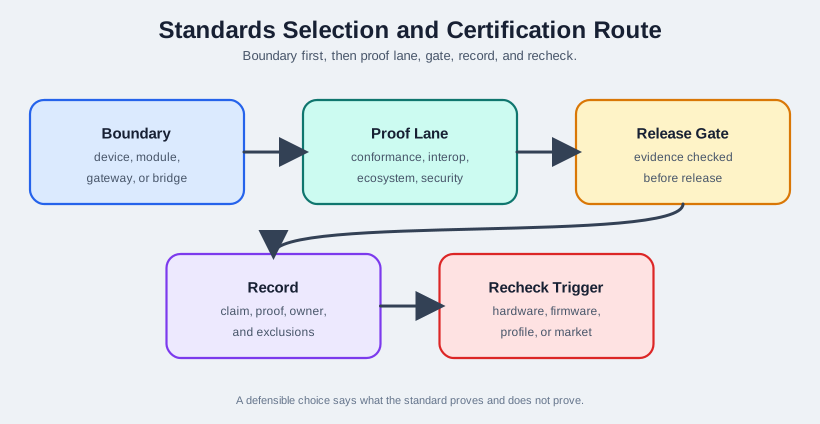
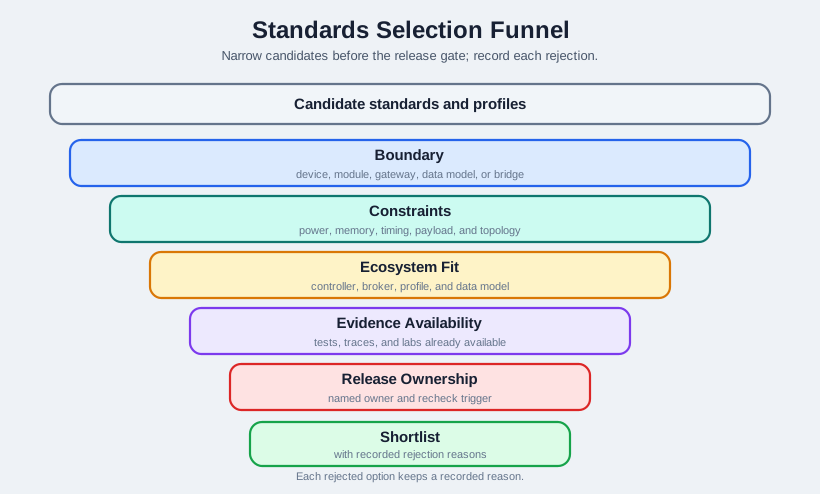
Standard selection is an architecture decision, not a popularity contest.
- Certification planning then records what kind of proof is needed for that claim.
- The common error is to treat a standard name, profile badge, or certified module as proof for the whole product.
Major section
Shortlist to Certification Plan
The practical workflow is to narrow candidate standards before the release gate.
- Product owner; recheck on feature, profile, firmware, or implementation change.
- The implementation works with the actual peer, controller, gateway, broker, bridge, or data consumer.
Major section
Certification Lifecycle Claims
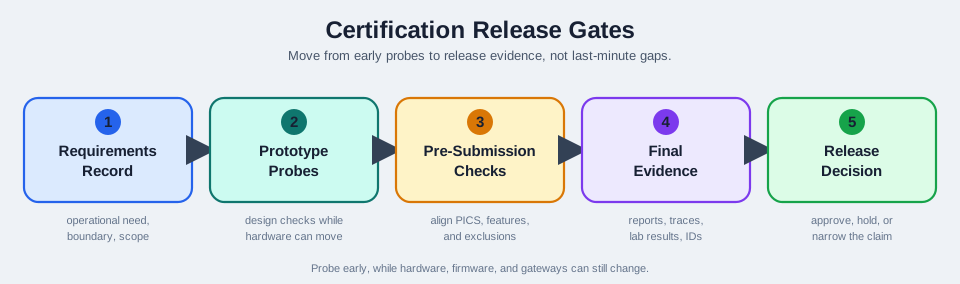
Certification planning remains useful after launch because the claim can drift.
- A checklist alone cannot settle certification lifecycle claims.
- The release system should therefore store evidence identifiers, not just prose.
Major section
IEEE and IETF IoT Standards
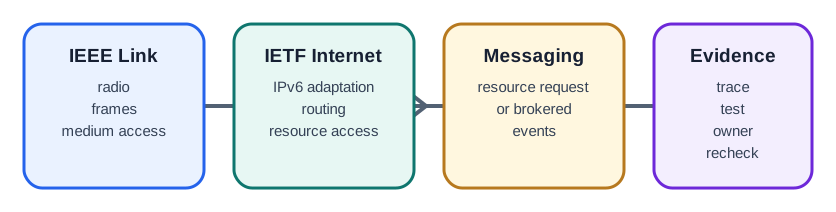
The radio can move a message, but the service rejects its address and data shape.
- Internet Protocol is a family of network rules.
- A protocol is a shared set of rules for exchanging messages.
Deck summary
Key takeaways
The mark may cover that part in one tested setup.
- Standard selection is an architecture decision, not a popularity contest.
- The practical workflow is to narrow candidate standards before the release gate.
- Certification planning remains useful after launch because the claim can drift.
- The radio can move a message, but the service rejects its address and data shape.
Retrieval practice
Recall check 1 of 6

Blueprint Bina says: answer from memory, then check your reasoning.
Q1What must a team record before accepting an IoT standards-selection decision?
Show answer
Answer: A A standards decision should be tied to an explicit architecture boundary, selected constraints, the proof lane, and a lifecycle recheck rule.
Retrieval practice
Recall check 2 of 6

Blueprint Bina says: answer from memory, then check your reasoning.
Q2A team has a shortlist of standards for a gateway product. Which planning step best prevents a late release surprise?
Show answer
Answer: A A certification plan should connect each standards claim to the proof lane, early probes, release evidence, limitations, owner, and recheck trigger.
Retrieval practice
Recall check 3 of 6

Blueprint Bina says: answer from memory, then check your reasoning.
Q3A certified gateway gets new firmware and a bridge update. What should the release team do with its earlier certification claim?
Show answer
Answer: A Version changes can move the behavior outside the evidence already accepted.
Retrieval practice
Recall check 4 of 6

Blueprint Bina says: answer from memory, then check your reasoning.
Q4Why should IEEE and IETF standards be reviewed as layer contracts rather than as one general interoperability claim?
Show answer
Answer: A IEEE and IETF standards are most useful when they are tied to the layer, boundary, evidence, and owner they actually govern.
Retrieval practice
Recall check 5 of 6

Blueprint Bina says: answer from memory, then check your reasoning.
Q5A facilities team says its building sensors use an IEEE low-power link, so the cloud dashboard should interoperate automatically. What is the strongest review response?
Show answer
Answer: A A standards claim should be split by layer so each boundary has evidence, ownership, and an explicit open-gap record.
Retrieval practice
Recall check 6 of 6

Blueprint Bina says: answer from memory, then check your reasoning.
Q6Which review record best supports an IEEE/IETF standards decision for a constrained IoT deployment?
Show answer
Answer: A A strong standards review record ties each claim to a layer, boundary, evidence source, owner, known gap, and recheck condition.
Print reference
Answers 1 of 2
Answer key.
- A · A standards decision should be tied to an explicit architecture boundary, selected constraints, the proof lane, and a lifecycle recheck rule.
- A · A certification plan should connect each standards claim to the proof lane, early probes, release evidence, limitations, owner, and recheck trigger.
- A · Version changes can move the behavior outside the evidence already accepted.
- A · IEEE and IETF standards are most useful when they are tied to the layer, boundary, evidence, and owner they actually govern.
Print reference
Answers 2 of 2
Answer key.
- A · A standards claim should be split by layer so each boundary has evidence, ownership, and an explicit open-gap record.
- A · A strong standards review record ties each claim to a layer, boundary, evidence source, owner, known gap, and recheck condition.