Reference Architectures · Study deck
Industry Consortium Profiles
Imagine a buyer wants a light, switch, hub, and building tool from several firms to work as one system.
Blueprint Bina is your guide for this deck.

After studying this chapter
Learning objectives
You will be able to:
- Treat a consortium profile as a scoped interoperability claim rather than proof that a whole deployment interoperates
- Identify the four profile areas (device behavior, information model, bridge behavior, conformance) that a review should scope separately
- Write a consortium review record naming profile area, claim, evidence, and project-owned gap
- Evaluate a bridge or gateway translation for what it preserves, transforms, drops, and leaves project-owned
Major section
A Clear First Route
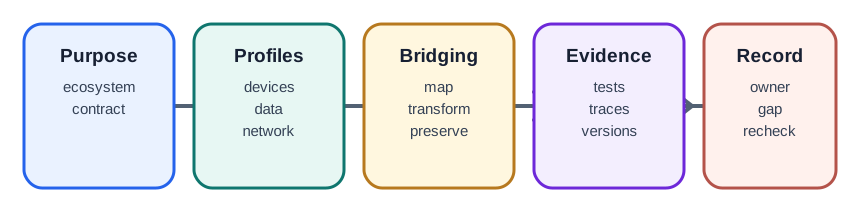
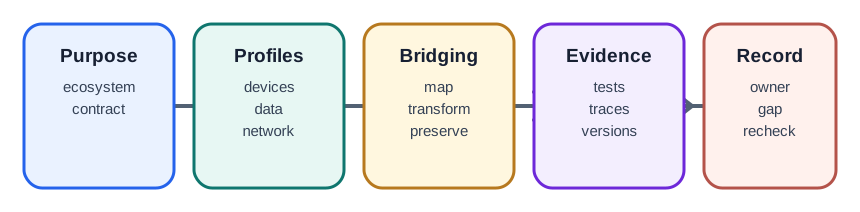
The team must decide what an industry profile truly proves at each join.
- A protocol is an agreed set of rules for an exchange.
- A gateway is a device or service that links one network or system to another.
- This page starts with one job.
- Last, choose accept the scoped claim, add bridge work, or require more proof.
Major section
A Clear First Route (continued)
A badge can narrow a test.
- This first route is a guide to the main choice.
- The Practitioner sections add profile records, bridge choices, test scope, and owner duties.
- Under the Hood adds version drift, lost meaning, optional parts, and faults across the full system.
- They do not reverse its main claim.
Major section
Standards as Contracts
The architecture mistake is to treat a consortium badge or membership statement as proof that the whole deployment will interoperate.
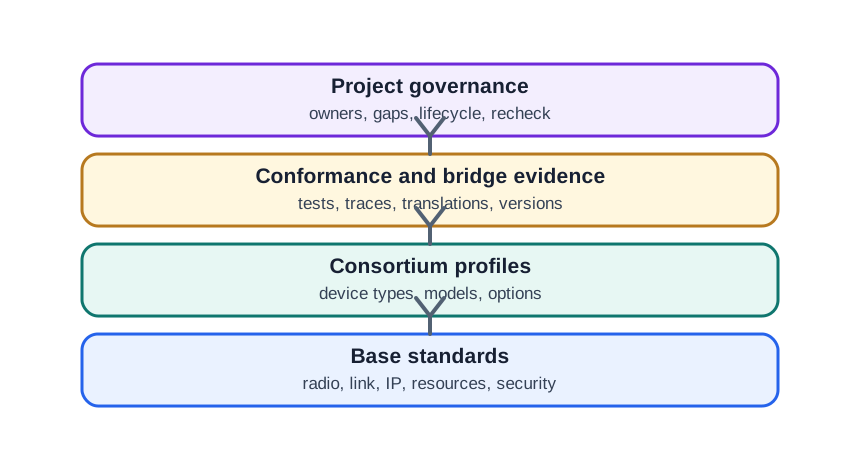
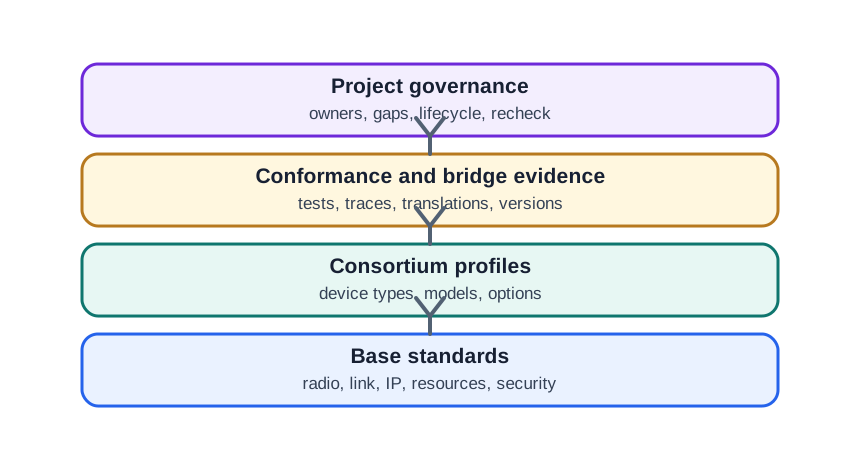
- A profile may cover one device type, one information model, one transport binding, or one bridge behavior while leaving diagnostics, lifecycle support, optional features, security integration, and operations to the project.
Major section
Standards as Contracts (continued)
The profile narrows the integration problem; it does not remove the project-specific release evidence.
- This keeps a useful consortium claim from becoming overbroad.
- That evidence should name the owner who will retest the profile claim when the product or ecosystem changes.
- Information Model Defines units, identifiers, object relationships, attributes, event meaning, diagnostics, and domain vocabulary.
Major section
Standards as Contracts (continued)
For example, a lighting profile may make on/off state and brightness meaning portable, while the project still owns installer workflow, emergency behavior, local override, fault reporting, and the bridge record into a building-management platform.
- Device Profile Defines required behavior, optional capabilities, commands, states, events, setup expectations, and user-facing device roles.
- Conformance Evidence Defines tests, reference behavior, version claims, optional-feature handling, and what a profile statement actually proves.
- Bridge Contract Defines how one ecosystem is represented inside another, including what is preserved, transformed, dropped, or project-owned.
Major section
Consortium Review Record
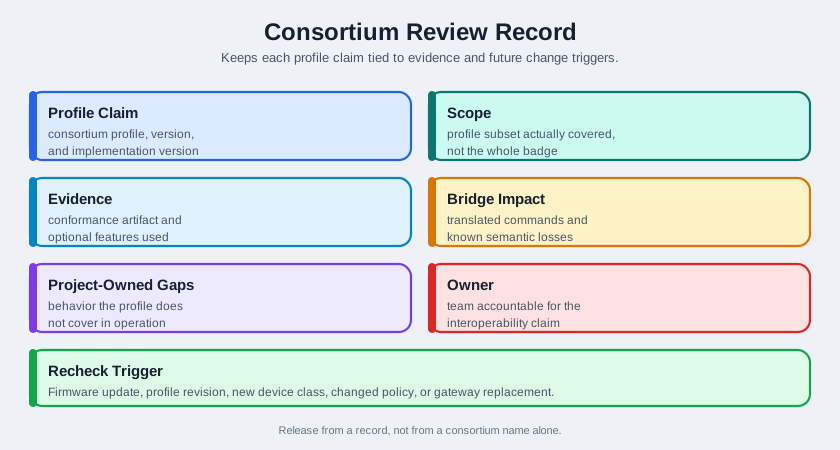
The practical move is to write down the profile claim before accepting it. "Uses a consortium profile" is too vague.
- Which device types, commands, states, events, and optional features are covered.
- Profile declaration, test results, payload samples, controller traces, and setup records.
- Which units, identifiers, object relationships, status fields, and events have shared meaning.
Major section
Interoperability Lifecycle
Consortium interoperability is not frozen at design time.
- Profiles evolve, optional features differ, certification scopes can be narrow, devices are replaced, bridge firmware changes, and operations teams discover edge cases.
- A strong architecture treats the consortium decision as a lifecycle claim that must be kept true.
- Optional features are a common source of drift.
Major section
Interoperability Lifecycle (continued)
Two products may both claim the same profile while one exposes a diagnostic state, schedule type, or fault reason that the other does not.
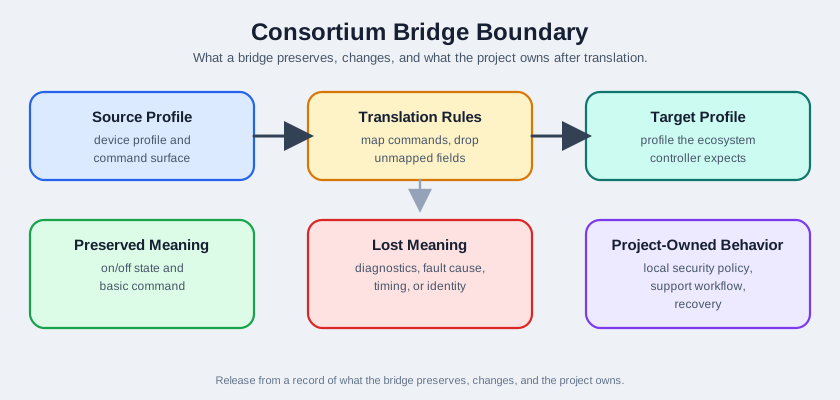
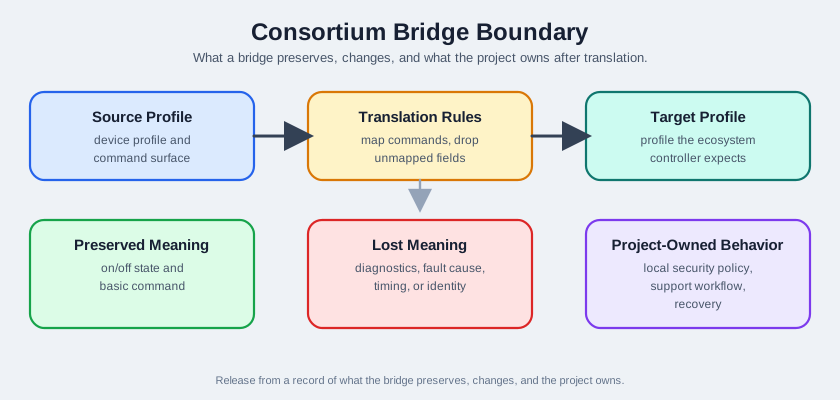
- A gateway may translate the basic on/off command but drop battery condition, calibration state, installer metadata, or a warning event.
- A conformance report may prove a reference interaction but not the local security policy, support workflow, or recovery behavior.
- The architecture record should make those limits visible before release.
Major section
Interoperability Lifecycle (continued)
Semantic Loss A bridge may preserve an on/off state while dropping diagnostics, fault causes, timing assumptions, or identity meaning.
- The lifecycle record should therefore include profile version, implementation version, conformance artifact, optional features used, bridge behavior, known losses, project-owned gaps, and the trigger for retest.
- That record lets the team keep interoperability true instead of assuming the original badge still covers the operated system.
- When any of those change, the consortium decision needs fresh evidence.
Major section
Interoperability Lifecycle (continued)
Triggers include firmware updates, profile revisions, new device classes, changed security policy, gateway replacement, field diagnostics that the profile does not cover, and any support incident where profile behavior and project behavior disagree.
- Under the hood, this is a configuration-management problem as much as an interoperability problem.
- The accepted profile claim must be tied to the shipped firmware, the gateway translator, the controller behavior, the support playbook, and the release notes.
- Together: Consortium Bridge Boundary and recovery connect to the claim: A bridge must say what it preserves, what it changes, and what the project owns after translation.
Deck summary
Key takeaways
The team must decide what an industry profile truly proves at each join.
- A badge can narrow a test.
- The architecture mistake is to treat a consortium badge or membership statement as proof that the whole deployment will interoperate.
- The profile narrows the integration problem; it does not remove the project-specific release evidence.
- For example, a lighting profile may make on/off state and brightness meaning portable, while the project still owns installer workflow, emergency behavior, local override, fault reporting, and the bridge record into a building-management platform.
Retrieval practice
Recall check 1 of 3

Blueprint Bina says: answer from memory, then check your reasoning.
Q1What is the safest way to treat an IoT consortium profile during architecture review?
Show answer
Answer: A A consortium profile should be reviewed as a scoped claim.
Retrieval practice
Recall check 2 of 3

Blueprint Bina says: answer from memory, then check your reasoning.
Q2A team says a gateway will bridge an existing device ecosystem into a new consortium profile. What evidence should the reviewer request first?
Show answer
Answer: A Bridge claims are valid only when the project records translation behavior, loss, evidence, ownership, and recheck triggers.
Retrieval practice
Recall check 3 of 3

Blueprint Bina says: answer from memory, then check your reasoning.
Q3Why should a consortium profile decision include a recheck trigger?
Show answer
Answer: A Consortium decisions remain true only while their scope, implementation, bridge behavior, and operating assumptions remain true.
Print reference
Answers
Answer key.
- A · A consortium profile should be reviewed as a scoped claim.
- A · Bridge claims are valid only when the project records translation behavior, loss, evidence, ownership, and recheck triggers.
- A · Consortium decisions remain true only while their scope, implementation, bridge behavior, and operating assumptions remain true.