Human-Centred IoT Design · Study deck
IoT Research Methods: Evidence and Selection
A team cannot learn field routines from a survey alone.
UX Uma is your guide for this deck.
After studying this chapter
Learning objectives
You will be able to:
- choose a research method based on the design decision and evidence gap
- distinguish behavior evidence, explanation evidence, scale evidence, and field evidence
- plan contextual inquiry, interviews, diary studies, prototype tests, surveys, telemetry review, and pilots
- combine methods without turning research into an unfocused activity list
Major section
Begin With the Gap in What You Know
Telemetry means records sent from a system so its state can be watched.
- The logs show where people stop, but not why.
- The first choice is the question that blocks the design choice.
- Each method has a blind spot.
- An interview can miss real habit.
Major section
In 60 Seconds
Research methods are ways to reduce uncertainty before a design decision.
- In IoT, the right method depends on what the team needs to learn about people, context, device behavior, service touchpoints, and long-term use.
- The method should match the decision.
- A team should not use a quick survey to replace observation when the real question is physical placement, shared use, failure recovery, or trust.
Major section
Pick Methods for Uncertainty
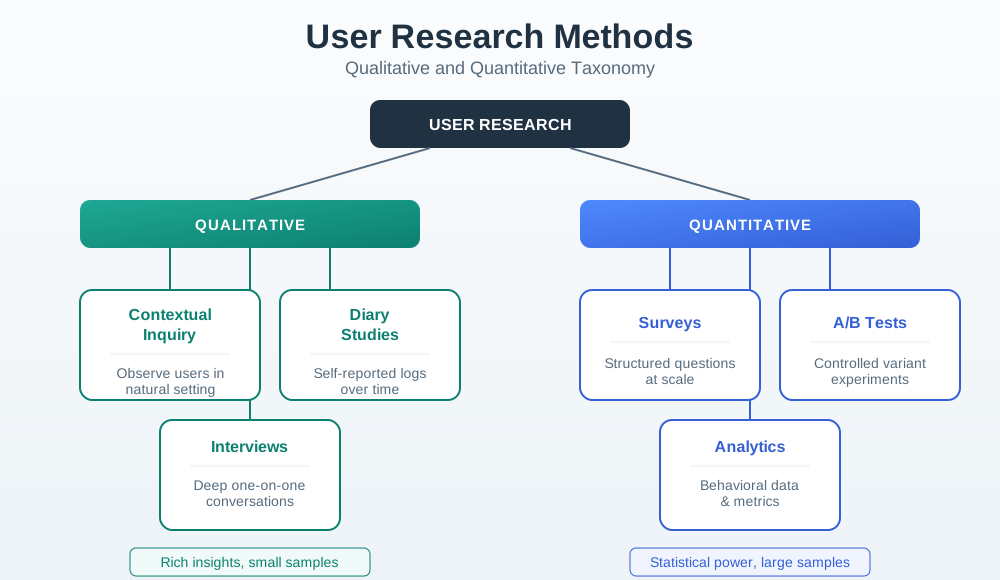
Interviews, observation, logs, prototype tests, surveys, and pilots each answer a different kind of question.
- An IoT research method is useful only when it answers the uncertainty behind a design decision.
- In the meeting room comfort sensor case, the first uncertainty is why staff ignore a prompt.
- For a connected product, the evidence type is often mixed.
Major section
Pick Methods for Uncertainty (continued)
A team choosing setup copy for a leak sensor needs different evidence from a team deciding whether a building dashboard should aggregate occupancy by room, floor, or shift.
- An interview after an observed incident can reveal goals, trust, language, and responsibility that a count alone cannot explain.
- Once the pattern is understood, a survey or telemetry can estimate how often it occurs in the studied setting.
- For shared spaces, method choice also needs affected-role coverage.
Major section
Pick Methods for Uncertainty (continued)
A setup abandonment question needs observation of physical placement, a prototype check of state messages, logs for Wi-Fi join or BLE provisioning failures, and a follow-up interview about what the user believed was happening.
- A survey can help later, but only after the team knows which setup conditions and failure states to ask about.
- A meeting-room comfort prompt involves the person who receives the prompt, other people in the room, facilities staff, support staff, and the team responsible for sensor placement or HVAC rules.
- Meaning unknown: interview after an observed event so participants can explain goals, trust, language, responsibility, and expectations.
Major section
Field Tests, Prototypes, Logs
A first-time smart-lock setup study might combine contextual inquiry at the door, a prototype test of invite and permission screens, support-log review of failed access cases, and a short interview after the task.
- The observation shows what people do, the prototype test checks comprehension, the logs show which failures happen in the field, and the interview explains why a user trusted or distrusted the state.
- A shared-access product may need account owners, guests, installers, property managers, support agents, and bystanders.
- A comfort-sensor study may need workers from different shifts, facilities staff, people in shared spaces, and people with accessibility needs.
Major section
Research Plans Need Instrumentation
A prototype test can log the screen, variant, selected action, error state, and recovery path.
- When a research method uses logs, telemetry, or a prototype, name the signals that will support interpretation.
- Instrumentation should match the research question.
- Research data may include location, occupancy, access events, health-adjacent routines, household patterns, or workplace behavior.
Major section
Research Plans Need Instrumentation (continued)
The goal is not to collect everything; it is to collect the minimum signals that let the team distinguish user confusion, device failure, cloud delay, permission denial, and support-process breakdown.
- A field pilot can join anonymized participant id, device id, firmware version, gateway id, role, event timestamp, support ticket tag, and study note without exposing unnecessary household or workplace detail.
- If the join key is missing, teams often end up with interviews that cannot be connected to logs or logs that cannot explain user behavior.
- Those controls make telemetry and support review usable without turning research into uncontrolled surveillance.
Major section
How It Works: Match Method to Evidence
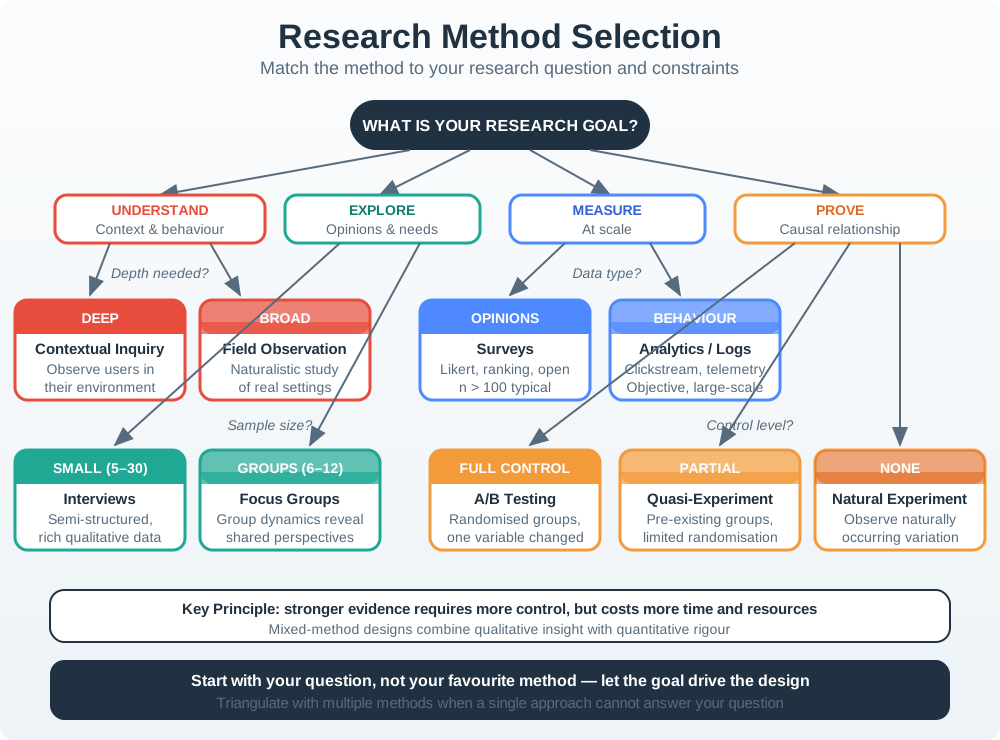
If the question is about what people actually do, observe behavior in context.
- A research plan should begin with the decision the team needs to make.
- "What do users want?".
- The stronger question makes the method easier to choose.
- If the question is about why people act that way, interview after observation.
Major section
How It Works: Match Method to Evidence (continued)
"Which setup state does a first-time user need to see when a shared entry device fails: phone permission denied, invite pending, credential inactive, device offline, or account ownership conflict?".
- It points toward field setup observation, prototype testing of recovery messages, support-log review, and role-specific interviews.
- If the question is about repeated use over time, use diaries, logs, or field pilots.
- If the question is about whether an interface is understandable, test the prototype.
- If the question is about how common a known pattern is, use a survey or telemetry review.
Major section
Method Selection Map
Translate that evidence into a named: Risk before writing the: Requirement, so the design response has a reason.
- Explore asks what they think and need.
- A site visit gives rich detail in the place of use.
- This record carries the chosen research method into the running design decision.
Deck summary
Key takeaways
Telemetry means records sent from a system so its state can be watched.
- Research methods are ways to reduce uncertainty before a design decision.
- Interviews, observation, logs, prototype tests, surveys, and pilots each answer a different kind of question.
- A team choosing setup copy for a leak sensor needs different evidence from a team deciding whether a building dashboard should aggregate occupancy by room, floor, or shift.
- A setup abandonment question needs observation of physical placement, a prototype check of state messages, logs for Wi-Fi join or BLE provisioning failures, and a follow-up interview about what the user believed was happening.
Retrieval practice
Recall check 1 of 3
UX Uma says: answer from memory, then check your reasoning.
Q1A facilities team is choosing how to study why staff ignore comfort-sensor prompts in meeting rooms. Which plan best matches the question?
Show answer
Answer: B Method choice should follow the decision.
Retrieval practice
Recall check 2 of 3
UX Uma says: answer from memory, then check your reasoning.
Q2Field visits reveal a repeated alert problem. The team now needs to estimate how widespread it is across deployed sites. Which evidence best answers that new question?
Show answer
Answer: B Use a defined survey or fleet telemetry after the field pattern is clear.
Retrieval practice
Recall check 3 of 3
UX Uma says: answer from memory, then check your reasoning.
Q3A team knows staff skip comfort alerts but not why. Which first method fits that uncertainty?
Show answer
Answer: C Observation and explanation address the reason behind the action.
Print reference
Answers
Answer key.
- B · Method choice should follow the decision.
- B · Use a defined survey or fleet telemetry after the field pattern is clear.
- C · Observation and explanation address the reason behind the action.