Reference Architectures · Study deck

Choosing an IoT Architecture Pattern

Picture a cold-room sensor that must raise a local alarm even when the outside link is down.

Blueprint Bina is your guide for this deck.

selection
Blueprint Bina, the module guide, in a scene from this chapter.
iotclass.org

After studying this chapter

Learning objectives

You will be able to:

  • Classify system flows (telemetry, commands, alerts, configuration, diagnostics, analytics, workflows) by response target, autonomy need, and ownership before choosing a placement pattern
  • Choose the simplest architecture pattern (cloud-centered, gateway/fog, edge-autonomous, hybrid/federated) that satisfies the hardest flow without forcing every flow into the same tier
  • Write an architecture selection record naming context, flow groups, chosen pattern, rejected alternatives, validation evidence, and review condition
  • Select validation evidence (flow trace, outage drill, boundary test, operations drill, data-quality review) that proves a placement choice still holds
iotclass.org

Major section

Start With the Decision You Can Defend

Those two needs already suggest different places for fast action and long-term analysis.

  • A reference architecture is a guide, not a finished design.
  • Its boxes do not prove capacity, security, cost, or support at the real site.
  • Each box must answer a need on the card.
iotclass.org

Major section

Flow Evidence Guides Selection

Architecture selection is not a vote for cloud, edge, gateway, or a favorite reference model.

  • Beginner Rule Choose the simplest architecture pattern that satisfies the hardest flow, then record what the choice hides and which evidence would require another review.
  • A single IoT system can contain several different flows.
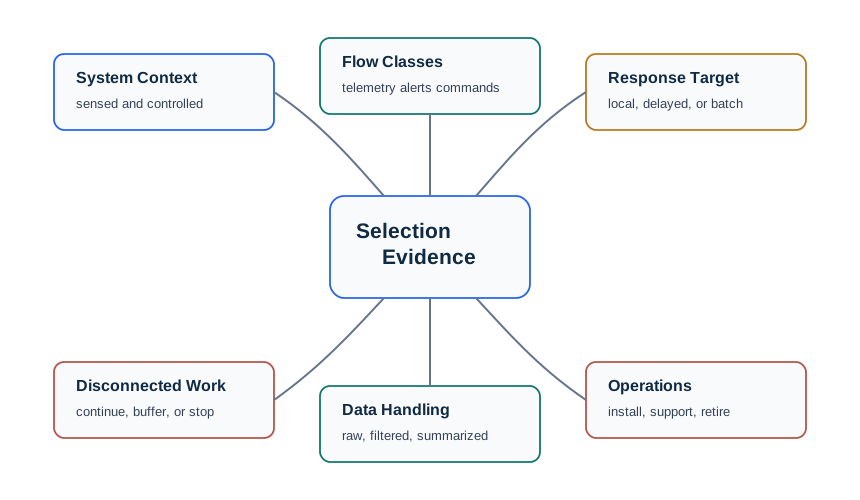
Architecture selection inputs including system context, flow classes, response targets, disconnected operation, data handling, ownership, operations, and review conditions.
iotclass.org

Major section

Flow Evidence Guides Selection (continued)

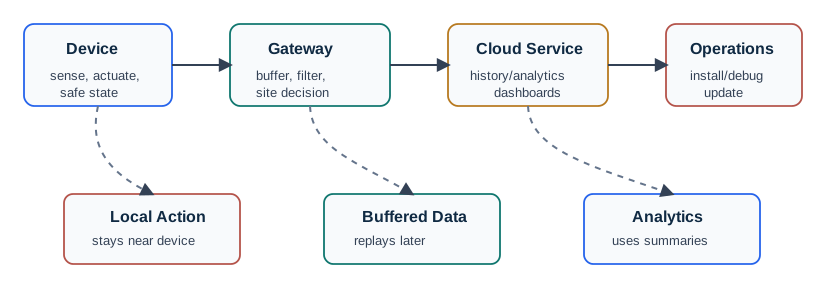
Periodic telemetry can tolerate delay, but a bounded local-control flow may need to continue when upstream services are unavailable.

  • Diagnostics may need operating records, while analytics can often run centrally after data is buffered.
  • Treating every flow as if it has the same timing, autonomy, and ownership need is the usual source of weak architecture choices.
  • The selection record should keep those proofs separate instead of hiding them under one pattern label.
iotclass.org

Major section

Flow Evidence Guides Selection (continued)

For example, a campus building system might publish zone temperature telemetry over MQTT every minute, keep actuator setpoints inside a BACnet or Modbus gateway, and send nightly energy summaries to a time-series service.

  • Those flows can share device identity, timestamp conventions, and inventory records, but their placement proof is different: outage logs for local control, buffer-drain evidence for telemetry, schema checks for analytics, and support records for operations.
  • It should also name which deployment inventory changes would invalidate the comparison.
  • Autonomy Need Decide what must continue if connectivity, cloud services, or operators are unavailable.
iotclass.org

Major section

Split Requirements Before Patterns

The practical move is to split the system by flow before comparing patterns.

  • Telemetry, alerts, commands, configuration, diagnostics, analytics, and user workflows can share infrastructure only where their timing, autonomy, data-quality, and ownership needs are compatible.
  • That structure supports split requirements before patterns: Different flows can use different placement rules inside one architecture.

Why it matters

Analytics can often sit in central data services because historical aggregation does not block local operation.

Different flows can use different placement rules inside one architecture.
iotclass.org

Major section

Split Requirements Before Patterns (continued)
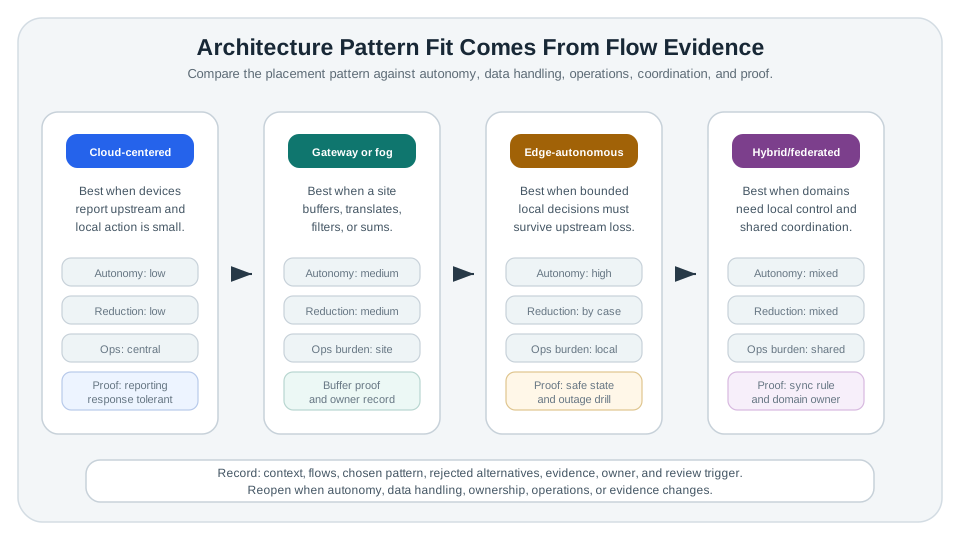
Selection Rule The hardest flow sets the minimum local capability.

  • The simplest flow should not force every other flow into the same tier.
  • Cloud-Centered Use when devices can report upstream, local action is limited, and disconnected operation has low consequence.
  • Its visible anchors include Architecture Pattern Fit Comes From Flow Evidence and: Cloud-centered.
iotclass.org

Major section

Split Requirements Before Patterns (continued)
Environmental telemetry can be buffered and uploaded later.

  • Gateway or Fog Use when local buffering, protocol translation, filtering, aggregation, or site-level ownership is needed.
  • Edge-Autonomous Use when bounded local decisions must continue without waiting for upstream connectivity or remote services.
  • Maintenance diagnostics need device health, stale-reading, calibration, and replacement records.
iotclass.org

Major section

Split Requirements Before Patterns (continued)

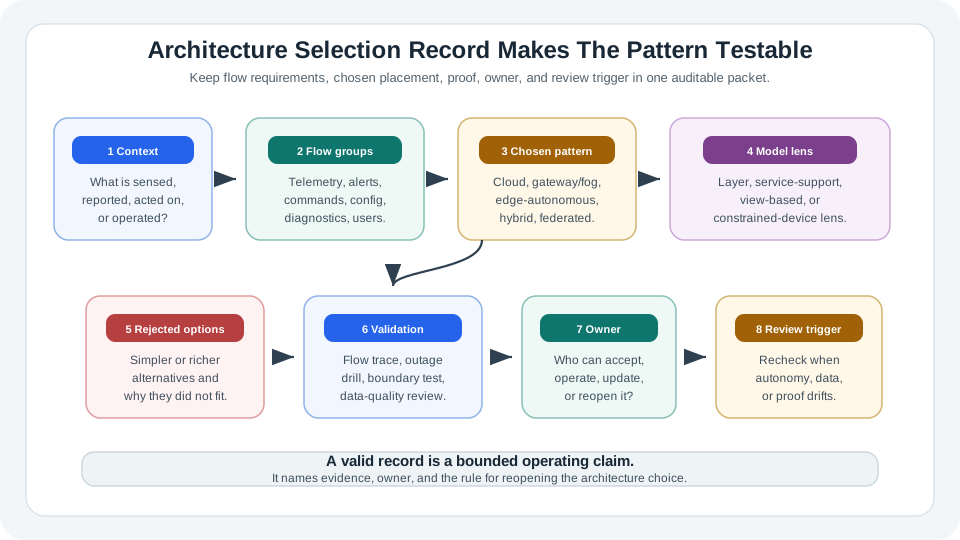
The fields below keep a hybrid or federated design precise enough for another reviewer to challenge.

  • Hybrid or Federated Use when several sites, business units, or operational domains need local control plus shared coordination.
  • Context: what is sensed, controlled, reported, or operated.
  • Rejected alternatives: what was simpler or richer, and why it did not fit.
iotclass.org

Major section

Split Requirements Before Patterns (continued)

The proposition under review is: Pattern comparison should explain why each flow fits a cloud-centered, gateway or fog, edge-autonomous, or hybrid pattern, and what evidence would force another review.

  • Validation evidence: traces, outage drills, boundary tests, inspections, or operating records.
  • That keeps a practical hybrid from becoming a vague compromise and gives reviewers a concrete way to challenge the placement.
  • Analytics can often sit in central data services because historical aggregation does not block local operation.
iotclass.org

Major section

Testable Architecture Selection

The under-the-hood question is not whether the pattern name sounds correct.

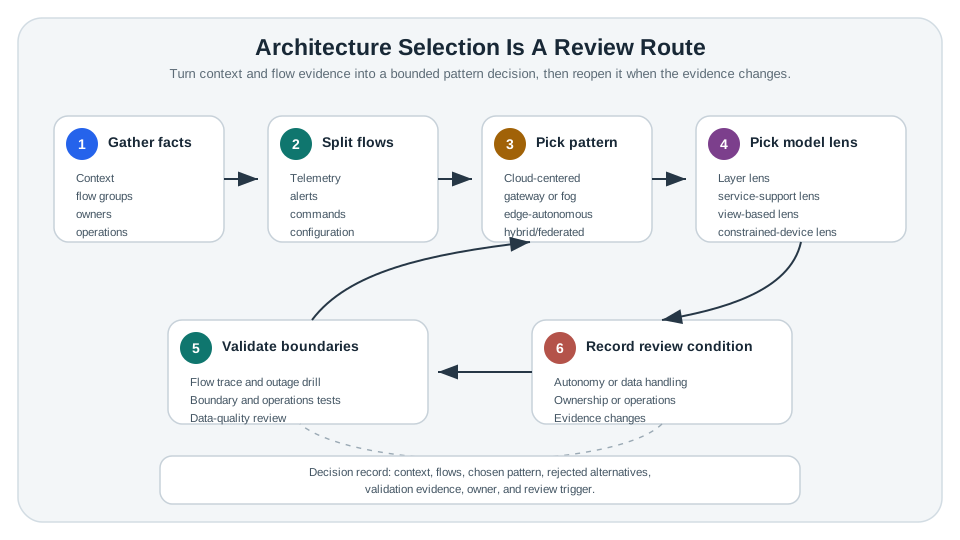
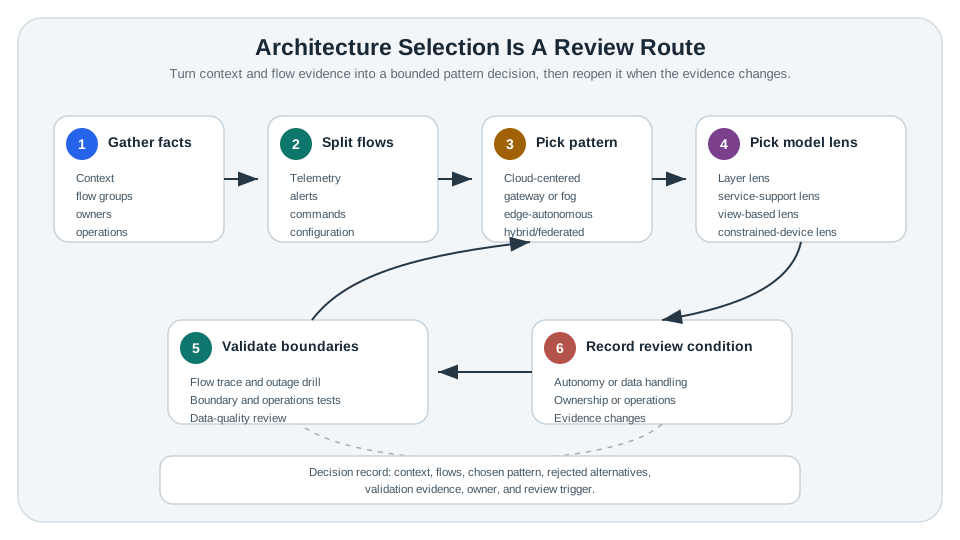
  • Its specific claim is: The review route moves from context and flow evidence to pattern choice, model lens, validation evidence, and a review condition tied to autonomy, data handling, ownership, operations, or evidence changes.
  • The reference model lens should expose the dominant review risk.

Why it matters

The three labels prevent a one-box testable architecture selection reading.

The review route moves from context and flow evidence to pattern choice, model lens, validation evidence, and a review condition tied to autonomy, data handling, ownership, operations, or evidence changes.
iotclass.org

Major section

Testable Architecture Selection (continued)
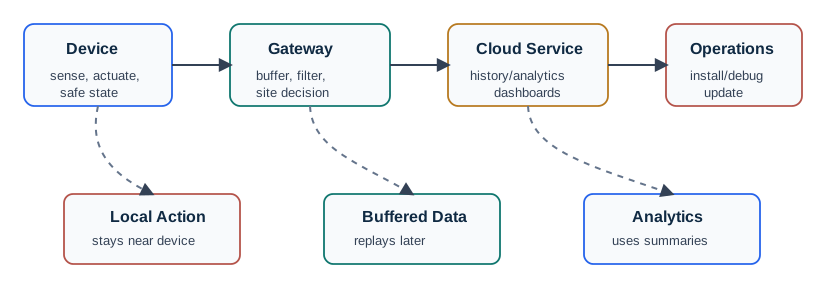
Operations drill: proof that field or support teams can commission, diagnose, update, and retire components.

  • Their relevance to hybrid/federated is: The review route moves from context and flow evidence to pattern choice, model lens, validation evidence, and a review condition tied to autonomy, data handling, ownership, operations, or evidence changes.
  • Outage drill: proof of what continues, buffers, stops, or degrades when connectivity is unavailable.
  • A testable selection has pass/fail evidence for each boundary it claims.
iotclass.org

Major section

Testable Architecture Selection (continued)
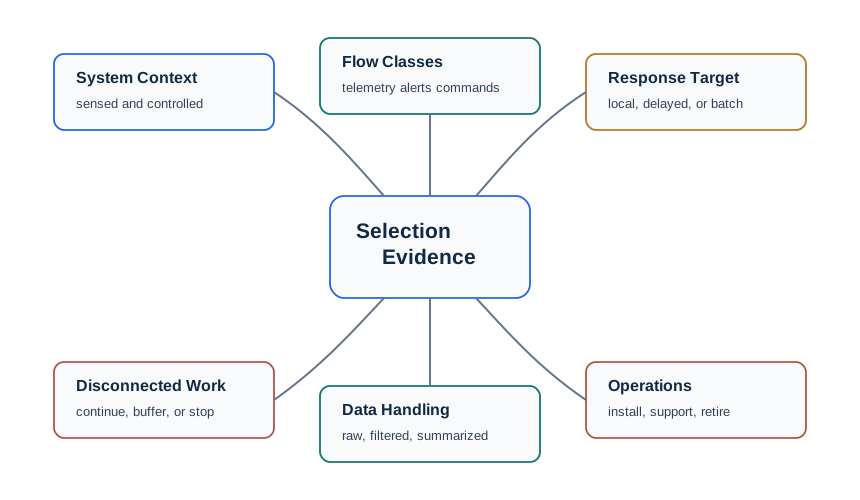
The three labels prevent a one-box testable architecture selection reading.

  • Boundary test: proof that a device, gateway, cloud service, or application can change without rewriting unrelated layers.
  • Data-quality review: proof that timestamps, freshness, duplicates, summaries, and missing data are represented correctly.
  • A compact layer lens may be enough for broad device, network, processing, and application responsibilities.
iotclass.org

Major section

Testable Architecture Selection (continued)

A service-support lens helps when registration, routing, support services, data handling, and applications need clear boundaries.

  • A view-based lens helps when function, information, deployment, and operations views need separate reviewers.
  • A constrained-device lens helps when energy, topology, retry behavior, local storage, or maintenance interval drives the design.
  • If central analytics is the reason, the evidence should show accepted schemas, duplicate handling, late-arriving data policy, and the owner of model or dashboard changes.
iotclass.org

Deck summary

Key takeaways

Those two needs already suggest different places for fast action and long-term analysis.

  • Architecture selection is not a vote for cloud, edge, gateway, or a favorite reference model.
  • Periodic telemetry can tolerate delay, but a bounded local-control flow may need to continue when upstream services are unavailable.
  • For example, a campus building system might publish zone temperature telemetry over MQTT every minute, keep actuator setpoints inside a BACnet or Modbus gateway, and send nightly energy summaries to a time-series service.
  • The practical move is to split the system by flow before comparing patterns.
iotclass.org

Retrieval practice

Recall check 1 of 3

Blueprint Bina says: answer from memory, then check your reasoning.

Q1A building-monitoring system has telemetry, local control, diagnostics, and analytics flows. What should the team do before choosing cloud, gateway, edge, or hybrid placement?

AClassify each flow by response target, outage behavior, data handling, owner, proof, and placement.
BPick the cloud, gateway, or edge pattern the team has delivered most often on past projects.
CDraw one reference diagram first, then force telemetry, alerts, diagnostics, and analytics into it.
DWait for implementation to reveal the hardest flow, then adjust owners and interfaces later.
Show answer

Answer: A Mixed IoT systems need flow-by-flow placement: local-control paths may require gateway or edge autonomy, while telemetry, diagnostics, and analytics can often use buffered or central paths.

iotclass.org

Retrieval practice

Recall check 2 of 3

Blueprint Bina says: answer from memory, then check your reasoning.

Q2A system has a local equipment-control flow that must continue during upstream outages and a trend-reporting flow that can wait. Which selection is strongest?

AKeep control local, buffer telemetry, and send trend reports upstream when connectivity returns.
BMove both flows to the cloud because trend reports already tolerate delayed processing.
CPut every feature at the edge because one control path needs local autonomy.
DSkip the decision record because mixed placement is too complex to review.
Show answer

Answer: A Architecture selection should split mixed requirements by flow and record the pattern, evidence, rejected alternatives, owner, and review condition.

iotclass.org

Retrieval practice

Recall check 3 of 3

Blueprint Bina says: answer from memory, then check your reasoning.

Q3Why should an architecture selection record include a review condition?

ABecause flow behavior, autonomy, ownership, operations, or validation evidence can drift after selection.
BBecause review conditions prove the original architecture pattern was always incorrect.
CBecause every IoT system must eventually migrate into a cloud-centered pattern.
DBecause reference model lenses remove the need for traces, drills, and operating records.
Show answer

Answer: A Selection records need review conditions because flow, autonomy, data, ownership, operations, and evidence can drift after the original review.

iotclass.org

Print reference

Answers

Answer key.

  1. A · Mixed IoT systems need flow-by-flow placement: local-control paths may require gateway or edge autonomy, while telemetry, diagnostics, and analytics can often use buffered or central paths.
  2. A · Architecture selection should split mixed requirements by flow and record the pattern, evidence, rejected alternatives, owner, and review condition.
  3. A · Selection records need review conditions because flow, autonomy, data, ownership, operations, and evidence can drift after the original review.
iotclass.org