Reference Architectures · Study deck

Practice: IoT Reference Architecture

A payload is the useful data carried inside a message.

Blueprint Bina is your guide for this deck.

iotclass.org

After studying this chapter

Learning objectives

You will be able to:

  • build a small layered IoT flow using device input, message formatting, local decision logic, and a review record;
  • explain which code or test artifact belongs to each architecture layer;
  • validate data-quality, threshold, and fallback behavior without relying on a specific board or cloud service;
  • extend the lab design toward accumulation, abstraction, application, and operations layers;
iotclass.org

Major section

Start With the Review Record

A reviewer must be able to repeat the same cases.

  • The screen may show the right number while one hidden step uses stale or unsafe data.
  • For every hand-off, record the input, the output, the time, and the reason a value was accepted or rejected.
  • It proves that the chosen boundaries can be inspected.
iotclass.org

Major section

Start With the Review Record (continued)

The evidence should show which layer noticed the change and which action followed.

  • This small lab does not prove a full service is ready for use.
  • In the lab, the architecture becomes real when the review record has something concrete to inspect.
  • A diagram alone is not enough; it needs a flow trace, a boundary decision, a test result, a risk note, and a reason the current design is acceptable.
iotclass.org

Major section

Minimum Viable Understanding

The principles below keep tooling secondary to evidence: a simulator, board, or fixture is acceptable only when normal, invalid, delayed, override, and recovery cases remain independently inspectable.

  • A normal input should produce the agreed payload and decision; missing, stale, or invalid input should carry a quality reason and avoid accidental actuation; reset and manual override should leave visible state.
  • That repeatability is what lets the lab stand in for a small architectural proof rather than a one-time demonstration.
  • The lab is about boundaries.: Device input, payload formatting, local decision logic, durable records, and operator response should be separate enough to test independently.
iotclass.org

Major section

Minimum Viable Understanding (continued)

Proof matters more than the tool.: You can use a simulator, a bench microcontroller, or a mocked input script if each layer produces inspectable output.

  • Validation protects higher layers.: A failed sensor reading should become a marked data-quality condition, not an accidental alert.
  • A lab record is a design artifact.: Capture assumptions, inputs, outputs, test cases, failures, and review conditions.
  • Production needs more layers.: This lab starts small, then shows what would be added for storage, abstraction, dashboards, operations, and updates.
iotclass.org

Major section

Scenario and Setup

It produces a structured message, makes a local alert decision, and records enough evidence for review.

  • The decision consumes validated readings, not raw pins.
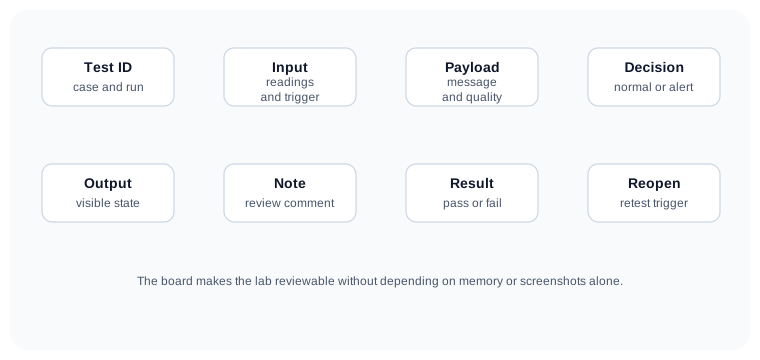
  • Lab Record Captured input, payload, decision, output, failed case, and reviewer note for each test run.
  • The tooling is acceptable only if it lets you observe the layer evidence listed in this chapter.
iotclass.org

Major section

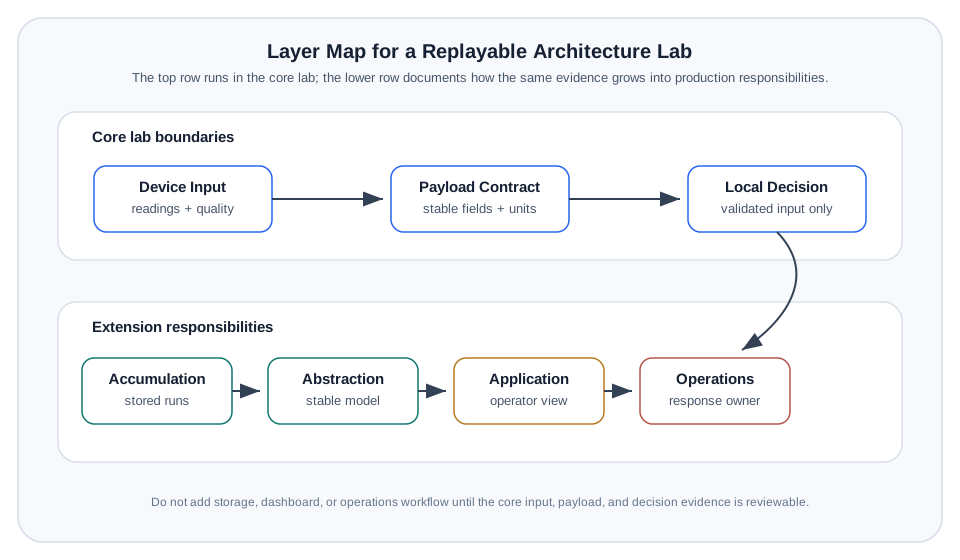
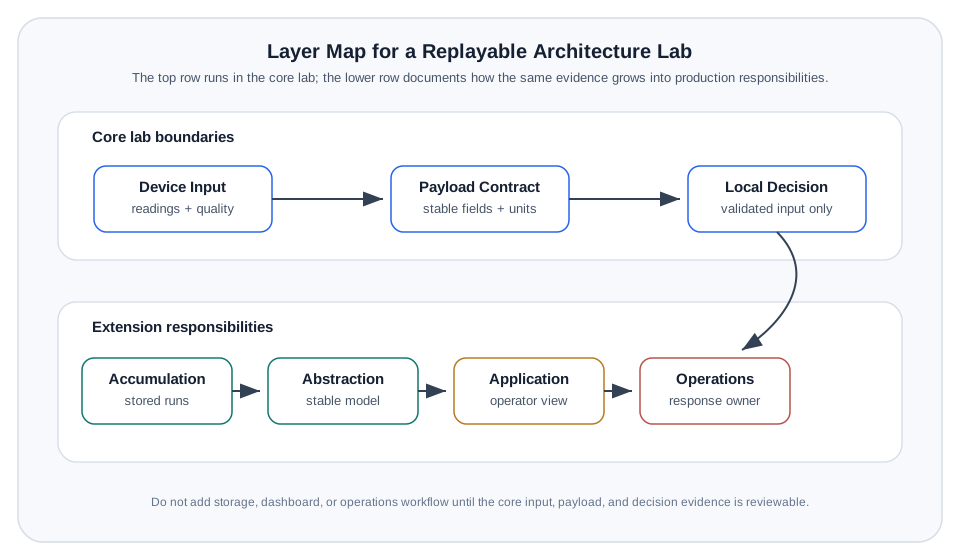
Layer Map

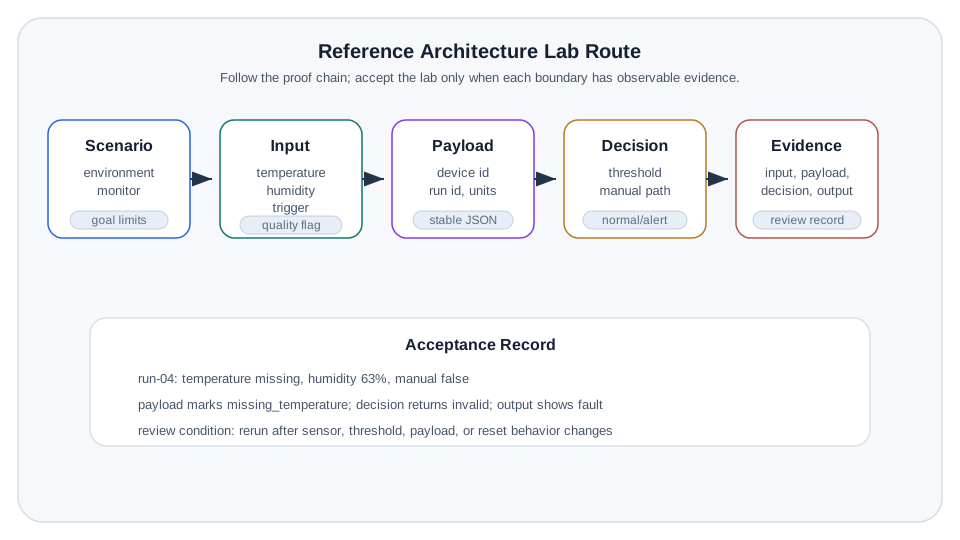
The lab begins with three active layers, then documents how it would grow into the full reference architecture.

  • Layer 2: Message Format Builds a payload that can be logged, sent, stored, or replayed without exposing hardware details.
  • Extension Layers Add storage, abstraction, dashboards, operator workflow, update records, and support ownership after the core lab passes.
Reference architecture lab layer map separating core input, payload, and decision boundaries from later accumulation, abstraction, application, and operations responsibilities.
iotclass.org

Major section

Test Matrix

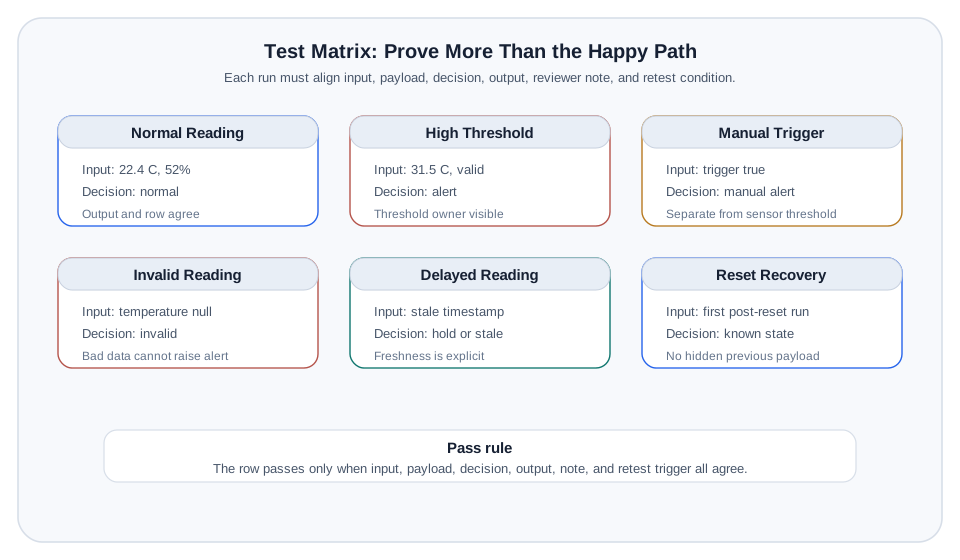
This: Pass rule sequence supports the claim: Reference architecture lab test matrix showing normal, high-threshold, manual-trigger, invalid-reading, delayed-reading, and reset-recovery runs with the evidence required for each row.

  • Normal Reading Valid readings stay inside limits.
  • Local decision remains normal.
  • Payload remains valid.
  • Local decision becomes alert.

Key terms

Payload
Payload is valid.
Payload quality
Payload quality is marked invalid.
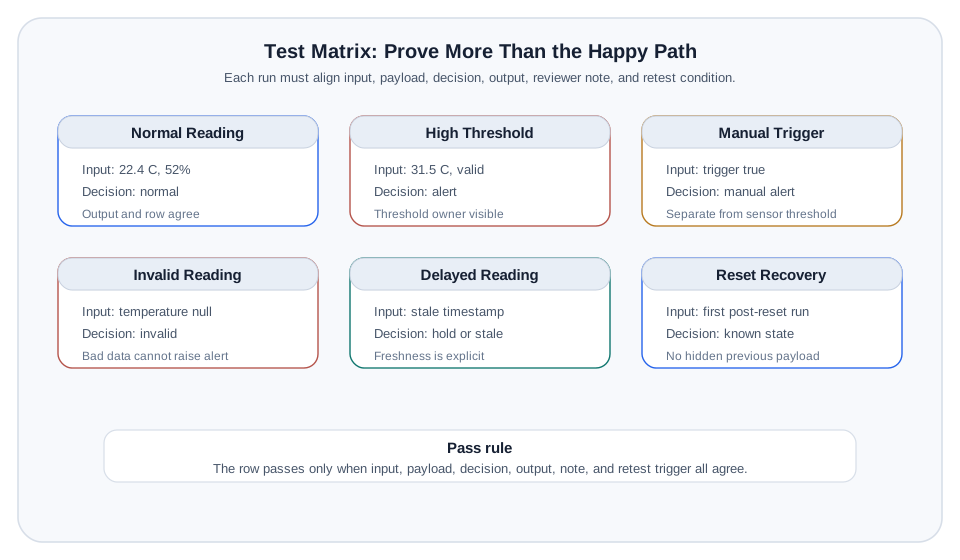
Reference architecture lab test matrix showing normal, high-threshold, manual-trigger, invalid-reading, delayed-reading, and reset-recovery runs with the evidence required for each row.
iotclass.org

Major section

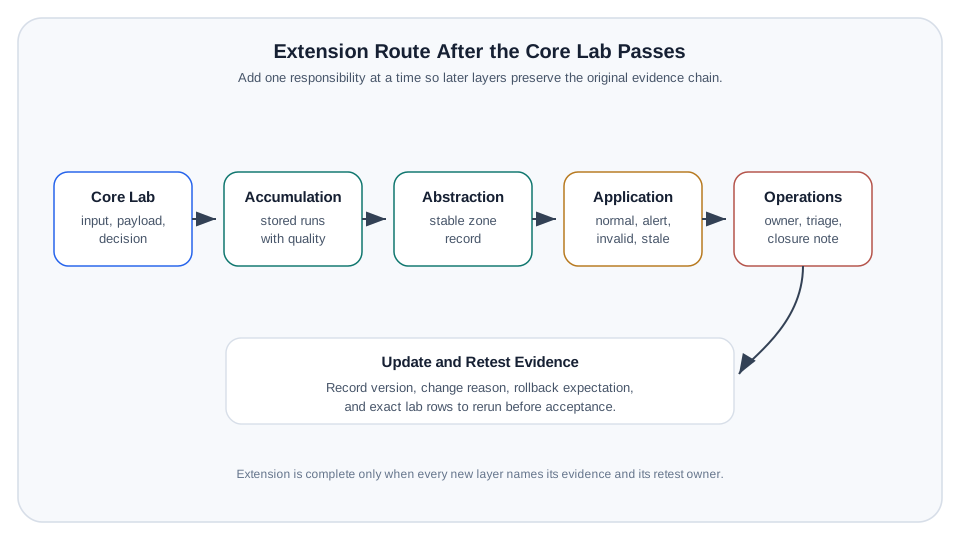
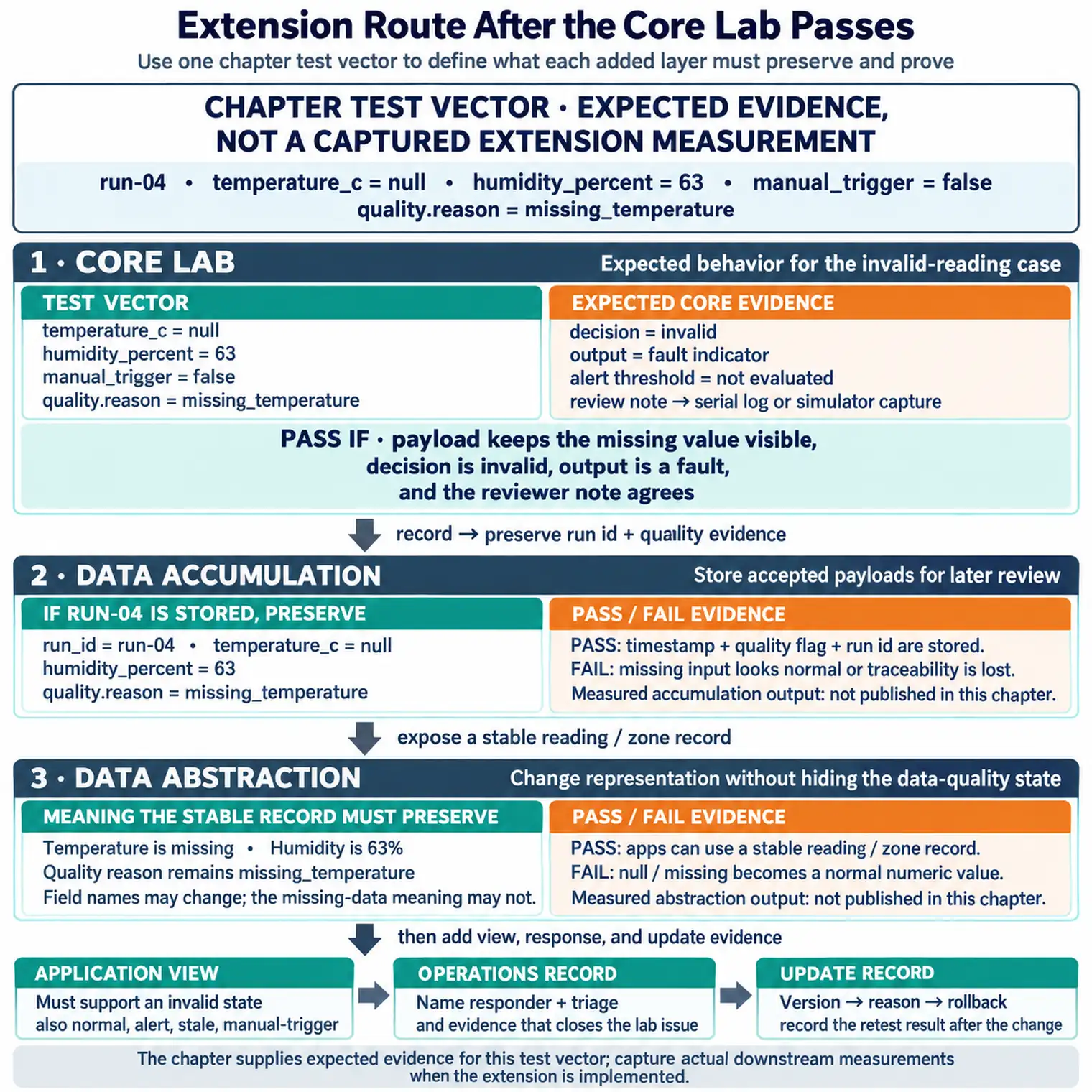
Extension Plan

Data Accumulation Store accepted payloads with timestamps, quality flags, and run ids for later review.

  • Data Abstraction Expose a stable reading or zone record so applications do not depend on device-specific fields.
  • Application View Show normal, alert, invalid, stale, and manual-trigger states in a human-readable view.
Reference architecture lab extension route from the core input-payload-decision lab through accumulation, abstraction, application, operations, update evidence, and retest ownership.
iotclass.org

Major section

Key Concepts

Payload contract:: The message structure that carries readings and quality information across layer boundaries.

  • For every case, compare raw input, formatted payload, decision output, visible behavior, and stored note using the same run identifier.
  • A disagreement reveals the boundary that needs repair.
  • Local decision:: Logic that acts on validated input before storage, dashboard, or operations layers are involved.

Why it matters

Quality flag:: A field that marks whether a reading is valid, missing, delayed, stale, or otherwise unsafe for normal decision logic.

iotclass.org

Major section

Lab Record

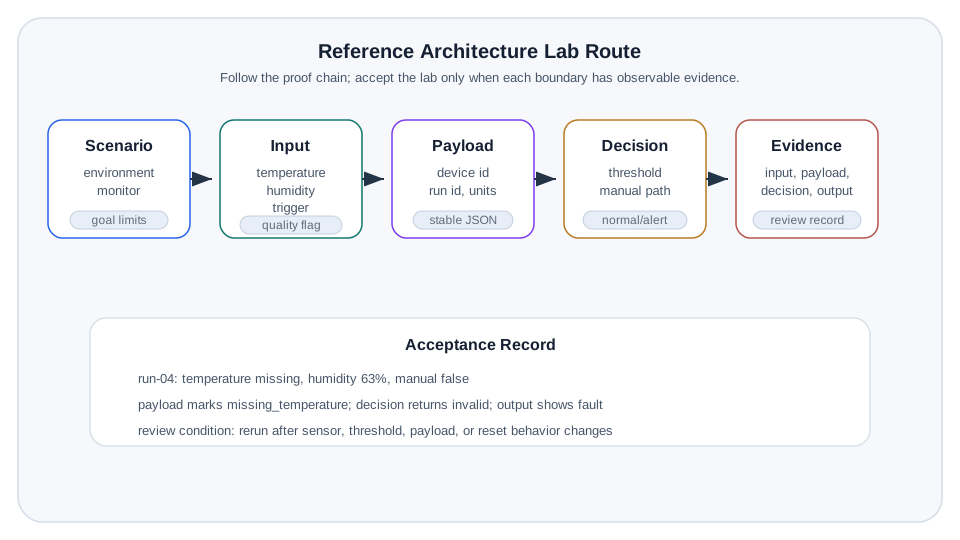
They prove that the lab does not silently convert bad input into a confident application decision.

  • A useful lab row is specific enough to rerun.
  • For example, run-04 might inject temperature_c: null, humidity_percent: 63, manual_trigger: false, and quality.reason: missing_temperature.
  • If the same row only says "LED on" or "test passed," it is not architecture evidence.

Try it: Lab Record in the chapter

iotclass.org

Major section

Boundary Collapse Hides Defects

When input reading, payload formatting, threshold logic, output control, and review text live in one long loop, a lab can pass by accident.

  • A payload-format change can alter decision behavior.
  • A missing sensor value can look like a normal reading.
  • A dashboard label can become the only evidence that an alert happened.
  • Separated functions make defects visible.
iotclass.org

Major section

Boundary Collapse Hides Defects (continued)

The device-input layer can mark bad readings, the payload layer can carry quality evidence, the decision layer can refuse invalid data, and the lab-record layer can show which case failed.

  • The failure mode is usually an implicit dependency.
  • A function that formats JSON might also clamp values, so the decision layer never sees an out-of-range input.
  • The integrated run should prove the same boundaries in order, not replace them.
iotclass.org

Major section

Boundary Collapse Hides Defects (continued)

A display routine might translate invalid into the same red LED used for a high threshold, so the reviewer cannot distinguish a sensor fault from a real alert.

  • A reset routine might clear output state but leave the last payload in memory, so the next record looks current when it is stale.
  • A payload-format change should preserve decision outcomes for the same validated input.
  • A threshold change should alter only the decision cases it names.
iotclass.org

Deck summary

Key takeaways

A reviewer must be able to repeat the same cases.

  • The evidence should show which layer noticed the change and which action followed.
  • The principles below keep tooling secondary to evidence: a simulator, board, or fixture is acceptable only when normal, invalid, delayed, override, and recovery cases remain independently inspectable.
  • Proof matters more than the tool.: You can use a simulator, a bench microcontroller, or a mocked input script if each layer produces inspectable output.
  • It produces a structured message, makes a local alert decision, and records enough evidence for review.
iotclass.org

Retrieval practice

Recall check 1 of 3

Blueprint Bina says: answer from memory, then check your reasoning.

Q1Why does this reference-architecture lab insist you not collapse sensing, formatting, and decision logic into one step?

ABecause separate functions let sensing, formatting, and decisions run in parallel to reduce latency.
BBecause separated layers show which boundary owns valid, invalid, or delayed data.
CBecause compilers reject programs that read sensors and make decisions together.
DBecause each layer must be written in a different language or toolchain.
Show answer

Answer: B Keeping sensing, formatting, and decision layers separate lets the lab prove which boundary owns valid, invalid, or delayed data.

iotclass.org

Retrieval practice

Recall check 2 of 3

Blueprint Bina says: answer from memory, then check your reasoning.

Q2A lab run receives an invalid temperature reading, but the alert LED turns on because the threshold function used the raw value directly. Which architecture boundary failed?

AThe dashboard failed because the LED color was missing from the lab notes.
BInput quality and local decision boundaries failed because bad data reached threshold logic.
CStorage failed because the payload was not saved in a database first.
DThe network boundary failed because packet checks should reject corrupted sensor values before delivery.
Show answer

Answer: B Layered lab evidence should show invalid readings as quality conditions.

iotclass.org

Retrieval practice

Recall check 3 of 3

Blueprint Bina says: answer from memory, then check your reasoning.

Q3During the architecture lab, a reset test shows the output state returns to normal, but the lab record does not include the input quality flag, payload fields, or local decision that produced that output. What should the reviewer require before accepting the lab?

AAccept it because a normal-looking output proves reset recovery and layer ownership.
BRequire only a dashboard screenshot because application evidence replaces input and payload evidence.
CRequire a record linking reset input, quality, payload, decision, output, result, review condition, and owning layer.
DRemove the reset case because recovery belongs only to production operations.
Show answer

Answer: C A reference-architecture lab should be accepted only when the evidence record proves input quality, payload format, local decision, output state, review result, and ownership across normal and recovery cases.

iotclass.org

Print reference

Answers

Answer key.

  1. B · Keeping sensing, formatting, and decision layers separate lets the lab prove which boundary owns valid, invalid, or delayed data.
  2. B · Layered lab evidence should show invalid readings as quality conditions.
  3. C · A reference-architecture lab should be accepted only when the evidence record proves input quality, payload format, local decision, output state, review result, and ownership across normal and recovery cases.
iotclass.org