Routing & RPL · Study deck

IPv6 and 6LoWPAN for IoT

Internet Protocol is a set of rules for naming devices and moving packets between networks.

Packet Pete is your guide for this deck.

protocolsipv66lowpan
Packet Pete, the module guide, in a scene from this chapter.
iotclass.org

After studying this chapter

Learning objectives

You will be able to:

  • separate what IPv6 addressing provides from what 6LoWPAN link adaptation provides
  • prove compression context and fragmentation limits before trusting a compressed packet
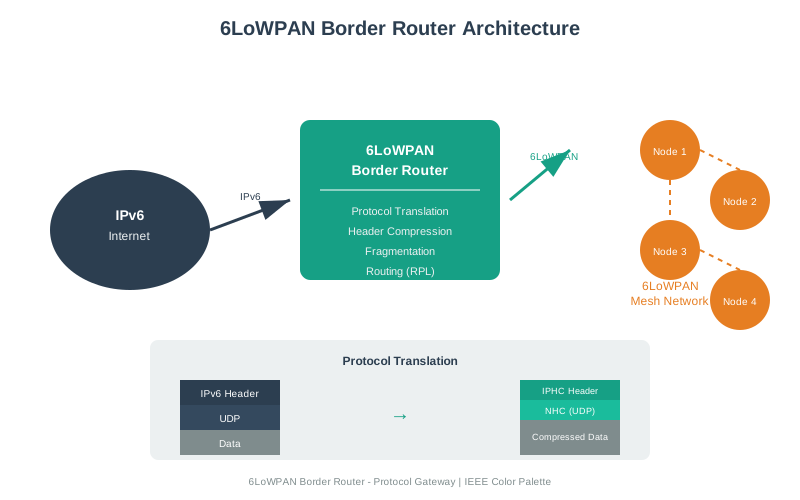
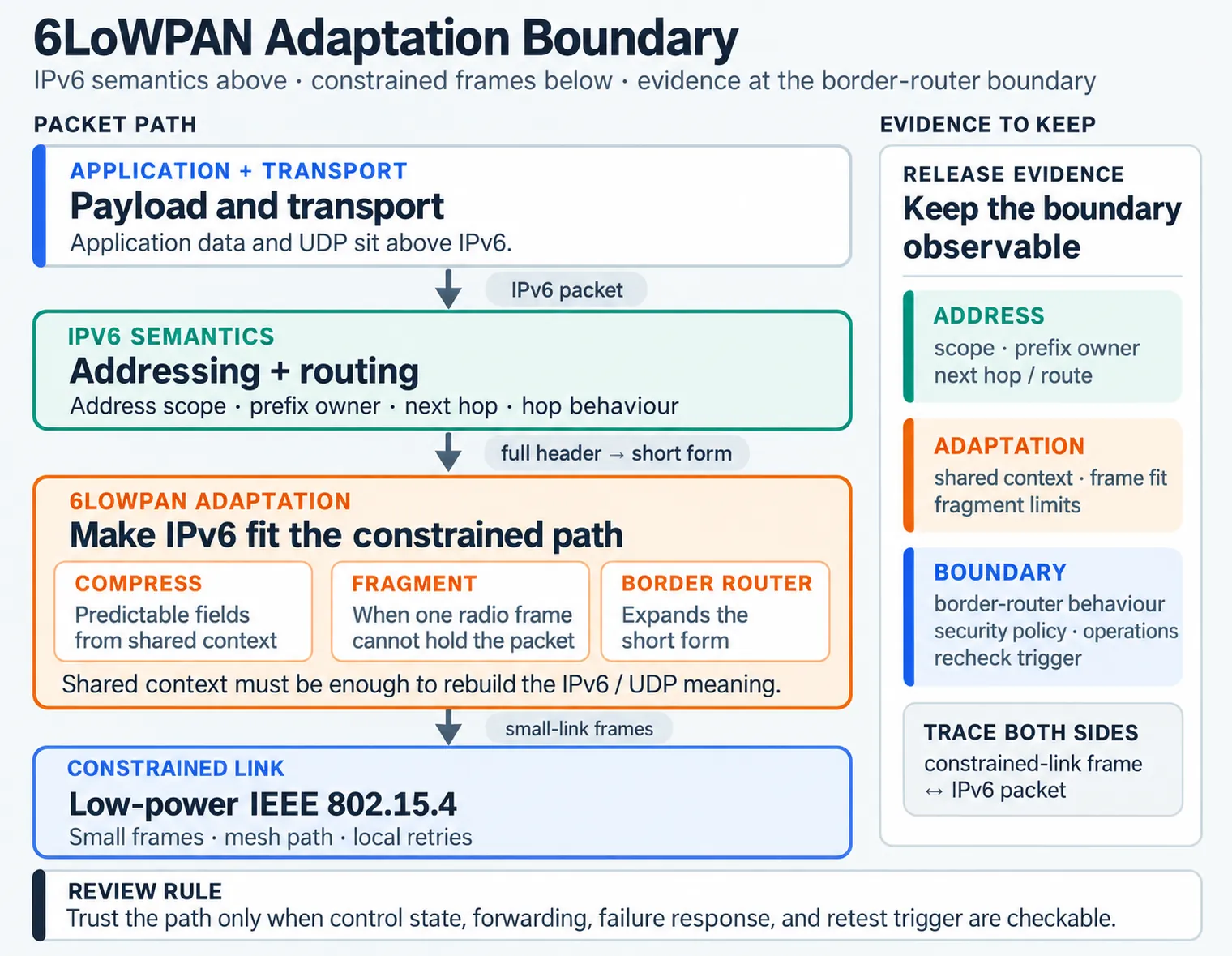
  • use border-router boundary evidence (prefix advertisement, context expansion, failure counters) to decide release readiness
  • Explain: 6LoWPAN is short for IPv6 over Low-Power Wireless Personal Area Networks.
iotclass.org

Major section

Start With One Compressed Packet

6LoWPAN is short for IPv6 over Low-Power Wireless Personal Area Networks.

  • It helps IPv6 packets fit those small radio frames.
  • The IPv6 address says where the packet starts and ends.
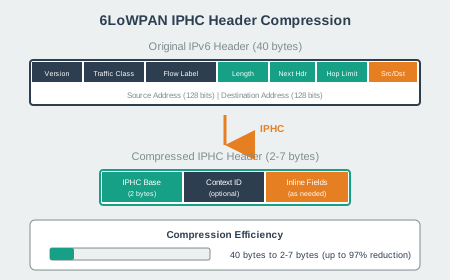
  • The 6LoWPAN layer shortens parts that both sides can infer.
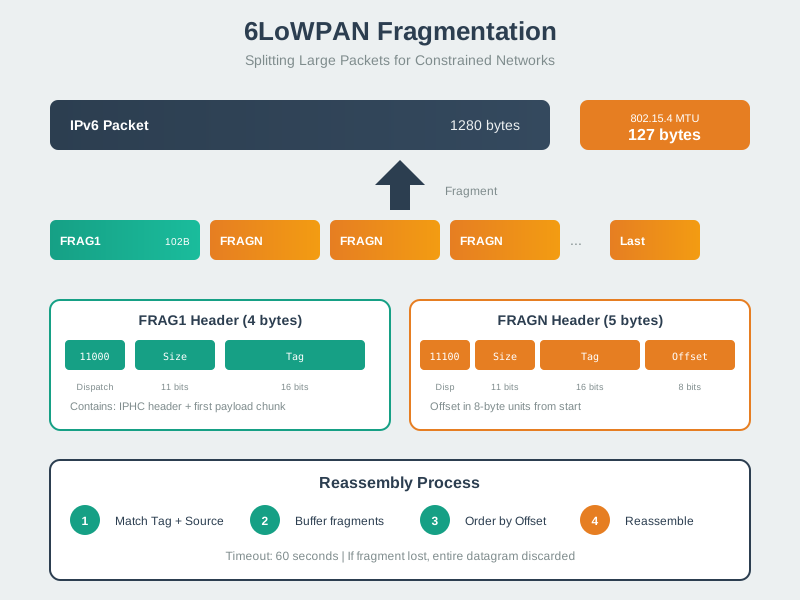
  • It may also split a packet that is too large for one radio frame.

Key terms

Internet Protocol
Internet Protocol is a set of rules for naming devices and moving packets between networks.
IPv6
IPv6 is version 6 of those rules.

Why it matters

Splitting a packet adds risk because every piece must arrive before the packet can be rebuilt.

iotclass.org

Major section

Start With One Compressed Packet (continued)
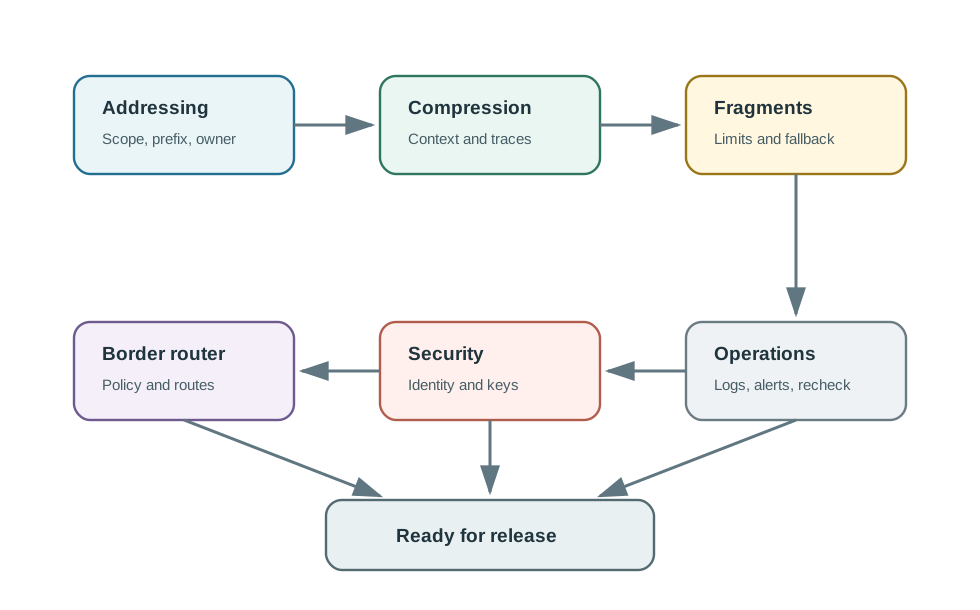
Shortening a header is safe only when both sides share the same context.

  • Real sites can use several address scopes, context rules, routes, and security checks.
  • The Practitioner section explains those choices.
  • Under the Hood shows the byte and fragment limits that can force a message redesign.
iotclass.org

Major section

Start With One Compressed Packet (continued)

The far side must not treat a part packet as a full one.

  • Each case should show who owns the prefix, route, short form, and check after a change.
  • A large message may need many pieces, more radio time, and more chances to fail.
  • 6LoWPAN becomes practical when you inspect one IPv6 packet before and after adaptation.
iotclass.org

Major section

Overview: IPv6 Gives Addressing; 6LoWPAN Adapts The Link
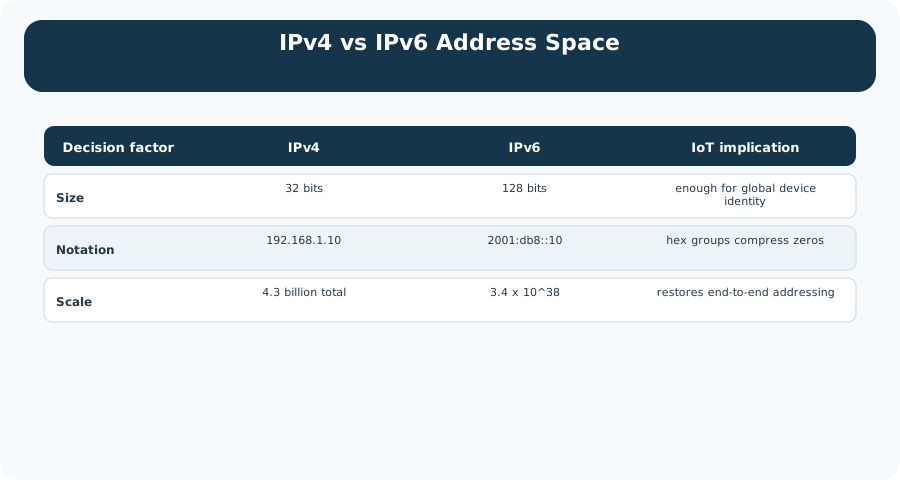
This matters because a routing label or formed topology alone cannot prove that the required traffic path works or recovers at its boundaries.

  • Their combined meaning is that iPv6 review starts with scope, prefix ownership, interface identity, neighbor behavior, and route ownership, which advances Overview: IPv6 Gives Addressing; 6LoWPAN Adapts The Link.
IPv6 review starts with scope, prefix ownership, interface identity, neighbor behavior, and route ownership.
iotclass.org

Major section

Summary

IPv6 gives IoT systems a scalable addressing and routing foundation, but address size is not a security control.

  • 6LoWPAN adapts IPv6 to constrained links through context-dependent compression, fragmentation, and border-router expansion.
  • Compression evidence must name inferred fields, inline exceptions, shared context, next-header support, and representative traces.
  • Fragmentation needs payload budgets, buffer checks, loss counters, and fallback behavior before release.
iotclass.org

Deck summary

Key takeaways

6LoWPAN is short for IPv6 over Low-Power Wireless Personal Area Networks.

  • Shortening a header is safe only when both sides share the same context.
  • The far side must not treat a part packet as a full one.
  • This matters because a routing label or formed topology alone cannot prove that the required traffic path works or recovers at its boundaries.
  • IPv6 gives IoT systems a scalable addressing and routing foundation, but address size is not a security control.
iotclass.org

Retrieval practice

Recall check 1 of 3

Packet Pete says: answer from memory, then check your reasoning.

Q1A greenhouse control mesh runs IPv6 over 6LoWPAN for pump-status sensors and valve commands. The team says the 128-bit addresses make the mesh secure enough for release. What is the safest review response?

ALong IPv6 addresses prevent all command abuse, so the mesh no longer needs access control.
BRequire identity, authorization, border-router policy, and monitoring evidence.
CIPv6 should be rejected because only IPv4 can secure pump and valve networks.
D6LoWPAN automatically encrypts every application message.
Show answer

Answer: B IPv6 is an addressing and routing foundation, not a complete security design.

iotclass.org

Retrieval practice

Recall check 2 of 3

Packet Pete says: answer from memory, then check your reasoning.

Q2A 6LoWPAN design promises that every packet will compress to the same tiny header size. What evidence should a reviewer request?

AA single best-case compression diagram copied from a different stack.
BA guarantee that fragmentation can never happen on low-power links.
CPacket traces showing inferred fields, inline exceptions, headers, and fragments.
DOnly the application dashboard, because packet traces are unrelated to adaptation behavior.
Show answer

Answer: C 6LoWPAN review needs deployment-specific evidence for compression context, inline fields, next-header support, and fragment behavior.

iotclass.org

Retrieval practice

Recall check 3 of 3

Packet Pete says: answer from memory, then check your reasoning.

Q3Which release evidence best proves an IPv6 and 6LoWPAN deployment is ready for constrained IoT traffic?

AA record assigning globally unique IPv6 addresses to the constrained nodes and the border router.
BA border-router diagram with no counters, logs, owner, or failure-mode evidence.
CA telemetry payload check showing that routine samples fit in a single compressed frame.
DA release record for address scope, compression, fragments, router policy, security, and rechecks.
Show answer

Answer: D Under the hood, IPv6 and 6LoWPAN readiness is proven at the boundary between constrained devices, adaptation behavior, border-router policy, and operations evidence.

iotclass.org

Print reference

Answers

Answer key.

  1. B · IPv6 is an addressing and routing foundation, not a complete security design.
  2. C · 6LoWPAN review needs deployment-specific evidence for compression context, inline fields, next-header support, and fragment behavior.
  3. D · Under the hood, IPv6 and 6LoWPAN readiness is proven at the boundary between constrained devices, adaptation behavior, border-router policy, and operations evidence.
iotclass.org