IoT Value and Product Strategy · Study deck
IoT Business Models: Revenue and Benefits
A product can gain subscribers while support and churn erase its margin.
Ada is your guide for this deck.

After studying this chapter
Learning objectives
You will be able to:
- Compare subscription, freemium, service, and data-revenue models.
- Calculate LTV-to-CAC and test a recurring-revenue gate.
- Explain: You now know why the device is only the relationship opener, while monitoring, control, analytics, updates, and renewal evidence carry the durable value.
- Explain: You now know why the example’s 75% subscription gross margin can outweigh its 25% hardware margin even when the device price drops.
Major section
Checkpoint: Value Loop
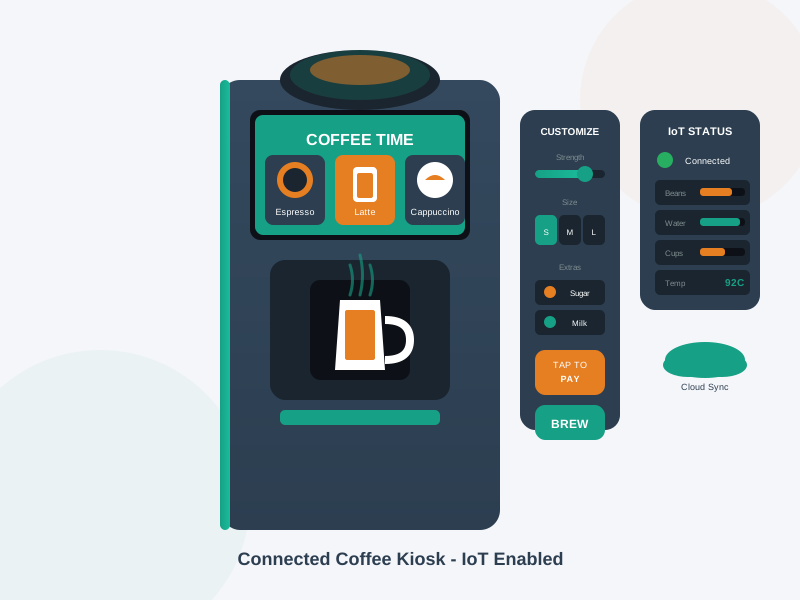
You now know why the device is only the relationship opener, while monitoring, control, analytics, updates, and renewal evidence carry the durable value.
- You now know why pricing pages are fragile until payer roles, user rights, billable units, and failure behavior are defined as entitlements.
- You now know why LTV:CAC, ARPU, gross margin, and churn require telemetry joined to account, device, plan, feature, support, cost, and outcome data.
- With the value loop established, the next move is practical: evaluate a proposed model before launch rather than after hardware enthusiasm has already set the plan.
Major section
Checkpoint: Recurring Revenue
You now know why the example’s 75% subscription gross margin can outweigh its 25% hardware margin even when the device price drops.
- You now know why freemium needs measured conversion and disciplined free-tier support costs.
- Those examples make the upside visible.
- The next section turns the same idea into an approval gate: the model must clear the economics before the team treats it as viable.
Major section
Definition
An IoT business model describes how an organization creates, delivers, and captures value through Internet of Things technologies, products, and services.
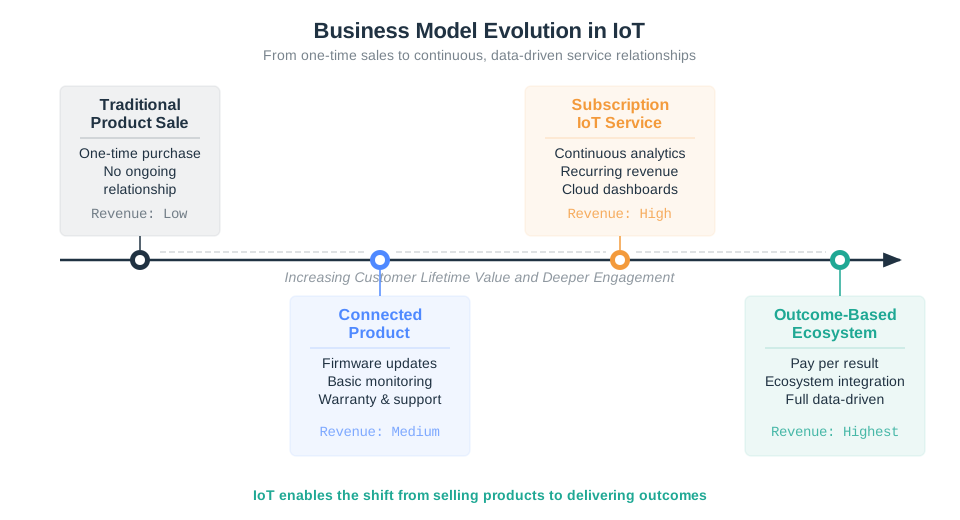
- The shift from a product sale to an IoT-enabled service changes both what the customer buys and what the supplier must keep delivering.
- Moving right can deepen the customer relationship, but it also lengthens the supplier's operational obligation.
Major section
Definition (continued)
Connectivity adds monitoring and updates, product-as-a-service makes that continuing capability part of the offer, and outcome-based pricing makes an agreed result the billable unit.
- That obligation—not connectivity alone—is the thread joining the examples that follow.
- Rolls-Royce takes on maintenance-planning and shop-visit cost risks.
- The first application turns recurring operation into something a provider can observe and support.
- Separate what the system observes from the human response it can support.
Major section
Definition (continued)
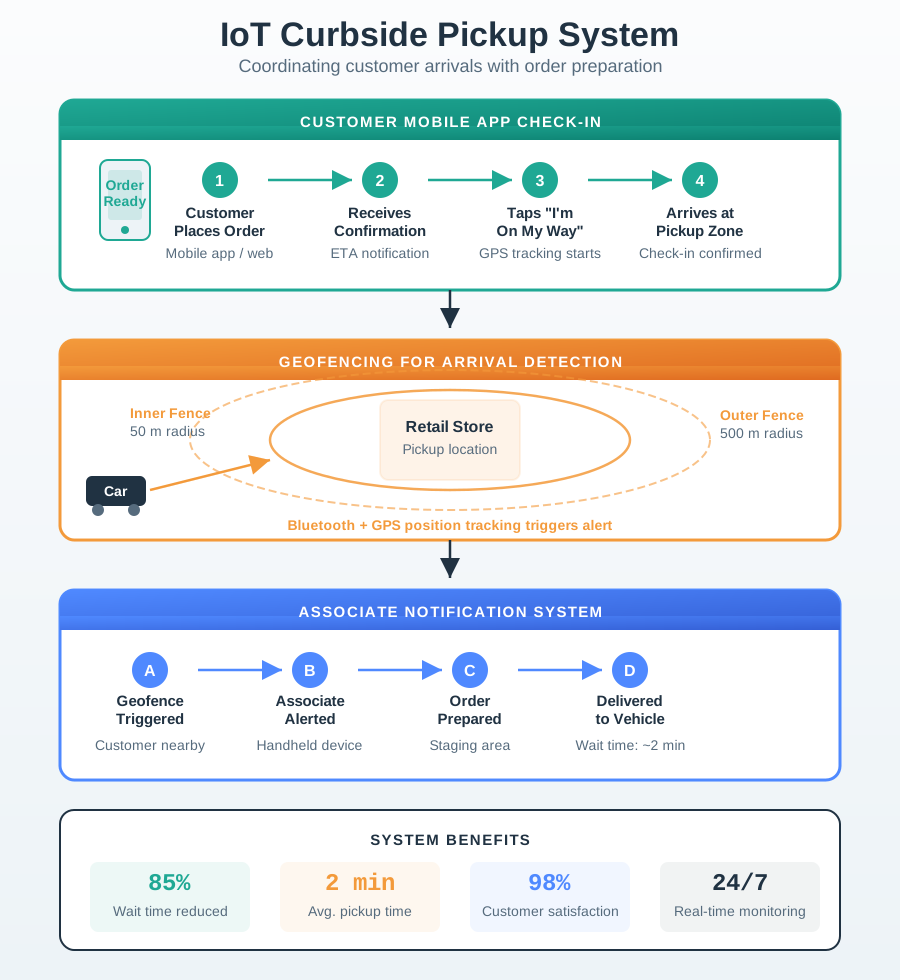
The business-model connection is the continuing loop: sensing must lead to an operational action that a customer or operator values, not merely to a dashboard.
- The timing boundary connects the digital promise to the physical encounter: an early signal can waste staff effort, while a late one leaves the customer waiting.
- Continuous service coordination creates value only when sensed context improves that real hand-off and the business measures the wait it removed.
- The sensors can provide evidence and prompt attention, but they do not guarantee a clinical or quality-of-life outcome by themselves.
Major section
IoT for Disability Benefits
Explore how IoT business models can support assistive technologies and people with disabilities while keeping the person's agency and the delivered service—not device novelty—at the centre.
- Continuous Value Delivery: IoT devices provide ongoing value through software updates, data analytics, and service improvements.
- Ecosystem Dependency: Success often requires partnerships across hardware, software, connectivity, and service providers.
Deck summary
Key takeaways
You now know why the device is only the relationship opener, while monitoring, control, analytics, updates, and renewal evidence carry the durable value.
- You now know why the example’s 75% subscription gross margin can outweigh its 25% hardware margin even when the device price drops.
- An IoT business model describes how an organization creates, delivers, and captures value through Internet of Things technologies, products, and services.
- Connectivity adds monitoring and updates, product-as-a-service makes that continuing capability part of the offer, and outcome-based pricing makes an agreed result the billable unit.
Retrieval practice
Recall check 1 of 4

Ada says: answer from memory, then check your reasoning.
Q1A fleet tracker team is choosing a recurring offer. What should it identify before approving the model?
Show answer
Answer: B The evaluation connects customer roles, recurring value, entitlement, and unit economics.
Retrieval practice
Recall check 2 of 4
Ada says: answer from memory, then check your reasoning.
Q2A pump vendor maintains uptime for a recurring fee and accepts repair risk. Which model fits best?
Show answer
Answer: B Correct: the vendor sells an ongoing outcome and carries part of the operating risk.
Retrieval practice
Recall check 3 of 4
Ada says: answer from memory, then check your reasoning.
Q3A connected-device app gains many free users but few paid upgrades. What must the freemium offer establish?
Show answer
Answer: D The chapter requires a useful paid tier and control of the support burden created by free adoption.
Retrieval practice
Recall check 4 of 4
Ada says: answer from memory, then check your reasoning.
Q4A service earns £30 contribution per month for an expected 20 months and spends £200 to acquire a customer. Does it meet a 3:1 LTV:CAC gate?
Show answer
Answer: D £30 per month for 20 months gives £600 LTV; £600 divided by £200 CAC is 3:1.
Print reference
Answers
Answer key.
- B · The evaluation connects customer roles, recurring value, entitlement, and unit economics.
- B · Correct: the vendor sells an ongoing outcome and carries part of the operating risk.
- D · The chapter requires a useful paid tier and control of the support burden created by free adoption.
- D · £30 per month for 20 months gives £600 LTV; £600 divided by £200 CAC is 3:1.