Human-Centred IoT Design · Study deck
IoT Interaction Principles: Context and Recovery
A screen that works at a desk may fail with gloves, noise, sun, or no link.
UX Uma is your guide for this deck.
After studying this chapter
Learning objectives
You will be able to:
- Explain: In Figure: Prototype fidelity timeline from paper sketches through digital, later does not mean automatically better; it means more expensive evidence about a narrower class of implementation-dependent risk.
- Explain: Evidence can come from sensor confidence, last-seen timestamps, vibration and temperature trends, gateway health, MQTT session logs, OpenTelemetry traces, maintenance work orders, and role-based notification policy.
- Explain: Together, the two diagrams define iteration discipline: state the question, select fitting fidelity, observe representative behavior, record a decision, and loop only on the risk that remains.
- Explain: Access trust checks whether that route remains usable and private.
Major section
Visible System State
A dashboard may show a room as occupied even when the last sensor reading is old.
- A lock screen may show "locked" even when the command is still queued.
- A thermostat may show a target temperature without explaining that the device is offline.
- If the system is uncertain, the interaction should say so in plain language and provide the next useful action.
Major section
Accessibility, Shared Use, and Trust
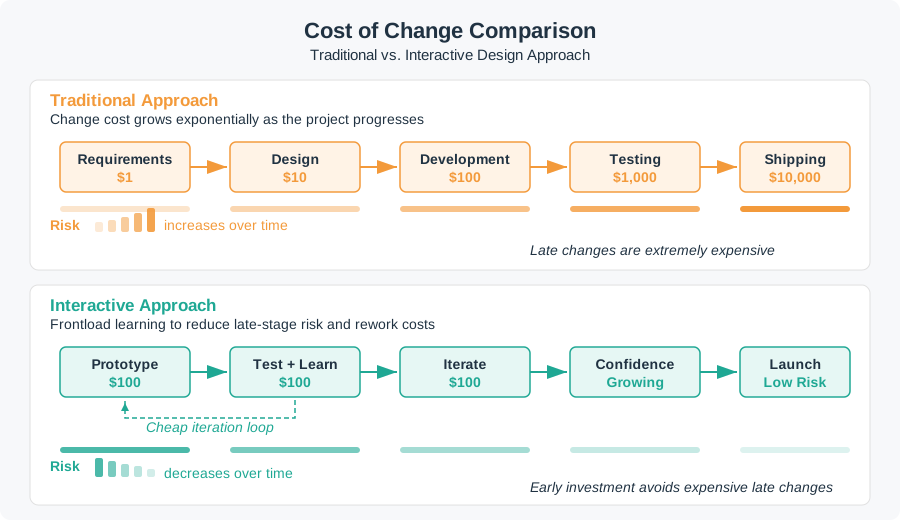
The interactive path spends effort on prototype, test, and iteration before launch, so uncertainty can be found while the design is still easier to change.
- Accessibility is not a late polish task.
- It changes the interaction architecture.
- The dollar marks are illustrative, not a forecast for this product.
Major section
Iteration Discipline
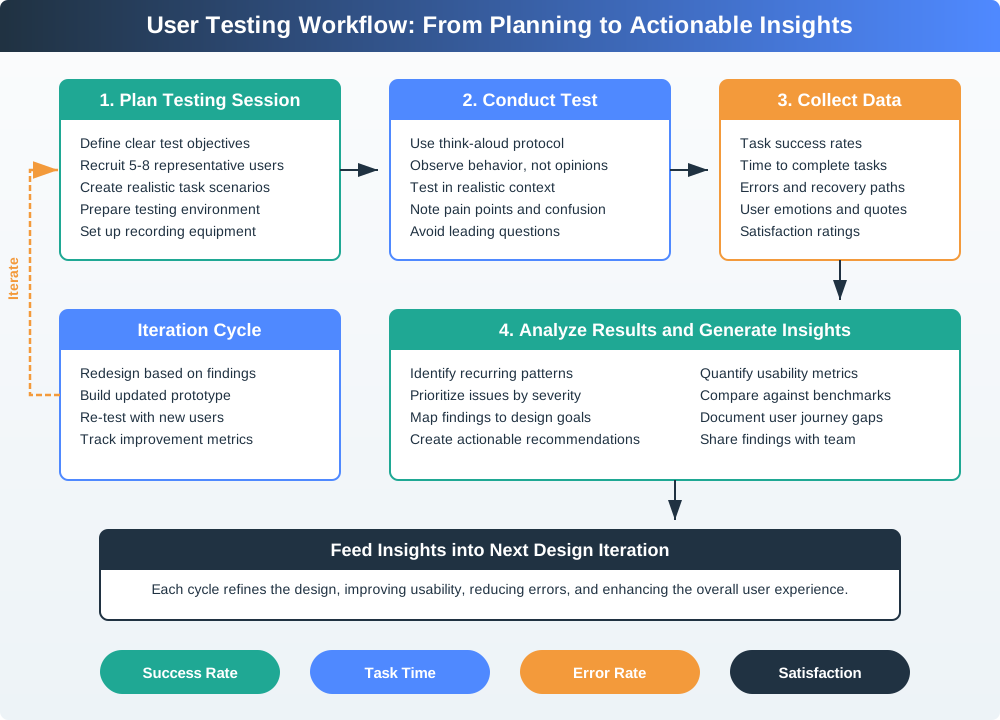
Iteration is not random redesign.
- Each iteration should answer a specific question.
- The review groups those facts into one clear finding; it does not turn each comment into a need.
- That finding must name the next design choice and the proof needed for a new test.
- Cost and change effort rise along that path.
Major section
Iteration Discipline (continued)
If it does not, the arrow back to the plan means repeat work, not useful change.
- In Figure: Prototype fidelity timeline from paper sketches through digital, later does not mean automatically better; it means more expensive evidence about a narrower class of implementation-dependent risk.
- Together, the two diagrams define iteration discipline: state the question, select fitting fidelity, observe representative behavior, record a decision, and loop only on the risk that remains.
- If the team only asks whether people like a mockup, it has not tested the interaction.
Major section
Incremental Examples
A beginner interaction review can start with a desk prototype for a soil-moisture sensor.
- A useful first test is to ask a learner which action is safe when the device is online, stale, or offline.
- A shared smart-lock product needs a setup flow that spans the wall reader, mobile credential, installer app, and cloud policy service.
- An industrial pump monitor needs interaction rules across the device indicator, operator dashboard, maintenance app, MQTT broker, notification service, and support console.
Major section
Incremental Examples (continued)
Recovery paths should cover duplicate credentials, expired invites, lost phones, low reader battery, and support handoff without exposing private access history to the wrong role.
- The design should name who owns acknowledged, assigned, snoozed, escalated, cleared, recurring, stale, and offline alert states.
- Evidence can come from sensor confidence, last-seen timestamps, vibration and temperature trends, gateway health, MQTT session logs, OpenTelemetry traces, maintenance work orders, and role-based notification policy.
- The interface is ready only when the operator and maintenance lead can explain the same state from their own surface.
Major section
Interaction Review Record
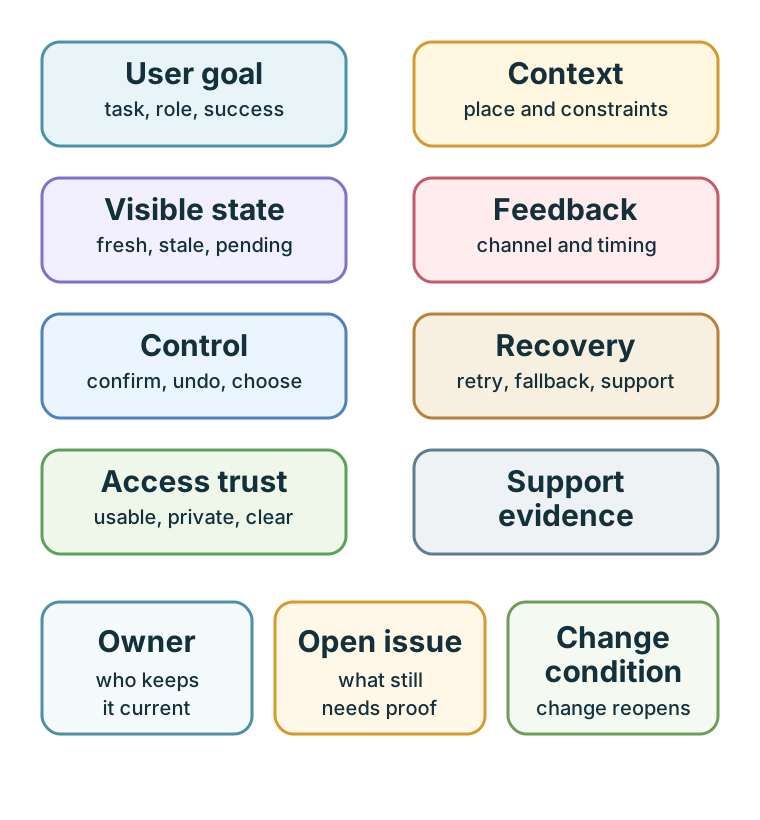
User goal and context define whose action is being reviewed and under what constraints.
- Control and recovery cover confirmation, undo, retry, fallback, and support when the action cannot finish.
- Access trust checks whether that route remains usable and private.
- The owner, open issue, and change condition keep the record alive after a first test.
Major section
Summary
Interactive design principles help IoT teams make connected products understandable, controllable, recoverable, accessible, and trustworthy.
- The most important review question is not whether the interface looks polished.
- Strong interaction design is evidence-bound.
- It connects user goals, physical context, system uncertainty, feedback channels, permission boundaries, support evidence, owners, and change conditions.
Deck summary
Key takeaways
A dashboard may show a room as occupied even when the last sensor reading is old.
- The interactive path spends effort on prototype, test, and iteration before launch, so uncertainty can be found while the design is still easier to change.
- Iteration is not random redesign.
- If it does not, the arrow back to the plan means repeat work, not useful change.
- A beginner interaction review can start with a desk prototype for a soil-moisture sensor.
Retrieval practice
Recall check 1 of 3

UX Uma says: answer from memory, then check your reasoning.
Q1A smart building dashboard shows a room as occupied, but the last sensor message is old and the gateway is offline. Which interaction design principle should guide the fix?
Show answer
Answer: B Visible system state is essential in IoT because device, network, sensor, gateway, and cloud uncertainty can change the meaning of a displayed value.
Retrieval practice
Recall check 2 of 3
UX Uma says: answer from memory, then check your reasoning.
Q2A pump dashboard shows an acknowledgement before the disconnected gateway receives it. Which label is truthful?
Show answer
Answer: C The interface distinguishes a request from confirmed device state.
Retrieval practice
Recall check 3 of 3
UX Uma says: answer from memory, then check your reasoning.
Q3A worker wears gloves beside a loud pump. Which control and feedback should a field test try?
Show answer
Answer: A Gloves and noise make small touch targets and sound-only feedback weak choices.
Print reference
Answers
Answer key.
- B · Visible system state is essential in IoT because device, network, sensor, gateway, and cloud uncertainty can change the meaning of a displayed value.
- C · The interface distinguishes a request from confirmed device state.
- A · Gloves and noise make small touch targets and sound-only feedback weak choices.