Applications & Use Cases · Study deck
Industrial Protocols: Families and Timing
This first route distinguishes industrial communication duties, then traces legacy and Ethernet families through timing, bandwidth, and cycle-time evidence.
Blueprint Bina is your guide for this deck.

After studying this chapter
Learning objectives
You will be able to:
- Compare industrial protocols (Modbus, PROFINET, EtherCAT, OPC-UA) by latency, throughput, and use case
- Evaluate protocol requirements for different industrial applications based on ISA-95 levels
- Justify protocol selection based on latency, determinism, and security constraints
- Distinguish between legacy serial protocols and modern industrial Ethernet protocols
Major section
Overview · Start With the Story
A protocol is a shared set of rules for how two machines exchange data.
- The rule set must fit the job and the harm caused by delay or loss.
- A status report for next week's maintenance plan can arrive later.
- No industrial protocol is best for every loop.
Major section
Protocols Need Timing Fit
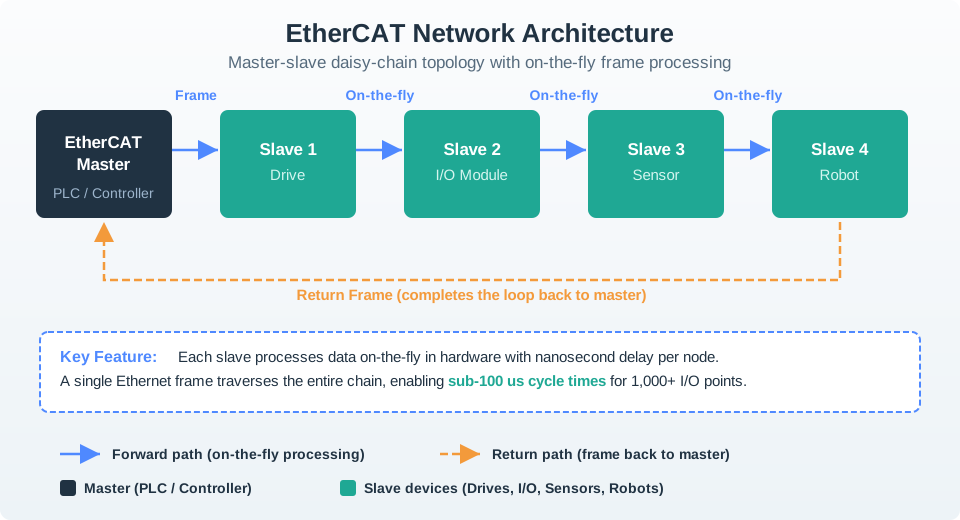
EtherCAT may be needed for tightly synchronized motion.
- A conveyor status light, a servo axis, a safety interlock, and an ERP production report should not all use the same communication pattern.
- The right question is what happens if a message is late, duplicated, stale, missing, or accepted by the wrong system.
- Industrial protocol decisions also have long memory.
Major section
Protocols Need Timing Fit (continued)
The first distinction is between monitoring, automation, motion, safety, and integration.
- Modbus TCP may be acceptable for simple register reads.
- PROFINET IO or EtherNet/IP may fit distributed I/O and drives.
- OPC UA may be the right layer for semantic IT/OT integration once the real-time control boundary is protected.
Major section
Protocols Need Timing Fit (continued)
An industrial protocol is not selected because it is newer or more fashionable.
- MQTT Sparkplug B may help publish normalized telemetry upward, but it should not be confused with a deterministic fieldbus for closed-loop control.
- Plants may run equipment for 20 or 30 years, with spare parts, electrician skills, PLC programming tools, vendor support contracts, cable trays, and downtime windows already fixed.
- A greenfield packaging line can optimize around a modern motion network.
Major section
Match Protocol to Control Loop
A 100 ms tank-level trend can tolerate retry and buffering.
- A 1 ms drive loop cannot wait for a broker, VPN, or cloud API.
- A brownfield Modbus RTU segment may be left in place and bridged, while a new motion cell may justify EtherCAT or PROFINET IRT.
- Beckhoff and many motion-control systems use EtherCAT.
Major section
Match Protocol to Control Loop (continued)
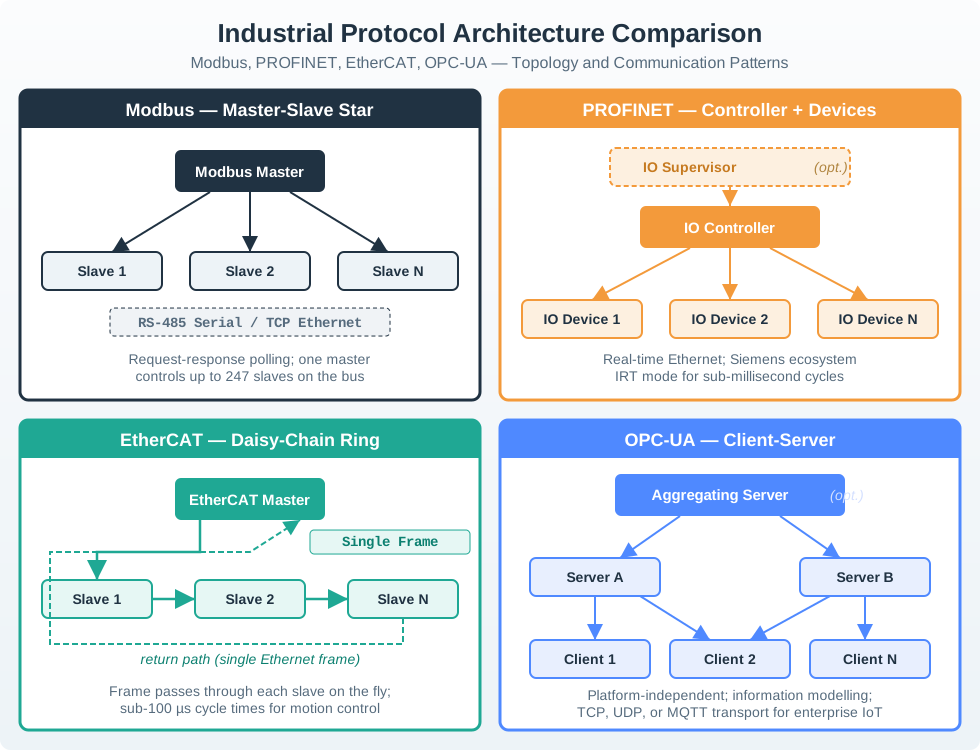
The same plant can therefore use several protocols at once, each with a different responsibility.
- Rockwell/Allen-Bradley plants often use EtherNet/IP with CIP objects and Studio 5000.
- Legacy panels may expose Modbus RTU over RS-485 or Modbus TCP.
- Integration layers may use OPC UA, MQTT Sparkplug B, or historian connectors.
Major section
Match Protocol to Control Loop (continued)
Maintenance teams must be able to diagnose the chosen stack at 2 a.m., not only during a vendor demo.
- A temperature trend might move from a Modbus RTU transmitter to a gateway, then to OPC UA, then to a historian and dashboard.
- A robot-axis command might stay inside EtherCAT or PROFINET IRT and never cross the enterprise boundary.
- A plant KPI might be aggregated by an edge node and published through MQTT after quality checks.
Major section
Determinism Needs Scheduling
Industrial Ethernet does not automatically make a network deterministic.
- These details explain why two protocols with similar cable connectors can behave very differently under load.
- Legacy protocols have different tradeoffs.
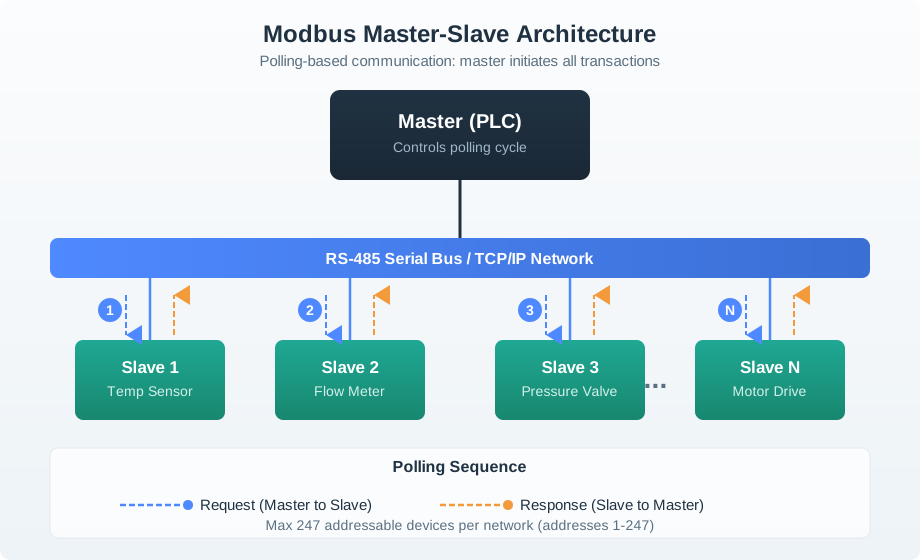
- Modbus RTU over RS-485 is simple and widely deployed, but it is request-response, usually single-master, and carries registers rather than rich semantics.
Major section
Determinism Needs Scheduling (continued)
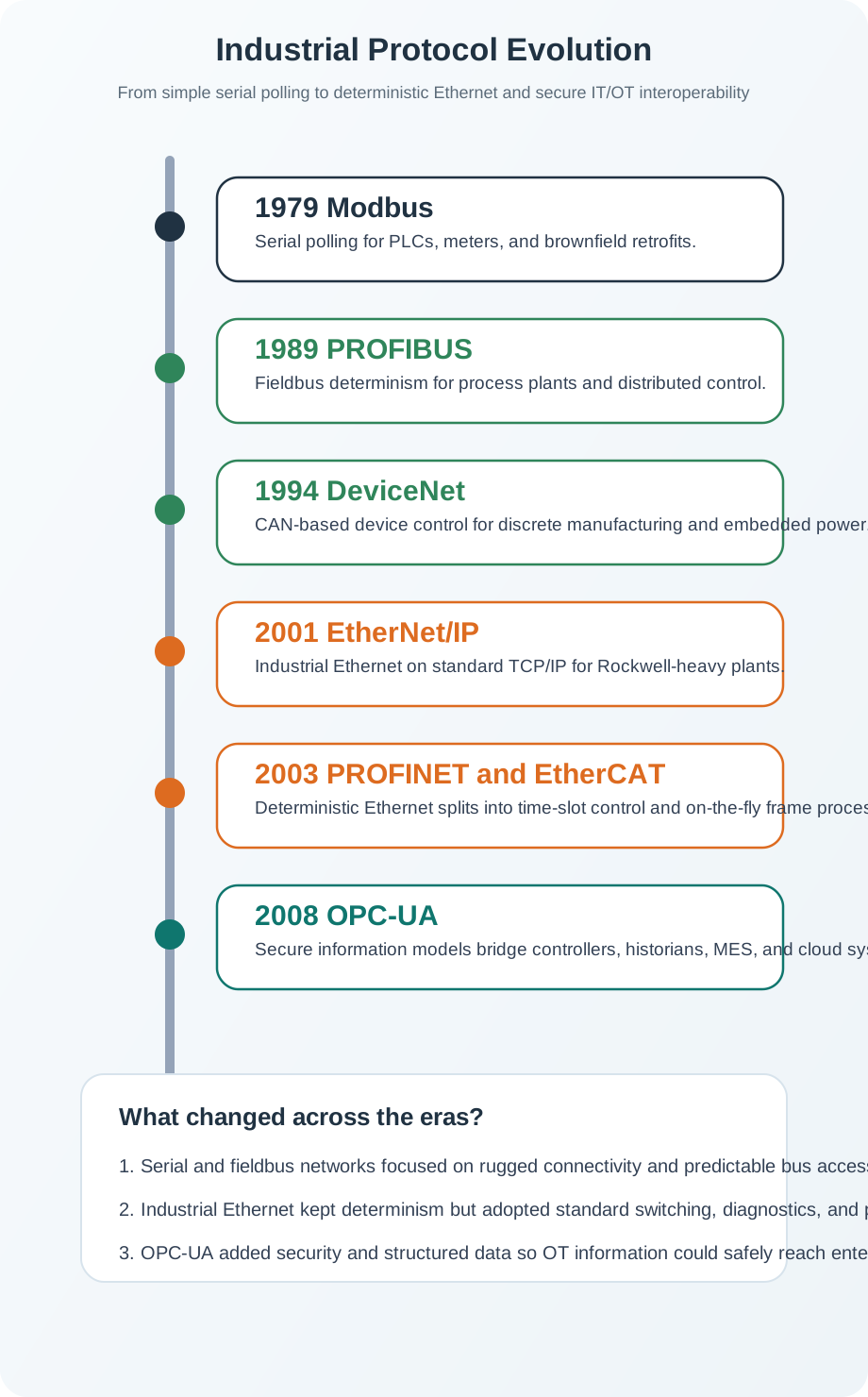
PROFIBUS DP and DeviceNet solved many fieldbus needs before Ethernet became common.
- IO-Link often connects smart sensors and actuators to a master that then speaks PROFINET, EtherNet/IP, or another higher-level protocol.
- These protocols can still be correct when downtime, replacement cost, or certification risk makes wholesale migration unattractive.
- Testing should match the consequence.
Major section
Determinism Needs Scheduling (continued)
A motion cell needs cycle-time and jitter tests under worst-case load.
- A drive network may stay on EtherCAT, an I/O island may use PROFINET, a gateway may expose an OPC UA server, and a DMZ broker may publish Sparkplug B topics to analytics systems.
- IEC 62443 zones and conduits help decide which messages can cross from cell, area, site operations, and enterprise networks.
- The selected protocol is only credible when those evidence paths are defined.
Major section
Industrial Protocols Basics · Robot Factory Visit
Core Concept: Industrial protocols such as Modbus, PROFINET, EtherCAT, EtherNet/IP, and OPC UA are chosen by timing, determinism, safety role, vendor ecosystem, lifecycle, and integration boundary.
- Temperature Terry is amazed!
- The factory has 50 robots all working together to build cars.
- Nobody can hear anything!
Major section
Consumer vs Industrial IoT · Industrial Network Bandwidth
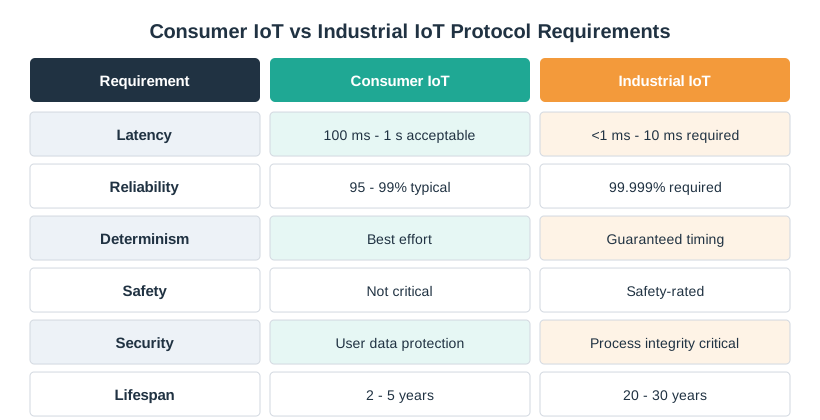
Consumer IoT: Human-visible status updates can often tolerate delayed or retried delivery.
- Industrial IoT: Drive, I/O, interlock, and closed-loop control paths need explicit cycle-time and jitter budgets.
- Consumer IoT: Best-effort delivery is often acceptable when the consequence is inconvenience.
- Industrial IoT: Safety-rated operation and process-integrity protection are mandatory.
Major section
Legacy Industrial Protocols
This reading constrains modbus keeps the communication model simple: one master polls register data from slave devices, which makes it easy to bridge but limited for rich and supplies the visual evidence for modbus (1979).
- Multi-master: Multiple PLCs can coexist.
Major section
Modern Industrial Ethernet · Putting Numbers to It
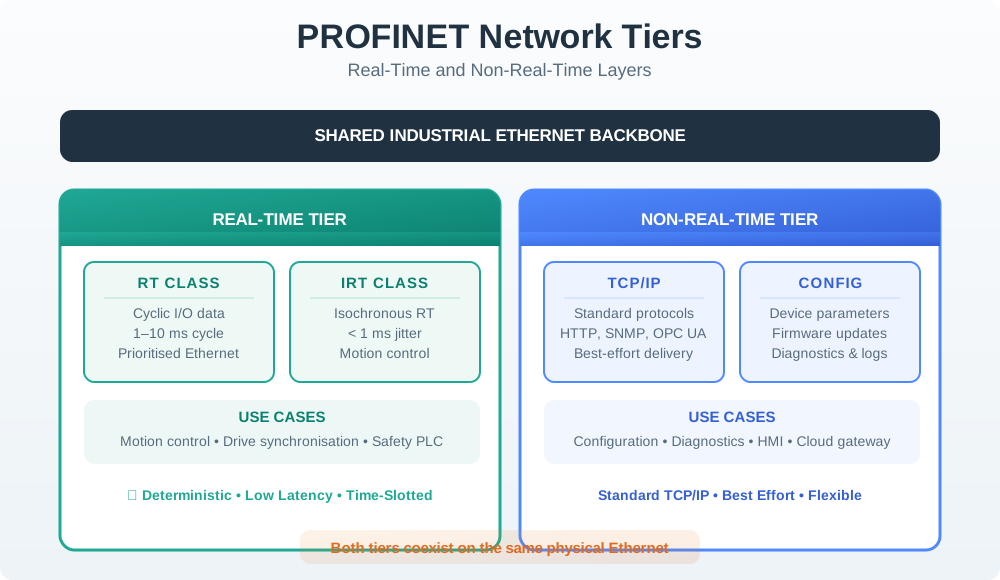
Its visual vocabulary joins PROFINET Network Tiers to: Real-Time and Non-Real-Time Layers, which frames profinet separates deterministic cyclic i/o traffic from non-real-time configuration, diagnostics, and it-style traffic.
- That labelled limit reconnects the visual to profinet (2003).
- Standard TCP/IP: Uses unmodified Ethernet.
Major section
EtherCAT Cycle Time
The evidence ledger must preserve sensor calibration, sample time, command, alarm state, and operator ownership, because a fast protocol cannot repair an untrustworthy measurement or an unsafe fallback.
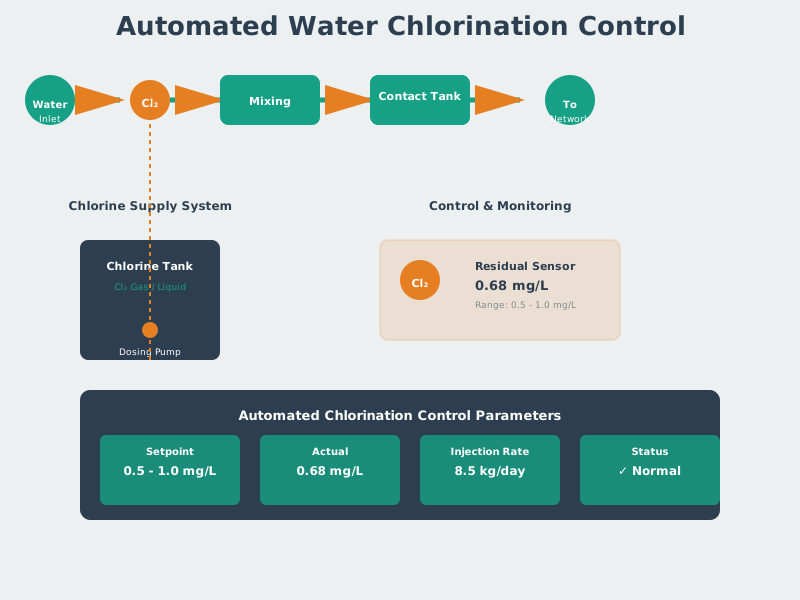
- The PLC compares the measured 0.68 mg/L with the 0.5–1.0 mg/L target band; the decision remains hold unless a bounded adjustment is justified.
Deck summary
Key takeaways
A protocol is a shared set of rules for how two machines exchange data.
- EtherCAT may be needed for tightly synchronized motion.
- The first distinction is between monitoring, automation, motion, safety, and integration.
- An industrial protocol is not selected because it is newer or more fashionable.
- A 100 ms tank-level trend can tolerate retry and buffering.
Retrieval practice
Recall check 1 of 2

Blueprint Bina says: answer from memory, then check your reasoning.
Q1A factory has 200 legacy Modbus RTU sensors on RS-485 serial networks. The plant manager wants to integrate this data into a new cloud-based analytics platform without replacing the sensors. What is the most practical approach?
Show answer
Answer: B Correct!
Retrieval practice
Recall check 2 of 2

Blueprint Bina says: answer from memory, then check your reasoning.
Q2What makes EtherCAT uniquely fast compared to other industrial Ethernet protocols like PROFINET or EtherNet/IP?
Show answer
Answer: B Correct!
Print reference
Answers
Answer key.
- B · Correct!
- B · Correct!