Applications & Use Cases · Study deck
Industry 4.0: Technologies and Integration
Industry 4.0 links sensors, machines, models, and control.
Blueprint Bina is your guide for this deck.

After studying this chapter
Learning objectives
You will be able to:
- Test industry 4.0 technologies with a concrete scenario and pass criteria.
- Validate dashboards need action loops with a concrete scenario and pass criteria.
- test industry 4.0 technologies with a concrete scenario and pass criteria
- validate dashboards need action loops with a concrete scenario and pass criteria
Major section
Industry 4.0 Technologies
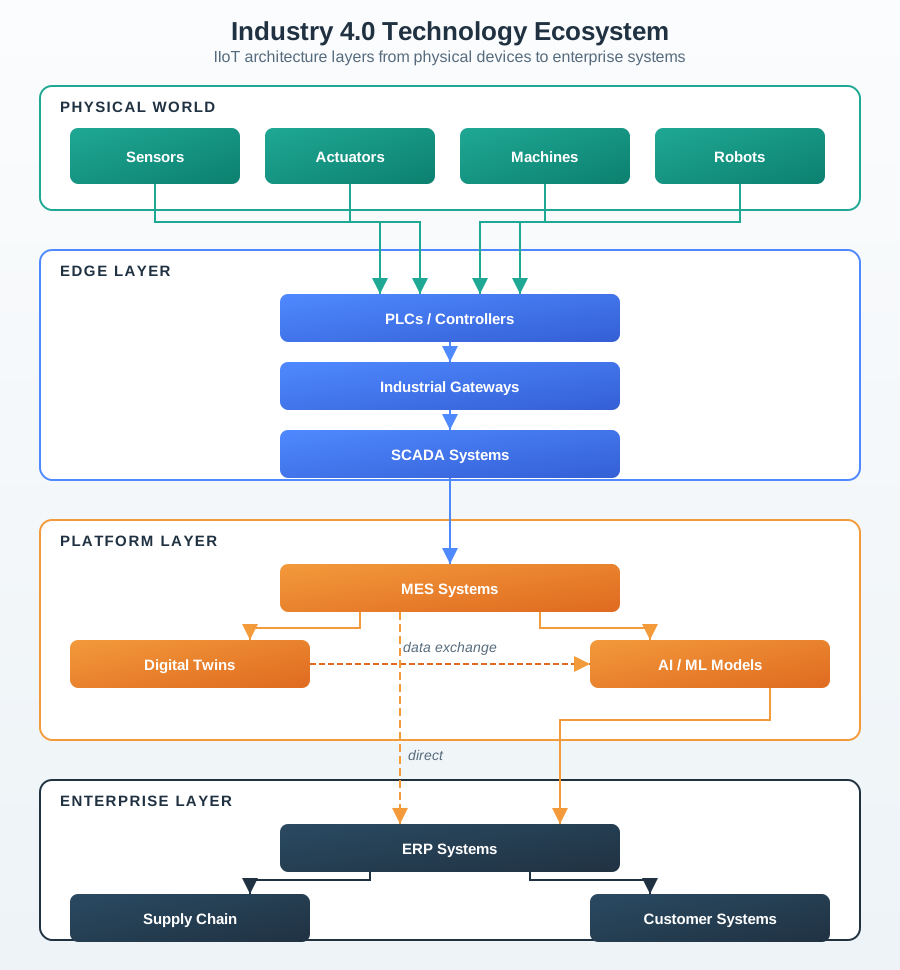
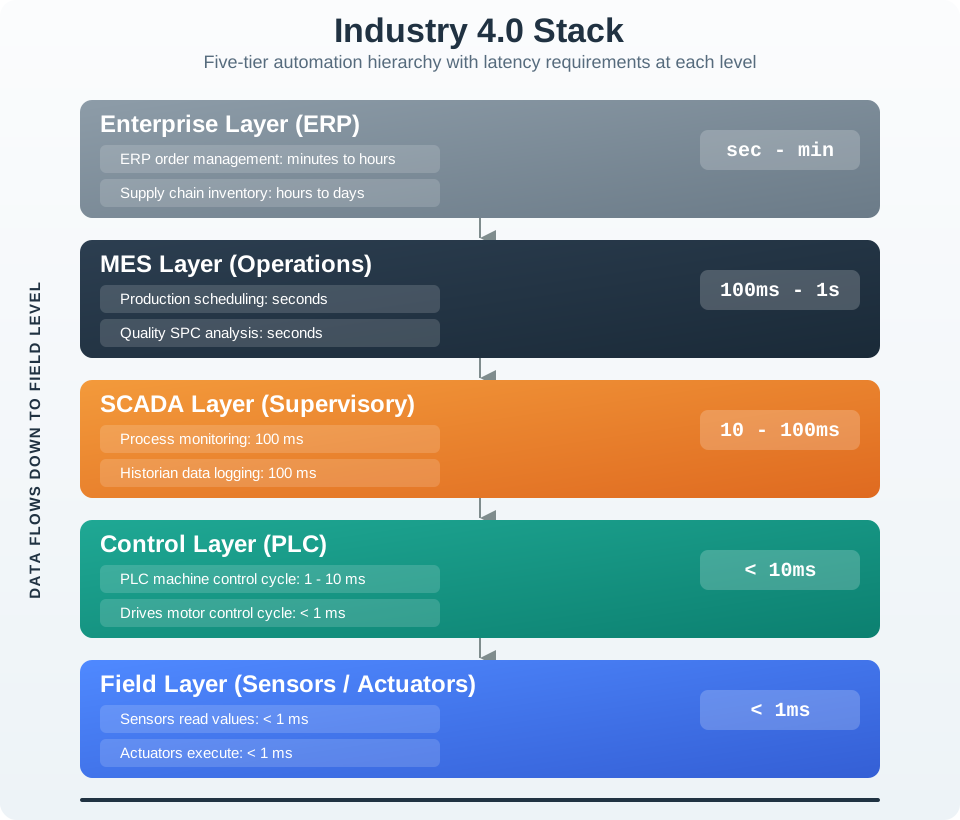
That sequence keeps industry 4.0 technologies tied to what is visibly labelled.
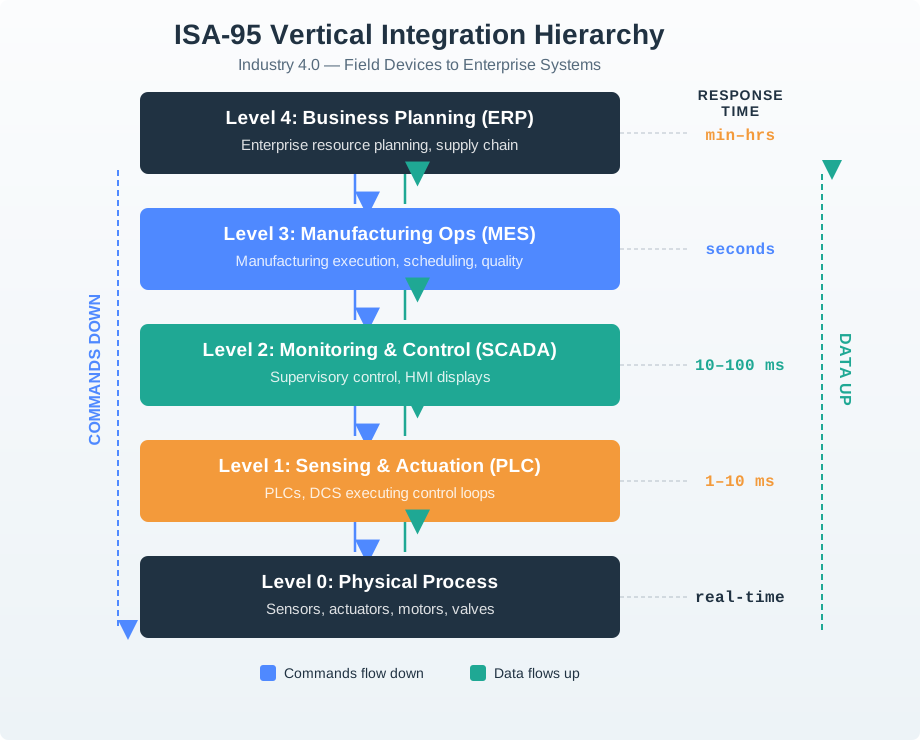
- The visual's third anchor,: Enterprise Layer (ERP), completes five-tier industry 4.0 stack showing latency requirements at each level: field devices operate in sub-millisecond cycles; control loops run at 1-10.
- That labelled limit reconnects the visual to cyber-physical systems (cps).
Major section
Industry 4.0 Technologies (continued)
Process optimization: Simulate production changes without stopping the line.
- Carry: Industry 4.0 Stack into industry 4.0 timing stack; use: Enterprise Layer (ERP) as its limiting condition.
- The visual evidence for cyber-physical systems (cps) sits in Figure: CNC Machine with IoT Monitoring.
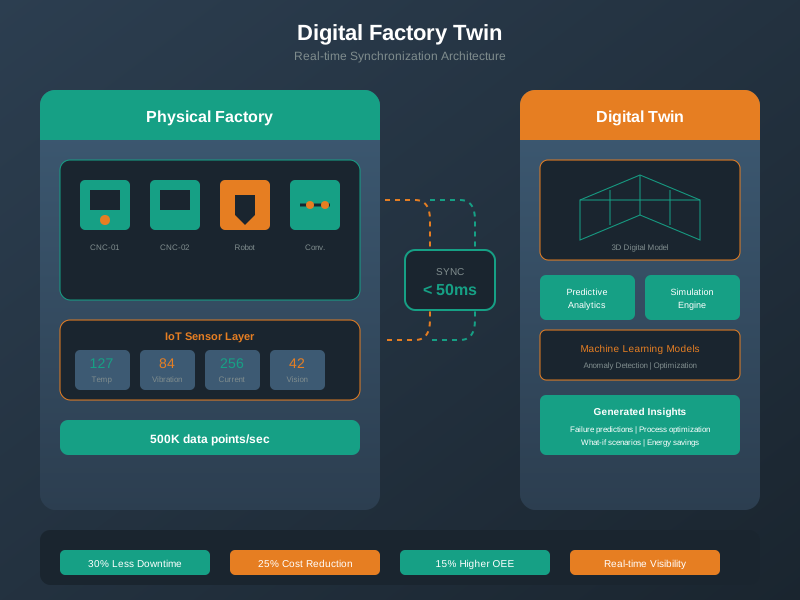
- That labelled check bounds digital factory twin visualization.
Major section
Industry 4.0 Technologies (continued)
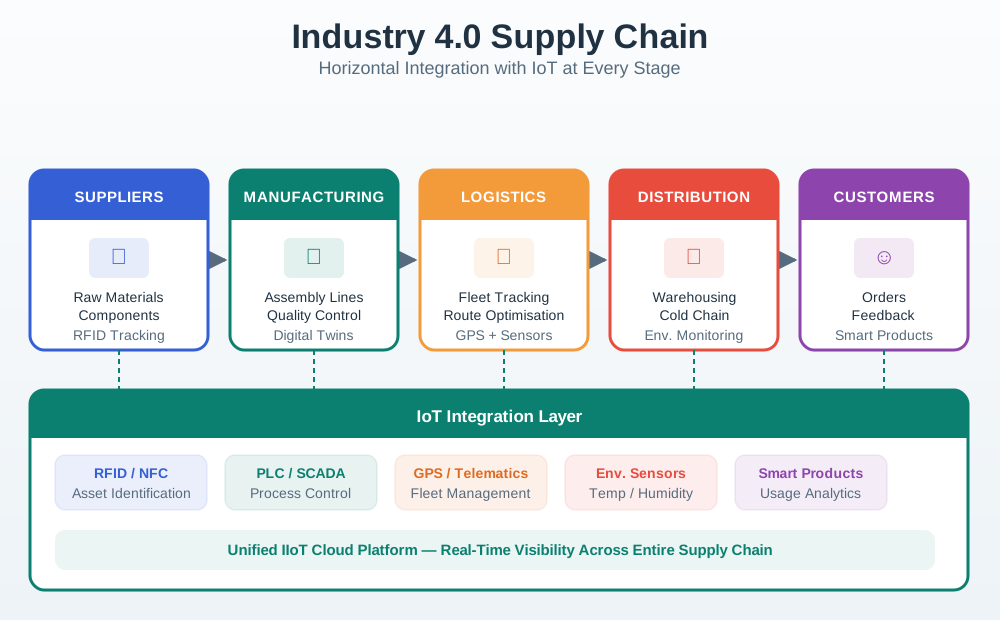
This virtual environment reduces commissioning time and minimizes the risk of costly production disruptions.
- Modern connected CNC systems continuously stream operational data to analytics platforms, enabling predictive maintenance when the signals are tied to machine state, maintenance history, and a work-order process.
- Visibility: Real-time monitoring of all processes.
- Predictability: Forecasting future states using AI models.
Major section
Industry 4.0 Technologies (continued)
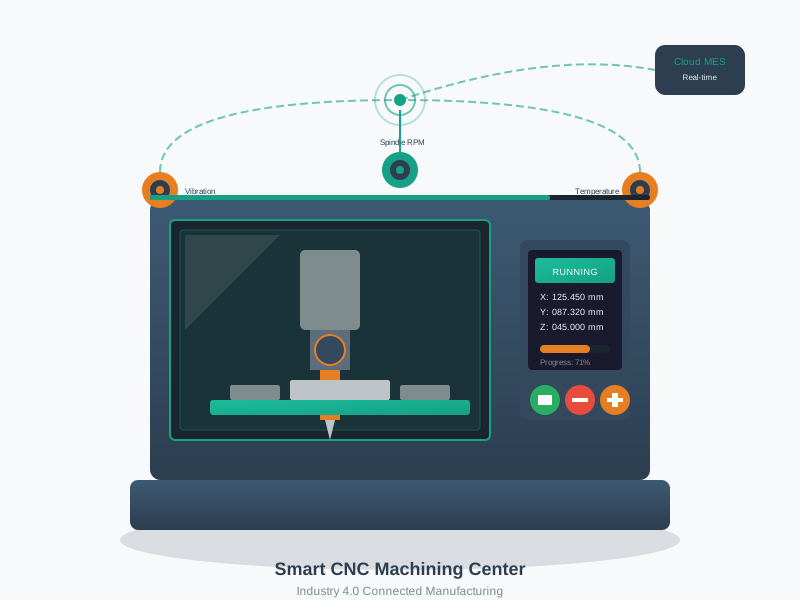
CPS differs from traditional embedded systems through continuous feedback loops, network connectivity, and autonomous decision-making capabilities.
- The economics of digital twins follow a clear pattern: the model is valuable when it changes a costly decision.
- Transparency: Understanding cause-and-effect relationships through data.
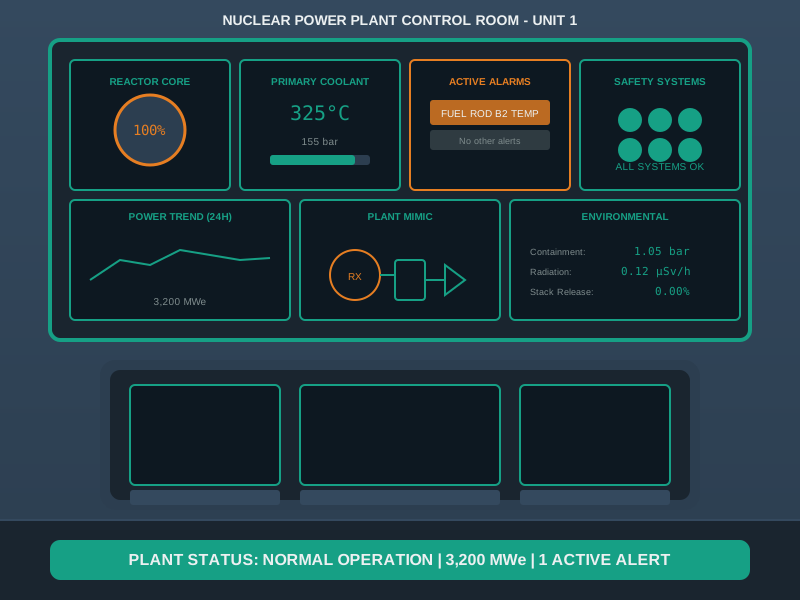
- Centralized control rooms provide operators with comprehensive visibility across distributed production facilities.
Major section
MVU: ISA-95 Automation Levels
You cannot use cloud computing for motor control (requires sub-millisecond response) or expect real-time process control from ERP systems designed for business planning.
- Key Takeaway: Each ISA-95 level has appropriate technology and timing constraints.
- Understand which level your application operates at before selecting protocols, computing infrastructure, and communication patterns.
Major section
MVU: ISA-95 Automation Levels (continued)
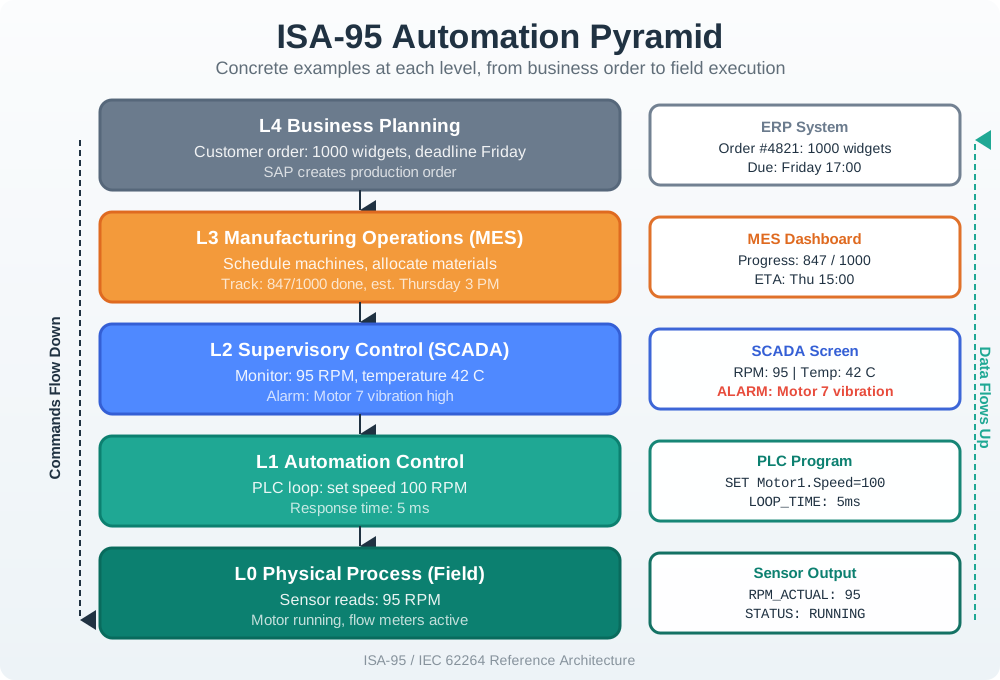
That sequence keeps mvu: isa-95 automation levels tied to what is visibly labelled.
- Instead of abstract level names, this diagram shows concrete examples of what happens at each level.
- This practical view helps students understand what information flows between levels and why each layer exists.
- That labelled check bounds isa-95 automation pyramid with concrete examples: level 4 receives customer order (1000 widgets by friday); level 3 schedules and tracks progress;.
Major section
Brownfield vs Greenfield IIoT
Timing capability: Brownfield retrofits inherit existing PLC cycle times, networks, and safety approvals; greenfield cells can specify timing and synchronization requirements upfront.
- When implementing Industry 4.0, choosing between retrofitting existing equipment (brownfield) versus building new smart facilities (greenfield) is a strategic decision with multi-year implications.
- Maximum OEE improvement: Brownfield upgrades are usually bounded by existing mechanical constraints; greenfield lines can redesign flow, instrumentation, and control from the start.
- This reduces risk while building internal expertise.
Major section
Brownfield vs Greenfield IIoT (continued)
Protocol compatibility: Brownfield projects usually need gateways for Modbus RTU, PROFIBUS, and proprietary serial links; greenfield deployments can standardize on OPC-UA, MQTT, and vendor-supported integration from day one.
- Equipment remaining life: Brownfield makes more sense when current equipment has meaningful useful life left; greenfield planning assumes a fresh asset lifecycle.
- Sunk cost recovery: Brownfield preserves the value of existing equipment; greenfield may require writing off old assets and funding a new asset base.
- Initial capital: Brownfield pilots tend to start smaller because they reuse existing machines; greenfield lines require a larger capital case because the project includes new equipment, commissioning, and migration.
Deck summary
Key takeaways
That sequence keeps industry 4.0 technologies tied to what is visibly labelled.
- Process optimization: Simulate production changes without stopping the line.
- This virtual environment reduces commissioning time and minimizes the risk of costly production disruptions.
- CPS differs from traditional embedded systems through continuous feedback loops, network connectivity, and autonomous decision-making capabilities.
- You cannot use cloud computing for motor control (requires sub-millisecond response) or expect real-time process control from ERP systems designed for business planning.
Retrieval practice
Recall check 1 of 4

Blueprint Bina says: answer from memory, then check your reasoning.
Q1An aerospace company wants to test how their jet engine will perform under extreme Arctic conditions (-40C, high altitude, ice formation). Using a digital twin approach, what is the PRIMARY advantage compared to physical testing?
Show answer
Answer: B Correct!
Retrieval practice
Recall check 2 of 4

Blueprint Bina says: answer from memory, then check your reasoning.
Q2A factory engineer needs to implement a motor speed control system that adjusts RPM based on product requirements. The control loop must respond within 5 milliseconds. At which ISA-95 level should this be implemented?
Show answer
Answer: C Correct!
Retrieval practice
Recall check 3 of 4

Blueprint Bina says: answer from memory, then check your reasoning.
Q3A factory manager wants to implement a dashboard showing real-time production counts updated every 5 minutes. According to ISA-95, which level should host this application?
Show answer
Answer: C Answer: C (Level 3 MES).
Q4Place each Industry 4.0 stage where it lives so you can trace how plant evidence becomes a governed operational improvement.
Show answer
Answer: A Separate observation, analysis, and action so you can test whether an IIoT value claim preserves trustworthy evidence and closes the loop with an accountable owner.
Retrieval practice
Recall check 4 of 4

Blueprint Bina says: answer from memory, then check your reasoning.
Q5Complete the IIoT signal gate for a predictive-maintenance alert:
Show answer
Answer: A A predictive-maintenance alert should check data quality, valid operating state, risk threshold, and action ownership before creating a work order.
Print reference
Answers
Answer key.
- B · Correct!
- C · Correct!
- C · Answer: C (Level 3 MES).
- A · Separate observation, analysis, and action so you can test whether an IIoT value claim preserves trustworthy evidence and closes the loop with an accountable owner.
- A · A predictive-maintenance alert should check data quality, valid operating state, risk threshold, and action ownership before creating a work order.