Applications & Use Cases · Study deck
Industry 4.0: Industrial Revolutions and Adoption
A factory has proved that one monitored machine can warn staff before a stoppage.
Blueprint Bina is your guide for this deck.

After studying this chapter
Learning objectives
You will be able to:
- Explain: They also identify new composite industries such as precision agriculture, digital healthcare, and digital mining as sources of new roles while highly automated work reduces demand for some unskilled tasks.
- Explain: An IIoT proposal should name which task moves to a machine, which decision remains with a person, which skill the new workflow requires, and how the operator can intervene.
- Explain: The slides connect that shift to lower-cost automated tasks, human supervision of more capable machines, and workers whose roles increasingly require digital and analytical skills.
- Explain: The named product examples make that boundary concrete.
Major section
Steam to Cyber-Physical Systems
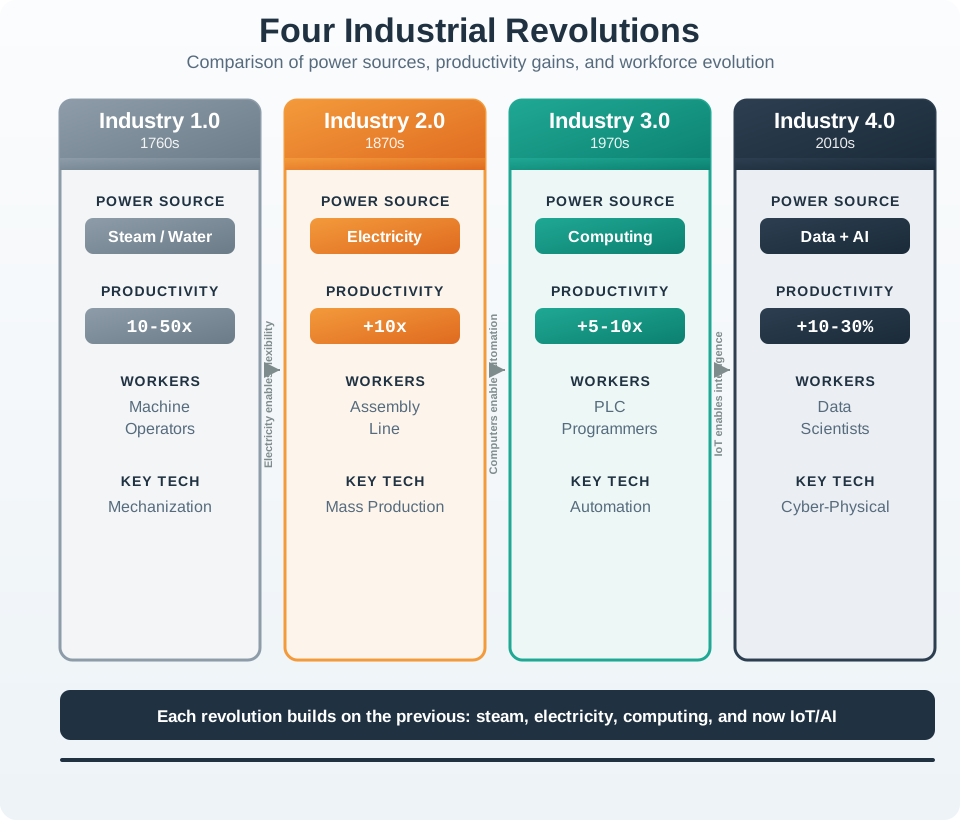
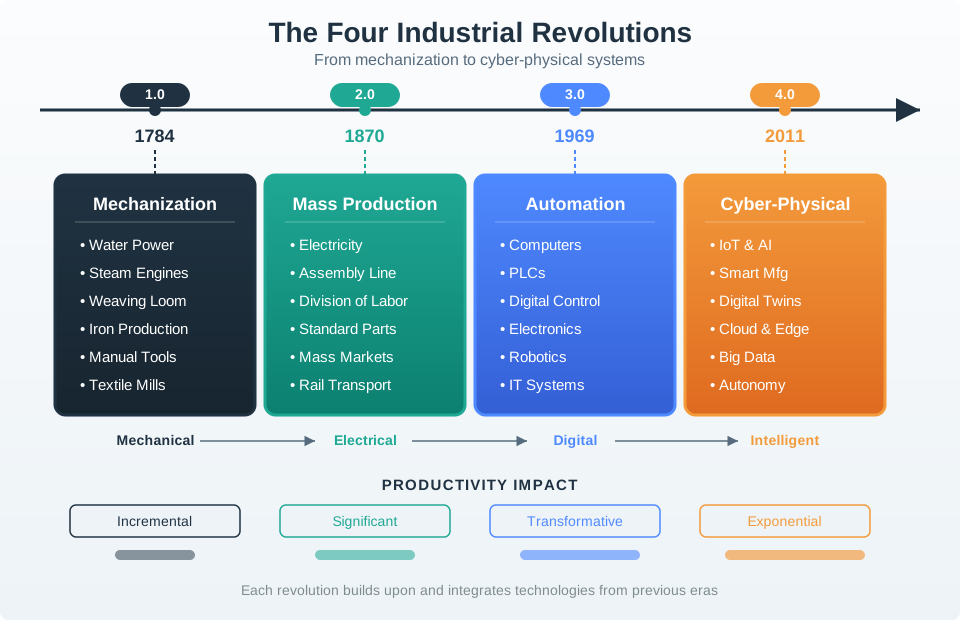
Electricity enables conveyor belts.
- A Programmable Logic Controller (PLC) receives a digital blueprint, then automatically mills, drills, and shapes metal with zero human intervention.
- Industry 4.0 (2011+): The same CNC machine now has vibration sensors detecting bearing wear 2 weeks before failure.
- Industry 4.0's superpower is coordination - machines talking to each other and making decisions collectively.
Major section
ISA-95 Automotive Integration
The plant must integrate OT on the factory floor with IT and enterprise systems following ISA-95 boundaries.
- The challenge: Customer order change arrives at Level 4 (ERP) requiring panel type switch mid-shift.
- That labelled limit reconnects the visual to isa-95 automotive integration.
Major section
Connected Ecosystems Change the Work
The slides connect that shift to lower-cost automated tasks, human supervision of more capable machines, and workers whose roles increasingly require digital and analytical skills.
- An IIoT proposal should name which task moves to a machine, which decision remains with a person, which skill the new workflow requires, and how the operator can intervene.
- A robot that senses, reasons, and acts still needs a defined human-supervision boundary.
- They also identify new composite industries such as precision agriculture, digital healthcare, and digital mining as sources of new roles while highly automated work reduces demand for some unskilled tasks.
Major section
Hazards and Interoperability Stay in the System
Its hazard list includes hazardous substances, oxygen deficiency, particulates, radiation, and physiological stress.
- Standardization is presented as the route to better system and application interoperability, with unresolved boundaries at semantic meaning, security and privacy, and radio access.
- The named product examples make that boundary concrete.
Deck summary
Key takeaways
Electricity enables conveyor belts.
- The plant must integrate OT on the factory floor with IT and enterprise systems following ISA-95 boundaries.
- The slides connect that shift to lower-cost automated tasks, human supervision of more capable machines, and workers whose roles increasingly require digital and analytical skills.
- Its hazard list includes hazardous substances, oxygen deficiency, particulates, radiation, and physiological stress.
Retrieval practice
Recall check

Blueprint Bina says: answer from memory, then check your reasoning.
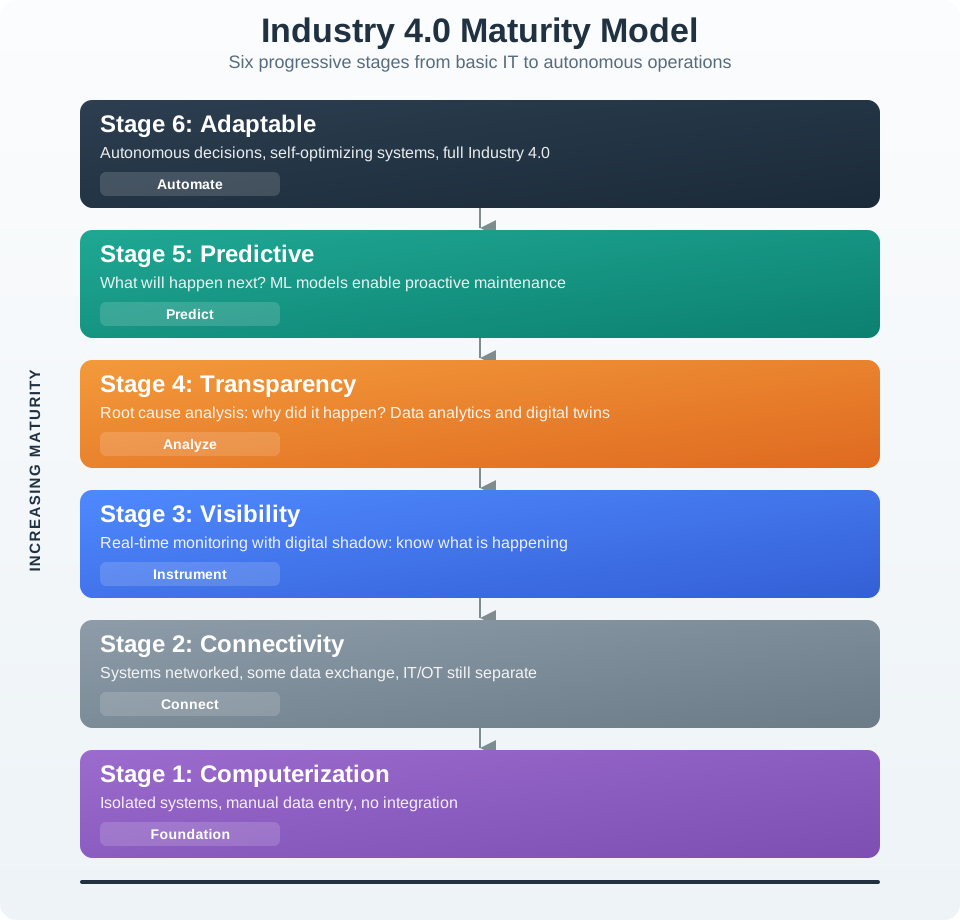
Q1A manufacturing plant manager wants to implement Industry 4.0. They plan to add temperature sensors to 50 machines and log data to a spreadsheet for weekly review. Is this Industry 4.0?
Show answer
Answer: B Correct!
Print reference
Answers
Answer key.
- B · Correct!