Applications & Use Cases · Study deck

Healthcare IoT: Safety and Clinical Integration

A late or wrong vital sign can change a care choice.

Blueprint Bina is your guide for this deck.

applicationdomainshealthcare
Blueprint Bina, the module guide, in a scene from this chapter.
iotclass.org

After studying this chapter

Learning objectives

You will be able to:

  • Explain: A prototype should expose those boundaries early so the team can decide whether it is building a wellness feature, a clinical decision support path, a regulated medical-device function, or an operational hospital tool.
  • Explain: The Problem: 50% of patients don't take medications as prescribed, causing 125,000 deaths and $300 billion in healthcare costs annually in the US alone.
  • Explain: The boundary is not only legal; it affects telemetry retention, alarm priority, labeling, validation data, cybersecurity controls, and support staffing.
  • Explain: A hospital platform may be funded by enterprise contracts, integration services, and support commitments.
iotclass.org

Major section

Safety, Privacy, Interoperability

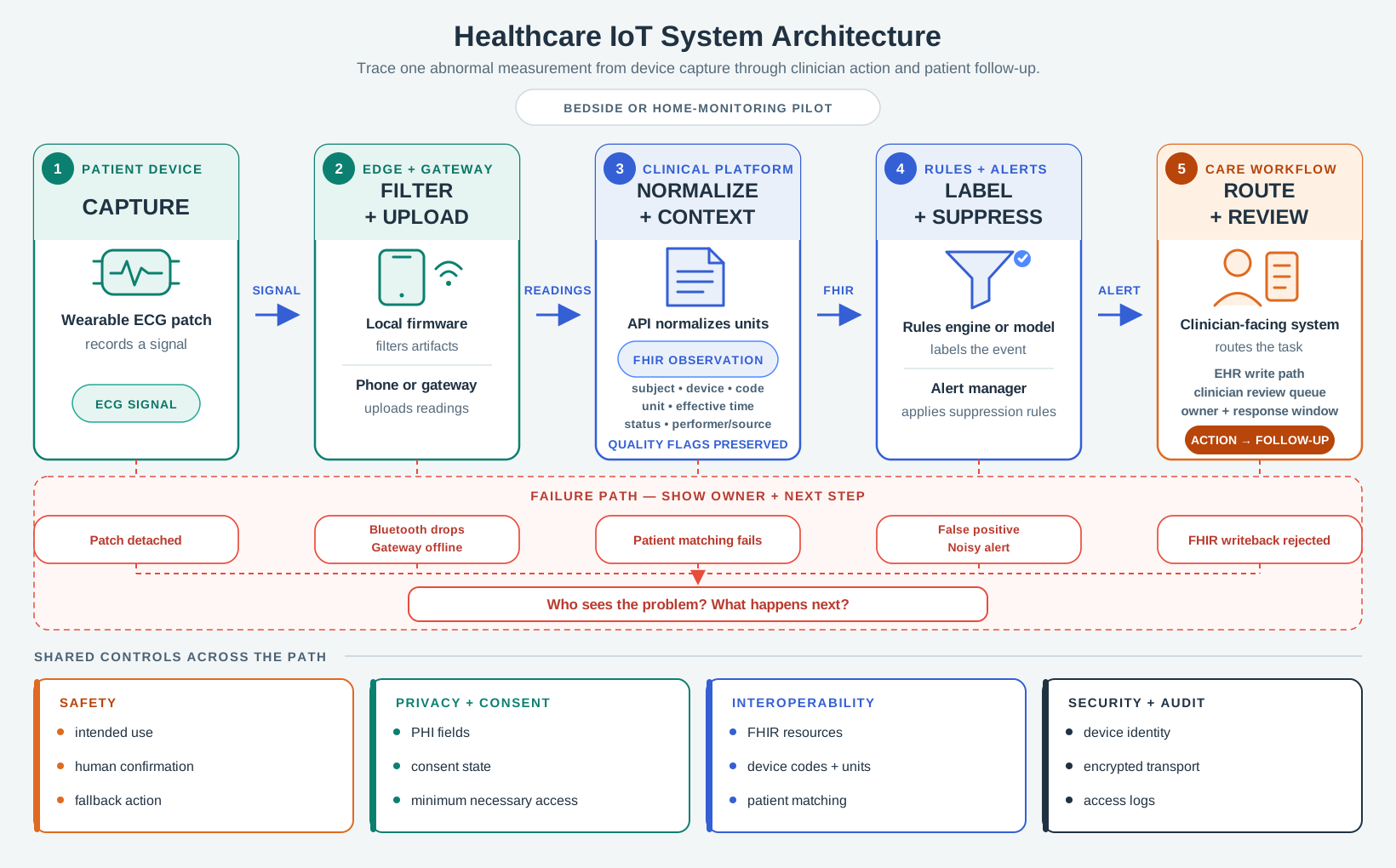
Healthcare IoT fails when the device path, clinical workflow, privacy model, and regulatory evidence are designed separately.

  • A prototype should expose those boundaries early so the team can decide whether it is building a wellness feature, a clinical decision support path, a regulated medical-device function, or an operational hospital tool.
  • At the data layer, every observation needs provenance.

Why it matters

Availability also matters: local alarms, store-and-forward queues, gateway health checks, and downtime procedures must be tested because cloud availability does not guarantee bedside reliability.

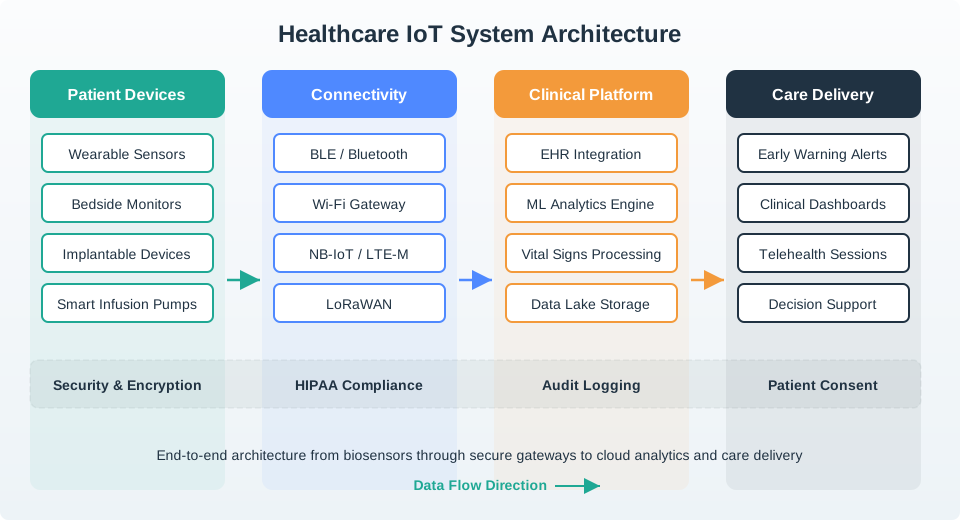
Healthcare IoT system boundary: patient devices, connectivity, clinical platforms, and care-delivery workflows need shared security, consent, audit, and privacy controls.
iotclass.org

Major section

Safety, Privacy, Interoperability (continued)

The boundary is not only legal; it affects telemetry retention, alarm priority, labeling, validation data, cybersecurity controls, and support staffing.

  • A FHIR Observation should carry the subject, device, code, unit, effective time, status, performer or source, and interpretation when appropriate.
  • Downstream clinical logic should be able to distinguish a confirmed abnormal measurement from a missing or low-confidence signal.
  • Security design has to match the clinical risk.
iotclass.org

Major section

Consumer vs. Clinical-Grade Devices

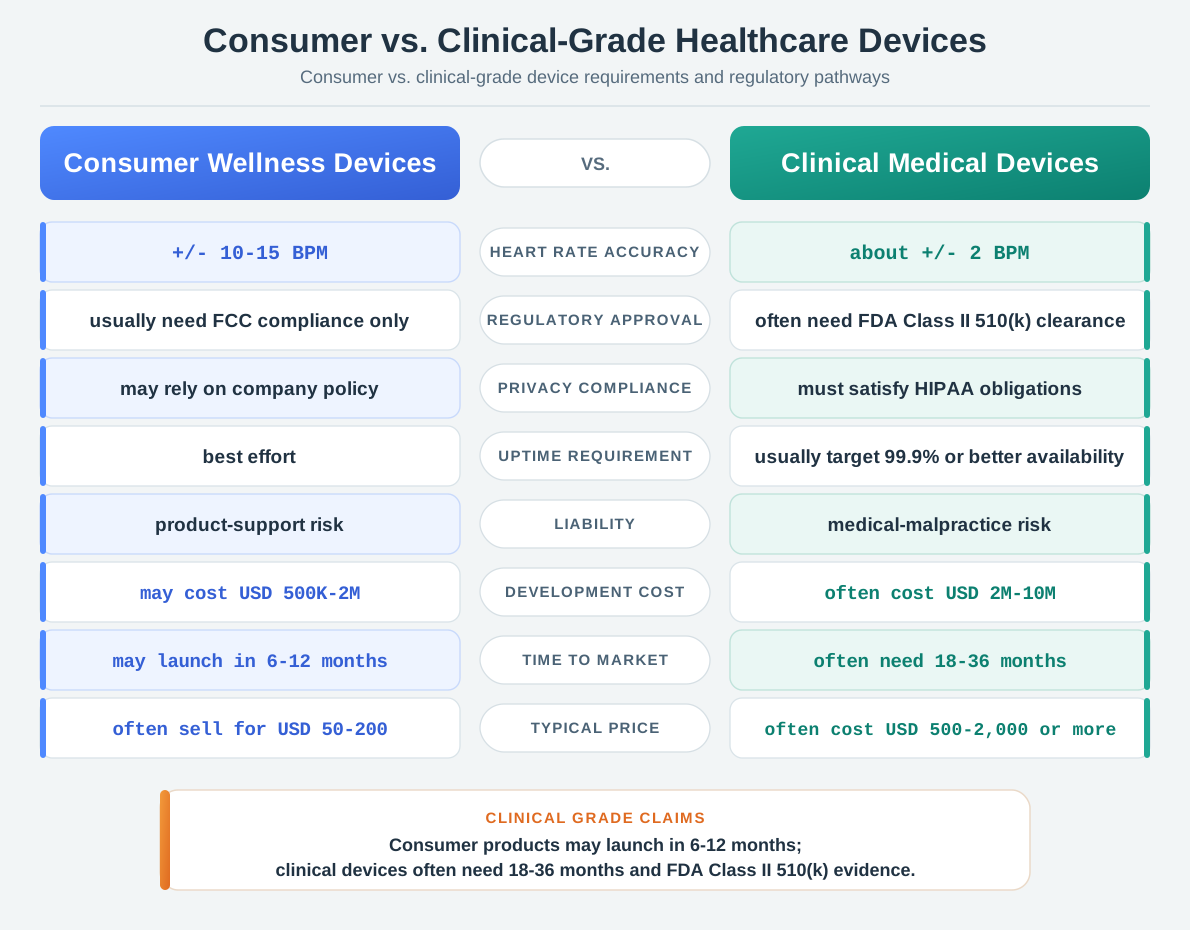
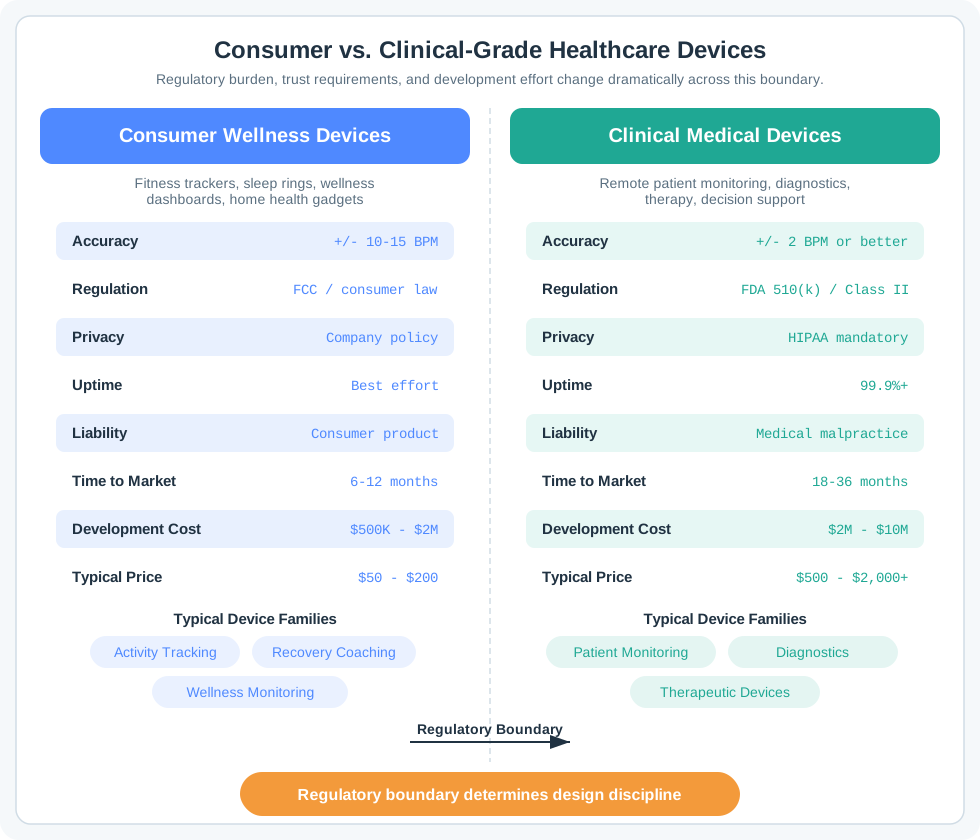
Regulatory approval: consumer trackers usually need FCC compliance only; clinical medical devices often need FDA Class II 510(k) clearance.

  • Privacy compliance: consumer products may rely on company policy; clinical devices must satisfy HIPAA obligations.
  • Uptime requirement: consumer products are best effort; clinical devices usually target 99.9% or better availability.
Healthcare IoT Device Classification - Consumer vs. clinical-grade device requirements and regulatory pathways
iotclass.org

Major section

Remote Monitoring Business Model Check

Healthcare IoT economics depend on who pays for the workflow, not only on the sensor cost.

  • A consumer wellness device may be funded by a subscription.
  • A remote patient monitoring service may be funded by reimbursement codes, care-management contracts, or payer programs.
  • A hospital platform may be funded by enterprise contracts, integration services, and support commitments.

Why it matters

If revenue depends on collecting more low-value signals while clinicians are trying to reduce alert noise, the model will fight the clinical design.

iotclass.org

Major section

Ingestible Sensors for Adherence

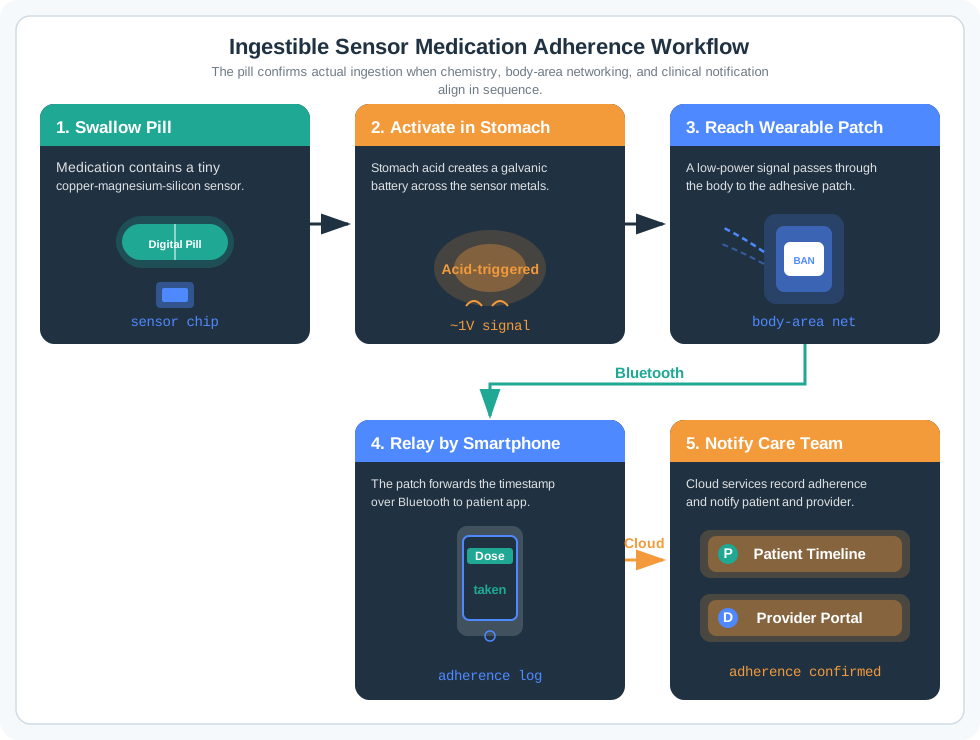
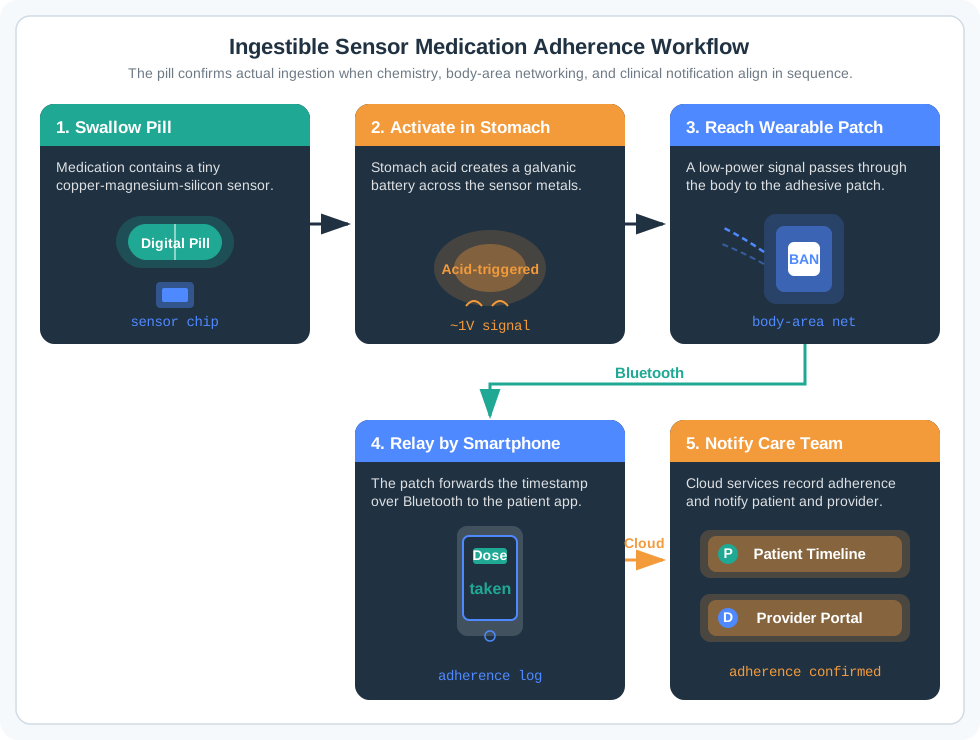
The Problem: 50% of patients don't take medications as prescribed, causing 125,000 deaths and $300 billion in healthcare costs annually in the US alone.

  • The Solution: Ingestible sensors embedded in pills that confirm medication was actually swallowed.
Ingestible Sensor Medication Adherence System - End-to-end workflow from pill ingestion to provider notification
iotclass.org

Deck summary

Key takeaways

Healthcare IoT fails when the device path, clinical workflow, privacy model, and regulatory evidence are designed separately.

  • The boundary is not only legal; it affects telemetry retention, alarm priority, labeling, validation data, cybersecurity controls, and support staffing.
  • Regulatory approval: consumer trackers usually need FCC compliance only; clinical medical devices often need FDA Class II 510(k) clearance.
  • Healthcare IoT economics depend on who pays for the workflow, not only on the sensor cost.
  • The Problem: 50% of patients don't take medications as prescribed, causing 125,000 deaths and $300 billion in healthcare costs annually in the US alone.
iotclass.org

Retrieval practice

Recall check

Blueprint Bina says: answer from memory, then check your reasoning.

Q1A team wants to add IoT monitoring to a healthcare workflow. What should be checked before focusing on connectivity?

AClinical safety, privacy, regulatory fit, data quality, and alert workflow
BWhether the device uses the newest wireless protocol even if the care workflow is unclear
CHow to collect the most data possible before assigning clinical ownership
DWhether consumer convenience alone justifies skipping privacy and consent controls
Show answer

Answer: A Healthcare IoT must serve safe, privacy-aware clinical or care workflows, not connectivity for its own sake.

iotclass.org

Print reference

Answers

Answer key.

  1. A · Healthcare IoT must serve safe, privacy-aware clinical or care workflows, not connectivity for its own sake.
iotclass.org