Reference Architectures · Study deck
Connectivity and Energy Trade-offs
Picture a leak unit under a sink that should run for five years.
Blueprint Bina is your guide for this deck.

After studying this chapter
Learning objectives
You will be able to:
- Convert deployment constraints into communication and energy selection gates.
- Compare viable link paths using range, payload rhythm, latency, reliability, energy behavior, installation, and support proof.
- Build a power-state ledger that separates measured behavior from assumptions.
- Check harvesting designs by buffer, shortage behavior, recovery, and operations records.
Major section
Start With the Energy Budget
A battery label gives stored charge, but the unit spends it in many small events.
- A rare weak-link day may cost more than weeks of sleep.
- A gateway is the unit that links nearby devices to another network or service.
- The leak alarm should keep its urgent local action and store a dated fact for later.
Major section
Start With the Energy Budget (continued)
A longer report period may save energy but delay a useful trend.
- Local work may cut radio use but add compute time.
- A stronger part may handle a peak while spending more when idle.
- A five-year claim is weak if the field team cannot tell which unit is failing or reach it safely.
Major section
Start With the Energy Budget (continued)
An average budget cannot prove battery chemistry, radio reach, or every field year.
- Under the Hood explains peaks, voltage loss, retries, and the reasons an early estimate can collapse.
- Energy selection starts with a small accounting problem.
- A device wakes, senses, computes, transmits, listens, sleeps, and sometimes retries.
Major section
Phoebe's Field Notes: Why "Peak Support" Needs Its Own Number
A 250 mA pulse loses $0.250\times1.50=0.375$ V, leaving only 2.625 V.
- Stored charge may remain, but the pack cannot deliver that pulse above the operating floor.
Major section
Minimum Viable Understanding
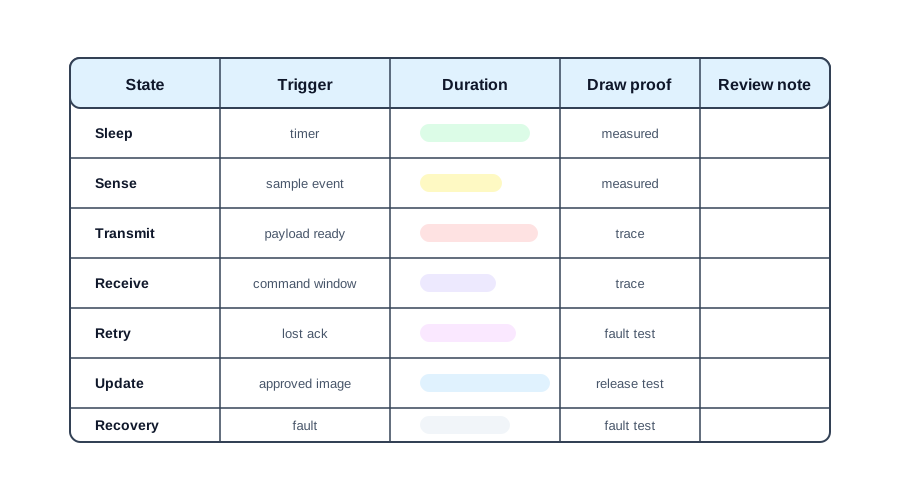
Include join, receive, retry, update, diagnostic, and recovery states instead of extrapolating only from sleep and one successful transmit.
- A choice earns approval when measurements, limitations, support ownership, and the low-energy behavior all fit the required maintenance interval.
- Energy is a state ledger.: Sleep, sensing, processing, transmit, receive, retry, update, fault, and recovery states all need proof.
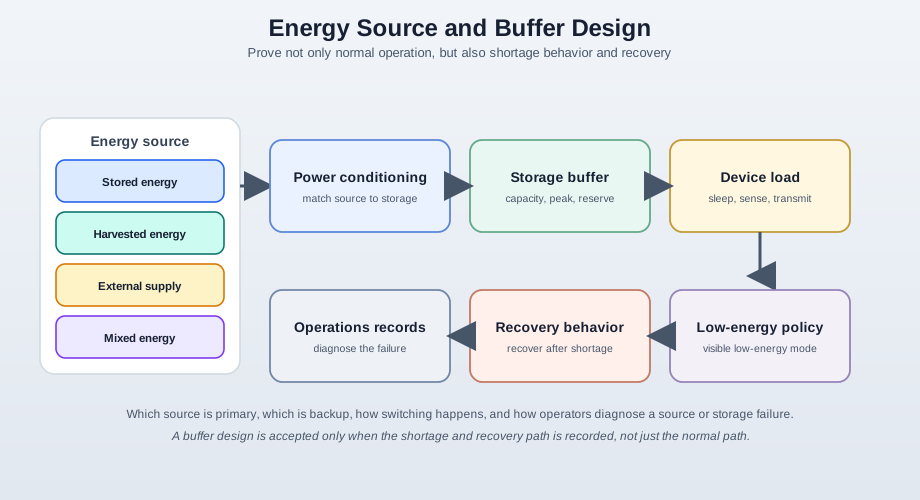
- Harvesting needs buffering.: Ambient energy is variable, so the check must prove storage, low-energy behavior, and recovery after shortage.
Major section
Constraint-First Selection
The right technology is the one that satisfies the scenario with the least hidden risk.
- Constraint-first selection begins before a protocol or platform is named.
- Candidate A must expose site delivery and gateway recovery; Candidate B must expose coverage, attach behavior, and energy per report.
Major section
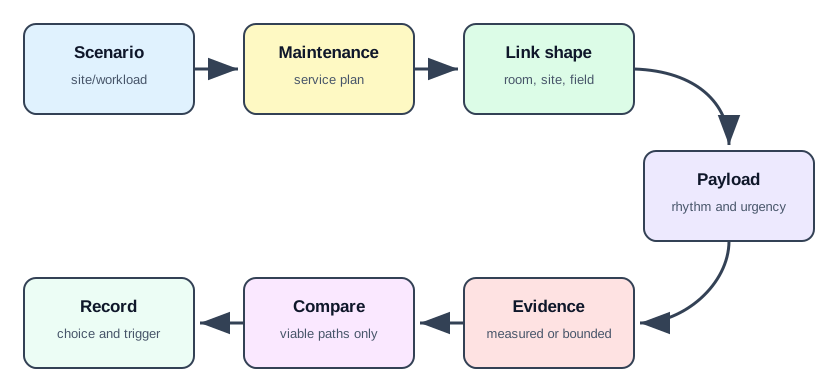
Selection Funnel
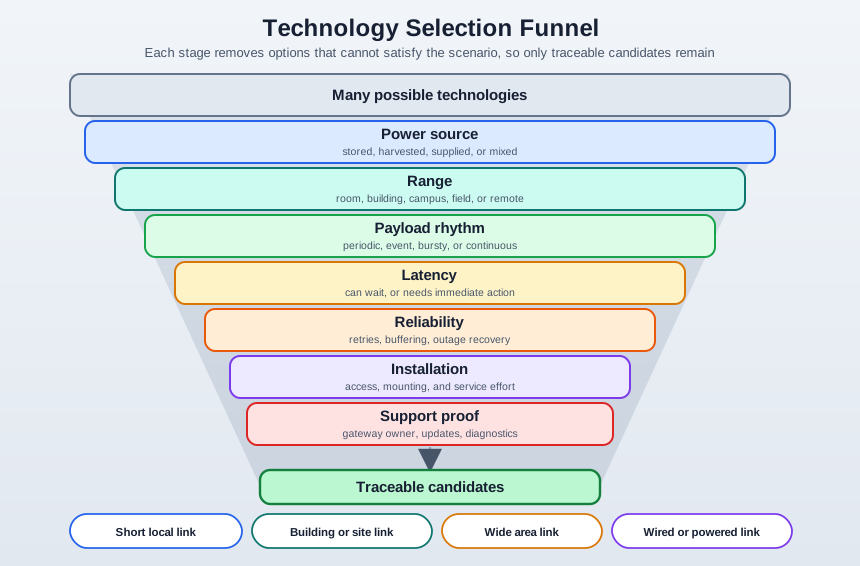
A selection funnel protects the decision from feature-first thinking.
- Each stage removes options that cannot satisfy the scenario, then the final comparison focuses on trade-offs between a small number of viable paths.
- The next selection funnel step needs Technology Selection Funnel as a visual checkpoint.
Major section
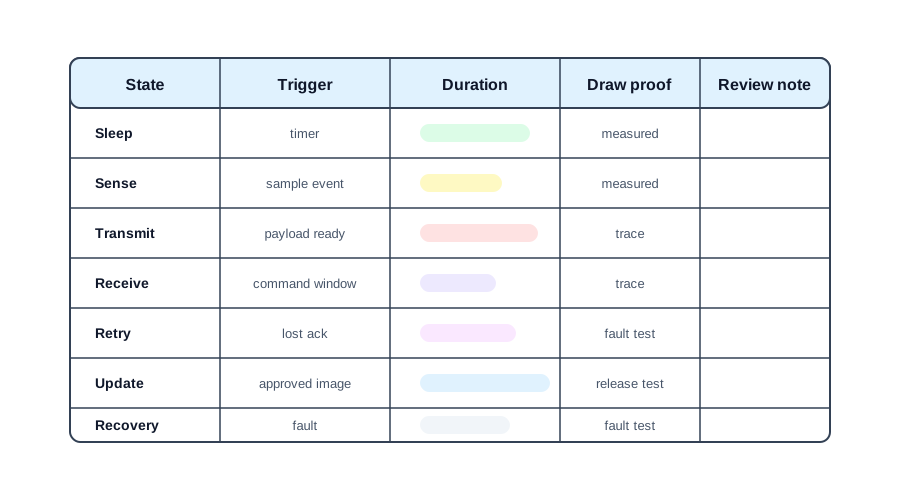
Power-State Ledger
Energy checks fail when a design uses one averaged value without showing how the device moves through states.
- A ledger makes the proof inspectable.
- The review note identifies the assumption that must remain visible when the architecture or operating policy changes.
- Recovery is not free; a release test must prove the bounded return.
Major section
Energy Source And Buffer Design
Stored energy, harvested energy, and externally supplied energy each change the architecture.
- The check should prove not only normal operation, but also shortage behavior and recovery.
Major section
Coupled Trade-Offs
Communication choice, energy design, and operations support affect each other.
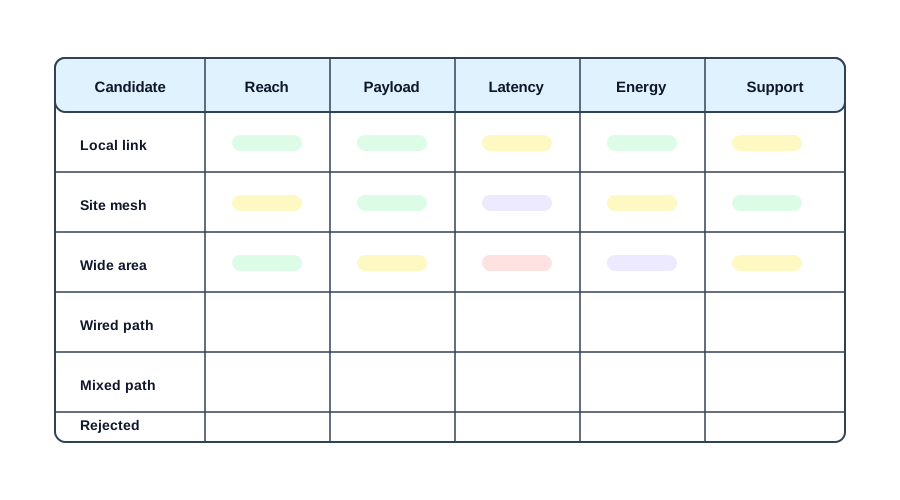
- A mesh needs route-churn and outage evidence; wide area needs coverage, attach, and per-report energy traces; a mixed path needs end-to-end failover proof.
Major section
Scenario: Remote Leak Monitor
A maintenance team wants a leak monitor in a mechanical room that is hard to access.
- It reports only when water is detected, sends a periodic health signal, and must be easy for support staff to diagnose without opening the enclosure.
- Fix the site and maintenance facts, compare only link candidates that can serve them, and then run each survivor through the energy ledger and failure probes.
- The final decision should not simply name a protocol.
Major section
Scenario: Remote Leak Monitor (continued)
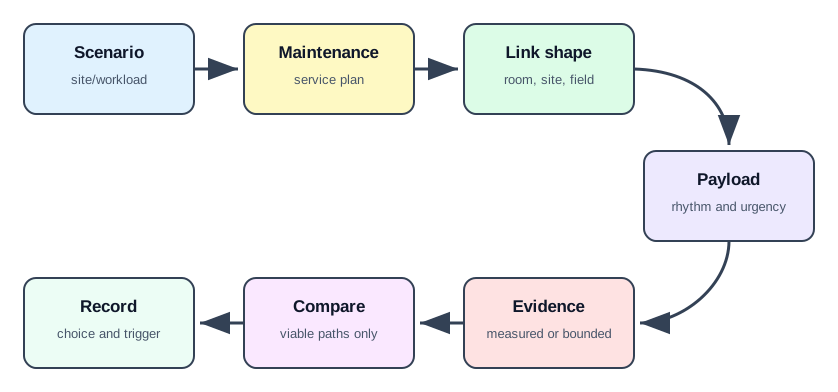
The accepted path is the one whose reach, stored-energy behavior, diagnostic evidence, and support ownership remain credible in both normal and fault states; a protocol name alone is not the conclusion.
- Scenario facts: hard-to-access site, low payload volume, event-driven alert, periodic health signal, support needs diagnostic records.
- Accepted path: the path with enough reach, support records, and energy behavior under both normal and fault conditions.
- It should state why the selected communication and energy design fits this building, this maintenance model, and this failure profile.
Major section
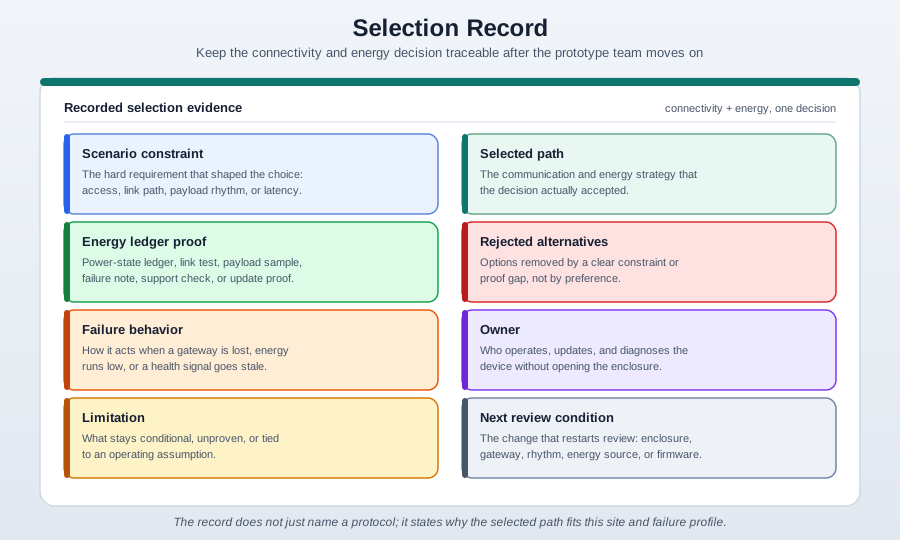
Selection Record
With: Recorded selection evidence included, their combined meaning is: The selection record captures scenario constraint, selected path, energy ledger proof, rejected alternatives, failure behavior, owner, limitation, and next review condition as an eight-field document.
- The change that restarts selection review, such as a new enclosure, gateway location, reporting rhythm, energy source, firmware path, or support workflow.
Deck summary
Key takeaways
A battery label gives stored charge, but the unit spends it in many small events.
- A longer report period may save energy but delay a useful trend.
- An average budget cannot prove battery chemistry, radio reach, or every field year.
- A 250 mA pulse loses $0.250\times1.50=0.375$ V, leaving only 2.625 V.
- Include join, receive, retry, update, diagnostic, and recovery states instead of extrapolating only from sleep and one successful transmit.
Retrieval practice
Recall check 1 of 3

Blueprint Bina says: answer from memory, then check your reasoning.
Q1A remote leak monitor sends tiny event messages and periodic health signals from a hard-to-access mechanical room where gateway coverage can be intermittent. Which first check keeps the communication and energy decision traceable?
Show answer
Answer: C A traceable connectivity and energy decision proves scenario constraints, link behavior, power states, failure probes, support ownership, and review conditions before the selected path becomes a deployment dependency.
Retrieval practice
Recall check 2 of 3

Blueprint Bina says: answer from memory, then check your reasoning.
Q2A remote leak monitor sends tiny event messages and a periodic health signal from a hard-to-access mechanical room. What is the strongest first selection step?
Show answer
Answer: B Technology selection and energy management should be checked together.
Retrieval practice
Recall check 3 of 3

Blueprint Bina says: answer from memory, then check your reasoning.
Q3A remote leak monitor meets its average-current target during a clean bench test, but the real mechanical room has intermittent gateway coverage. Which proof should be reviewed before release?
Show answer
Answer: D Intermittent coverage can make rare states frequent, changing endurance and support behavior.
Print reference
Answers
Answer key.
- C · A traceable connectivity and energy decision proves scenario constraints, link behavior, power states, failure probes, support ownership, and review conditions before the selected path becomes a deployment dependency.
- B · Technology selection and energy management should be checked together.
- D · Intermittent coverage can make rare states frequent, changing endurance and support behavior.