Analytics & ML · Study deck
IoT Edge Models: Processing Levels
Keep the first design small.
Data Dora is your guide for this deck.

After studying this chapter
Learning objectives
You will be able to:
- Explain the Seven-Level IoT Reference Model: Describe how data flows from physical devices through edge processing to cloud analytics
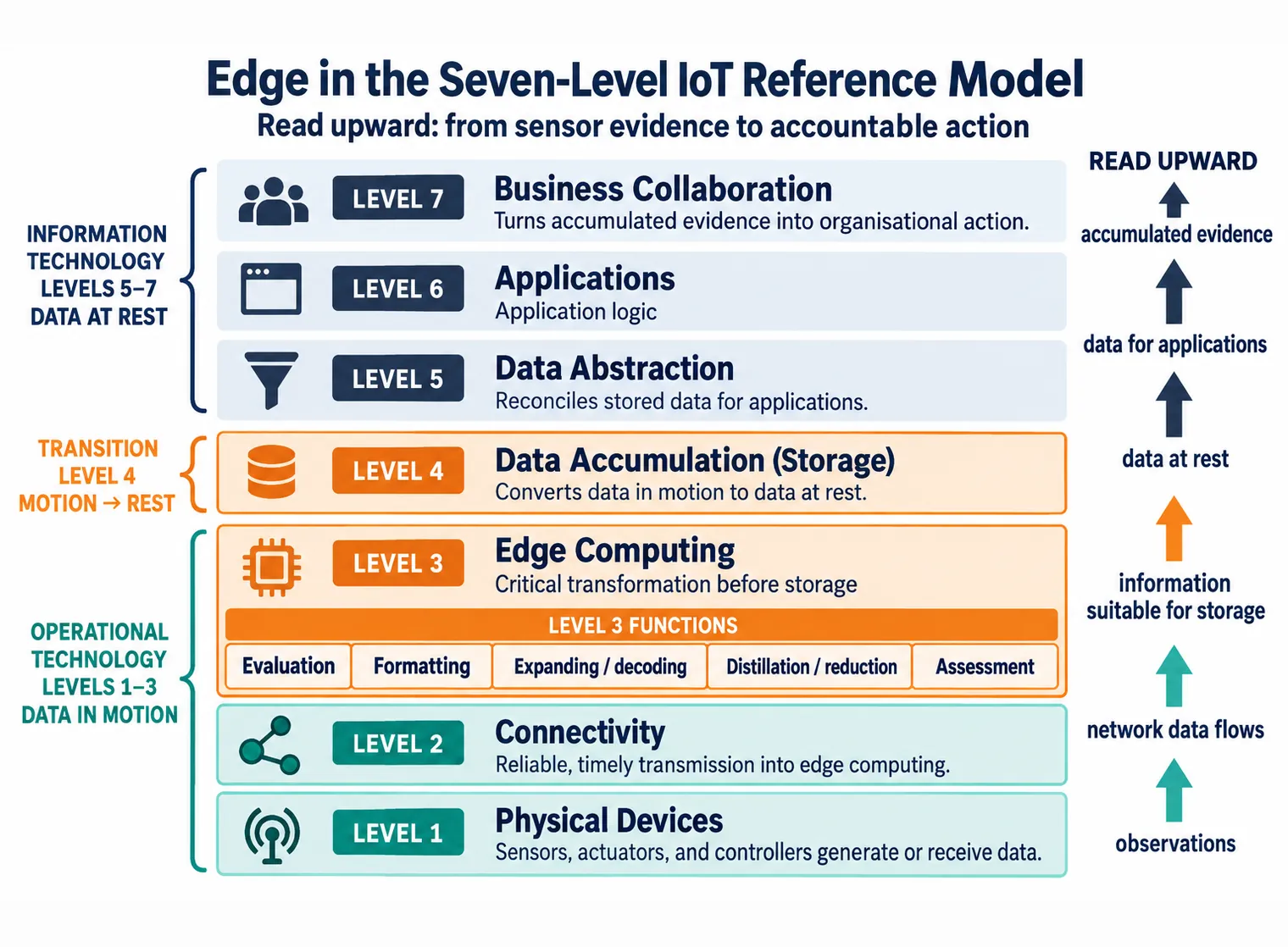
- Distinguish OT vs IT Layers: Classify which levels handle operational technology (data in motion) versus information technology (data at rest)
- Apply Level 3 Processing Functions: Implement evaluation, formatting, decoding, distillation, and assessment at the edge
- Design for Data Accumulation: Determine appropriate storage strategies at Level 4 based on data characteristics
Major section
Start With the Story
Sending every frame away would be slow and costly.
- An edge system does some work near the camera before it sends a result.
- Bandwidth means how much data a link can carry in a given time.
- This short trial often reveals where the first useful decision should live.
- The best location is not always the nearest one.
Major section
IoT Reference Model Overview
The IoT Reference Model provides a structured framework for understanding where data processing occurs in IoT systems.
- Devices create observations, connectivity moves them, and Level 3 evaluates, formats, distils, or assesses them before Level 4 makes data durable.
Major section
IoT Reference Model Overview (continued)
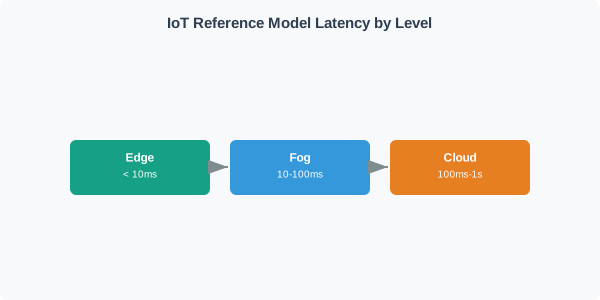
With that path established, the timeline in Figure: Sequence timeline showing latency at each IoT Reference shows what changes when a response stops locally or continues upward.
- The local route stops at Level 3 for a response measured in tens of milliseconds, whereas the cloud route crosses accumulation and higher-level processing and can take seconds or longer.
- The comparison connects level placement to the chapter's running constraints—latency, bandwidth, and the amount of context required by the decision.
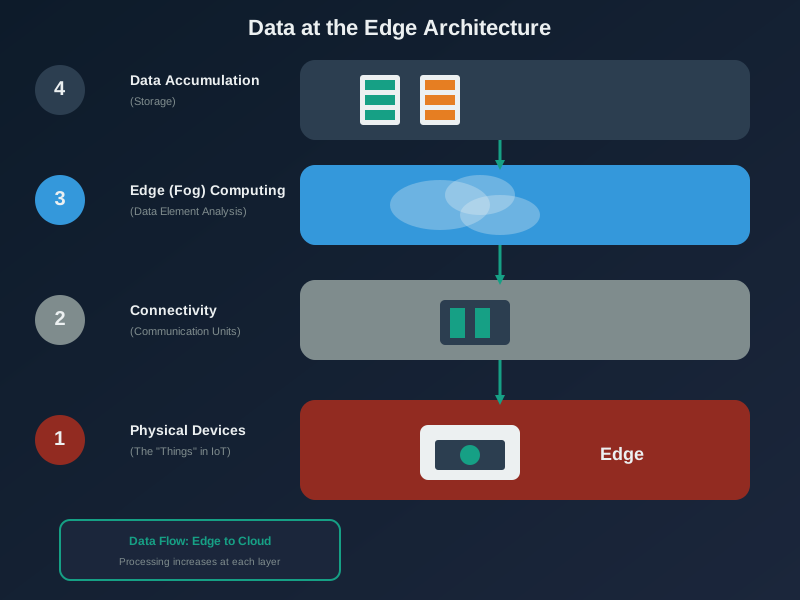
- The layered diagram in Figure: Data at the edge architecture overview then shows how that local node participates in a larger data path.
Major section
Level 2 Connectivity
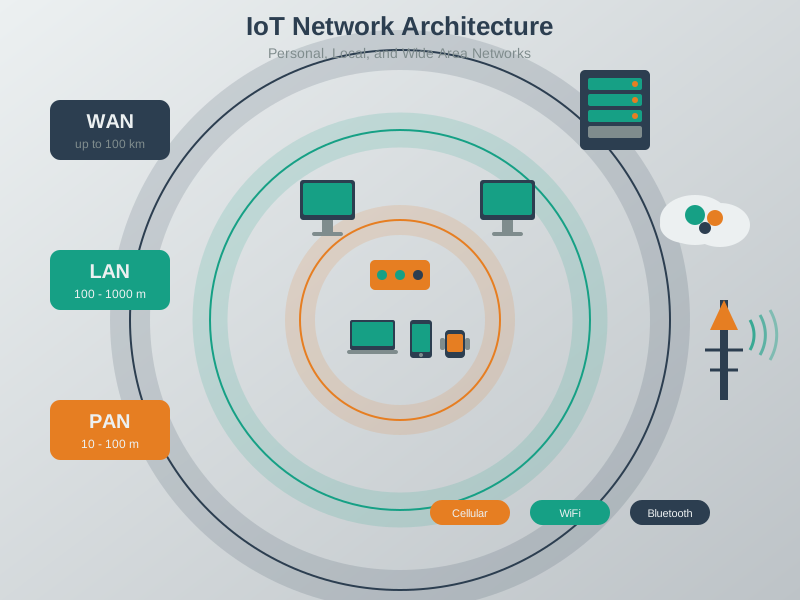
Level 2 contains communications and connectivity -- providing reliable, timely information transmission.
- This includes transmissions from devices (Level 1) to the network, across the network, and into the edge computing layer (Level 3).
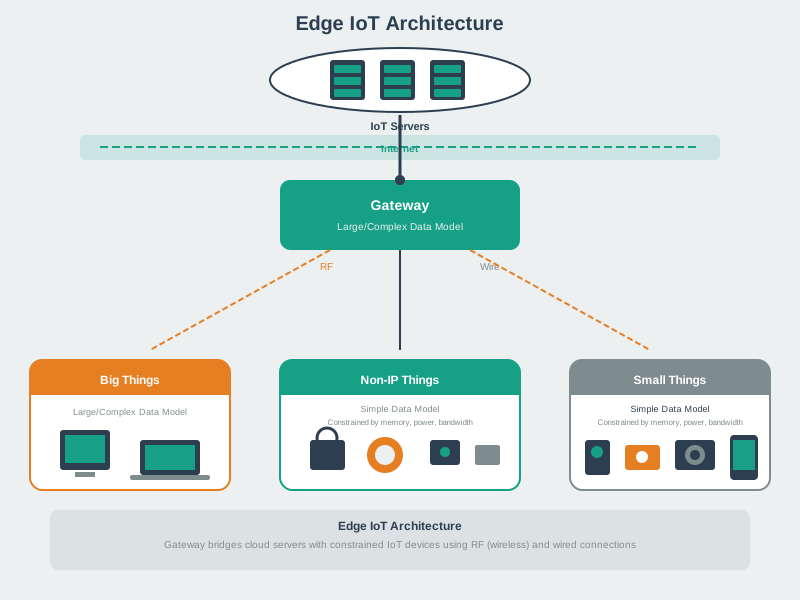
- A gateway changes protocol and trust responsibilities, while a direct IP path moves more of those responsibilities onto the device.
Deck summary
Key takeaways
Sending every frame away would be slow and costly.
- The IoT Reference Model provides a structured framework for understanding where data processing occurs in IoT systems.
- With that path established, the timeline in Figure: Sequence timeline showing latency at each IoT Reference shows what changes when a response stops locally or continues upward.
- Level 2 contains communications and connectivity -- providing reliable, timely information transmission.
Retrieval practice
Recall check

Data Dora says: answer from memory, then check your reasoning.
Q1A gateway converts device protocols to MQTT, checks a temperature safety threshold, and averages readings over 5-minute windows. At which IoT Reference Model level do these occur?
Show answer
Answer: B Protocol conversion, threshold checks, and windowed aggregation are Level 3 edge (fog) computing functions.
Print reference
Answers
Answer key.
- B · Protocol conversion, threshold checks, and windowed aggregation are Level 3 edge (fog) computing functions.