Transport Protocols · Study deck
DTLS: Handshake and UDP Protection
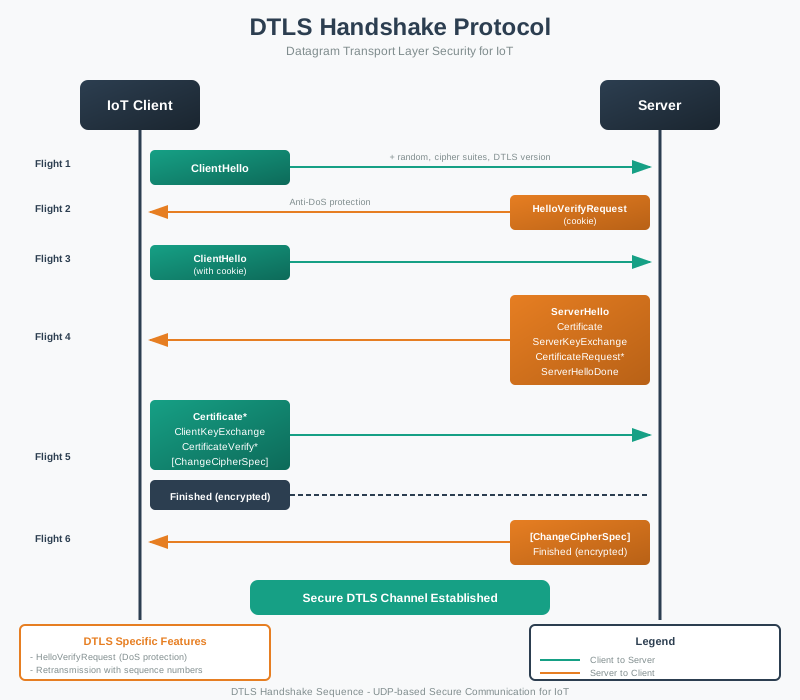
UDP sends separate packets, so DTLS must handle loss and reordering during its handshake.
Packet Pete is your guide for this deck.

After studying this chapter
Learning objectives
You will be able to:
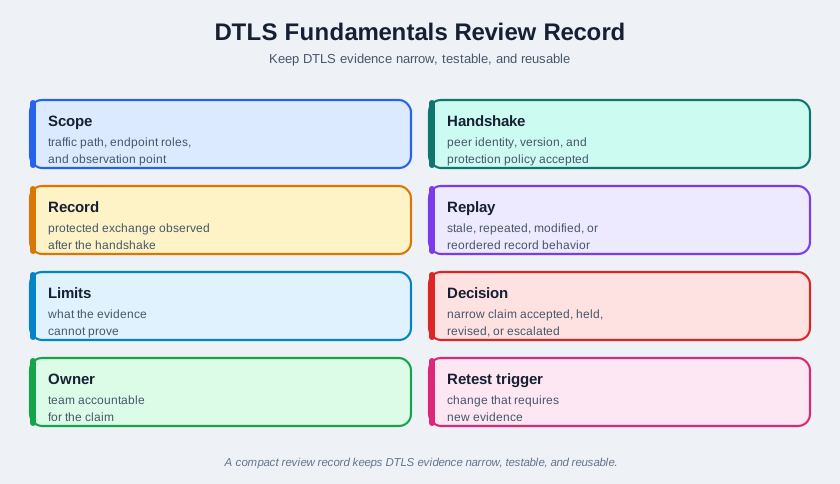
- Explain: The architectural boundary needs a review record that ties it to a real endpoint pair and session. Figure: A compact review record keeps DTLS evidence narrow shows the fields that keep that evidence narrow and repeatable.
- Explain: DTLS can protect the record, bind it to a peer identity, and limit replay, but it does not decide whether the application should trust the command itself.
- Explain: An attacker on the path should not be able to read it, change it, or replay an old alarm as if it were new.
- Explain replay, integrity, and privacy protection for UDP.
Major section
Start With the Decision · Inside the DTLS Handshake
UDP sends separate packets, so DTLS must handle loss and reordering during its handshake.
- A final success line does not show what was checked or retried.
- More retries can help on a weak link, but they spend time, power, and radio space.
- A protocol is a set of rules for an exchange.
Major section
How DTLS Protects UDP
An attacker on the path should not be able to read it, change it, or replay an old alarm as if it were new.
- The security layer protects datagram traffic.
- Its setup can also cost time, memory, radio use, and battery energy.
- Those costs matter on a small device.
- Both results belong in the same release choice.
Major section
How DTLS Protects UDP (continued)
Under the Hood follows setup messages, protected records, replay checks, and the limits of separate packets.
- The receiver still has to check the sender's right and the message value.
- A small board may pass the security check yet miss its response or battery goal.
- Finish with limits, decision, owner, and retest trigger.
Major section
How DTLS Protects UDP (continued)
A useful DTLS fundamentals review record does not ask only whether DTLS is present.
- Transport proof and app proof belong in the same review, but they are not the same claim.
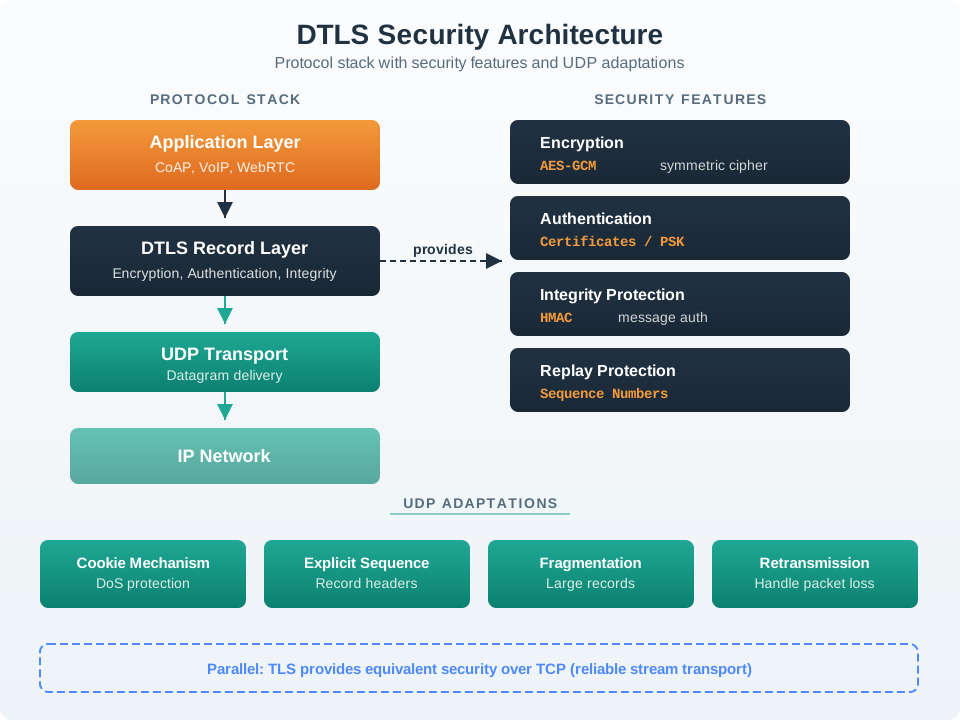
- The stack placement explains both what DTLS adds and what remains above or below its boundary.
- Decision, owner, evidence limit, and retest trigger.
Major section
How DTLS Protects UDP (continued)
DTLS can protect the record, bind it to a peer identity, and limit replay, but it does not decide whether the application should trust the command itself.
- Inside the DTLS layer, identify encryption, integrity, and peer-authentication functions; outside it, keep datagram loss and application authorization as separate questions.
- This layered reading anchors the chapter's claim that protected records do not prove the whole system outcome.
- It only states the transport-protection evidence.
Major section
How DTLS Protects UDP (continued)
Duplicate or stale-record test, rejection log, ignored-record log, or explicit limit.
- It names the protected traffic, endpoint roles, observation point, handshake context, record evidence, replay evidence, limits, owner, and retest trigger.
- The same evidence cannot prove device calibration, business-rule authorization, or cloud-side retention.
- DTLS adapts TLS-style transport protection for UDP.
Major section
How DTLS Protects UDP (continued)
It also prevents overclaiming.
- The architectural boundary needs a review record that ties it to a real endpoint pair and session. Figure: A compact review record keeps DTLS evidence narrow shows the fields that keep that evidence narrow and repeatable.
- That order connects a packet trace to its session context while preserving the application and operational questions DTLS cannot answer for the reviewer.
- Application authorization and device trust still need their own evidence.
Major section
Summary · Key Takeaway
DTLS attack-resistance and authentication checks should be bounded.
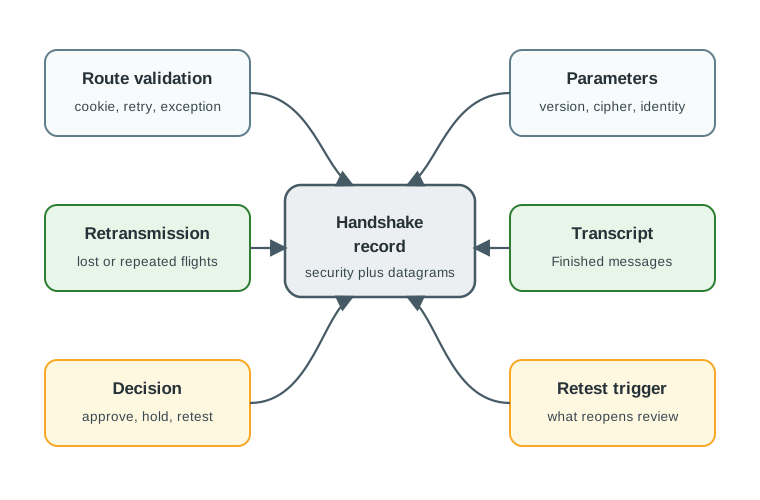
- A cookie challenge can support a return-reachability and server-state claim.
- Replay handling can support a duplicate or stale-record claim.
- Transcript and Finished-message checks can support a handshake-tamper claim.
- DTLS does not close every security question.
Deck summary
Key takeaways
UDP sends separate packets, so DTLS must handle loss and reordering during its handshake.
- An attacker on the path should not be able to read it, change it, or replay an old alarm as if it were new.
- Under the Hood follows setup messages, protected records, replay checks, and the limits of separate packets.
- A useful DTLS fundamentals review record does not ask only whether DTLS is present.
- DTLS can protect the record, bind it to a peer identity, and limit replay, but it does not decide whether the application should trust the command itself.
Retrieval practice
Recall check 1 of 6

Packet Pete says: answer from memory, then check your reasoning.
Q1A DTLS trace shows that a gateway eventually completed a handshake. What must be recorded before the team accepts that handshake for release?
Show answer
Answer: B Handshake review starts with scoped evidence: who connected, what was negotiated, what was observed, and what decision follows.
Retrieval practice
Recall check 2 of 6

Packet Pete says: answer from memory, then check your reasoning.
Q2A server policy says unknown DTLS peers must prove return reachability before the server commits heavier work. A capture shows a first ClientHello followed immediately by a full server flight with no visible retry or cookie evidence. What is the strongest review action?
Show answer
Answer: C Route-validation review compares configured expectation with observed handshake behavior and records any exception.
Retrieval practice
Recall check 3 of 6

Packet Pete says: answer from memory, then check your reasoning.
Q3A device has strong full-handshake evidence, then later uses session resumption. What should the review avoid claiming without new evidence?
Show answer
Answer: D Full handshakes and resumed sessions should be connected but not blended.
Retrieval practice
Recall check 4 of 6

Packet Pete says: answer from memory, then check your reasoning.
Q4A DTLS review sees protected records but no session context. Why is the record incomplete?
Show answer
Answer: C DTLS fundamentals tie record-layer evidence to session context, peer identity, replay behavior, and limits.
Retrieval practice
Recall check 5 of 6

Packet Pete says: answer from memory, then check your reasoning.
Q5A trace shows UDP datagrams carrying DTLS records after a completed handshake. What is the strongest evidence-bound conclusion?
Show answer
Answer: B DTLS evidence should stay tied to observed records, handshake context, peer identity, and stated limits.
Retrieval practice
Recall check 6 of 6

Packet Pete says: answer from memory, then check your reasoning.
Q6A review claims replay handling was verified, but the evidence only shows one normal protected record. What should happen next?
Show answer
Answer: D Replay claims need replay evidence.
Print reference
Answers 1 of 2
Answer key.
- B · Handshake review starts with scoped evidence: who connected, what was negotiated, what was observed, and what decision follows.
- C · Route-validation review compares configured expectation with observed handshake behavior and records any exception.
- D · Full handshakes and resumed sessions should be connected but not blended.
- C · DTLS fundamentals tie record-layer evidence to session context, peer identity, replay behavior, and limits.
- B · DTLS evidence should stay tied to observed records, handshake context, peer identity, and stated limits.
Print reference
Answers 2 of 2
Answer key.
- D · Replay claims need replay evidence.