UX Design · Study deck

Device Form Factors: Context and Review Evidence

A device may fit the bench and still fail in a wet, gloved, or shared space.

UX Uma is your guide for this deck.

form-factor-reviewenclosure-designmounting
UX Uma, the module guide, in a scene from this chapter.
iotclass.org

After studying this chapter

Learning objectives

You will be able to:

  • Explain: That arrangement shows why a bench-sized enclosure is not enough evidence: the form-factor record must also cover stable attachment, sensor exposure, pressure, clothing movement, and a service path the wearer can manage.
  • Explain: Metal may be useful for heat or strength, but it can block wireless signals if the antenna is inside the metal boundary.
  • Explain: A device that requires the wrong tool, surface, angle, or permission can fail before it starts collecting data.
  • Explain: The correct choice depends on the deployment and maintenance evidence, not on which method is easiest to draw.
iotclass.org

Major section

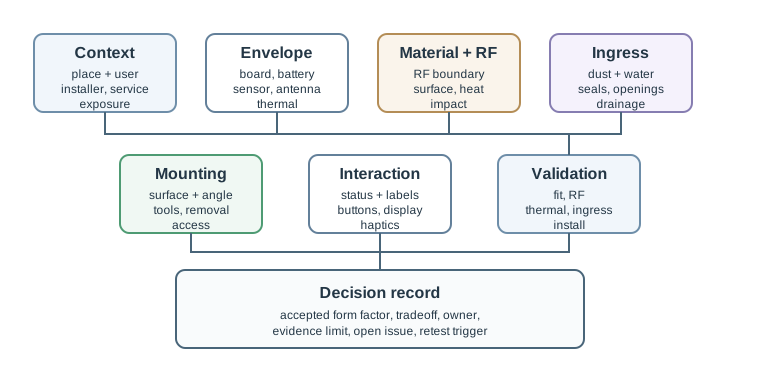
Form Factor Review Path
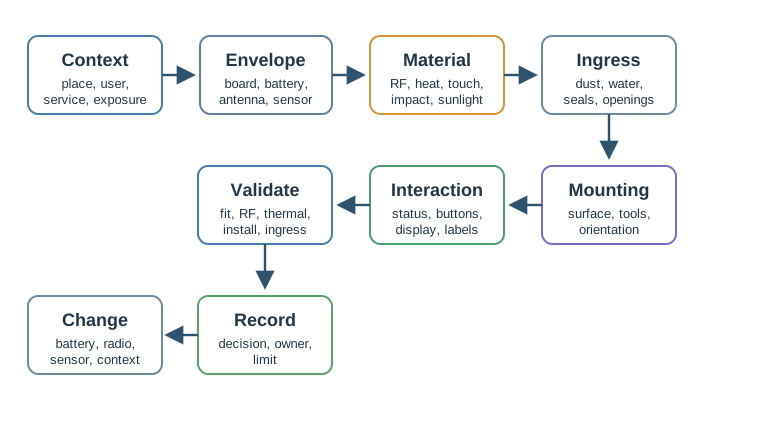
Together,: Validate and: Change frame the form factor review path claim: device form factor review path.

  • For form factor review path,: Validate supplies visible evidence;: Change constrains the decision.
  • Decision and change condition: accepted tradeoff, owner, evidence limit, and condition that requires another form factor review.
Device form factor review path.
iotclass.org

Major section

Materials And RF Boundaries

Material choice affects durability, radio performance, heat, weight, feel, sealing, and serviceability.

  • Metal may be useful for heat or strength, but it can block wireless signals if the antenna is inside the metal boundary.
  • Soft materials may help wearables or impact protection, but they can create cleaning, aging, or tolerance issues.
  • The record should show which tradeoff was accepted.
iotclass.org

Major section

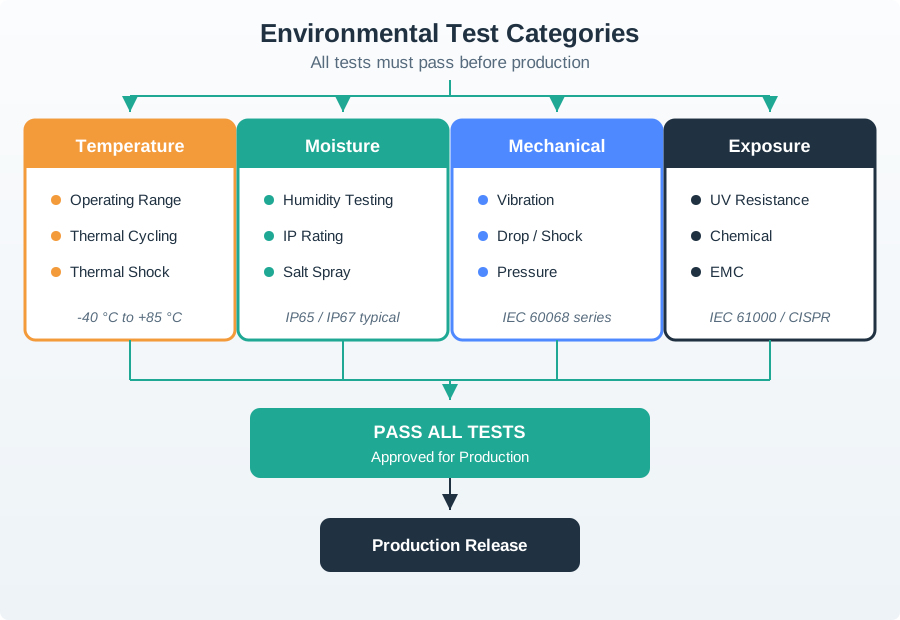
Ingress And Environmental Protection

Ingress protection is a design decision, not a decorative rating label.

  • The reviewer should connect the rating or protection strategy to the actual exposure.
  • The evidence should match the exposure that the device is expected to face.
Environmental test categories for temperature, moisture, mechanical, and exposure checks.
iotclass.org

Major section

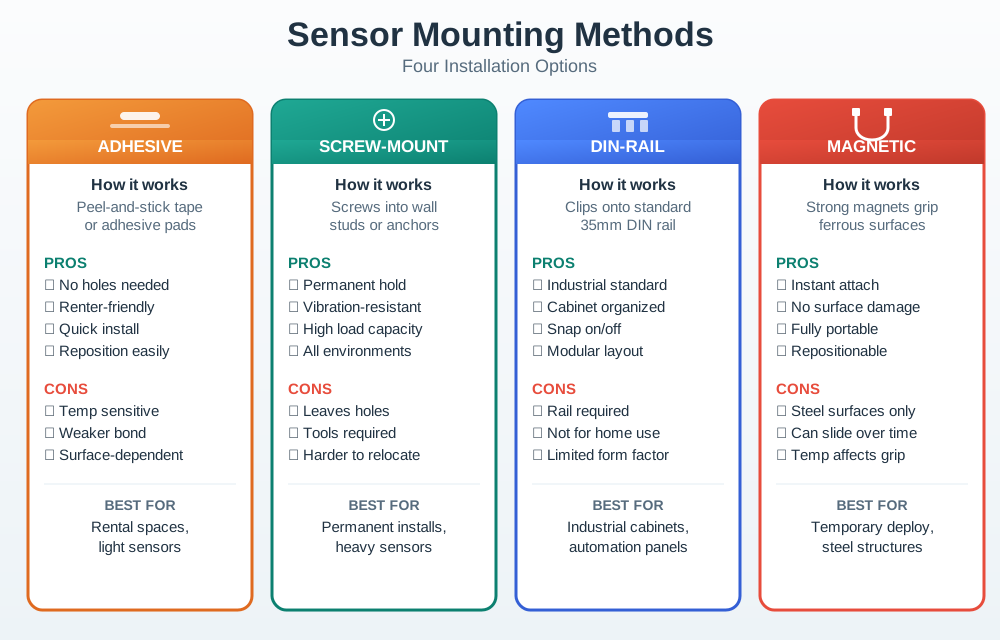
Mounting And Maintenance

Mounting is part of the user experience.

  • A device that requires the wrong tool, surface, angle, or permission can fail before it starts collecting data.
  • The correct choice depends on the deployment and maintenance evidence, not on which method is easiest to draw.
Sensor mounting methods comparing adhesive, screw-mount, DIN-rail, and magnetic installation options.
iotclass.org

Major section

Interaction Surfaces

Physical interaction should be simple enough for installation and routine use.

  • The device should communicate enough state for the person at the device to know what to do next.

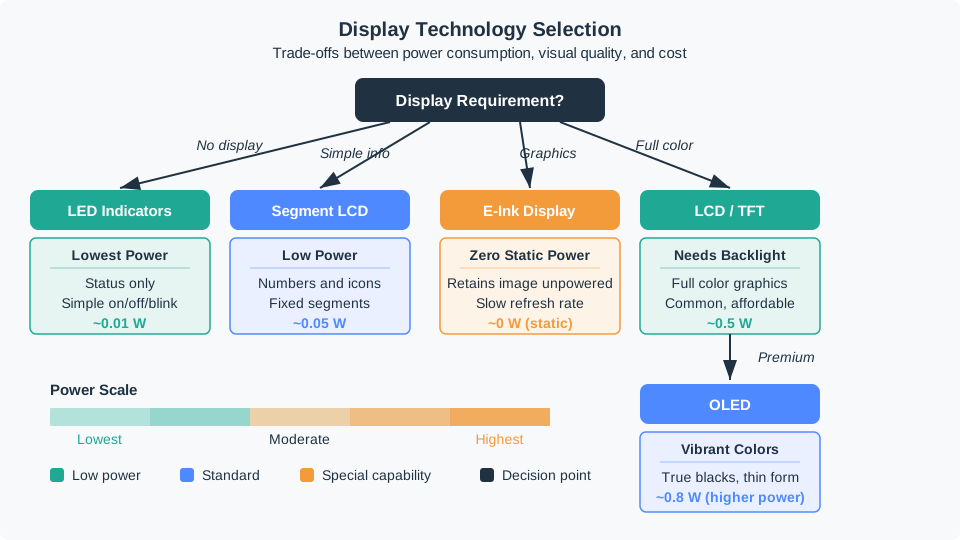
Numbers to remember

~0.01 Wretain ~0.01 W beside ~0.5 W so interaction surfaces remains explicit.
~0.5 Wretain ~0.01 W beside ~0.5 W so interaction surfaces remains explicit.
Display technology selection for LED indicators, segment LCD, E-Ink, LCD or TFT, and OLED.
iotclass.org

Major section

Worked Review: Outdoor Sensor

A soil or weather sensor is planned for an exposed outdoor location.

  • The sensor opening and orientation are defined.
  • Battery replacement or service access is documented.
  • The antenna path is not blocked by the enclosure, mounting post, soil, or nearby metal.
  • The validation record includes both bench checks and a placement trial.
iotclass.org

Major section

Worked Review: Wearable Tag

A wearable tag is planned for repeated body contact and daily movement.

  • The black sensor enclosure and the clothing neckline make placement, orientation, and body contact visible rather than hypothetical.
  • Strap, clip, or attachment method fits the body location and use duration.
  • Cleaning and sweat exposure are included in the material and seal review.

Key terms

Status feedback
Status feedback is visible or felt without forcing frequent phone checks.
This body-worn sensing device shows why a wearable-tag review must include clip position, pressure points, orientation, privacy, and whether daily movement can dislodge or obscure the sensors.
iotclass.org

Major section

Worked Review: Wearable Tag (continued)

That arrangement shows why a bench-sized enclosure is not enough evidence: the form-factor record must also cover stable attachment, sensor exposure, pressure, clothing movement, and a service path the wearer can manage.

  • Status feedback is visible or felt without forcing frequent phone checks.
  • Charging or battery replacement does not make routine use impractical.
  • Comfort, attachment, cleaning, and status feedback are part of the form factor evidence.
iotclass.org

Deck summary

Key takeaways

Together,: Validate and: Change frame the form factor review path claim: device form factor review path.

  • Material choice affects durability, radio performance, heat, weight, feel, sealing, and serviceability.
  • Ingress protection is a design decision, not a decorative rating label.
  • Mounting is part of the user experience.
  • Physical interaction should be simple enough for installation and routine use.
iotclass.org

Retrieval practice

Recall check

UX Uma says: answer from memory, then check your reasoning.

Q1A connected device design uses a metal enclosure with an internal antenna. The record says the enclosure is durable, but it does not show RF evidence from the installed orientation. What is the strongest review response?

APause acceptance until RF is tested with the real enclosure, antenna location, and mounting orientation
BAccept it because metal improves durability and therefore cannot harm wireless reliability
CApprove the case after a CAD review, treating RF testing as a later firmware task
DReplace the RF check with a larger battery estimate and a thicker enclosure wall
Show answer

Answer: A A form factor decision is reviewable only when physical choices are tied to deployment, RF, mounting, interaction, and validation evidence.

iotclass.org

Print reference

Answers

Answer key.

  1. A · A form factor decision is reviewable only when physical choices are tied to deployment, RF, mounting, interaction, and validation evidence.
iotclass.org