Reference Architectures · Study deck
IoT Development Workflow: Debug and Release
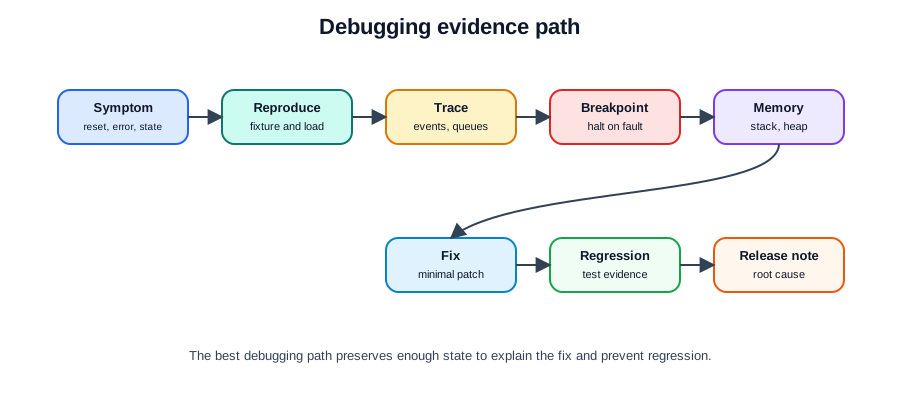
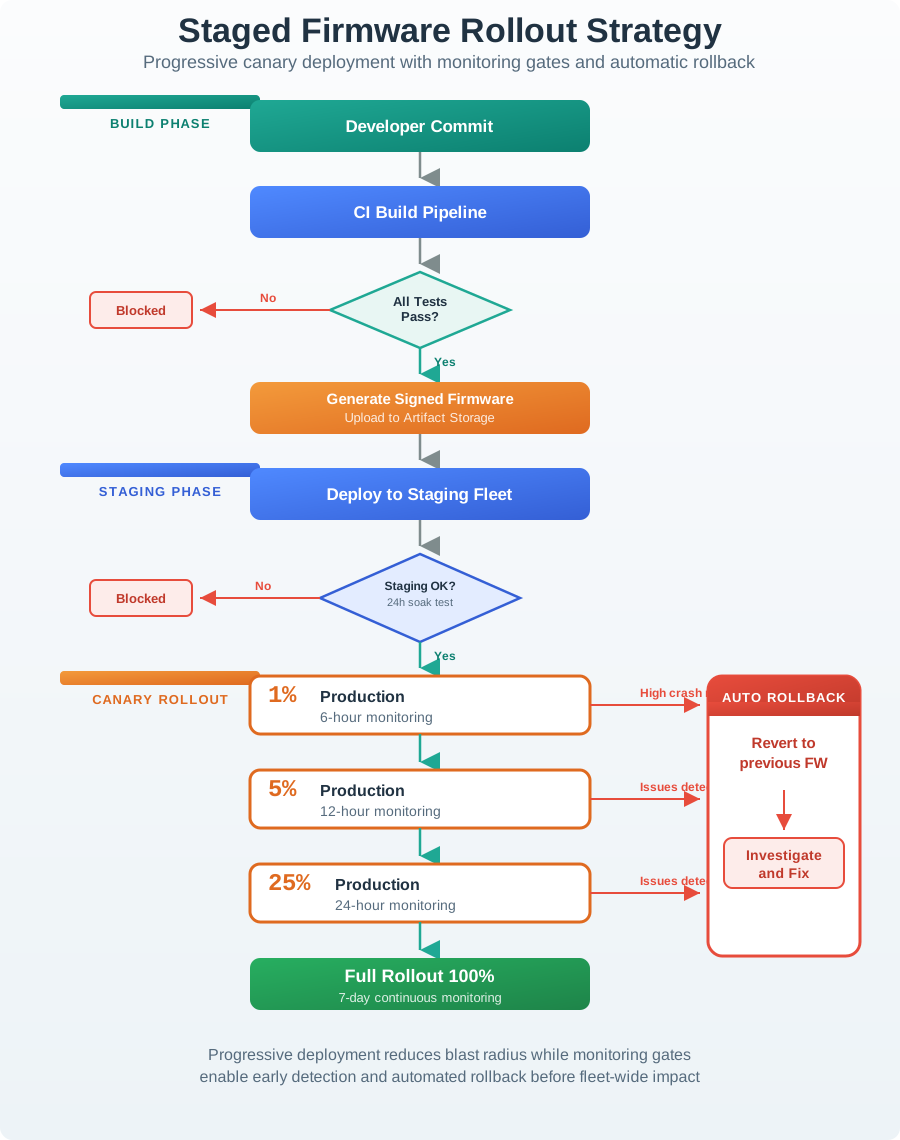
A firmware change builds locally, but a build is not yet a release.
Blueprint Bina is your guide for this deck.

After studying this chapter
Learning objectives
You will be able to:
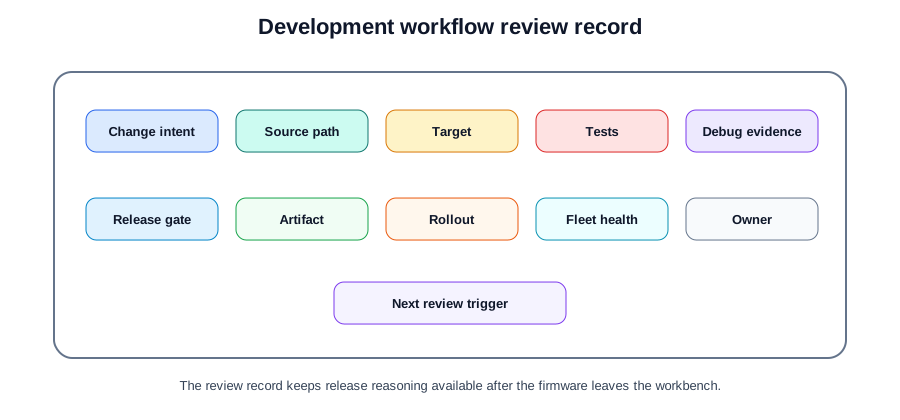
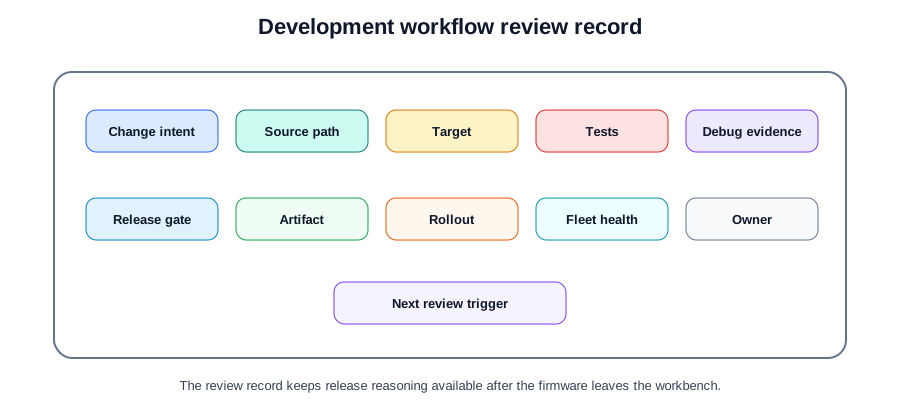
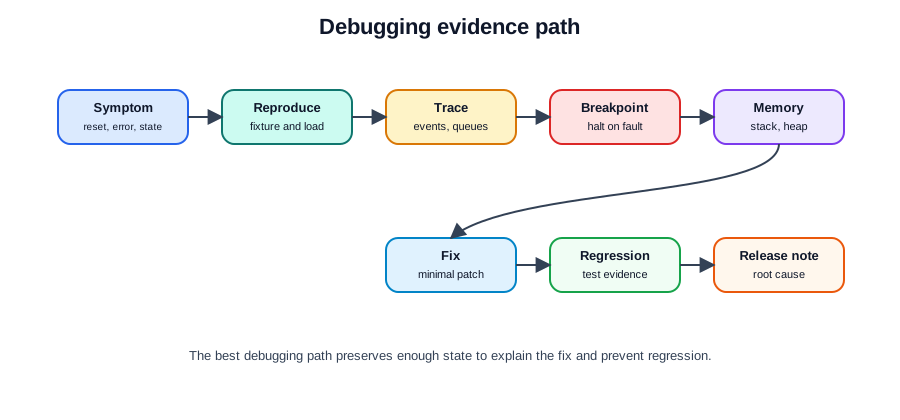
- Explain: This path preserves the chapter’s development workflow release record argument: A development workflow release record captures change intent, branch, target, tests, debug findings, release gate, artifact, rollout, fleet health, owner, and next checkpoint.
- Explain: Each stage consumes the evidence left by the previous one so a reconnect fix cannot reach devices without regression, artifact, and rollback proof.
- Explain: Close the route only after the artifact, deployment cohort, and rollback target can be traced back to the same source and configuration.
- Explain: The team needs to change the firmware without breaking local alarms or losing event evidence.
Major section
CI Release Gates
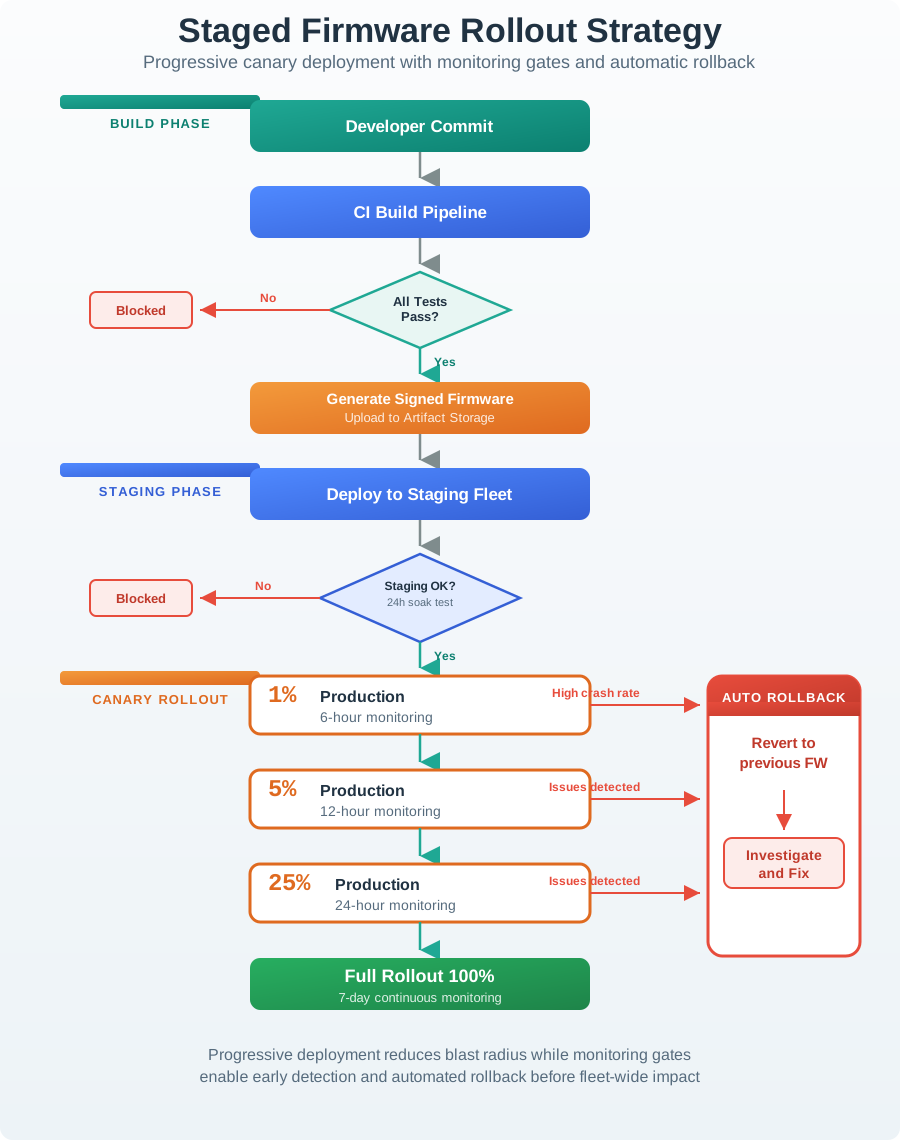
CI is useful when it rejects changes that would be unsafe, unreproducible, or unreviewable in the fleet.
- The workflow should fail closed.
- If a required gate cannot run, the release should wait for review rather than silently publishing an unverified artifact.
Major section
Cold-Room Firmware Change
A recent field report shows occasional missing compressor-state events after a reconnect.
- The team needs to change the firmware without breaking local alarms or losing event evidence.
- The grouped actions below are not independent chores.
- That continuity ties the source change to field health instead of relying on separate teams to reinterpret the incident.
Major section
Cold-Room Firmware Change (continued)
Close the route only after the artifact, deployment cohort, and rollback target can be traced back to the same source and configuration.
- Each stage consumes the evidence left by the previous one so a reconnect fix cannot reach devices without regression, artifact, and rollback proof.
- Those final links turn a local fix into controlled operational change.
- Link the change to the field report and affected firmware families.
Major section
Development Workflow Release Record
The workflow should end with a release record that can be used during audits, incident analysis, and future changes.
- This path preserves the chapter’s development workflow release record argument: A development workflow release record captures change intent, branch, target, tests, debug findings, release gate, artifact, rollout, fleet health, owner, and next checkpoint.
Deck summary
Key takeaways
CI is useful when it rejects changes that would be unsafe, unreproducible, or unreviewable in the fleet.
- A recent field report shows occasional missing compressor-state events after a reconnect.
- Close the route only after the artifact, deployment cohort, and rollback target can be traced back to the same source and configuration.
- The workflow should end with a release record that can be used during audits, incident analysis, and future changes.
Retrieval practice
Recall check

Blueprint Bina says: answer from memory, then check your reasoning.
Q1A firmware change fixes reconnect replay on cold-room gateways. The local test passes, but CI did not run the hardware-in-the-loop boot test because the fixture was offline. What should the release workflow do?
Show answer
Answer: B A required gate that does not run leaves missing proof.
Print reference
Answers
Answer key.
- B · A required gate that does not run leaves missing proof.