Applications & Use Cases · Study deck
Data Monetization: Direct and Ecosystem Value
A data product has no value until a named customer can act on it.
Blueprint Bina is your guide for this deck.

After studying this chapter
Learning objectives
You will be able to:
- Explain: Market forecasts vary by analyst and definition, so the durable skill is evaluating whether a proposed data product has a named buyer, a clear decision value, and a defensible privacy boundary.
- Explain: The consequence: Teams can spend heavily on collection infrastructure, then discover that raw exports produce weak revenue because buyers still have to clean, join, validate, and interpret the data.
- Explain: In a smart-home ecosystem, the fee must be justified by real value: user reach, integration tooling, device certification, cloud infrastructure, support, and reduced partner acquisition cost.
- apply privacy, consent, regulation, and decision-value safeguards
Major section
Data Monetization
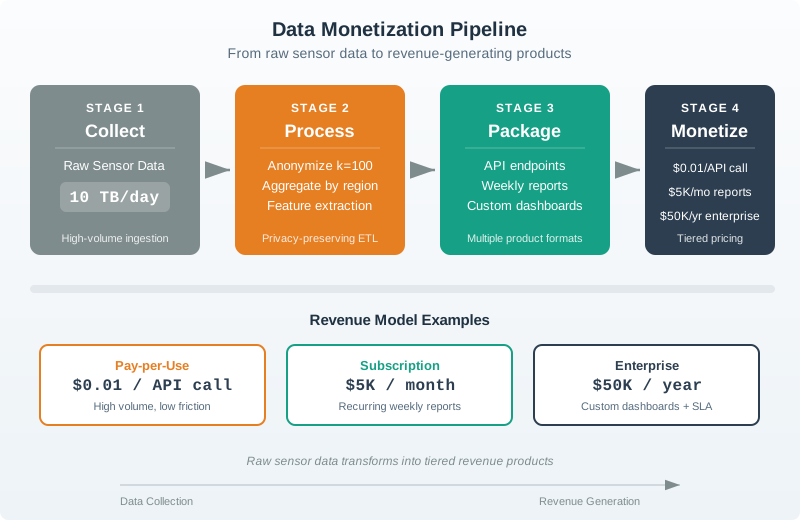
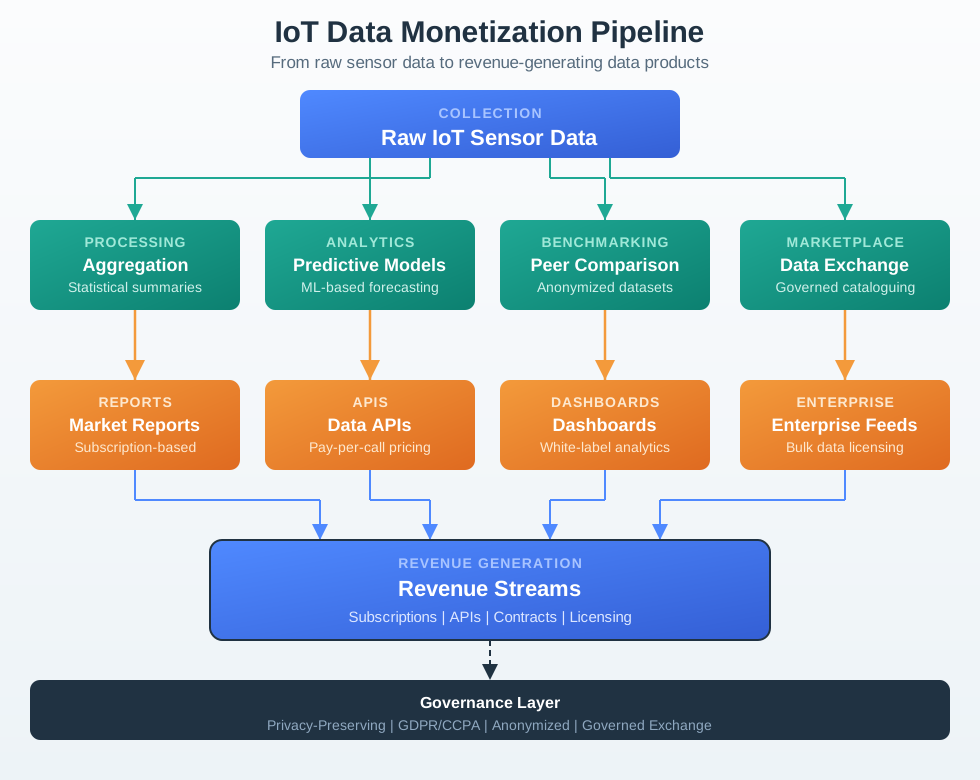
That labelled check bounds iot data monetization pipeline from raw sensor data to revenue streams.
- Figure: Alternative view makes data monetization inspectable through Data Monetization Pipeline and: From raw sensor data to revenue-generating products.
- IoT devices generate large amounts of data that can be monetized in various ways while respecting privacy and regulatory constraints.
Major section
Data Monetization (continued)
Regularly audit anonymization to prevent re-identification attacks.
- Together those labels make alternative view: data monetization pipeline - this diagram shows data monetization as a four-stage pipeline. Stage 1 (collect): raw sensor data at testable.
- Market forecasts vary by analyst and definition, so the durable skill is evaluating whether a proposed data product has a named buyer, a clear decision value, and a defensible privacy boundary.
- Maintain user trust through transparency about what data is shared.
Major section
Sell Insights, Not Raw Data
The same data becomes more useful when processed into building efficiency benchmarks, HVAC failure predictions, and energy optimization recommendations.
- The consequence: Teams can spend heavily on collection infrastructure, then discover that raw exports produce weak revenue because buyers still have to clean, join, validate, and interpret the data.
- The value-to-cost ratio improves only when the product becomes a decision-ready insight.
- Key principle: Data value is created through processing, not collection.
Major section
Indirect Revenue Models
For many IoT companies, indirect revenue ultimately exceeds direct product sales.
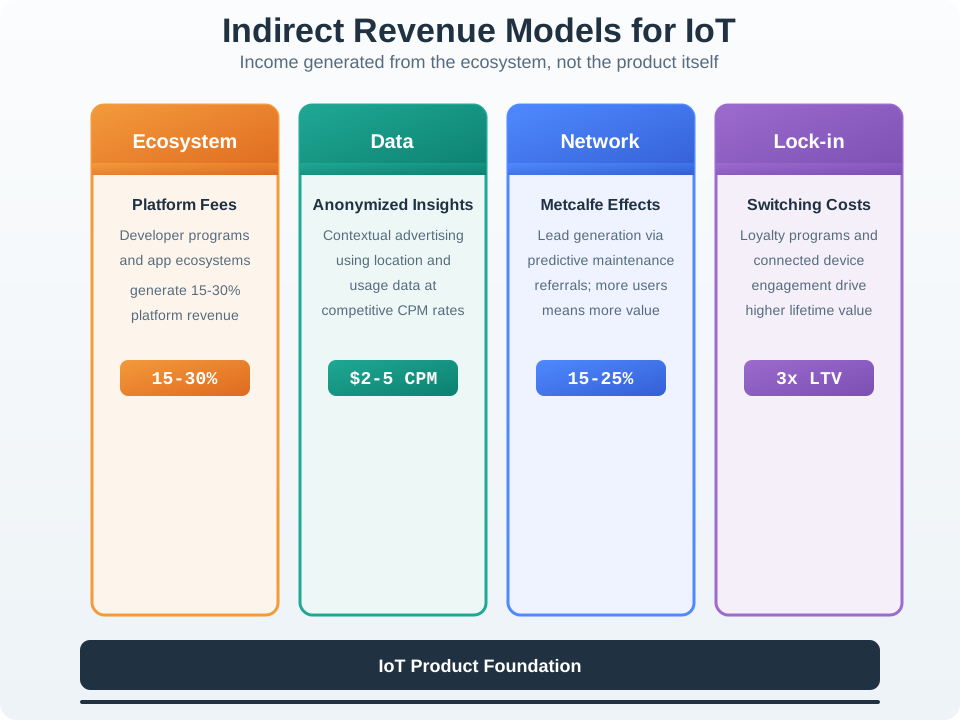
- That labelled limit reconnects the visual to indirect revenue models.
- The visual evidence for indirect revenue models sits in Figure: Alternative view.
- Certification Programs: Generate revenue from "Works with" certification, testing, and compliance services.
Major section
Indirect Revenue Models (continued)
In a smart-home ecosystem, the fee must be justified by real value: user reach, integration tooling, device certification, cloud infrastructure, support, and reduced partner acquisition cost.
- The defensible price depends on test depth, support burden, legal review, and the demand created by the platform.
- Training revenue is usually secondary; the larger value is reducing support load and increasing successful integrations.
- Indirect revenue models generate income not from the IoT product itself, but from the ecosystem, relationships, and behaviors it enables.
Deck summary
Key takeaways
That labelled check bounds iot data monetization pipeline from raw sensor data to revenue streams.
- Regularly audit anonymization to prevent re-identification attacks.
- The same data becomes more useful when processed into building efficiency benchmarks, HVAC failure predictions, and energy optimization recommendations.
- For many IoT companies, indirect revenue ultimately exceeds direct product sales.
- In a smart-home ecosystem, the fee must be justified by real value: user reach, integration tooling, device certification, cloud infrastructure, support, and reduced partner acquisition cost.
Retrieval practice
Recall check 1 of 2

Blueprint Bina says: answer from memory, then check your reasoning.
Q1A smart thermostat company has 2 million devices collecting hourly temperature, humidity, and energy usage data. A utility company wants to purchase aggregated insights for demand forecasting. Which data monetization approach best balances revenue potential with user privacy?
Show answer
Answer: B Correct!
Retrieval practice
Recall check 2 of 2

Blueprint Bina says: answer from memory, then check your reasoning.
Q2A connected agriculture platform collects soil moisture, temperature, and nutrient data from 500,000 farm sensors across 12 states. A seed company wants to purchase data to improve their crop yield models. Which data product would command the highest price?
Show answer
Answer: B Correct!
Print reference
Answers
Answer key.
- B · Correct!
- B · Correct!