Connected Product and Service Design · Study deck
Device Lifecycle Management: Review Stages
A connected product needs evidence from setup through retirement.
UX Uma is your guide for this deck.
After studying this chapter
Learning objectives
You will be able to:
- Trace lifecycle review path across its components and failure boundaries.
- Validate worked review: shared building device with a concrete scenario and pass criteria.
- Explain: Retire: revoke credentials, wipe local data, remove cloud records, recycle or dispose, and close the asset record.
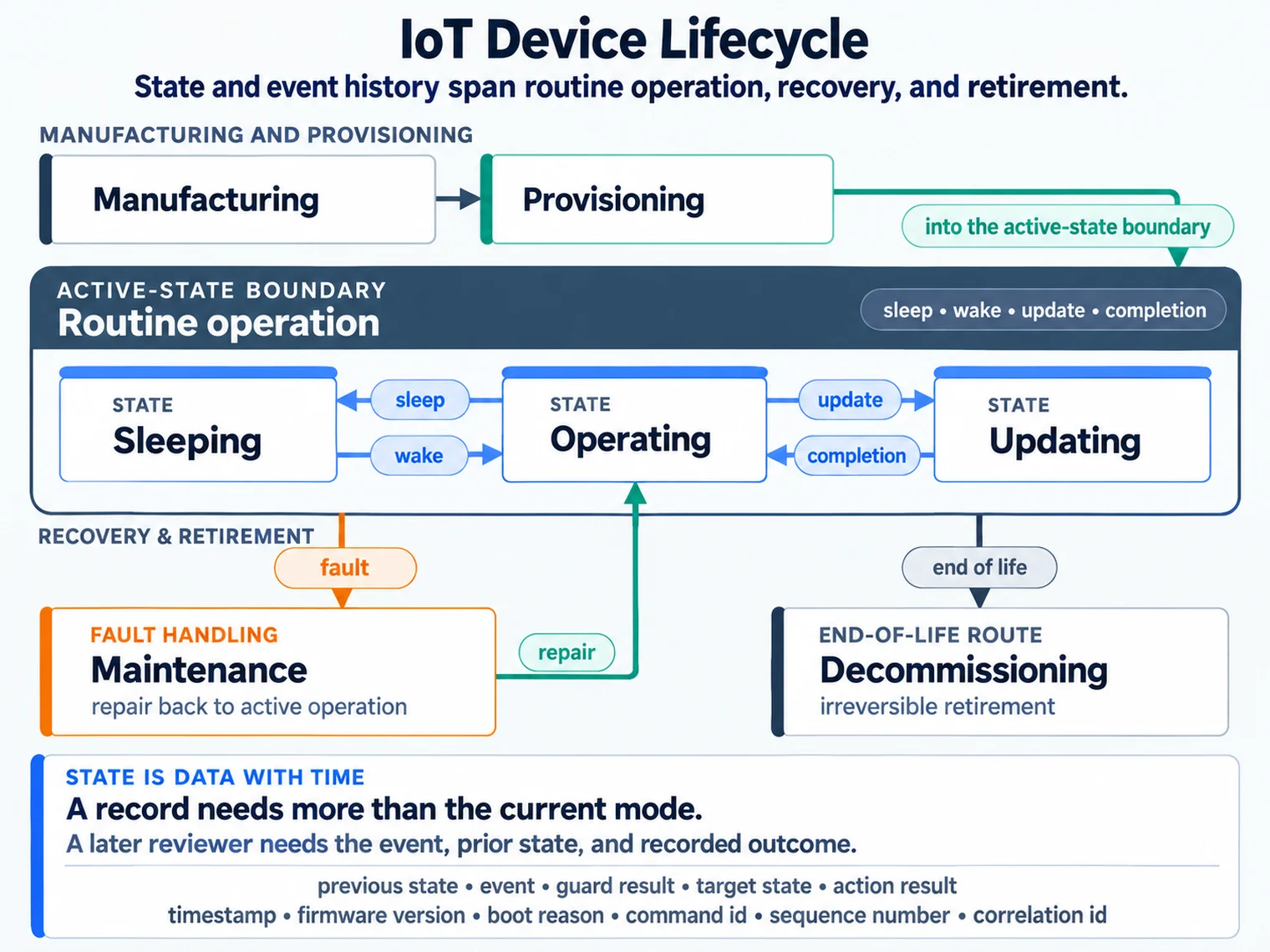
- Explain: Inside it, sleep and wake move the unit between sleeping and operating, while an update is another controlled transition.
Major section
Lifecycle Stages
The strongest planning output is not a long document.
- Inside it, sleep and wake move the unit between sleeping and operating, while an update is another controlled transition.
- A fault leads toward maintenance rather than being treated as normal operation; an end of life event leads toward decommissioning.
- Commissioning checks whether the device works in its real context.
Major section
Lifecycle Stages (continued)
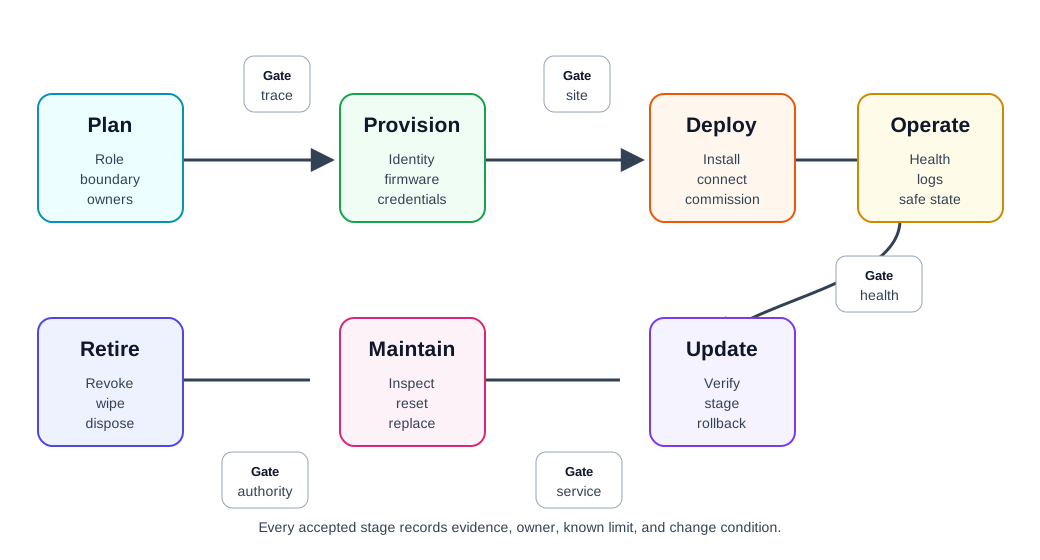
A reviewer needs to know which transition occurred, what evidence confirmed it, and whether the unit can safely return to service.
- Identity, ownership, firmware baseline, cloud or gateway enrollment, and reset behavior are also part of the lifecycle record.
- Manufacturing gives the unit an identifier, hardware revision, firmware baseline, and test history.
- They need their own lifecycle gate.
Major section
Lifecycle Stages (continued)
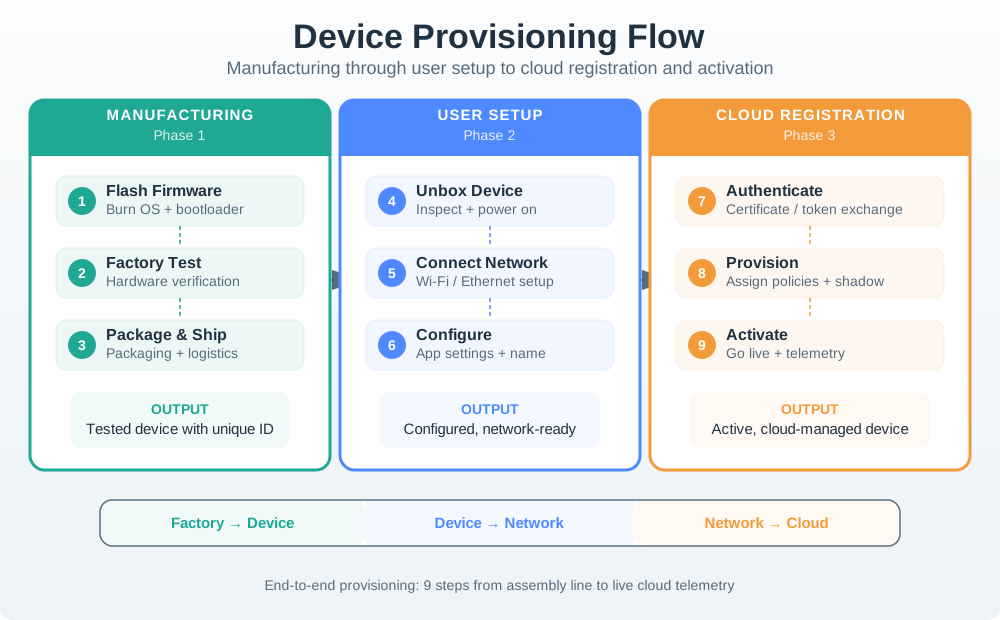
Cloud registration checks that the device can be authenticated and associated with the right owner before activation.
- The phase labels make the handoff visible: a factory test is not proof that field enrollment succeeded.
- Operation evidence shows whether the device can be trusted after deployment.
- Monitoring should distinguish healthy silence from a failure.
Major section
Lifecycle Stages (continued)
OTA and configuration updates change a deployed device.
- A device that passes bench testing can still fail after it is placed near metal, water, concrete, heat sources, moving machinery, human bodies, or sealed cabinets.
- Maintenance covers the recurring work needed to keep the device useful.
- A sealed device can still need cleaning, reset, update, replacement, or retirement.
Major section
Lifecycle Stages (continued)
A low-rate sensor may report rarely by design, but the system still needs a way to tell whether the device is asleep, offline, misconfigured, blocked, or retired.
- Connected devices often change owners, accounts, sites, gateways, or tenants.
- Ownership transfer is a lifecycle stage, not an edge case.
- Devices that cannot be safely transferred can create privacy, support, and security risks.
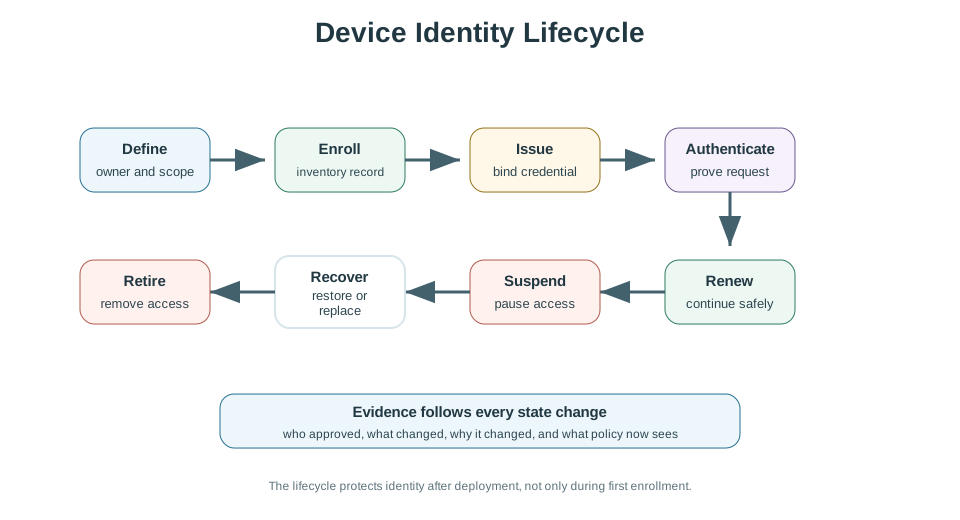
- Decommissioning removes a device from service without leaving active trust relationships behind.
Major section
OTA Update Review
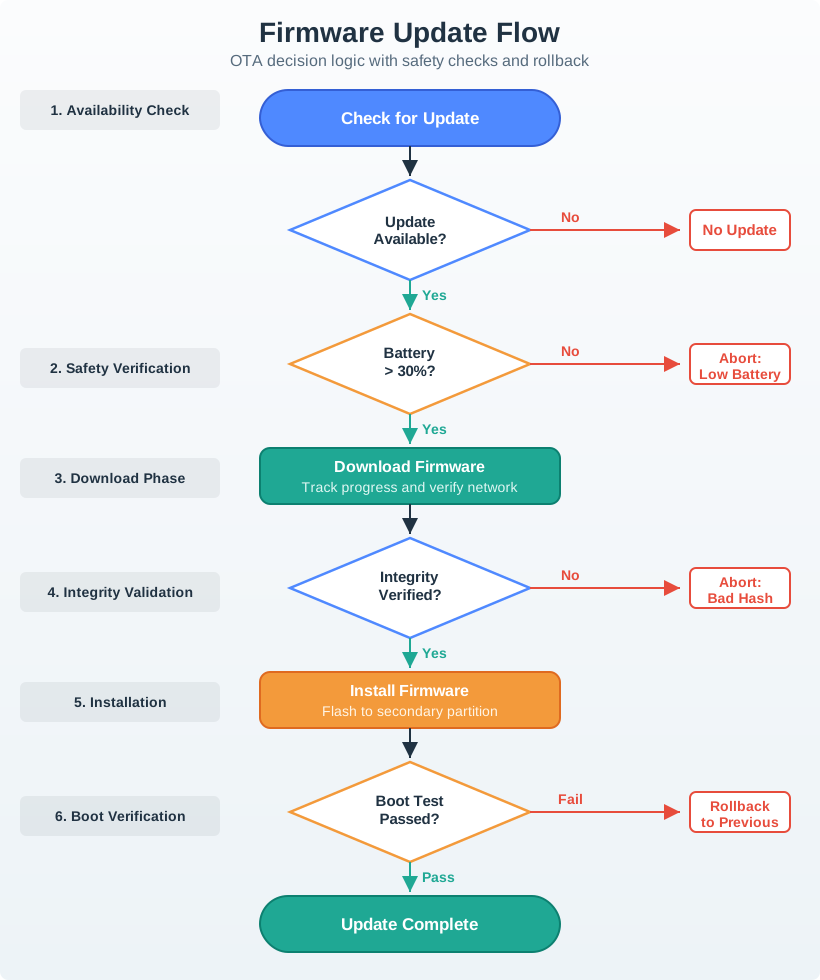
OTA update readiness is an evidence gate, not just a feature.
- Availability is only the first gate.
- Verification then checks the package before installation, and a boot test decides whether the new version can remain active.
- A staged rollout adds health checks so the team can halt a wider update after a small group.
Major section
Lifecycle Readiness Record
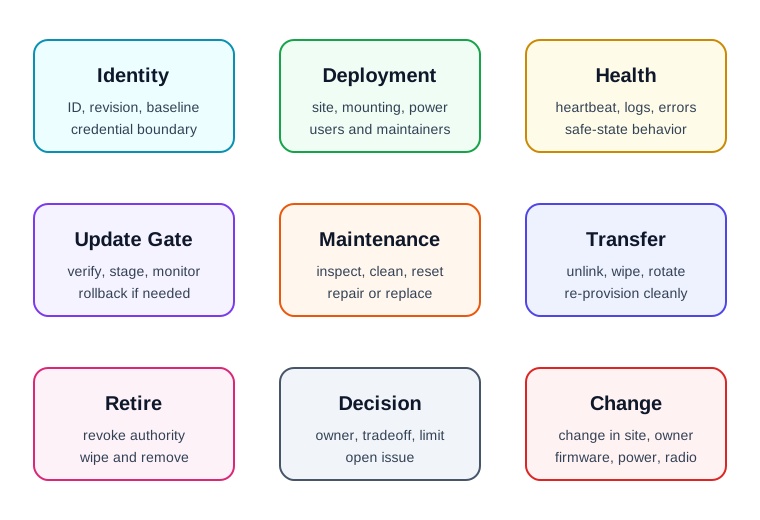
Health signals show whether it is still operating as expected, while the update gate records package checks and rollback confirmation.
- A later reviewer can then tell which evidence still applies and what change would require a fresh decision.
- Health signals: heartbeat, last-seen rule, battery or power state, local logs, error states, and safe-state behavior.
- Transfer path: unlink, wipe, re-provision, owner change, returned unit, and data boundary.
Major section
Worked Review: Outdoor Battery Sensor
A battery-powered outdoor sensor reports site conditions through a local gateway.
- Lifecycle evidence to request: Unit identity and firmware baseline are recorded before installation.
- The installation record includes mounting, enclosure orientation, signal path, and service access.
- Battery level is checked before any update attempt.
- OTA update path includes compatibility, staged rollout, verification, and rollback.
Major section
Worked Review: Outdoor Battery Sensor (continued)
Maintenance includes cleaning, battery replacement, seal inspection, and reset.
- Decommissioning revokes credentials and removes the unit from gateway and cloud inventory.
- A field sensor also needs evidence for update, maintenance, failure recovery, transfer, and retirement.
- Change condition: Rerun the review when the enclosure, mounting, antenna path, battery, gateway, firmware, update policy, reporting interval, maintenance access, or deployment environment changes.
Major section
Worked Review: Shared Building Device
A shared building device provides local status and accepts commands from authorized users.
- Lifecycle evidence to request: Device authority and user roles are separated from normal telemetry.
- Local status shows whether the device is online, offline, updating, or locked out.
- Maintenance instructions cover physical access, cleaning, logs, and support escalation.
Major section
Common Findings
The lifecycle record stops at installation and ignores operation, update, transfer, or retirement.
- Provisioning is treated as Wi-Fi setup only, with no identity or ownership evidence.
- The device has no clear way to distinguish sleeping, offline, failed, reset, and retired states.
- OTA readiness is claimed without power, storage, compatibility, staging, rollback, or post-update evidence.
Major section
Common Findings (continued)
Maintenance depends on physical access, tools, accounts, or permissions that are not recorded.
- Ownership transfer does not wipe local data or rotate credentials.
- Decommissioned devices can still reconnect or appear active in dashboards.
- Environmental evidence was collected on the bench instead of in representative deployment conditions.
- The record lacks an owner, known limit, open issue, or change condition.
Deck summary
Key takeaways
The strongest planning output is not a long document.
- A reviewer needs to know which transition occurred, what evidence confirmed it, and whether the unit can safely return to service.
- Cloud registration checks that the device can be authenticated and associated with the right owner before activation.
- OTA and configuration updates change a deployed device.
- A low-rate sensor may report rarely by design, but the system still needs a way to tell whether the device is asleep, offline, misconfigured, blocked, or retired.
Retrieval practice
Recall check

UX Uma says: answer from memory, then check your reasoning.
Q1A device record shows successful first-day installation, but it does not explain firmware rollback, low-power update deferral, ownership transfer, or credential revocation. How should reviewers handle the device lifecycle plan?
Show answer
Answer: A A lifecycle review must cover the full device journey from provisioning through retirement, with evidence for update recovery and authority removal.
Print reference
Answers
Answer key.
- A · A lifecycle review must cover the full device journey from provisioning through retirement, with evidence for update recovery and authority removal.