Cloud, SDN & Production Architectures · Study deck
Cloud Platforms: Message Paths and Capacity
A sensor message crosses more than one cloud service before it creates value.
Cloud Clara is your guide for this deck.

After studying this chapter
Learning objectives
You will be able to:
- Explain: For an IoT lab or private deployment, a DevStack installation can prove the workflow at small scale: create a key pair, create a security group, launch an instance, attach networking, and communicate with the instance.
- Explain: An IoT team using that stack still needs the same release record as any other platform: who owns security groups, key pairs, images, networks, storage volumes, quotas, backups, usage records, and incident response.
- Explain: A platform choice often starts with a messy stream of device messages: some are alarms, some are routine samples, some drive dashboards, and some feed batch analysis.
Major section
Start With the Message Path
A burst of routine readings must not delay an alarm, and a lost worker must not erase the only copy of work still due.
- A broker is a service that directs messages from senders to interested receivers.
- A queue is a waiting line for work.
- A stream is an ordered history that can be read again.
Major section
Start With the Message Path (continued)
An available platform does not prove a correct application.
- Old data, wrong identity, weak access rules, or a harmful receiver action can still produce failure.
- Under the Hood explains partitioning, order, duplicate work, saved state, pressure limits, identity, and how managed services divide responsibility with the customer.
- A platform choice often starts with a messy stream of device messages: some are alarms, some are routine samples, some drive dashboards, and some feed batch analysis.
Major section
Minimum Viable Understanding
A platform decision is a responsibility decision.: Decide who operates device identity, ingestion, routing, state, storage, monitoring, and updates.
- Brokers, queues, and streams are not interchangeable.: Use each for the role it is built to support.
- MQTT QoS is not end-to-end reliability by itself.: It describes delivery between MQTT clients and brokers; downstream processing still needs idempotency and replay rules.
- Capacity records matter more than product labels.: Check connections, message rate, payload size, burst shape, retained state, replay window, and operational ownership.
Major section
Platform Responsibility Map
Some teams consume those capabilities as managed services.
- The architecture check should focus on the responsibilities, not on brand names.
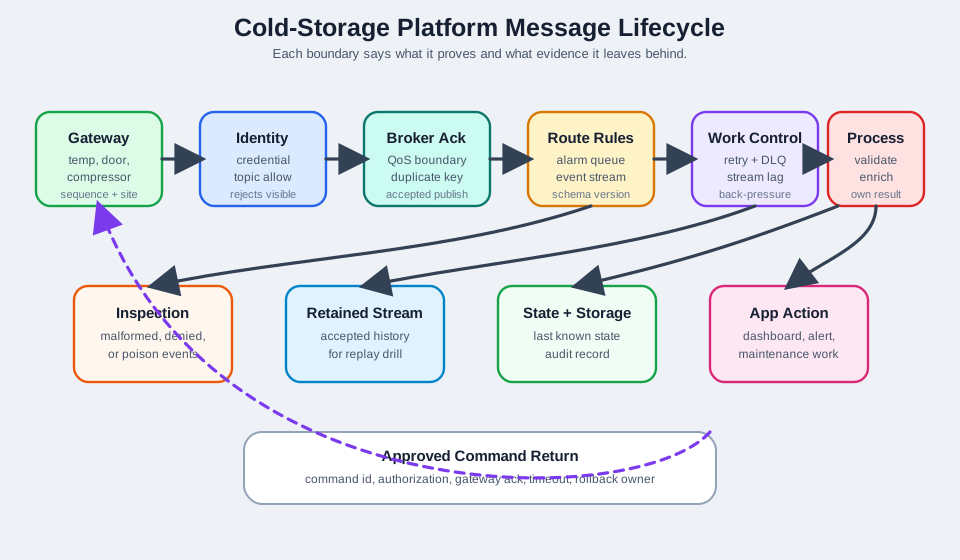
- The overview depth layer shows the responsibility map that connects field-side devices and gateways to identity, ingestion, routing, observability, state, storage, and controlled return paths.
- The review record should explain why that operating shape fits the workload.
Major section
Broker, Queue, Or Stream?
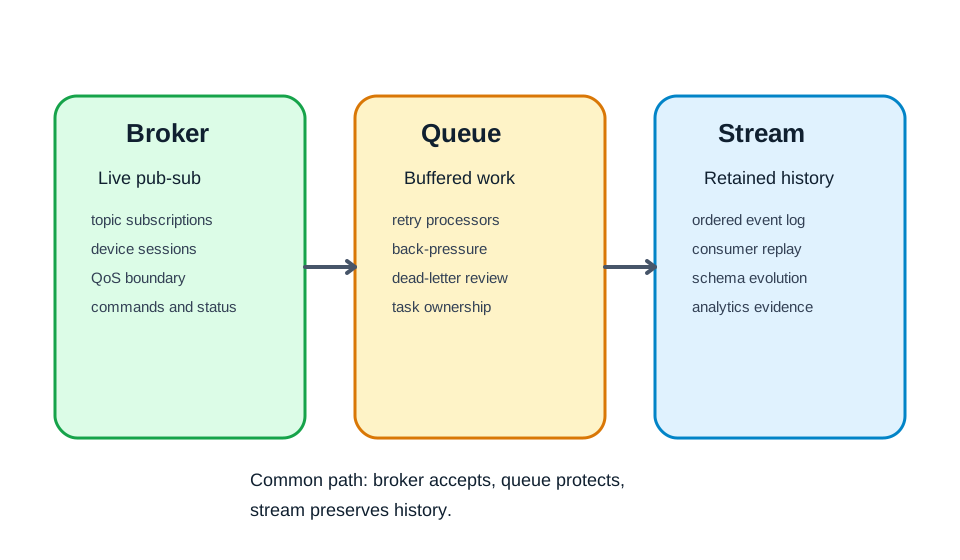
IoT systems often use several message technologies at once.
- A device-facing broker is not the same as a processing queue, and neither is the same as a replayable event stream.
- Validation record: session behavior, QoS use, topic naming, authentication, authorization, retained messages, and offline handling.
Major section
Message Lifecycle
A message lifecycle diagram should show more than "device sends data to cloud." It should expose the control points where errors, duplicates, routing mistakes, and visibility gaps occur.
- This supports message lifecycle.
Major section
Managed or Self-Managed Platforms
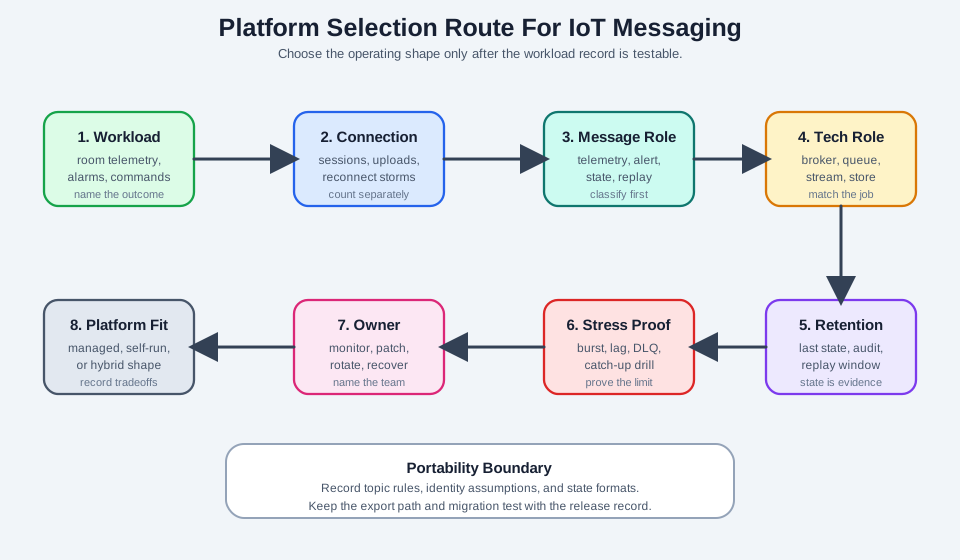
The durable question is not "managed or self-hosted?" The question is "which operating responsibilities should this team own?".
- Useful when the team needs deep control over broker behavior, site-local operation, custom protocols, isolated environments, or consistent deployment across many private sites.
- Useful when local brokers protect site operation while cloud services handle fleet dashboards, long-term analytics, and cross-site coordination.
- That proof should not be mistaken for production readiness.
Major section
Managed or Self-Managed Platforms (continued)
OpenStack is a common example of a self-managed IaaS control plane.
- The names are not the design goal; the design goal is still the responsibility boundary.
- An IoT team using that stack still needs the same release record as any other platform: who owns security groups, key pairs, images, networks, storage volumes, quotas, backups, usage records, and incident response.
- For an IoT lab or private deployment, a DevStack installation can prove the workflow at small scale: create a key pair, create a security group, launch an instance, attach networking, and communicate with the instance.
Major section
QoS And Reliability
MQTT QoS is useful, but it is not the whole reliability design.
- Fit: frequent telemetry where occasional loss is acceptable and newer readings supersede older readings.
- Extra controls: sequence numbers or sampling-quality indicators when loss should be visible.
- Fit: alerts, state changes, and commands where delivery matters and duplicates can be handled.
Deck summary
Key takeaways
A burst of routine readings must not delay an alarm, and a lost worker must not erase the only copy of work still due.
- An available platform does not prove a correct application.
- A platform decision is a responsibility decision.: Decide who operates device identity, ingestion, routing, state, storage, monitoring, and updates.
- Some teams consume those capabilities as managed services.
- IoT systems often use several message technologies at once.
Retrieval practice
Recall check

Cloud Clara says: answer from memory, then check your reasoning.
Q1A platform accepts telemetry but loses events during downstream outages. Which responsibility should the team examine?
Show answer
Answer: A The responsibility map assigns buffering to retry storms and downstream interruptions.
Q2An analytics team needs ordered event history for replay. Which role best matches that requirement?
Show answer
Answer: D The section distinguishes replayable ordered history from live routing and queued work.
Print reference
Answers
Answer key.
- A · The responsibility map assigns buffering to retry storms and downstream interruptions.
- D · The section distinguishes replayable ordered history from live routing and queued work.