Cloud, SDN & Production Architectures · Study deck
Cloud Deployment Models: Ownership and Risk
A cloud model sets who owns the service, hardware, and risk.
Cloud Clara is your guide for this deck.

After studying this chapter
Learning objectives
You will be able to:
- Explain: That observation connects this visual to the chapter's running narrative: use it to justify the next design decision and to record what evidence would confirm it in operation.
- Explain: Edge is not one of the four classic cloud deployment models, but it is often the first boundary an IoT architect must decide.
- Explain: The architecture must define who operates the platform, who approves schema changes, how tenants are isolated, and how disputed data is corrected.
- Explain: The edge should not be forced to store or analyze years of data when central systems can do that better.
Major section
Start With the Boundary That Must Hold
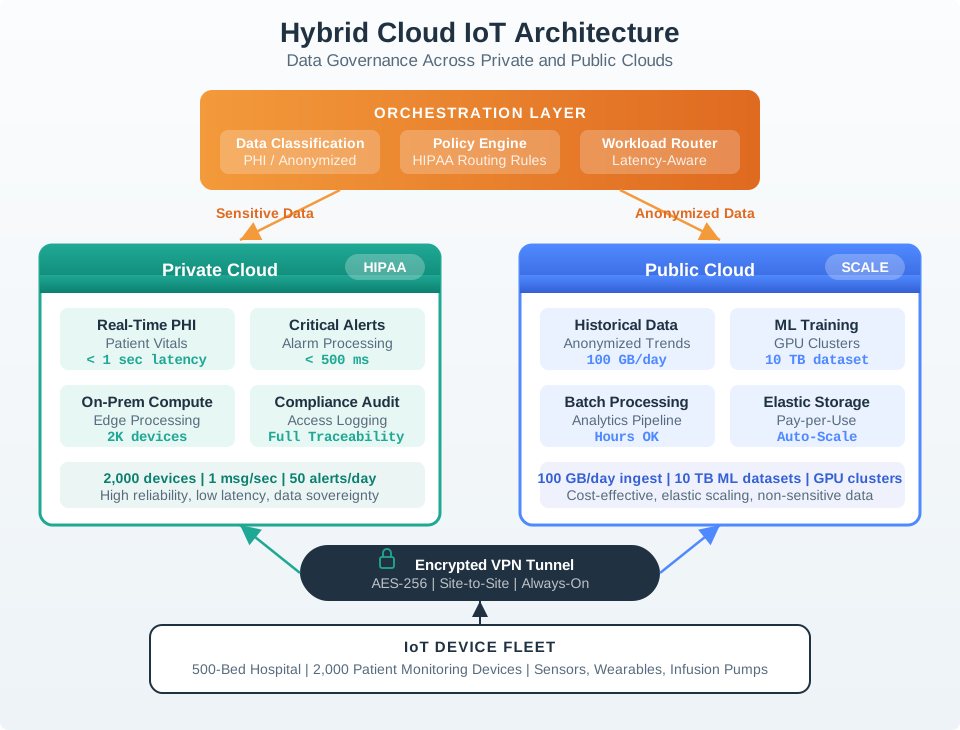
A private service may give the hospital more direct control.
- Neither choice is safe until ownership, access, outage, and exit plans are clear.
- The architect should begin with the data and decision.
- Include how the team will leave the setting without losing needed records or breaking the service.
- Each group sees a different risk.
Major section
Start With the Boundary That Must Hold (continued)
The best setting is the one that meets the stated need with risks the team can own and test.
- A model name should never replace this shared decision.
- A shared setting can still isolate work well.
- A private setting can still be poorly run.
- A contract may support a plan.
Major section
Start With the Boundary That Must Hold (continued)
A shared outside service may grow quickly and reduce local work.
- An open item needs an owner and date.
- The labels public, private, community, and hybrid do not prove control by themselves.
- Practitioner records the boundary choices.
- A deployment model is not a brand of cloud.
Major section
Minimum Viable Understanding
Public cloud fits elastic ingestion, dashboards, storage, and analytics when data can leave the site boundary under approved controls.
- Private cloud fits workloads that need site control, strict isolation, local operations, or predictable local latency.
- Community cloud fits a governed group that shares infrastructure, standards, and operating rules.
- Edge placement is part of the same decision even though edge is not itself a cloud deployment model.
Major section
Deployment Models Are Boundary Choices
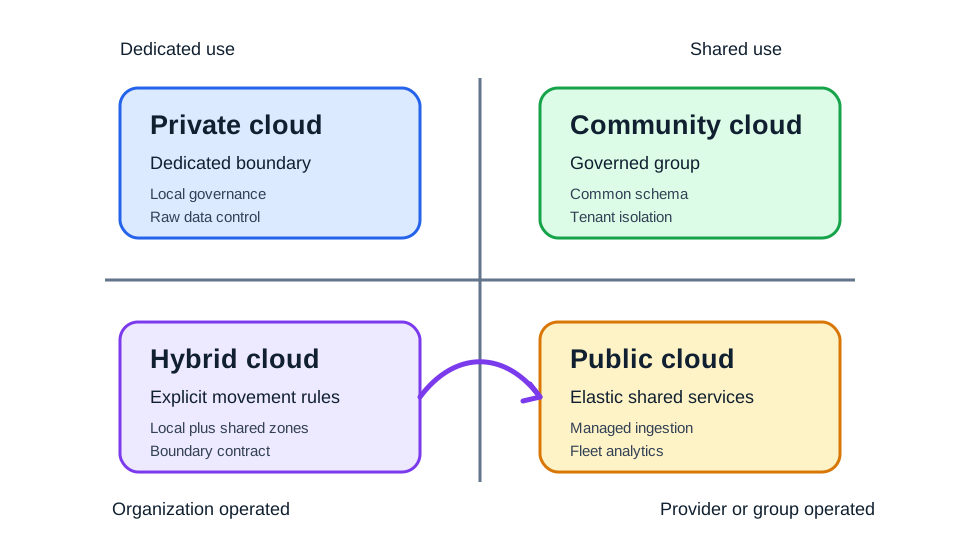
The resulting visual statement is: Deployment models separate ownership, sharing, and operating control before any provider choice is made.
- Public cloud is provider-operated infrastructure shared across many customers.
- Encryption and identity controls are necessary, but they do not replace a placement decision.
- Community cloud is shared infrastructure for organizations with aligned requirements and common governance.
Major section
Deployment Models Are Boundary Choices (continued)
Private cloud is dedicated infrastructure operated for one organization, either on site or in a hosted environment.
- In IoT, this can appear in municipal services, research networks, utility collaborations, sector-specific testbeds, or shared infrastructure across related agencies.
- Community cloud fails when the governance model is vague.
- The architecture must define who operates the platform, who approves schema changes, how tenants are isolated, and how disputed data is corrected.
Major section
The Placement Route
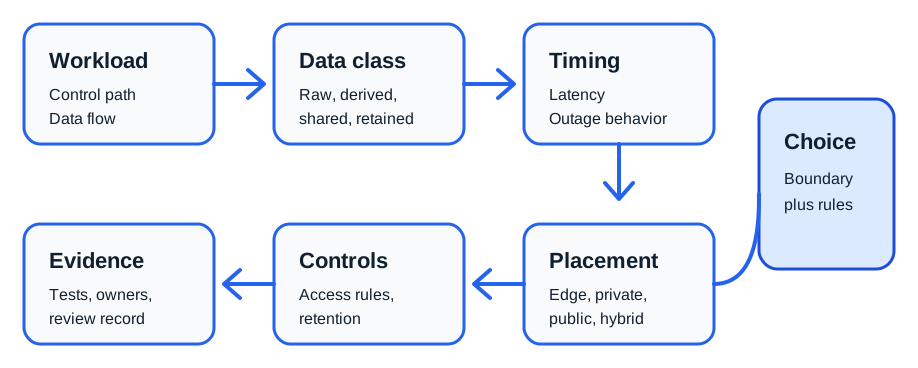
Workload placement should follow evidence.
- That observation connects this visual to the chapter's running narrative: use it to justify the next design decision and to record what evidence would confirm it in operation.
- The route closes only when a short validation record preserves the assumptions, tests, failure behaviour, and accountable owners.
Major section
Edge Is The First Deployment Boundary
Edge is not one of the four classic cloud deployment models, but it is often the first boundary an IoT architect must decide.
- A deployment model that ignores the edge usually becomes unreliable or expensive.
- The cloud should not be in the critical path for a decision that must complete faster than the network can reliably support.
- The edge should not be forced to store or analyze years of data when central systems can do that better.
Deck summary
Key takeaways
A private service may give the hospital more direct control.
- The best setting is the one that meets the stated need with risks the team can own and test.
- A shared outside service may grow quickly and reduce local work.
- Public cloud fits elastic ingestion, dashboards, storage, and analytics when data can leave the site boundary under approved controls.
- The resulting visual statement is: Deployment models separate ownership, sharing, and operating control before any provider choice is made.
Retrieval practice
Recall check

Cloud Clara says: answer from memory, then check your reasoning.
Q1Public, private, community, and hybrid cloud deployment models are best understood as what kind of choice?
Show answer
Answer: A Cloud deployment models are boundary choices about who owns, shares, and governs the infrastructure, not a price ranking.
Print reference
Answers
Answer key.
- A · Cloud deployment models are boundary choices about who owns, shares, and governs the infrastructure, not a price ranking.