Applications & Use Cases · Study deck

Smart Home: Design, Energy, and Reliability

A household has chosen devices that can talk to one another, but the first evening scene still fails when the internet drops and wakes people when one sensor is wrong.

Blueprint Bina is your guide for this deck.

applicationdomainssmart
Blueprint Bina, the module guide, in a scene from this chapter.
iotclass.org

After studying this chapter

Learning objectives

You will be able to:

  • Explain: Homes in extreme climates (Minnesota winters, Arizona summers) with poor insulation may save 25-30%, while homes in mild climates (San Diego, Honolulu) with newer construction may save only 8-12%.
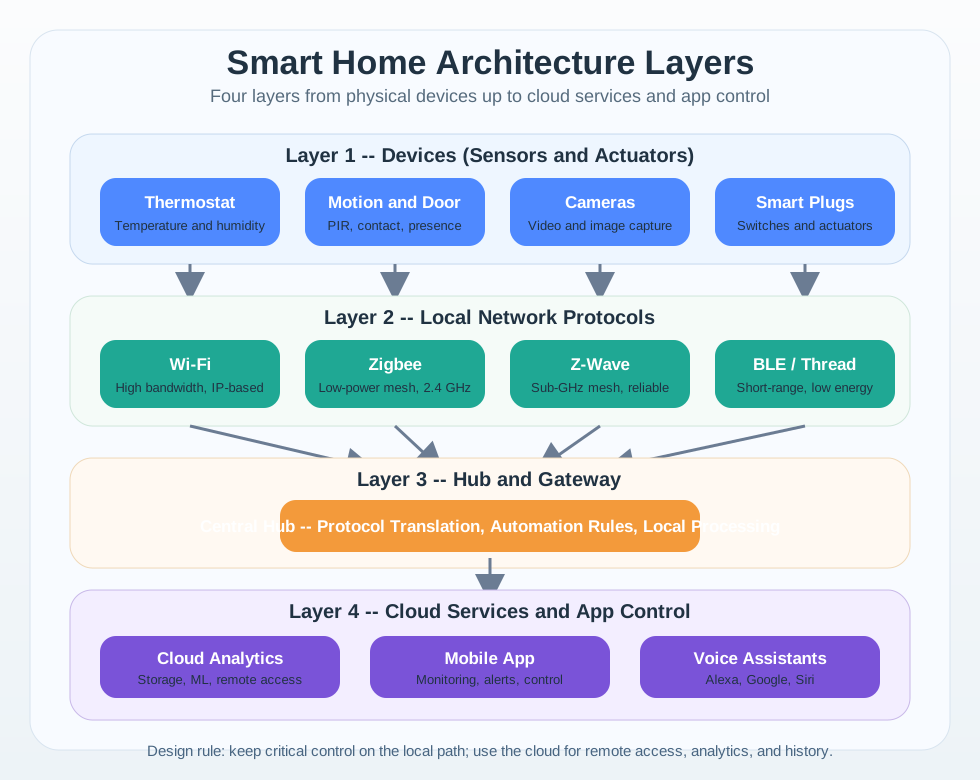
  • Explain: A well-designed smart home should have all critical automations (lighting, locks, thermostat schedules) running locally, with cloud used only for remote access and voice assistant NLU processing.
  • Explain: When setting up a smart home, you must choose between hub-based systems (SmartThings, Hubitat, Home Assistant) and cloud-only systems (Ring, Wyze, TP-Link Kasa).
  • design a smart-home scene with triggers, actions, and fallback
iotclass.org

Major section

Incremental Examples
The main review is schedule, manual override, and energy use.

  • Intermediate Example:: A heating scene uses occupancy and temperature.
  • It must avoid wasting energy when a room is empty and avoid discomfort when a sensor is stale.
  • It needs false-alarm handling, privacy boundaries, local fallback, and clear user control.
iotclass.org

Major section

Smart Home Energy ROI

That labelled limit reconnects the visual to smart home energy roi.

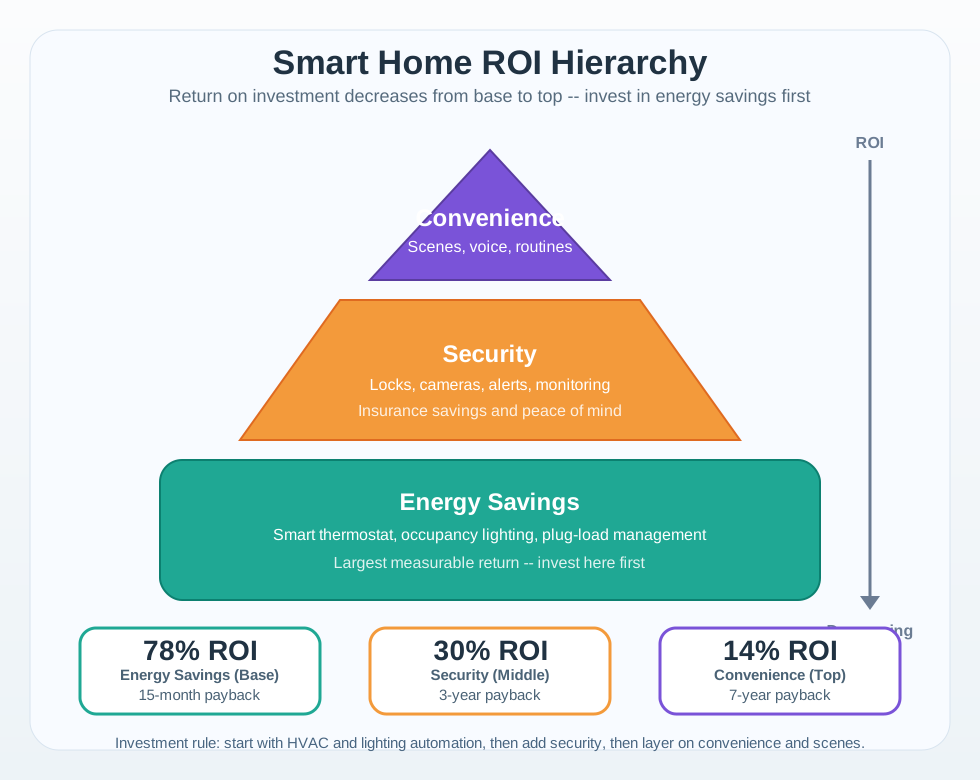
  • Key Insight: The smart thermostat alone delivers 54% of total savings, making it the highest-ROI starting point for most households.

Numbers to remember

54%Key Insight: The smart thermostat alone delivers 54% of total savings
A hub-and-bulb starter set illustrates the investment boundary in the ROI exercise: the controllable load is only part of the cost; the hub that coordinates devices and automation rules also belongs in the system total. Photo: Sho Hashimoto, CC BY 2.0
iotclass.org

Major section

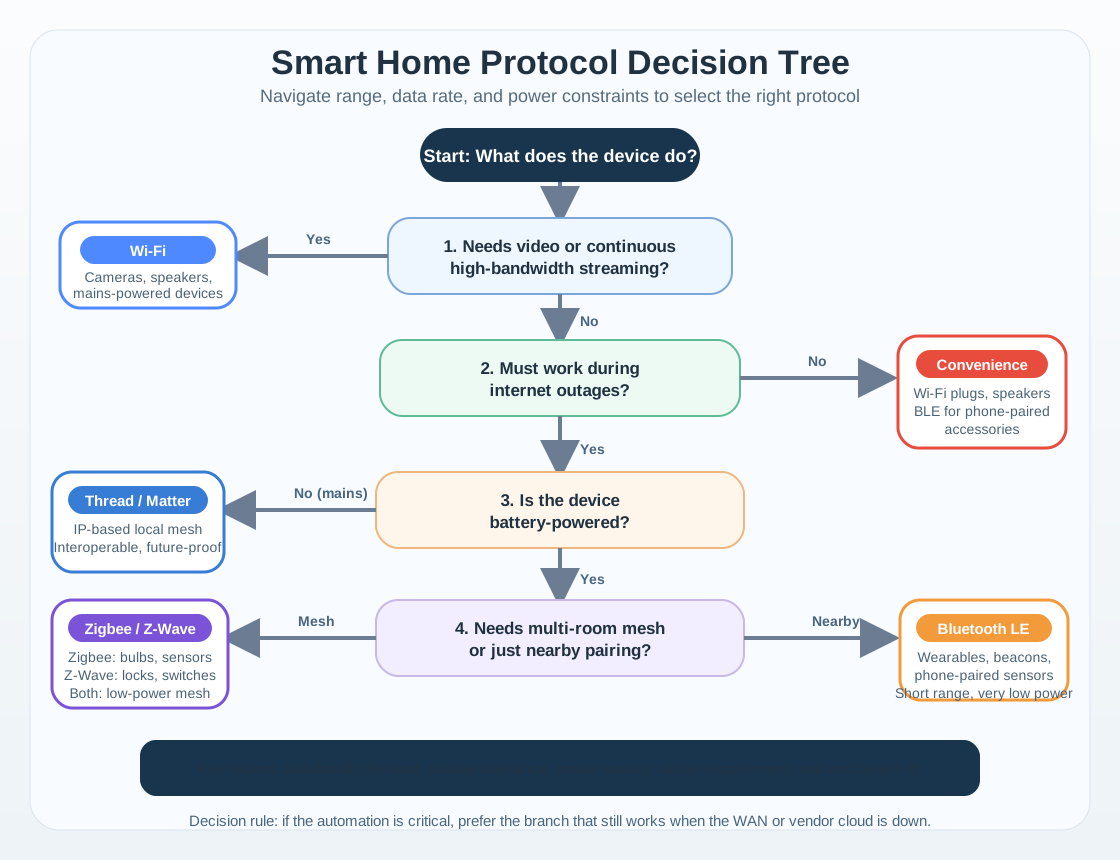
Smart Home Protocol Comparison

Matter: range and power depend on the underlying transport, 50-500 ms latency, low cloud dependency with local-first control.

  • Cloud devices have 98% uptime; local devices achieve 99.5%+.

Numbers to remember

50-500 msand power depend on the underlying transport, 50-500 ms latency
98%Cloud devices have 98% uptime
99.5%Cloud devices have 98% uptime; local devices achieve 99.5%+.
Smart Home Protocol Selection Decision Tree
iotclass.org

Major section

Smart Homes Can Work Offline

The Belief: If the internet goes down, the entire smart home stops working.

  • The Reality: It depends entirely on protocol and platform choice.
  • Thread/Matter devices are designed for local-first operation by default.
  • A well-designed smart home should have all critical automations (lighting, locks, thermostat schedules) running locally, with cloud used only for remote access and voice assistant NLU processing.
iotclass.org

Major section

Climate Limits Savings

The Reality: The 18% figure is an average across US households.

  • Savings vary dramatically by climate zone, home construction, and existing HVAC efficiency.
  • Homes in extreme climates (Minnesota winters, Arizona summers) with poor insulation may save 25-30%, while homes in mild climates (San Diego, Honolulu) with newer construction may save only 8-12%.
  • The ROI calculation must account for local energy costs ($0.10/kWh in Louisiana vs. $0.30/kWh in Connecticut) and heating degree days.

Numbers to remember

18%The Reality: The 18% figure is an average across US households.
25-30%Arizona summers) with poor insulation may save 25-30%
iotclass.org

Major section

Hub vs Cloud Smart Homes

When setting up a smart home, you must choose between hub-based systems (SmartThings, Hubitat, Home Assistant) and cloud-only systems (Ring, Wyze, TP-Link Kasa).

  • This decision affects reliability, privacy, cost, and complexity.
  • Internet outage: hub-based systems keep local automations working; cloud-only systems may stop working.
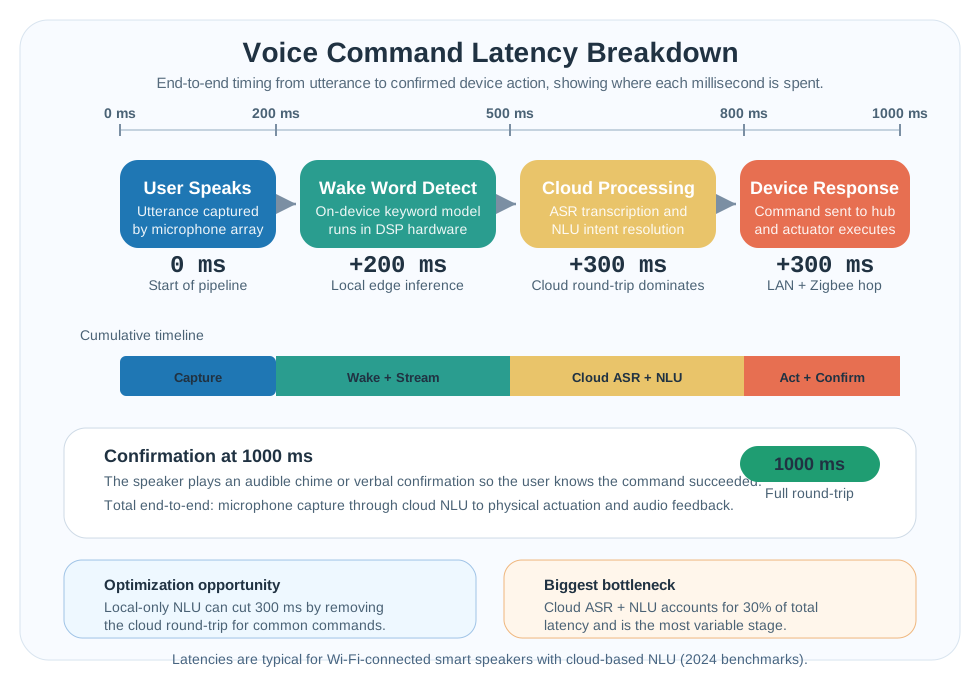
  • Response time: hub-based systems usually respond in 100-500 ms through local processing; cloud-only systems often need 500-2000 ms for cloud round trips.

Numbers to remember

500-2000 mscloud-only systems often need 500-2000 ms for cloud round trips.
iotclass.org

Major section

Hub vs Cloud Smart Homes (continued)

Privacy: hub-based systems can keep data local unless shared; cloud-only systems send more data to the vendor cloud.

  • Setup complexity: hub-based systems require moderate hub setup and pairing; cloud-only systems are usually app-first and easier to start.
  • Device compatibility: hub-based systems can span Zigbee, Z-Wave, and Wi-Fi; cloud-only systems are more limited to a vendor ecosystem.
  • Monthly cost: hub-based systems are often $0 after hub purchase; cloud-only systems often charge $3-10/month for features.
  • Technical knowledge: hub-based systems need intermediate routing and IP comfort; cloud-only systems are beginner-friendly.
iotclass.org

Deck summary

Key takeaways

The main review is schedule, manual override, and energy use.

  • That labelled limit reconnects the visual to smart home energy roi.
  • Matter: range and power depend on the underlying transport, 50-500 ms latency, low cloud dependency with local-first control.
  • The Belief: If the internet goes down, the entire smart home stops working.
  • The Reality: The 18% figure is an average across US households.
iotclass.org

Retrieval practice

Recall check 1 of 4

Blueprint Bina says: answer from memory, then check your reasoning.

Q1A homeowner spends $2,400/year on electricity with HVAC at 45% ($1,080), plug loads at 25% ($600), and lighting at 15% ($360). They install a $249 smart thermostat that reduces HVAC costs by 18%. What is the first-year ROI on the thermostat alone?

AAbout 18% -- matching the energy savings percentage
BAbout 78% -- saving $194/year on a $249 investment
CAbout 140% -- smart lighting has a higher ROI
DAbout 8% -- barely better than a savings account
Show answer

Answer: B The thermostat reduces HVAC costs by 18% of $1,080 = $194/year.

iotclass.org

Retrieval practice

Recall check 2 of 4

Blueprint Bina says: answer from memory, then check your reasoning.

Q2A "Good Night" scene controls 16 Zigbee devices and 6 Wi-Fi cloud devices. If each Zigbee device has 99.5% uptime and each Wi-Fi device has 98% uptime, what is the approximate overall scene success rate?

A99.5% - the average of both protocols
B98.0% - limited by the weakest protocol
C81.8% - the product of all individual reliabilities
D95.0% - a weighted average based on device count
Show answer

Answer: C

Q3A security system generates 18 false alarms per week. After implementing pet-immune sensors (-45%) and sensor relocation (-20%), how many false alarms remain?

A6.3 per week
B7.9 per week
C9.9 per week
D11.7 per week
Show answer

Answer: B

iotclass.org

Retrieval practice

Recall check 3 of 4

Blueprint Bina says: answer from memory, then check your reasoning.

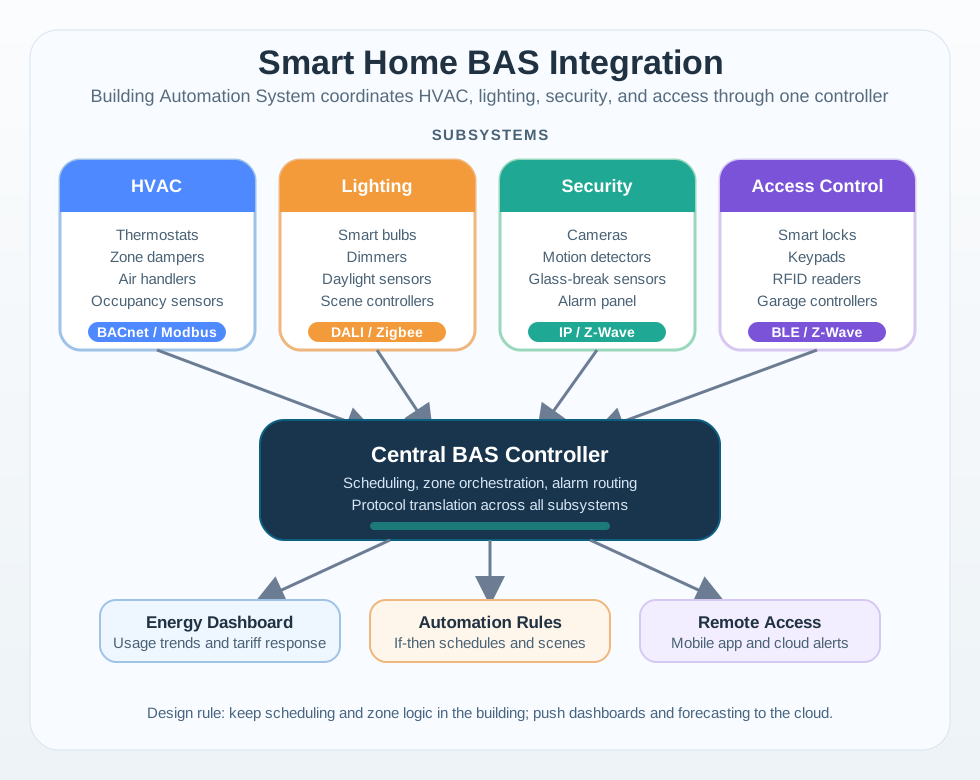
Q4For commercial building HVAC optimization, why do buildings with variable occupancy (like universities) see the highest energy savings from occupancy sensors?

AUniversities have older HVAC systems that waste more energy
BPeak-average occupancy gaps create more set-back zones
CStudents generate more body heat than office workers
DUniversity buildings have more windows for natural ventilation
Show answer

Answer: B B) The gap between peak and average occupancy creates more zones that can be set back Buildings with variable occupancy have the widest gap between "designed-for" capacity and actual usage at any given time.

iotclass.org

Retrieval practice

Recall check 4 of 4

Blueprint Bina says: answer from memory, then check your reasoning.

Q5Complete the smart-home scene reliability calculator:

Asuccess = 1.0
Bsuccess = len(device_reliabilities)
Csuccess = max(device_reliabilities)
Dsuccess = sum(device_reliabilities)
Show answer

Answer: A Scene reliability is the product of each required device's reliability.

Q6A smart home security system generates 15 false motion alerts per week, mostly from pets and sunlight changes. The homeowner starts ignoring all alerts. What is the most effective multi-layer approach to reduce false alarms?

AReplace all motion sensors with cameras and use manual video review for every event
BIncrease the motion sensor sensitivity threshold to only trigger on large movements
CDisable motion detection during daytime hours when most false alarms occur
DLayer pet-immune PIR filtering, environmental rules, and AI classification
Show answer

Answer: D see answers page

iotclass.org

Print reference

Answers 1 of 2

Answer key.

  1. B · The thermostat reduces HVAC costs by 18% of $1,080 = $194/year.
  2. C
  3. B
  4. B · B) The gap between peak and average occupancy creates more zones that can be set back Buildings with variable occupancy have the widest gap between "designed-for" capacity and actual usage at any given time.
  5. A · Scene reliability is the product of each required device's reliability.
iotclass.org

Print reference

Answers 2 of 2

Answer key.

  1. D · Effective false alarm reduction requires layered filtering: hardware-level pet-immune PIR sensors reject small heat signatures, environmental logic rules filter known false-positive patterns (rapid sunlight changes, HVAC airflow), and AI classification can distinguish human movement patterns from pets or environmental noise.
iotclass.org