Applications & Use Cases · Study deck
Retail IoT: Loss Prevention and Operations
A tagged item leaves through the wrong door as the freezer temperature rises.
Blueprint Bina is your guide for this deck.

After studying this chapter
Learning objectives
You will be able to:
- Explain: Privacy by Design -> Customer Trust: Transparent data practices such as opt-in and clear signage increase IoT feature adoption by 2-3x versus stealth tracking.
- Explain: Beacon Notifications -> Notification Fatigue: More than 3 push notifications per visit can cause 40% app uninstall rates; personalization plus cool-down periods prevent fatigue.
- Explain: Metal and liquid interference is often dismissed as "not our problem" or discovered only after tens of thousands of tags have been purchased.
- Explain: Liquid-filled products: Absorb 2.4 GHz RF energy (water is lossy at UHF frequencies).
Major section
Energy Management in Retail
IoT-based energy management can reduce this by 20-40%.
- Retail stores consume 50-100 kWh per square meter annually.
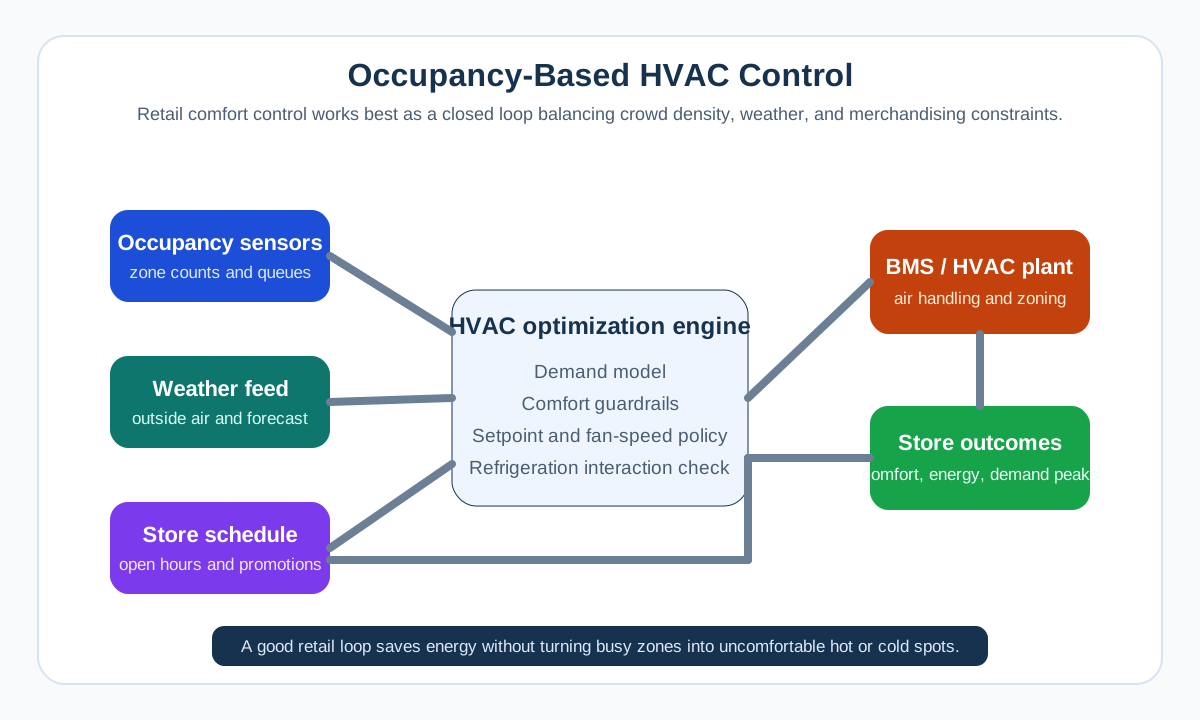
- That labelled check bounds occupancy-based hvac control.
Major section
Common Misconceptions About Retail IoT
Smart shelves reduce count frequency, not eliminate it entirely.
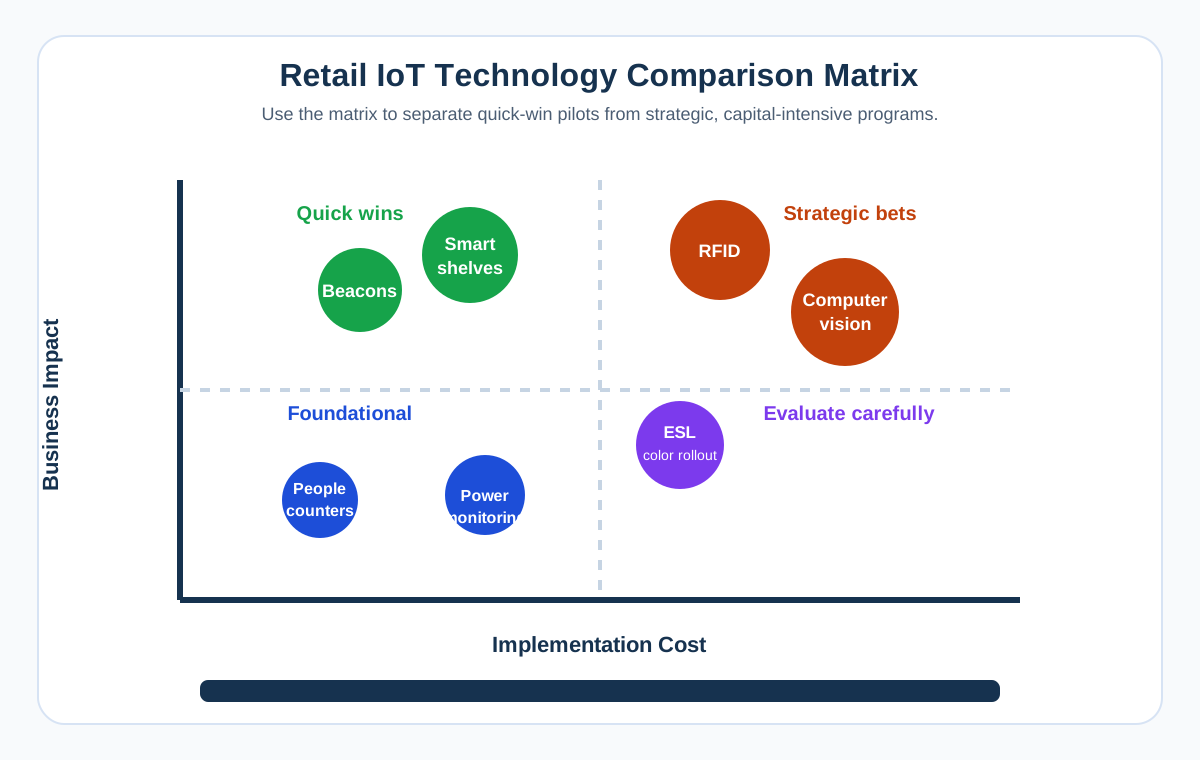
- Tagging a $0.75 can of beans adds 4-10% to product cost, which is unacceptable for thin-margin grocery.
- RFID adoption is highest in apparel (where margins are 50-60%) and electronics (where loss prevention justifies the cost).
- RFID-enabled stores still perform quarterly full-store inventory audits, though these now take 30 minutes instead of 8 hours.
Major section
RFID Metal/Liquid Issues
Metal and liquid interference is often dismissed as "not our problem" or discovered only after tens of thousands of tags have been purchased.
- Liquid-filled products: Absorb 2.4 GHz RF energy (water is lossy at UHF frequencies).
- Key Takeaway: RFID is not a universal solution.
- Success requires material-aware tag selection, strategic placement, and realistic budgeting for specialized tags.
Major section
Concept Relationships: Smart Retail
Beacon Notifications -> Notification Fatigue: More than 3 push notifications per visit can cause 40% app uninstall rates; personalization plus cool-down periods prevent fatigue.
- Self-Checkout Automation -> Transaction Time: RFID-enabled basket scanning reduces checkout time by 40-60%, improving customer experience and throughput.
- Heat Maps + Journey Analysis -> Conversion Rate: Foot-traffic analysis improves conversion 15-25% by optimizing placement and staffing.
- Privacy by Design -> Customer Trust: Transparent data practices such as opt-in and clear signage increase IoT feature adoption by 2-3x versus stealth tracking.
Deck summary
Key takeaways
IoT-based energy management can reduce this by 20-40%.
- Smart shelves reduce count frequency, not eliminate it entirely.
- Metal and liquid interference is often dismissed as "not our problem" or discovered only after tens of thousands of tags have been purchased.
- Beacon Notifications -> Notification Fatigue: More than 3 push notifications per visit can cause 40% app uninstall rates; personalization plus cool-down periods prevent fatigue.
Retrieval practice
Recall check 1 of 4

Blueprint Bina says: answer from memory, then check your reasoning.
Q1Place each stock-loop responsibility where it lives so you can trace whether an empty shelf was missed by sensing, store integration, or replenishment action.
Show answer
Answer: A A useful smart-shelf system traces product-aware sensing through the store integration boundary to a replenishment decision, rather than treating every radio event as an action.
Retrieval practice
Recall check 2 of 4

Blueprint Bina says: answer from memory, then check your reasoning.
Q2A mid-sized grocery chain wants to reduce its 8% out-of-stock rate. They are considering deploying smart shelf sensors across all 12,000 SKUs. A pilot on high-velocity items (top 20% of SKUs) showed a 5% sales lift. What is the most cost-effective deployment strategy?
Show answer
Answer: C Focusing on high-velocity items first follows the retail IoT best practice of starting where impact is greatest.
Retrieval practice
Recall check 3 of 4

Blueprint Bina says: answer from memory, then check your reasoning.
Q3A grocery store has 8,000 SKUs with an 8% out-of-stock rate. If each stockout costs $4.00/hour in lost sales and the store operates 15 hours/day, what is the maximum daily cost of stockouts?
Show answer
Answer: Review the source
Q4What is the primary advantage of RFID inventory tracking over barcode scanning in apparel retail?
Show answer
Answer: Review the source
Retrieval practice
Recall check 4 of 4

Blueprint Bina says: answer from memory, then check your reasoning.
Q5Which electronic shelf label (ESL) technology offers the longest battery life while supporting multiple colors?
Show answer
Answer: Review the source
Q6In an RFID apparel workflow, at which stage is the tag typically deactivated?
Show answer
Answer: Review the source
Print reference
Answers
Answer key.
- A · A useful smart-shelf system traces product-aware sensing through the store integration boundary to a replenishment decision, rather than treating every radio event as an action.
- C · Focusing on high-velocity items first follows the retail IoT best practice of starting where impact is greatest.
- Review the source
- Review the source
- Review the source
- Review the source