Applications & Use Cases · Study deck

Retail IoT: Engagement and Inventory

A shelf reports low stock while a beacon offers a nearby shopper a discount.

Blueprint Bina is your guide for this deck.

applicationdomainsretail
Blueprint Bina, the module guide, in a scene from this chapter.
iotclass.org

After studying this chapter

Learning objectives

You will be able to:

  • Explain: The next set of systems shifts to store throughput, inventory truth, price accuracy, shrinkage, and energy - areas where the data may be less intimate but the operational integration is just as important.
  • Explain: Checks campaign rules: "Users with <$5 cereal spend + Zone 12 entry → Send 30% off coupon for Nature's Path organic cereal (high-margin item, aligns with customer preferences)".
  • Explain: Attribution: This customer was not planning to buy cereal (no cereal in last 10 trips), so the $4.19 sale is incremental revenue (not cannibalization).
iotclass.org

Major section

BLE Beacon Marketing

In ble beacon marketing, record: The different enclosures here still need a recorded UUID as the deciding distinction.

  • Customer downloads store's mobile app and enables Bluetooth + location permissions.
  • App runs background BLE scanning service (scans every 1 second for nearby beacons).
  • Customer walks past dairy section → App detects Beacon #8 UUID, RSSI = -65 dBm (~3 meters away).

Why it matters

Beacons are useful because they connect place, permission, and timing; they are risky because the same signal can feel helpful or invasive depending on the rule that fires.

BLE beacons are small battery-powered transmitters, not invisible points on a floor plan. The different enclosures here still need a recorded UUID, transmit power, mounting position, and battery-maintenance plan before a five-metre aisle trigger can be trusted. Photo: Nonokunono, CC BY-SA 3.0
iotclass.org

Major section

BLE Beacon Marketing (continued)

Customer taps notification → In-app coupon page shows barcode.

  • Customer enters cereal aisle → App detects Beacon #12 UUID, RSSI = -55 dBm (~1 meter away, strong signal = close proximity).
  • Cloud analytics platform receives zone entry event.
  • POS system validates: Coupon #XYZ123, User #98765, expires 11:00 AM (current time 10:57 AM, valid).
iotclass.org

Major section

BLE Beacon Marketing (continued)

Checks campaign rules: "Users with <$5 cereal spend + Zone 12 entry → Send 30% off coupon for Nature's Path organic cereal (high-margin item, aligns with customer preferences)".

  • Attribution: This customer was not planning to buy cereal (no cereal in last 10 trips), so the $4.19 sale is incremental revenue (not cannibalization).
  • Key Insight: The beacon itself is "dumb" (just broadcasts a UUID).
  • The beacon's job is proximity detection, not marketing logic.
  • Privacy Tradeoff: This system requires Bluetooth + location permissions, loyalty ID linkage, and purchase history tracking.
iotclass.org

Major section

Smart Shelf Monitoring

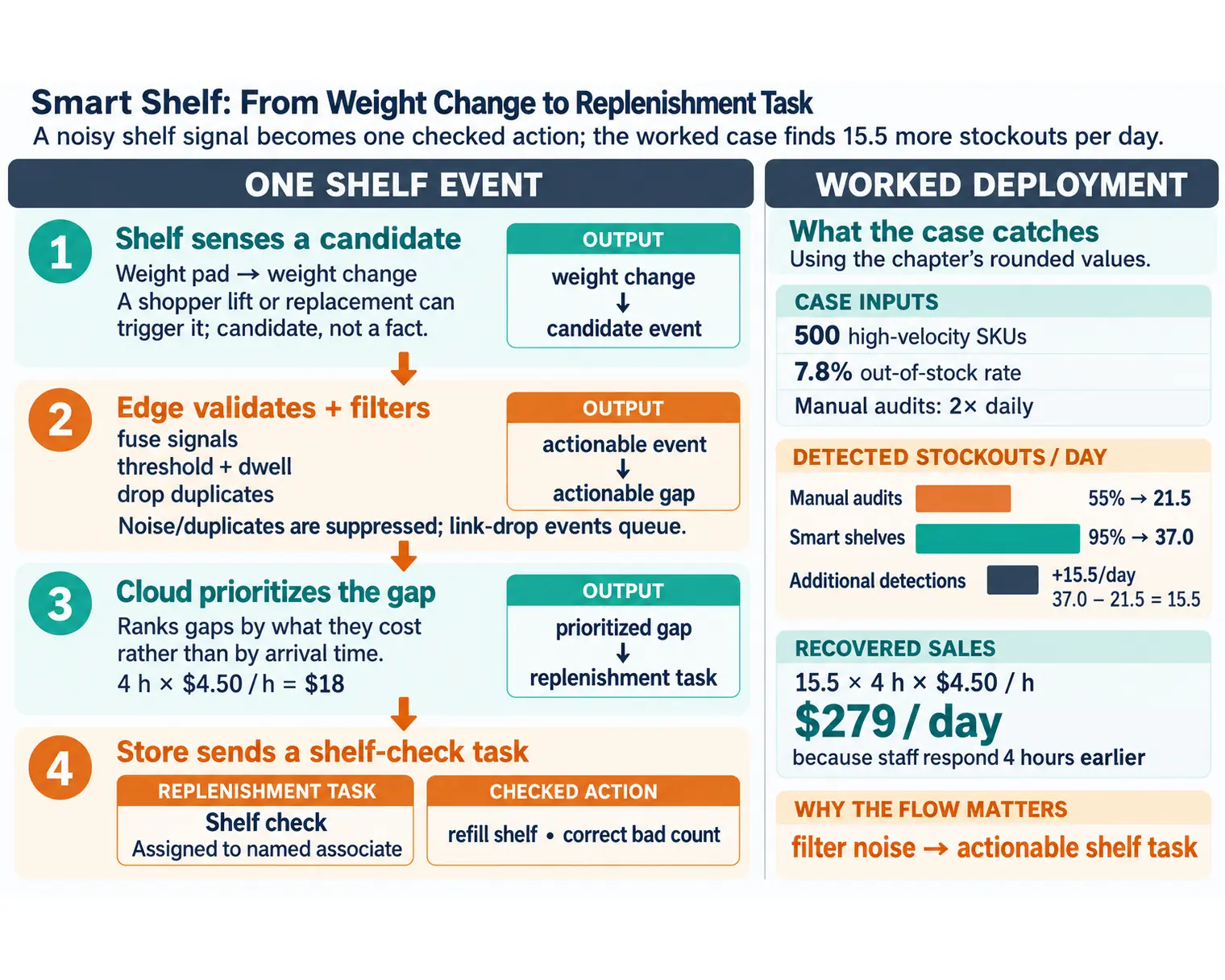
Smart shelves use sensors to detect product availability in real-time, dramatically reducing the time between a stockout occurring and staff responding.

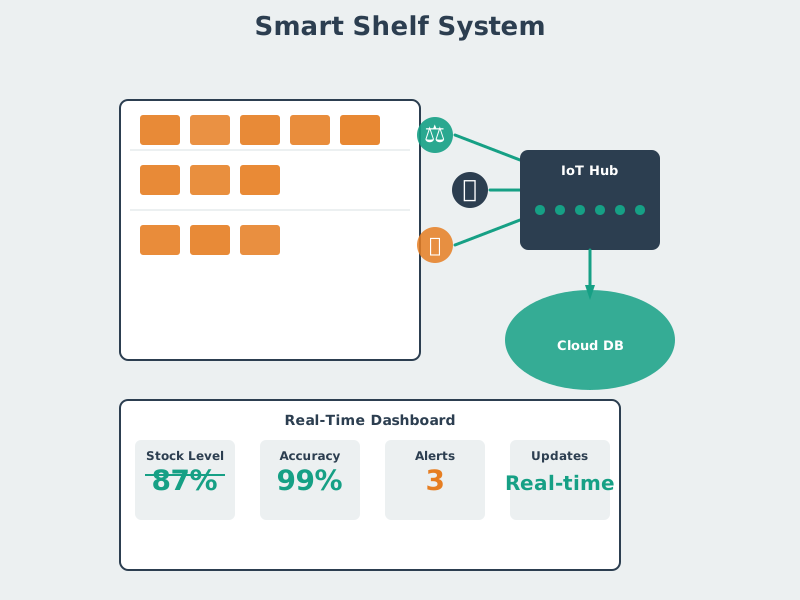
  • Weight sensors use pressure pads to detect product removal.
  • That labelled limit reconnects the visual to sensor technologies for smart shelves.
Smart Shelf System Architecture
iotclass.org

Major section

Grocery Smart Shelf Monitoring

Scenario: A regional grocery chain with 85 stores is evaluating smart shelf deployment.

  • That sequence keeps interactive calculator: smart shelf roi tied to what is visibly labelled.
Smart shelf system with weight sensors and electronic labels
iotclass.org

Major section

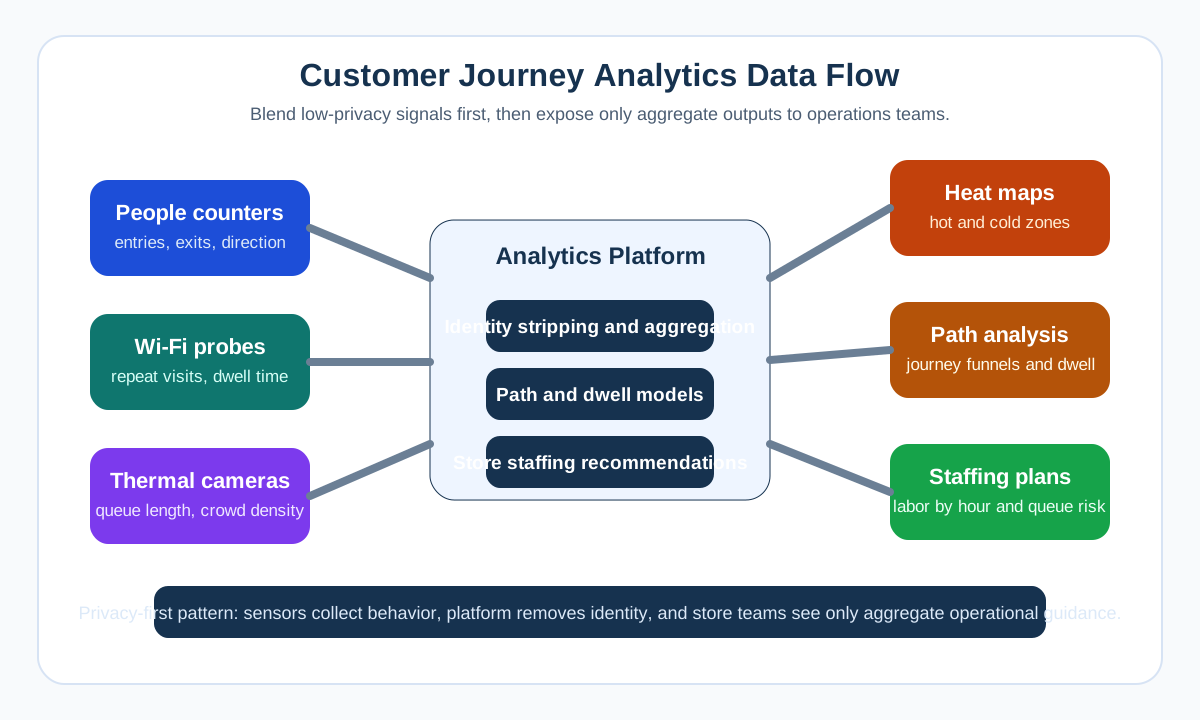
Beacon-Based Customer Engagement

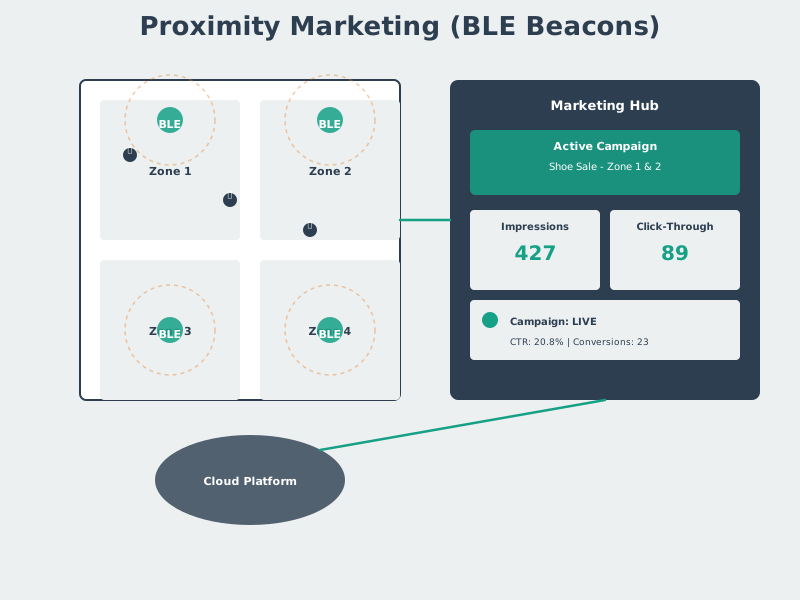
Bluetooth Low Energy (BLE) beacons enable location-aware customer engagement, sending personalized offers when shoppers are near relevant products.

  • Carry: Proximity Marketing (BLE Beacons) into how retail beacons work; use: Zone 2 as its limiting condition.
Beacon-Based Customer Journey
iotclass.org

Major section

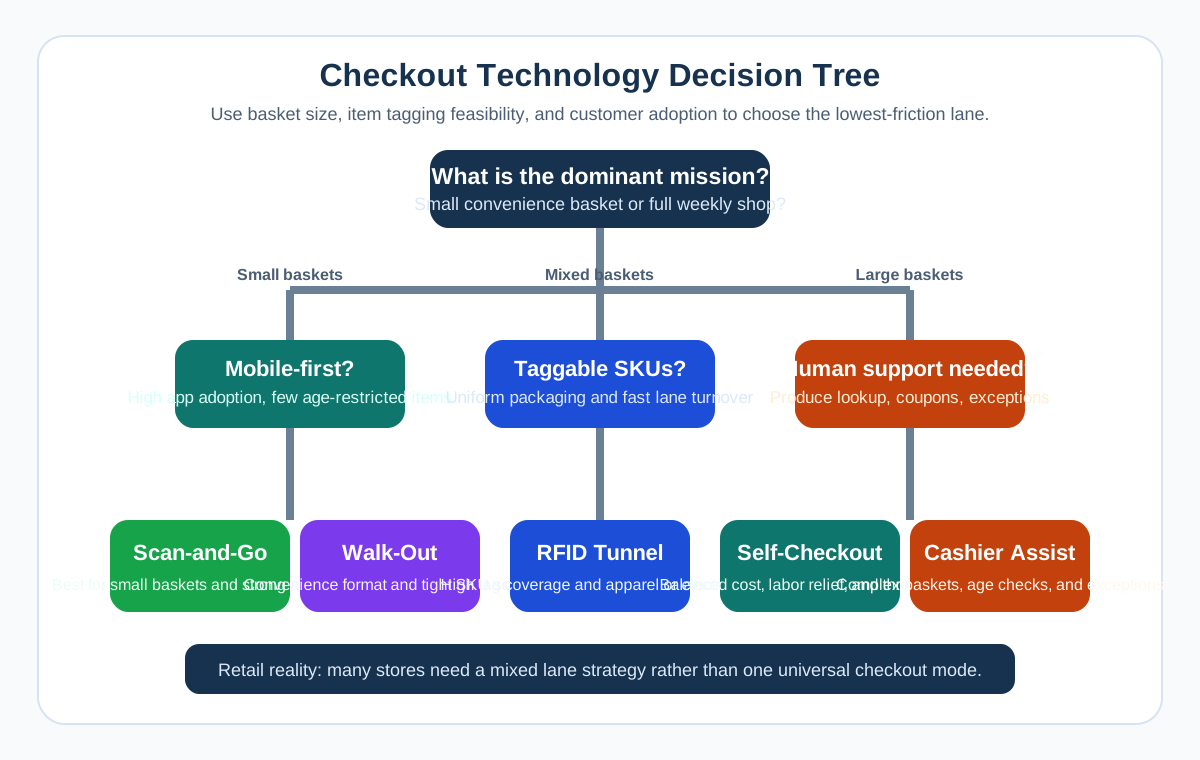
Checkout Automation Technologies

We have handled the most personal customer signal in the chapter.

  • The next set of systems shifts to store throughput, inventory truth, price accuracy, shrinkage, and energy - areas where the data may be less intimate but the operational integration is just as important.
  • Modern retail checkout spans a spectrum from traditional cashier lanes to fully automated walk-out stores.
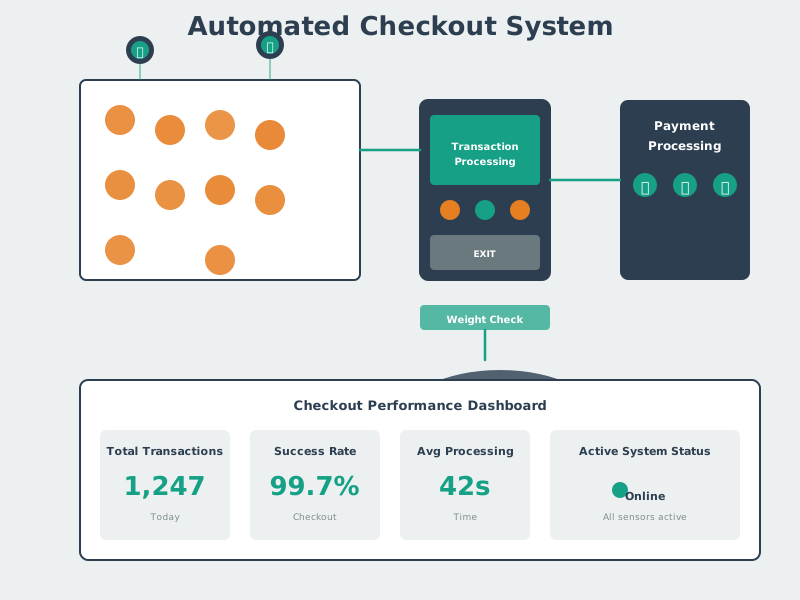
A self-checkout kiosk combines the scanner, payment terminal, user display, and a bagging-area weight check into one customer-operated station -- several sensing and decision points in a single retail workflow. Photo: Daylen, CC BY 4.0
iotclass.org

Major section

Cut Checkout Abandonment

Key Insight: The highest-ROI intervention is reducing false alarms, not speeding up scanning.

  • A frustrated customer who abandons represents $67.80 lost; a customer who takes 30 extra seconds still completes the purchase.
  • That sequence keeps cut checkout abandonment tied to what is visibly labelled.
Automated checkout kiosk with weight sensors and vision system
iotclass.org

Major section

RFID for Retail Inventory

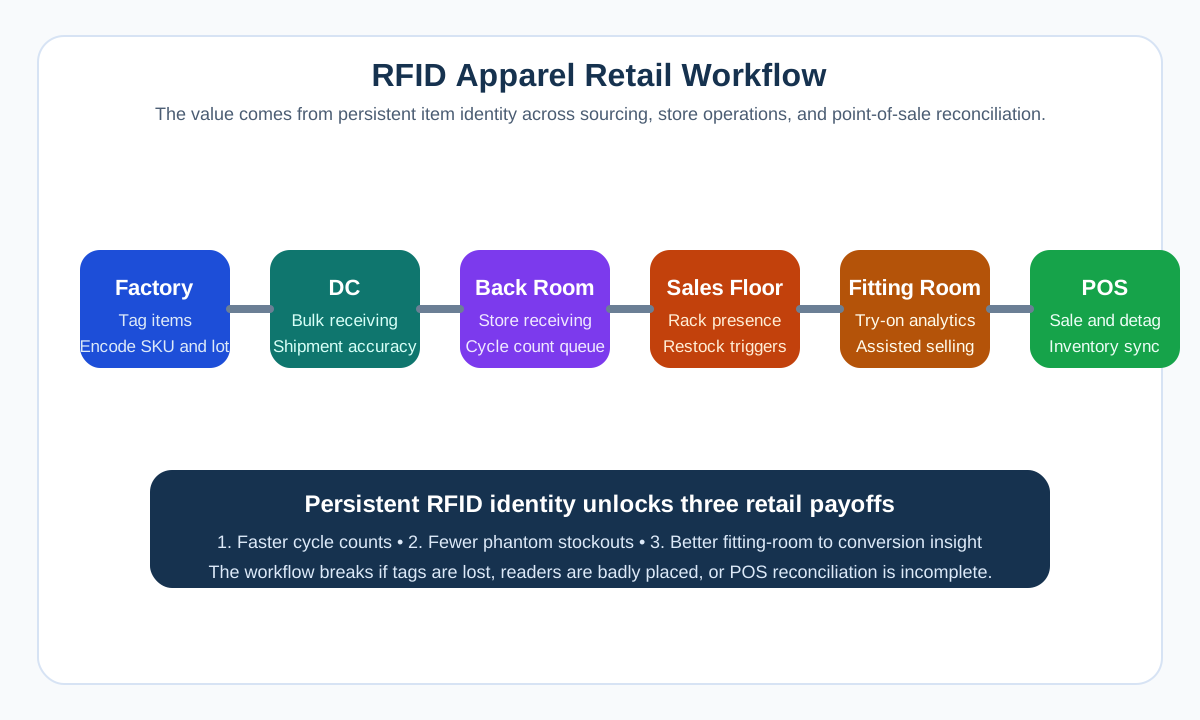
Radio Frequency Identification (RFID) provides item-level tracking, transforming inventory accuracy from ~65% (barcode-based) to ~98% (RFID-based).

  • The same identifier supports different decisions at each boundary, so reader placement and event ownership matter as much as tag range.
RFID Apparel Retail Workflow
iotclass.org

Deck summary

Key takeaways

In ble beacon marketing, record: The different enclosures here still need a recorded UUID as the deciding distinction.

  • Customer taps notification → In-app coupon page shows barcode.
  • Checks campaign rules: "Users with <$5 cereal spend + Zone 12 entry → Send 30% off coupon for Nature's Path organic cereal (high-margin item, aligns with customer preferences)".
  • Smart shelves use sensors to detect product availability in real-time, dramatically reducing the time between a stockout occurring and staff responding.
  • Scenario: A regional grocery chain with 85 stores is evaluating smart shelf deployment.
iotclass.org

Retrieval practice

Recall check

Blueprint Bina says: answer from memory, then check your reasoning.

Q1A grocery customer receives a cereal offer near an aisle beacon. Which component applies the targeting rules?

AThe app and cloud personalization path
BThe beacon’s local marketing engine
CThe checkout scanner before zone detection
DThe beacon battery maintenance process
Show answer

Answer: A The beacon broadcasts its identity; the app and cloud connect proximity to purchase history and campaign rules.

Q2A retailer wants useful location analytics with less intrusive tracking. Which choice matches the chapter’s trade-off?

ATrack full movement paths for deeper personalization
BUse full heat maps as the minimal-tracking option
CChoose tracking depth from campaign performance alone
DUse zone-only detection with reduced personalization depth
Show answer

Answer: D Zone detection offers useful analytics while limiting personalization and cross-sell detail.

iotclass.org

Print reference

Answers

Answer key.

  1. A · The beacon broadcasts its identity; the app and cloud connect proximity to purchase history and campaign rules.
  2. D · Zone detection offers useful analytics while limiting personalization and cross-sell detail.
iotclass.org