Industrial IoT and Business Operations · Study deck
Manufacturing IoT: Maintenance and Supply Chains
A plant can collect useful production and packaging evidence, but maintenance warnings and supply-chain signals still compete for attention.
Ada is your guide for this deck.
After studying this chapter
Learning objectives
You will be able to:
- calculate predictive-maintenance value from stated evidence
- connect retail and supply-chain sensing to decisions
- evaluate protocol, privacy, and deployment trade-offs
- Explain: Reactive work starts after damage, so the plant pays for emergency callouts, late parts and whatever else broke on the way down.
Major section
Predictive Maintenance in Manufacturing
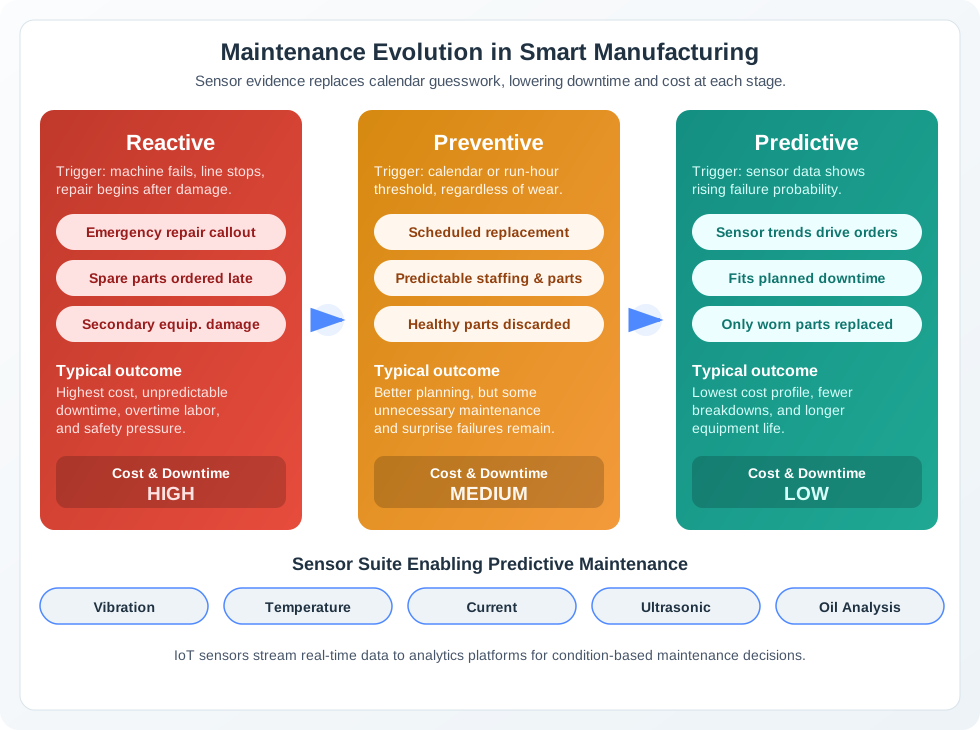
Reactive work starts after damage, so the plant pays for emergency callouts, late parts and whatever else broke on the way down.
- Preventive work starts on a calendar or run-hour count, which buys planning but throws away healthy parts and still misses early failures.
Major section
Predictive Maintenance in Manufacturing (continued)
Predictive work starts when sensor trends show failure risk rising, so the job fits into downtime the plant already planned.
- The strip along the bottom names what makes the third column possible: vibration, temperature, current, ultrasonic and oil data, streamed rather than sampled by hand.
- A US DOE guide reports an estimated 25-30% reduction in maintenance costs for a functional predictive-maintenance program.
- A US DOE guide reports an estimated 70-75% reduction in breakdowns for a functional predictive-maintenance program.
- A US DOE guide reports an estimated 35-45% reduction in downtime for a functional predictive-maintenance program.
Major section
Supply Chain Visibility Stack
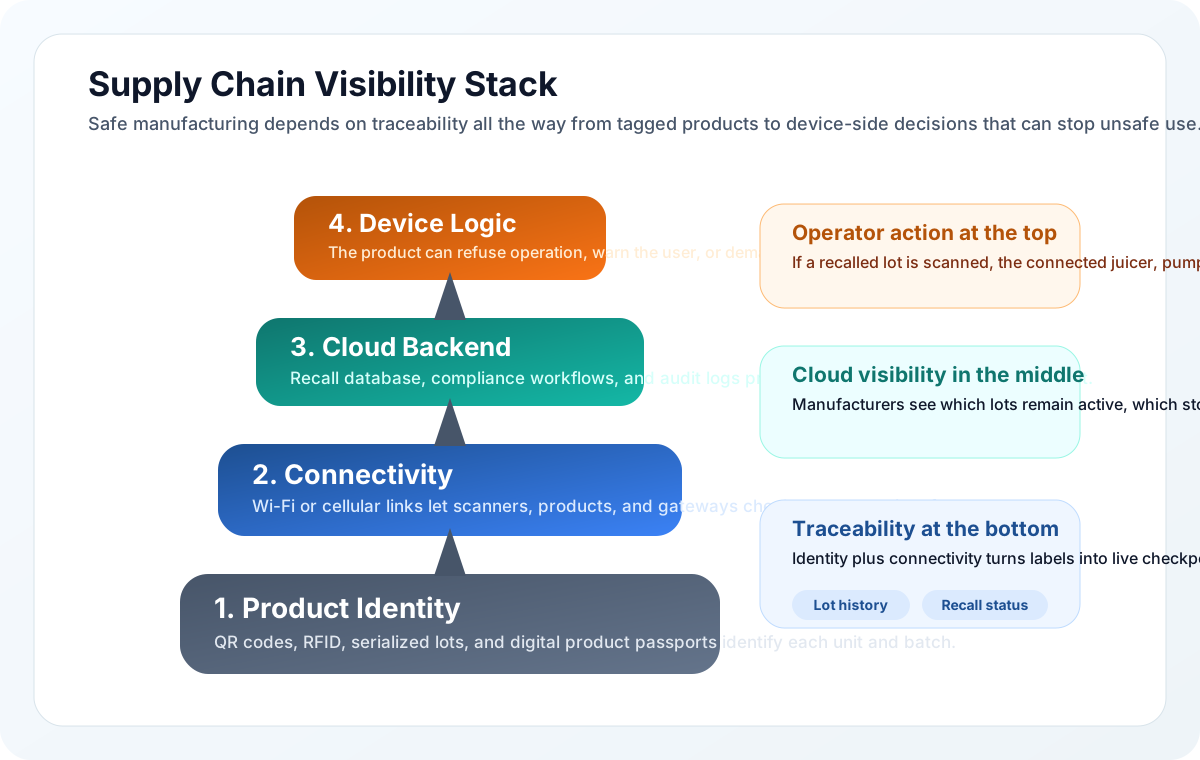
Connectivity: Function: Wi-Fi, cellular at point of use; Impact: Real-time check against recall database.
- Product identity comes first: a serial code or tag means the system can talk about one batch rather than one product line.
- Connectivity then lets a scanner ask about that batch where the work happens.
Major section
Mfg Relationships
Predictive Maintenance (PdM): Relates To: Vibration/Temperature Sensors; Relationship: Sensor trends can warn of developing faults so maintenance can be scheduled before a breakdown; measure warning lead time and downtime reduction for each asset.
- Smart Packaging: Relates To: Cold-Chain Monitoring; Relationship: Time-temperature indicators can show whether a package experienced a temperature excursion; quantify prevented loss in a deployment study.
- ERP/MES Integration: Relates To: Data Silos; Relationship: Plan and test interfaces so sensor alerts reach maintenance, production, and quality workflows.
- Cloud: Relates To: Latency Requirements; Relationship: Safety-critical controls (machine stops) use edge (<10 ms); strategic analytics (OEE trends) use cloud.
Deck summary
Key takeaways
Reactive work starts after damage, so the plant pays for emergency callouts, late parts and whatever else broke on the way down.
- Predictive work starts when sensor trends show failure risk rising, so the job fits into downtime the plant already planned.
- Connectivity: Function: Wi-Fi, cellular at point of use; Impact: Real-time check against recall database.
- Predictive Maintenance (PdM): Relates To: Vibration/Temperature Sensors; Relationship: Sensor trends can warn of developing faults so maintenance can be scheduled before a breakdown; measure warning lead time and downtime reduction for each asset.
Retrieval practice
Recall check 1 of 2

Ada says: answer from memory, then check your reasoning.
Q1A factory has 50 motors. With reactive maintenance, 8 fail per year at $15,000 each. Predictive maintenance with vibration sensors reduces failures to 2 per year. If sensors cost $300 each plus $150/year analytics, what is the first-year ROI?
Show answer
Answer: C Savings = (8-2) x $15,000 = $90,000.
Retrieval practice
Recall check 2 of 2

Ada says: answer from memory, then check your reasoning.
Q2Place each predictive-maintenance responsibility where it lives so you can trace whether a missed fault belongs to sensing, plant control, or maintenance workflow.
Show answer
Answer: A Predictive maintenance needs a traceable chain from contextual machine sensing, through the control-owned edge, to evidence-backed maintenance action.
Q3Complete the predictive maintenance alert checker:
Show answer
Answer: A Predictive maintenance alerts should suppress stale or low-confidence machine events and open work orders only when a trusted event reaches warning or critical severity while the asset is operating.
Print reference
Answers
Answer key.
- C · Savings = (8-2) x $15,000 = $90,000.
- A · Predictive maintenance needs a traceable chain from contextual machine sensing, through the control-owned edge, to evidence-backed maintenance action.
- A · Predictive maintenance alerts should suppress stale or low-confidence machine events and open work orders only when a trusted event reaches warning or critical severity while the asset is operating.