AMQP · Study deck
AMQP Frames: Routing and Reliability
Picture a freezer sending an alarm to a duty team.
Broker Bex is your guide for this deck.

After studying this chapter
Learning objectives
You will be able to:
- Apply AMQP Security: Configure SASL authentication, TLS encryption, and access control lists for a production IoT deployment
- Evaluate Interoperability: Compare AMQP broker implementations and justify vendor selection based on open standard benefits and multi-language client support
- Diagnose AMQP Connections: Analyze protocol-level frame sequences to identify and troubleshoot messaging failures
- Distinguish Frame Types: Explain the role of each AMQP 1.0 frame (OPEN through CLOSE) and construct the correct frame sequence for a given connection scenario
Major section
For Beginners: AMQP Frames
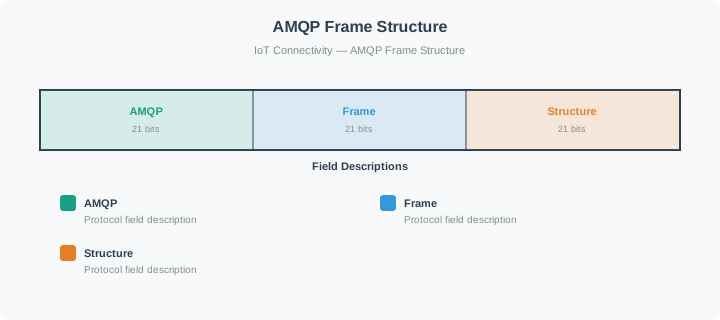
The header tells the receiver how to parse and multiplex the frame; the payload carries the operation-specific content.
- This structure makes the lifecycle sequence in the next section concrete.
Major section
The Secret Handshake
"Hey Max, I tried to send my light readings to the new cloud server, but it keeps rejecting me!" the LED said, flickering with frustration.
- the battery chimed in: "The nice thing is, you can have multiple conversations at the same time over one phone line -- that's channel multiplexing.
- One connection, many conversations, and I only have to power one radio link!".
- the microcontroller nodded wisely. "That's because the server uses AMQP security -- it's like a clubhouse with a secret handshake.
Major section
Reliability Features
AMQP provides enterprise-grade reliability mechanisms.
- Messages can be configured to survive broker restarts.
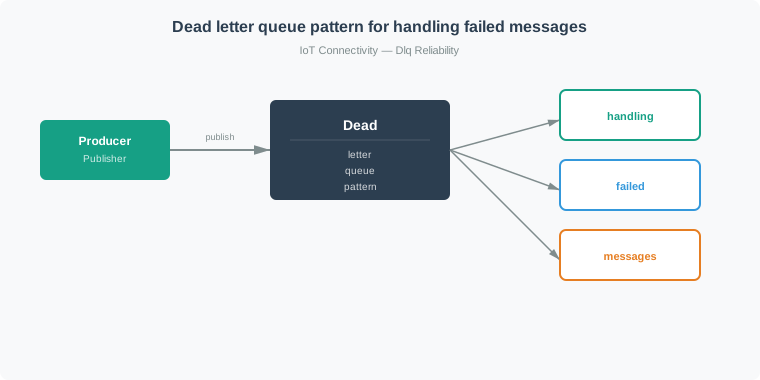
- Failed messages are captured for investigation rather than lost.
- The original workload can continue while operators inspect or retry the failed message.
- This path connects rejection policy to the later requirement for bounded retries and preserved failure evidence.
Major section
AMQP 1.0 Frame Types
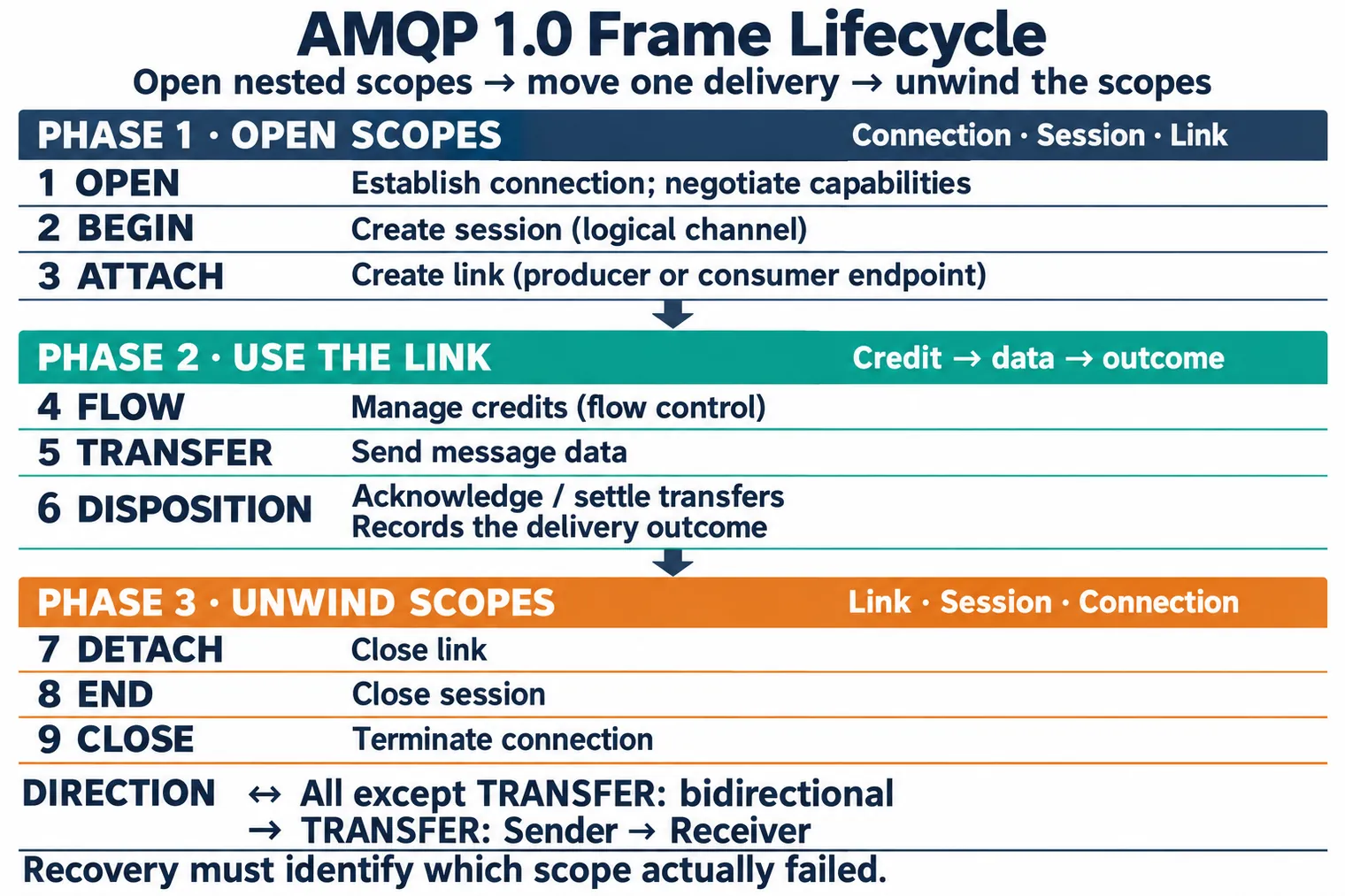
AMQP 1.0 uses nine frame types for protocol operation, providing a clear lifecycle from connection to message transfer.
- DISPOSITION records its outcome, while DETACH, END, and CLOSE unwind the nested scopes.
- This order explains why recovery must identify which scope actually failed.
Major section
Case Study: TransCargo Vehicle Telemetry Platform (Netherlands, 2024)
Scenario: A logistics company operates 2,500 delivery trucks across Europe.
- Each truck sends GPS, fuel, engine, and temperature telemetry via cellular modems to a central RabbitMQ AMQP broker.
- The platform must support real-time dispatch, regulatory compliance archiving, and alert processing.
- Lower match ratios indicate more efficient topic-based filtering.
Deck summary
Key takeaways
The header tells the receiver how to parse and multiplex the frame; the payload carries the operation-specific content.
- "Hey Max, I tried to send my light readings to the new cloud server, but it keeps rejecting me!" the LED said, flickering with frustration.
- AMQP provides enterprise-grade reliability mechanisms.
- AMQP 1.0 uses nine frame types for protocol operation, providing a clear lifecycle from connection to message transfer.
- Scenario: A logistics company operates 2,500 delivery trucks across Europe.
Retrieval practice
Recall check 1 of 3

Broker Bex says: answer from memory, then check your reasoning.
Q1Per this chapter's Reliability Features section, what distinguishes "transient" from "persistent" message mode in the trade-off table?
Show answer
Answer: A see answers page
Retrieval practice
Recall check 2 of 3

Broker Bex says: answer from memory, then check your reasoning.
Q2Per this chapter's RabbitMQ ACL example, which user can publish new sensor readings but cannot read data back from the broker?
Show answer
Answer: A The chapter's ACL table gives sensor_app configure and write permissions scoped to ^sensor\.* but a blank read permission -- a write-only device account, distinct from dashboard (read-only) and admin (full .* access on all three permission types).
Retrieval practice
Recall check 3 of 3

Broker Bex says: answer from memory, then check your reasoning.
Q3An AMQP sender has established a connection (OPEN) and created a session (BEGIN). It now wants to start pushing temperature sensor readings to a queue named 'sensor_data'. Which frame must the sender exchange NEXT, before any TRANSFER frames can occur?
Show answer
Answer: B
Print reference
Answers 1 of 2
Answer key.
- A · The chapter's trade-off table ties persistence directly to a performance cost: transient (memory-only) messages give high throughput and suit telemetry/logs, while persistent (disk+memory) messages trade some throughput for surviving a broker restart, which is why they're reserved for critical data and orders.
- A · The chapter's ACL table gives sensor_app configure and write permissions scoped to ^sensor\.* but a blank read permission -- a write-only device account, distinct from dashboard (read-only) and admin (full .* access on all three permission types).
Print reference
Answers 2 of 2
Answer key.
- B