Emerging Paradigms · Study deck

Ad-Hoc Production: Routing Trade-offs

The network finds a short route, but that route may cross weak batteries or unstable links.

Blueprint Bina is your guide for this deck.

adhocprod
Blueprint Bina, the module guide, in a scene from this chapter.
iotclass.org

After studying this chapter

Learning objectives

You will be able to:

  • Explain: This connects path selection to the earlier production objective: the best route is the one that meets latency and delivery needs without silently shortening the useful life of the network.
  • Explain: A useful ad-hoc assessment asks whether the routing claim still holds when traffic rate, node mobility, relay battery, link quality, interference, gateway placement, or recovery policy changes.
  • Explain: The review must track relay duty, route churn, battery thresholds, link quality, and whether a backup path quietly moves the bottleneck to a different node.
  • Explain: Production readiness is not the same as solving one routing exercise.
iotclass.org

Major section

Production Readiness Evidence Record
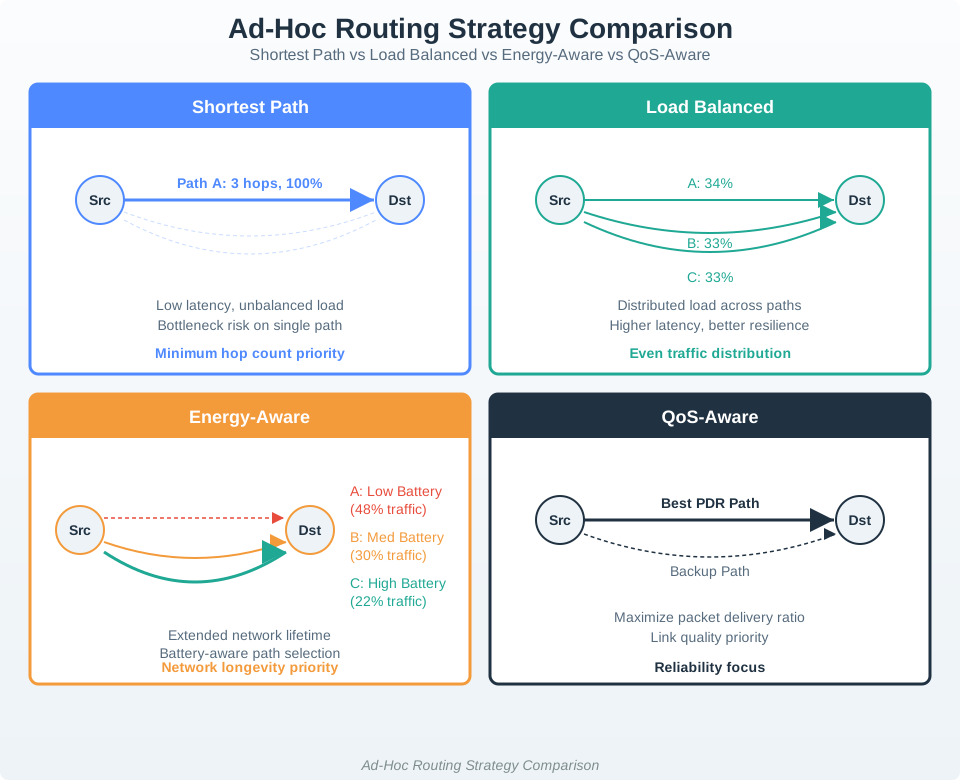
Production readiness is not the same as solving one routing exercise.

  • A useful ad-hoc assessment asks whether the routing claim still holds when traffic rate, node mobility, relay battery, link quality, interference, gateway placement, or recovery policy changes.
  • The worked examples are best read as evidence patterns.
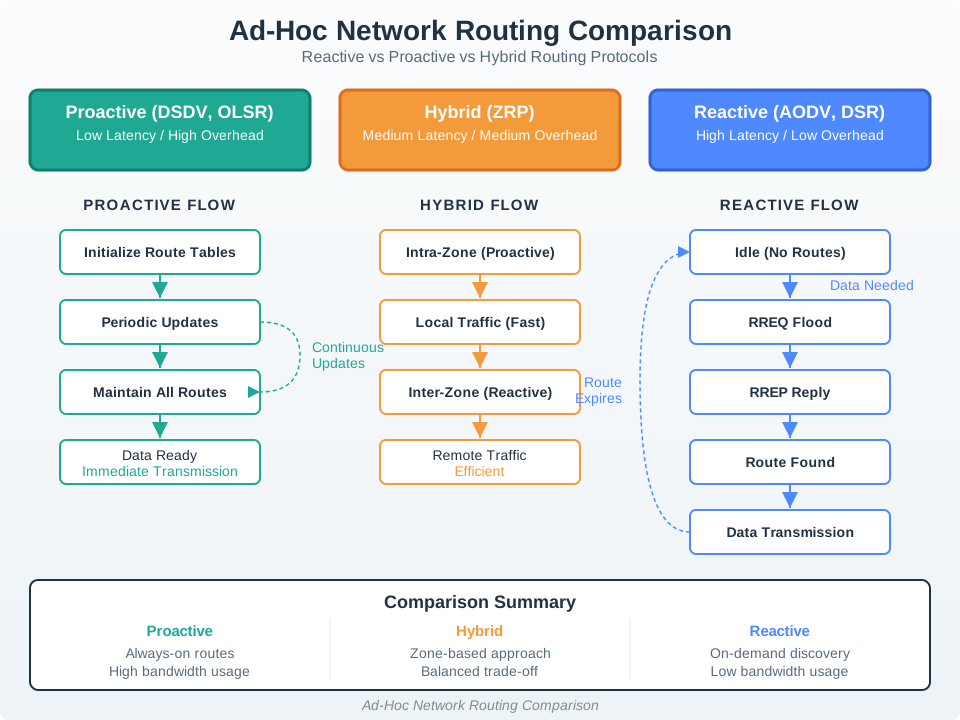
Ad hoc routing strategy comparison showing shortest-path, load-balanced, energy-aware, and QoS-aware routing choices with their latency, bottleneck, battery, and reliability trade-offs
iotclass.org

Major section

Failover State Machine Review

Each stage can fail or add delay.

  • Energy-aware routing has the same structure.
  • The review must track relay duty, route churn, battery thresholds, link quality, and whether a backup path quietly moves the bottleneck to a different node.
  • Failure-analysis rule:: When a recovery calculation looks strong, ask which state transition was measured and which was assumed.
iotclass.org

Major section

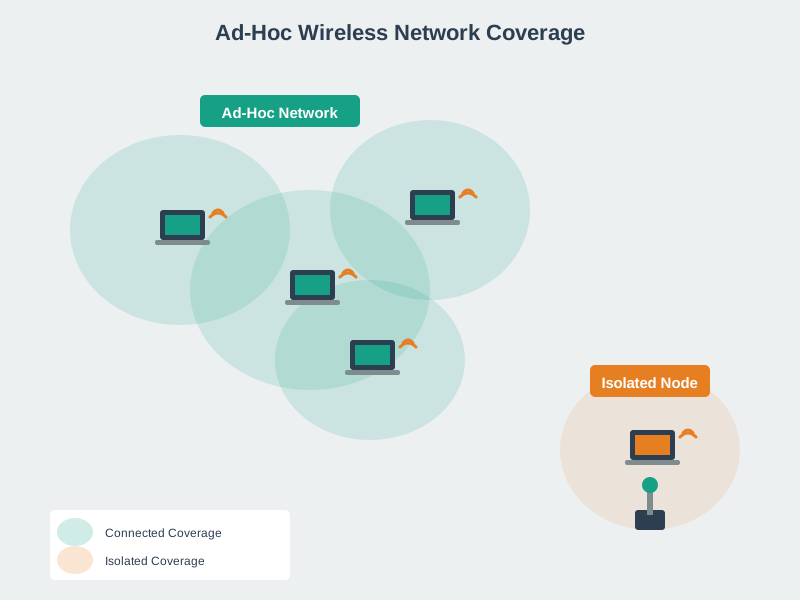
Visual: Ad Hoc Network Architecture

Every relay is both a participant and part of the path, so movement, loss, or battery depletion changes the topology the protocol sees.

  • That dependence is why production assessment begins with route formation and repair rather than assuming a permanent network backbone.
Comprehensive ad hoc network architecture visualization
iotclass.org

Major section

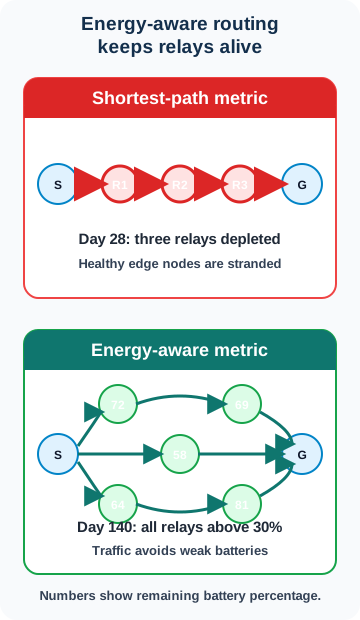
Energy-Aware vs Shortest Path

The energy-aware strategy accepts longer paths to spread work and keep the topology connected.

  • This connects path selection to the earlier production objective: the best route is the one that meets latency and delivery needs without silently shortening the useful life of the network.
Energy-aware routing lifetime impact: shortest-path routing concentrates traffic on high-betweenness nodes, rapidly depleting their batteries. Energy-aware routing sacrifices average path length to distribute load across more nodes, extending network lifetime by 5x. This visualization helps operators understand why "optimal" paths may be suboptimal for network longevity.
iotclass.org

Major section

Multi-Path Routing Strategies

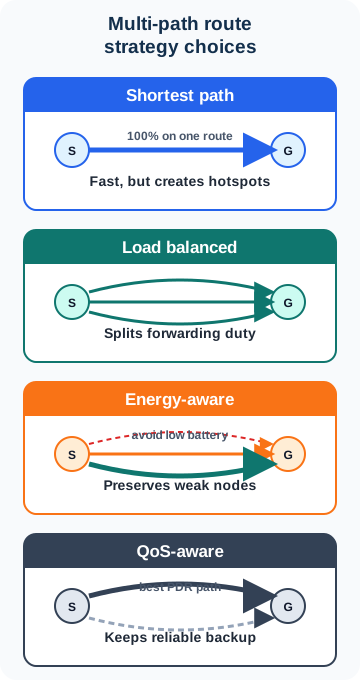
The right choice depends on application priorities visible.

  • None is universally best.
  • The running assessment therefore needs traffic priority, battery state, link evidence, and failover acceptance criteria before it can justify a production route policy.
Multi-path routing strategy comparison: production ad-hoc networks must choose between four strategies with different optimization goals. Shortest-path minimizes latency but creates hotspots. Load-balanced extends lifetime. Energy-aware preserves low-battery nodes. QoS-aware maximizes delivery ratio. The right choice depends on application priorities.
iotclass.org

Deck summary

Key takeaways

Production readiness is not the same as solving one routing exercise.

  • Each stage can fail or add delay.
  • Every relay is both a participant and part of the path, so movement, loss, or battery depletion changes the topology the protocol sees.
  • The energy-aware strategy accepts longer paths to spread work and keep the topology connected.
  • The right choice depends on application priorities visible.
iotclass.org

Retrieval practice

Recall check 1 of 2

Blueprint Bina says: answer from memory, then check your reasoning.

Q1Place each production-assessment input where it lives so you can choose an ad hoc route that survives real traffic and failures.

ATraffic
BFirmware
CUART
DBilling
Show answer

Answer: A Separate observed demand and link evidence, backup readiness, and final policy so you can justify a production route against latency, reliability, and battery constraints.

Q2Complete the backup-route filter used during ad hoc failover:

Aif low_battery(path):
Bif fast_enough(path):
Cif path is None:
Dif paths == []:
Show answer

Answer: A A failover route should reject dying nodes and paths that miss the latency budget before selecting the fastest remaining backup.

iotclass.org

Retrieval practice

Recall check 2 of 2

Blueprint Bina says: answer from memory, then check your reasoning.

Q3A field team reports that an ad-hoc deployment is production-ready because a backup path exists on a diagram. What evidence is still needed before accepting the failover claim?

AMeasured detection time, backup-path health, route-selection logic, first-packet delivery, rejected-route reasons, and retest triggers.
BOnly confirmation that the backup path has the fewest hops, because shortest alternate routes always recover fastest.
COnly the original route table captured at deployment time, because cached ad-hoc routes stay valid until replacement.
DA runbook statement that multi-path topologies recover instantly after any single link failure in normal operation.
Show answer

Answer: A Ad-hoc production readiness depends on measured routing fit, link evidence, failover state, energy state, and retest triggers.

iotclass.org

Print reference

Answers

Answer key.

  1. A · Separate observed demand and link evidence, backup readiness, and final policy so you can justify a production route against latency, reliability, and battery constraints.
  2. A · A failover route should reject dying nodes and paths that miss the latency budget before selecting the fastest remaining backup.
  3. A · Ad-hoc production readiness depends on measured routing fit, link evidence, failover state, energy state, and retest triggers.
iotclass.org